• Why the Westminster Confession Still Matters: A Conversation with Dr. Chad Van Dixhoorn
    Apr 25 2026

    Send us Fan Mail

    We’re joined by Dr. Chad Van Dixhoorn, professor of church history and theology at Reformed Theological Seminary and one of today’s leading Westminster Assembly scholars. Few men in our day have devoted more careful, sustained work to the Westminster Standards, studying both their historical setting and their theological substance. In this conversation, he offers a gracious and accessible presentation of the Confession and catechisms, while also pressing the importance of confessionalism for the life and health of the church today. Together, we explore why the Westminster Confession of Faith and the Larger and Shorter Catechisms still belong in the hands of ordinary Christians.

    For more information on Dr. Chad Van Dixhoorn’s work, please see the following: Confessing the Faith by Chad Van Dixhoorn, available through Banner of Truth.

    Dr. Van Dixhoorn is Professor of Church History and Theology at Reformed Theological Seminary in Charlotte, and he is widely recognized as one of the leading experts on the Westminster Assembly. He has completed a five volume edition of The Minutes and Papers of the Westminster Assembly, 1643 to 1652, giving the church an unprecedented window into the work and debates of the divines. He is also currently working on a major monograph on the Assembly and serves as the editor of John Arrowsmith’s Plans for Holy War, as well as general editor of the Works of Samuel Rutherford. Ordained in the Orthodox Presbyterian Church, Dr. Van Dixhoorn has also served pastorally both in the United Kingdom and here in the United States.


    Support the show

    Show More Show Less
    31 mins
  • Behind the Politics: Gospel Ministry at the Capitol — Interview with Rev. Ron Zeigler, Ministry to State (Harrisburg, PA)
    Apr 21 2026

    Send us Fan Mail

    Politics is everywhere, but it rarely feels personal. From cable news panels to social media takes, it’s easy to talk about “politicians” like they’re a single faceless group instead of neighbors made in the image of God. We sit down with Rev Ron Zeigler, a pastor serving full-time through Ministry to State at the Pennsylvania State Capitol in Harrisburg, to talk about what it looks like to bring pastoral care into one of the most pressurized workplaces in the Commonwealth.

    Ron shares how this Presbyterian Church in America ministry (under Mission to North America) focuses on prayer, presence, and genuine relationship with lawmakers, staffers, and even the police forces and custodial teams that keep the Capitol running. You’ll hear why legislators can feel overlooked and isolated, how caucus pressure and leadership demands shape real moral tension, and why Christians are called to intercede for civil government leaders according to 1 Timothy 2. He also tells remarkable stories from the halls and the Capitol cafe: prayer cards saved for years, moments of encouragement after difficult debates, and people from different parties and backgrounds praying together in public.

    Along the way we wrestle with a question many believers feel but rarely say out loud: how do we care more about the person than the person’s policy while still taking truth and conscience seriously? If you care about Christian political engagement, praying for government leaders, and a faithful public witness that doesn’t borrow the world’s contempt, this conversation offers a grounded path forward. Subscribe, share with a friend, and leave a review, then tell us: which leader will you start praying for this week?

    For more info on Ron's ministry, visit: PENNSYLVANIA | Ministry to State

    Support the show

    Show More Show Less
    50 mins
  • From John’s Gospel To Nicaea: How Christians Confessed One God In Three Persons (WCF 2)
    Apr 7 2026

    Send us Fan Mail

    The fastest way to misunderstand Christianity is to treat the Trinity like a math puzzle or a dusty debate from the fourth century. We pick up Westminster Confession of Faith chapter two and follow the doctrine of the Trinity where it actually comes from: the Bible’s own speech about the Father, the Son, and the Holy Spirit, with the Gospel of John front and center. Drew Brackbill helps us connect Scripture, church history, and the real-world stakes of orthodox Christian doctrine.

    From the apostle John’s insistence on the Word’s full divinity to the Anti-Nicene Fathers like Ignatius, we trace how Trinitarian theology shows up early and clearly before any ecumenical council meets. Then we explain why the word “Trinity” appears later than the belief, how terms like “one substance” (consubstantiality) help the church speak precisely, and why that precision is meant to protect biblical faith rather than replace it.

    We also walk through the major Trinitarian controversies that shaped the early church: modalism (Sabelianism) and Arianism, why they sounded persuasive, and why the Council of Nicaea and Athanasius mattered. Finally, we bring it into the present with modern examples and the ongoing question of creeds, confessions, and “no creed but the Bible.” If you care about the atonement, salvation, and faithful worship, this conversation lands close to home.

    Support the show

    Show More Show Less
    37 mins
  • One God, Three Persons: Understanding the Trinity (Westminster Confession Chapter 2)
    Mar 24 2026

    Send us Fan Mail

    Pastor Cisco Victa sits down with Drew Brackbill to discuss Chapter 2 of the Westminster Confession of Faith, Of God and of the Holy Trinity. Together they explore what the Confession teaches about the nature and attributes of the one true and living God and how Scripture reveals that this one God exists eternally as Father, Son, and Holy Spirit.

    In this conversation they begin to look at the historical development of the doctrine of the Trinity and the early church controversies that forced Christians to clarify their theology. From the writings of the early church fathers to the Council of Nicaea in 325 AD, they discuss how the church responded to errors such as modalism and Arianism and defended the biblical teaching that Christ is begotten, not made, and of the same essence as the Father.

    Join us as we consider why the doctrine of the Trinity stands at the center of the Christian faith and why it continues to matter for the church today.

    Support the show

    Show More Show Less
    43 mins
  • Settled by Scripture: The Canon, the Apocrypha, and the Westminster Confession (Part 2)
    Mar 10 2026

    Send us Fan Mail

    In this episode of Catechizing Conversations, Cisco Victa and Drew Brackbill continue their study of the Westminster Standards by focusing on Westminster Shorter Catechism Q.2 and Chapter 1 of the Westminster Confession of Faith.

    They explore why Scripture is the only rule to direct us how to glorify and enjoy God, clarifying the Reformed doctrine of sola Scriptura. The conversation addresses the role of church tradition, contrasts Protestant and Roman Catholic views of authority and canon, and explains how the Holy Spirit bears witness to Scripture’s divine authority.

    They also discuss the self-authenticating nature of Scripture, the perspicuity (clarity) of the Bible in matters necessary for salvation, and the responsibility of every believer to test teaching by God’s Word—like the Bereans in Acts 17. The episode concludes with practical encouragement to approach Scripture prayerfully, trusting the Spirit to illuminate the gospel through the written Word.

    Support the show

    Show More Show Less
    40 mins
  • Settled by Scripture: The Canon, the Apocrypha, and the Westminster Confession
    Feb 24 2026

    Send us Fan Mail

    In this episode of Catechizing Conversations, Cisco Victa and Drew Brackbill examine the formation of the biblical canon and the question: Who determines what counts as God’s Word?

    Tracing the history of the Old Testament from early Jewish recognition of the canon to the Septuagint, the Latin Vulgate, and the debates of the Reformation, they explain why Roman Catholic and Orthodox Bibles include the Deuterocanonical books while Protestants affirm a 66-book canon. The conversation engages early witnesses such as Josephus and Melito of Sardis, as well as the disagreements between Jerome and Augustine over the Apocrypha.

    They discuss why the Reformers returned to the Hebrew and Greek texts, why Protestants regard the Apocrypha as historically useful but not divinely inspired, and how the New Testament’s citation pattern shaped confidence in the Jewish canon. At the heart of the episode is a theological question: does the church authorize Scripture, or does Scripture authorize the church? Grounded in the Westminster Confession, this discussion connects canon formation to sola Scriptura, preaching, and the life of the church.

    Support the show

    Show More Show Less
    49 mins
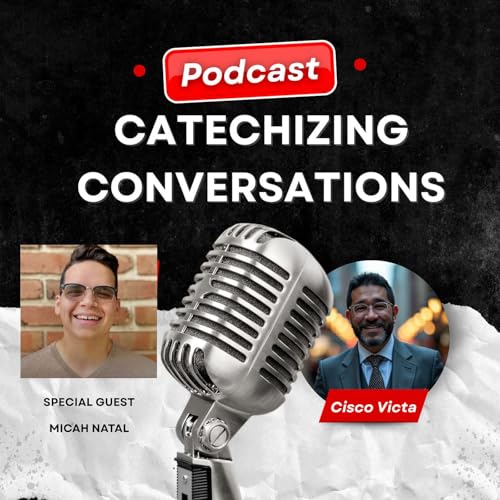
  • Campus Discipleship In A Secular Age: An Interview with Micah Natal of Disciple Makers
    Feb 10 2026

    Send us Fan Mail

    What happens when a former atheist returns to the college campus with the Gospel? We sit down with Micah Natal of DiscipleMakers to unpack how clear doctrine and real community take root in a place often defined by slogans, polarization, and noise.

    Micah traces his story from hearing a professor call the Bible “half myth,” to Micah's preaching in a house church, to the providential leading that led him into full-time campus work. Along the way, he learned the practices that now shape his work with students: slow, careful Bible study; resisting “what does this mean to me” shortcuts; and letting the Word master you before you teach it. He also spotlights a surprising tension: while many campuses broadcast their ideologies, faithful witness can still win respect. At Lebanon Valley College, Disciplemakers is widely praised for hospitality, proving that conviction and kindness can coexist.

    We also talk about the hunger rising among freshmen students for depth—questions about the Lord’s Supper, assurance, and Reformed theology—and why tools like the Westminster Confession and Heidelberg Catechism clarify complex truths without dumbing them down. Then we tackle an emerging challange: Artifical Intelligence. Micah names the real harms—lack of critical thinking, engineered “companions,” and dehumanizing misuse—and explains how embodied community, shared meals, small talk, and confession counter loneliness. The thread running through it all is the local church. Campus nights aren’t a substitute for membership, elders, and the one-anothering of the local church; students who plant roots in the local church now become contributors later.

    If you care about evangelism, discipleship, and the next generation’s formation, this conversation offers practical guidance and hopeful stories. Listen, share with a friend who mentors college students, and if it helps you, leave a review and subscribe so others can find it.

    Support the show

    Show More Show Less
    55 mins
  • Healthy Churches Grow: A Conversation with Pastor and Author, Tucker York
    Feb 4 2026

    Send us Fan Mail

    Healthy Churches Grow with Tucker York

    Tired of constantly putting out fires while the mission of the church stalls? In this episode, we sit down with pastor and author Tucker York to discuss the core ideas behind his book, Healthy Churches Grow: The Pastor’s Guide to Reducing Chaos, Creating Momentum, and Leading His Church to Health. Drawing directly from the framework of the book, Tucker offers a grounded and practical vision for church health that outlasts trends, respects a congregation’s real context, and frees pastors from the pressure of doing everything themselves.

    Throughout our conversation, Tucker walks us through key themes from Healthy Churches Grow, including how Ephesians 4 reframes pastoral leadership around preaching, prayer, study, and equipping the saints. He explains how clear roles, simple structures, and a culture of delegation are not corporate techniques, but biblical tools that help the body flourish without burning out its shepherds.

    We also dig into the nuts and bolts many churches avoid, topics Tucker addresses directly in the book, such as safety and crisis readiness, leadership alignment, and strategic planning that actually fits a church’s size and stage. Tucker helps pastors distinguish normal ministry fatigue from deeper structural dysfunction and shares realistic, low-lift “quick wins” from Healthy Churches Grow that can spark momentum now rather than someday.

    Leadership development and succession planning take center stage as well. Tucker explains how churches can intentionally identify gifts, create on-ramps for service, and build leadership pipelines that strengthen the church and extend its witness into the community. We also discuss pastoral transitions, one of the most vulnerable moments in a church’s life, and how clarity, humility, and foresight can turn those seasons into opportunities for renewal.

    Whether you are leading a young church plant or stewarding an established congregation, this conversation highlights why Healthy Churches Grow is a valuable guide for reducing chaos, creating momentum, and pursuing lasting church health.

    📘 Healthy Churches Grow by Tucker York

    Learn more about the book and get a copy here:
    https://a.co/d/03cdTnyL

    If this episode resonated with you, share it with a pastor or elder, subscribe for future episodes, and leave a review to help others find the show.
    What’s one “quick win” you’ll tackle this month?

    Support the show

    Show More Show Less
    44 mins