Episodes

  • 52. Creative Practice, The Power of Quiet Influence, and Impact Beyond Ego | David Murdoch
    Jan 12 2026

    What if the most lasting leadership isn't about the monuments you build but about the quiet spaces you create for others to thrive? Many senior leaders wrestle with this tension: how do we create impact that endures beyond our tenure without becoming the very "founder effect" that stifles the organisation's future? We know intellectually that leadership is about developing others, yet our systems still reward personal visibility over collective growth, heroic intervention over sustainable culture.

    This conversation with Professor David Murdoch offers a different lens. We explore what happens when leadership becomes less about being essential and more about making yourself unnecessary. Through his experience moving from technical expert to Vice Chancellor, from academic to industry leader, and through his two years running a remote hospital in Nepal, David reveals how unconventional detours often become our most formative experiences. His practice of building guitars (30 of them, all given away to friends around the world) isn't a hobby separate from his leadership, it's the creative renewal that sustains it. What's possible when we stop treating our "opposite world" as optional?

    Professor David Murdoch is an infectious disease expert, former Vice Chancellor of Otago University, and currently works with PHF Science leading organisational transformation. His father's quiet championing of women in education shaped David's approach to what I'm calling "covert mentoring," lifting others into opportunities without fanfare or expectation of recognition. In this conversation, you'll discover:

    1. How creative practice serves as a barometer for your work-life integration (when your mind wanders to the workshop during boring meetings, you're in a good spot)
    2. Why taking opportunities that "wreck your career" often become the best decisions you'll make
    3. How to build high trust, high accountability cultures through deliberate delegation and learning to let go
    4. Why working with young people isn't just about developing them, it's about their fresh questions keeping your thinking alive
    5. How succession planning is the ultimate success metric (things continuing well when you're not there)
    6. Why you can't assume you have a legacy, and how that humility actually creates enduring impact
    7. How experiences in radically different environments (like running a remote hospital in Nepal for two years) shape your leadership in ways conventional career paths never could
    8. Why the "founder effect" happens and what warning signs to watch for in your own leadership

    Timestamps:

    (00:00) - Introduction

    (03:02) - The Creative Outlet: Guitar Building and Leadership

    (09:13) - The Journey from Expert to Leader

    (23:59) - Trusting Young Talent in Leadership Roles

    (32:54) - Creating Lasting Impact in Leadership

    (38:20) - Building a Culture of Trust

    (42:02) - Lessons from Nepal: A Unique Leadership Experience

    Other References

    1. Nick Petrie
    Show More Show Less
    57 mins
  • 51. Leading Lasting Impact, Systems Thinking, and Living Deliberately | Digby Scott
    Dec 29 2025

    What if the most important measure of your leadership isn't what you achieve while you're in the role, but what continues after you've moved on? It's a question most senior leaders avoid because the answer is often uncomfortable. You've built the strategy, delivered the results, transformed the culture. But if you left tomorrow, how much of it would actually last?

    In this special Year in Review episode, Digby reflects on five interconnected themes that emerged from a year of deep conversations with remarkable leaders, change-makers, and systems thinkers. These aren't isolated insights, they're facets of the same question: how do we create change that endures? From understanding complex systems and shifting from hero to host leadership, to embracing unhurried productivity and living with deliberate authenticity, each theme builds toward a powerful framework for leading lasting impact.

    This episode is Digby's invitation to step back and see the bigger picture. Drawing on insights from over 50 conversations, personal experiences of burnout and breakthrough, and years of working with leaders across sectors, he maps a journey from crisis-driven leadership through to creating change so embedded that people don't want to go back. You'll discover:

    1. How to assess where you sit on the spectrum from crisis-driven to lasting impact leadership (and why most leaders get stuck at stage two)
    2. Why systems thinking is essential for addressing root causes rather than just treating symptoms, and how the dragonfly metaphor reframes our understanding of generational impact
    3. How shifting from hero to host leadership transforms dependency into capability, and why your job isn't to be the answer but to create conditions where answers emerge
    4. Why unhurried productivity isn't about slowing down but about creating spaciousness within the work itself, and how this becomes the foundation for everything else
    5. How living deliberately means making daily choices that align with who you truly are, not who you think you should be
    6. Why these five themes aren't separate ideas but interconnected pieces that, when working together, create leaders whose impact outlasts their tenure
    7. How to measure leadership success differently, focusing on what continues after you're gone rather than what you achieve while you're there

    Leading Lasting Impact self-assessment

    Other References:

    1. James McCulloch Podcast Episode
    2. Dr. Richard Hodge Podcast Episode
    3. Adam Cooper Podcast Episode
    Show More Show Less
    52 mins
  • 50. Listening Beyond Words, and Choosing What to Say No To | Oscar Trimboli
    Dec 15 2025

    How much of what matters most are you missing while you're listening? Not the words themselves (you're good at capturing those) but what's underneath them, between them, beyond them.

    Here's the uncomfortable truth: most of us believe we're better listeners than we actually are. We're busy preparing our response, managing the future, or distracted by the ping of the next urgent thing. Meanwhile, the people in front of us (the ones we're meant to be leading) are telling us everything we need to know. If only we knew how to truly hear it.

    In this conversation with Oscar Trimboli, we explore something deeper than communication skills. We venture into the territory of how we show up, what we say no to, and why the foundations we've already built might matter more than the future we're chasing. This is about the shift from hero to host, from infinite ambition to the surprising lightness of a ‘tour of duty’, and from listing ingredients to sharing the story of the meal.

    Oscar Trimboli is on a quest to create 100 million deep listeners in the workplace. He's spent decades discovering that the gap between speaking and listening isn't just about paying attention. It's about understanding that how we frame something can change what happens next. His work helps leaders see what they're missing when they focus only on the words.

    In this conversation, you'll discover:

    • Why the legacy you're creating might already exist in ways you can't yet see, and how acknowledging your past builds the foundation for what's next

    • How setting boundaries isn't about limitation but about the strategic clarity of knowing what you choose not to do

    • Why corporate funerals (literally burning what no longer serves) can create the trust that moves organisations forward when change initiatives get stuck

    • How the "tour of duty" mindset releases the weight of infinite responsibility and brings unexpected lightness to leadership

    • Why effective leaders operate as hosts rather than heroes, facilitating learning instead of performing expertise

    • How metaphors become mental shortcuts that help people understand the unfamiliar through the familiar, and why food and music work better than sport

    • Why distraction isn't just about devices but about the stories we tell ourselves when our attention wanders, and what choices we have in those moment

    • How "getting over yourself" enables you to serve the work rather than protect your ego, and why this shift makes everything else easier

    Timestamps:

    (00:00) - Introduction

    (06:39) - The Importance of Boundaries

    (10:32) - Navigating Change and Acknowledging the Past

    (19:11) - Corporate Funerals: Letting Go to Move Forward

    (24:41) - The Power of Rituals in Leadership

    (32:46) - Navigating Distractions in Conversations

    (42:59) - The Impact of Metaphors in Communication

    Other references:

    • Animal Liberation Orchestra
    • Deep Listening: Impact Beyond Words by Oscar Trimboli
    • Deep Listening Quiz

    You can find Oscar at:

    Website: oscartrimboli.com

    LinkedIn: linkedin.com/in/oscartrimboli

    Take the Deep Listening Quiz: listeningquiz.com


    Check out my services and offerings

    Show More Show Less
    47 mins
  • 49. From Proving Yourself to Backing Yourself
    Dec 8 2025

    Are you the bottleneck in your organisation? What if your greatest leadership contribution isn't solving every problem, but creating the conditions where others can thrive without you?

    I've been reflecting on a pattern I keep seeing in leaders—this constant pressure to prove our worth by being indispensable. Yet the organisations that truly transform are the ones where leadership doesn't depend on any single person staying in the room. This episode explores a fundamental shift: moving from proving yourself to backing yourself, and what that means for creating lasting impact.

    Drawing on insights from my conversation with James McCulloch, CEO of Victim Support New Zealand, I unpack what it takes to build systems that outlive your tenure, why organisations often reward heroics over sustainability, and how small, consistent choices can shift you from being the solution to creating the space where solutions emerge.

    You'll explore:

    • The hidden cost of trying to prove your worth through constant intervention
    • Why backing yourself changes everything about how you show up
    • What sustainable leadership actually looks like in practice
    • How to create conditions for others to succeed rather than being the sole hero
    • The shift from individual heroics to building systems that thrive
    • Why true leadership effectiveness is measured by the capability you build in others

    Check out my services and offerings: https://www.digbyscott.com/

    Subscribe to my newsletter: https://www.digbyscott.com/subscribe

    Follow me on LinkedIn: https://www.linkedin.com/in/digbyscott/

    Show More Show Less
    10 mins
  • 48. Authentic Storytelling and Creating Lasting Impact in an AI World | Gabrielle Dolan
    Dec 1 2025

    What if the stories we're not telling are the very ones that could shape our organisations long after we're gone? In a world flooded with AI-generated content that sounds increasingly the same, I wonder what happens to the distinctly human act of storytelling. And here's the deeper question: are we waiting too long to make the changes that matter most?

    This conversation explores the enduring power of authentic human stories in an age of artificial intelligence, the gift of presence in our distracted leadership, and what becomes possible when we stop gradually planning and simply flip the switch. We're examining how stories don't just communicate culture—they are the culture, coursing through organisations like lifeblood, carrying meaning long beyond our tenure. What's emerging here is an invitation to reconsider where real impact lives and how it spreads.

    Gabrielle Dolan is one of the world's leading experts on storytelling in business, having spent over two decades helping leaders find their authentic voice and communicate with depth through story. She's the author of eight books, including her latest Story Intelligence, which she describes as the first she's felt truly compelled to write. After a health scare prompted her to abandon gradual retirement in favour of immediate life redesign, Gabrielle now spends her time between storytelling work she carefully selects, travelling, and watching kangaroos at her holiday property in Bermagui. In this episode, you'll discover:

    • How authentic human stories serve as the antidote to AI-generated content that lacks heart and feeling
    • Why the most powerful cultural change happens when leaders let stories do the heavy lifting, rather than always being the storyteller themselves
    • How the practice of presence—whether watching wildlife or protecting creative time—becomes a discipline that sustains meaningful work
    • Why success might be better defined as freedom of choice rather than conventional measures of achievement
    • How stories create lasting impact by living in organizational culture long after the storyteller moves on
    • Why flipping the switch immediately can be more liberating than gradually planning for change
    • How leaders can spot when they're needed versus when they need to focus on what only they can do
    • Why knowing what a value means to you personally is essential before you can authentically communicate it to others

    Timestamps:

    (00:00) - The Role of Storytelling in an AI World

    (01:33) - Finding Presence in Nature

    (10:07) - Navigating Leadership Challenges

    (29:24) - The Art of Storytelling in Leadership

    (36:01) - The Enduring Nature of Stories

    (41:01) - Health Scares and Life Choices

    Other References:

    • Story Intelligence by Gabrielle Dolan
    • Sapiens: A Brief History of Humankind by Yuval Noah Harari
    • "Maker's Schedule, Manager's Schedule" by Paul Graham
    • National Australia Bank (NAB)
    • Bermagui, New South Wales, Australia
    • Dig Deeper Episode 20 with Sarah Manley
    Show More Show Less
    46 mins
  • 47. How to Lead from the Edge of Things
    Nov 24 2025

    What if the most dynamic leadership doesn't happen in the stable center or the chaotic unknown, but right at the edge between them? And what if trying to control everything is actually keeping you from discovering what's possible?

    In this solo episode, I explore leadership through the lens of the coast — that fascinating space where land meets sea. The intertidal zone, where stability and change collide, offers a powerful metaphor for the kind of leadership our complex world demands. I'll share why embracing the tension between control and adaptability isn't just necessary — it's where the most vital leadership occurs.

    You'll discover why the patterns you notice matter more than the predictions you make, how to navigate the loneliness that comes with leading at the edge, and what it means to be a lighthouse keeper who provides orientation rather than control.

    Whether you're feeling the pull between certainty and possibility, wrestling with forces you can't fully control, or simply curious about how to create the conditions for something new to emerge, this conversation will shift how you think about leading from the edge of things.

    In this episode, we explore:

    • Why leadership exists in the dynamic space between stability and change
    • How the ocean's unpredictability mirrors the challenges leaders face
    • What the intertidal zone teaches us about thriving in uncertainty
    • The challenges that come with leading from the edge (and why they're worth it)
    • Why awareness of patterns matters more than trying to control outcomes
    • How creating conditions for new ideas is more powerful than forcing solutions
    • Reflective questions to guide your own leadership development
    • What it means to be a lighthouse keeper in your leadership

    Check out my services and offerings https://www.digbyscott.com/

    Subscribe to my newsletter https://www.digbyscott.com/subscribe

    Follow me on LinkedIn https://www.linkedin.com/in/digbyscott/

    Show More Show Less
    12 mins
  • 46. Building Great Teams, Shifting from "My" to "Our", and the Power of Being Good Humans | Colin Ellis
    Nov 17 2025

    What if the very language you use—from "my target" to "our target," from "my client" to "our client"—is either building or breaking the culture you're trying to create? And what if being constantly busy is actually preventing the very work that matters most?

    In this conversation, I'm catching up with my mate Colin Ellis in a traditional English pub in Winchester. Colin's a five-time best-selling author and a super practical culture consultant who's spent decades helping organisations around the world rid themselves of what he calls toxic cultures. We're exploring the tension between delivering results and creating space for what actually sustains us—both as individuals and as teams and organisations. What emerges is a powerful reminder that building great culture isn't complicated. It's about creating the conditions where people can be good humans and do good work together.

    Colin Ellis grew up in Liverpool in a working-class family where security was paramount. After flunking school, he found his calling in project management—not for the technical side, but for the team-building aspect. His career took him from window cleaning family business roots to leading major project departments, from Melbourne to New Zealand and back to the UK. What's shaped his work most is his observation that the best teams valued both hard work and play, both productivity and camaraderie. He's built his reputation on making the complex simple, using language that connects with people who do the work day in, day out. His mission? To rid the world of toxic cultures by teaching leaders how to build great teams.

    You'll discover:

    • How a simple shift in language from "my" to "our" transforms everything about how teams show up and support each other
    • Why creating permission for your team to not be busy all the time might be the most productive thing you do as a leader
    • How investing in relationships and camaraderie is as important as delivering on your targets—and why Friday drinks became sacred time for Colin's highest-performing team
    • Why determination matters more than having a clever strategy when you're trying to create momentum
    • How reading Harvard Business Review in the office was "frowned upon" but essential for Colin's growth as a leader
    • Why the most productive teams are often the least hurried—and what Colin did in 2008 to create that culture
    • How burnout at 31 became the catalyst for building an integrated life where work is part of the whole, not the whole itself
    • Why demystifying culture change is about using language people understand, not complicated frameworks

    Timestamps:

    (00:00) - Introduction

    (10.39) - Individualism vs. Teamwork

    (27:09) - Burnout and the Path to Change

    (35:27) - Creating Productive Work Environments

    (38:34) - Redefining Productivity

    (41:41) - Cultural Shifts in Work Dynamics

    Other References

    • On the Road Jack Kerouac - https://www.penguin.co.nz/books/on-the-road-9780241951538
    • Harvard Business Review - https://hbr.org/
    • Michael Page - https://www.michaelpage.co.uk/
    • Liverpool Echo - https://www.liverpoolecho.co.uk/
    • Camp America - https://www.campamerica.co.uk/
    • Abel Tasman Coast Track -
    Show More Show Less
    49 mins
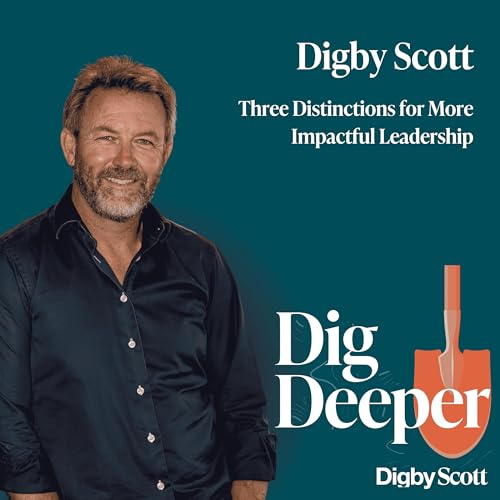
  • 45. Three Leadership Distinctions That Matter: Curiosity vs. Inquisitiveness, Knowledge vs. Wisdom, and Heroing vs. Hosting
    Nov 10 2025

    What if the gap between being curious and creating real change is just one small action?

    And what if the leadership move you've relied on your whole career is actually limiting your impact?

    This short episode cuts through the noise to explore three powerful distinctions that can transform how you lead. These aren't abstract theories. They're practical frameworks that help you navigate the messy, complex situations leaders face every day.

    You'll discover:

    • Why curiosity by itself isn't enough, and the one action that turns wondering into wisdom
    • The crucial difference between knowing what to do and understanding when to do it (and when not to)
    • How shifting from hero to host leadership creates sustainable impact and brings out the best in your team
    • Why heroing might feel productive while hosting builds resilience, innovation, and genuine engagement

    This is a bite-sized episode designed for leaders who want practical insights they can apply immediately. Pick one distinction, experiment with it, and notice what shifts.

    Whether you're leading a team meeting, navigating uncertainty, or simply wanting to deepen your leadership practice, these three distinctions offer a fresh lens on what makes leadership truly impactful.

    Check out my services and offerings https://www.digbyscott.com/

    Subscribe to my newsletter https://www.digbyscott.com/subscribe

    Follow me on LinkedIn https://www.linkedin.com/in/digbyscott/

    Show More Show Less
    3 mins