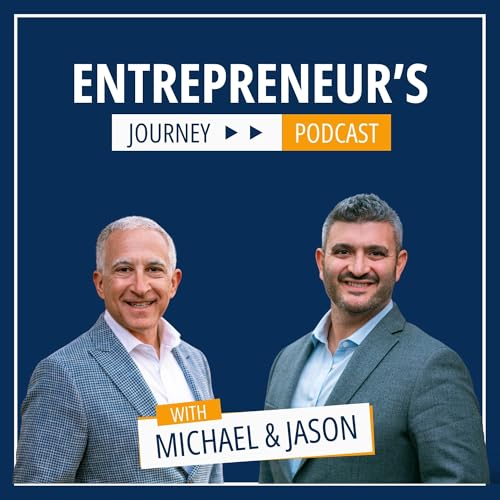
Entrepreneur's Journey cover art

Entrepreneur's Journey

Entrepreneur's Journey

Written by: HFM Investment Advisors LLC
Listen for free

Welcome to the Entrepreneur's Journey where Michael Pallozzi leads discussions with successful entrepreneurs to learn about their journey of starting, building, and eventually selling their business or transitioning it to the next generation. The goal is to allow you to learn from their knowledge, experience, and wisdom, as you pursue that in your own business. Michael Pallozzi is the President of HFM Investment Advisors, LLC and brings over 30 years of experience working with business owners to organize and manage their business and personal financial plans to help them define and realize their personal version of success in their lives and businesses.Copyright 2026 HFM Investment Advisors, LLC Careers Economics Leadership Management Management & Leadership Personal Success
Episodes
  • How Business Owners Can Maximize Value Before an Exit
    Oct 8 2026
    Welcome back to The Entrepreneur’s Journey. In this episode, Jason Gabrieli is joined by Anthony Hauser of Guaranteed Exit Partners to discuss how business owners in the skilled trades and home services can prepare for and maximize the value of a future sale. Drawing on his experience in investment banking and private equity, Anthony explains what buyers look for, what can derail a deal, and why creating competition among buyers can strengthen an owner’s position. They also cover practical steps owners can take before an exit, from reducing owner dependency and improving financial systems to addressing labor structure and understanding current M&A market trends.Tune into this episode to also learn:● [00:01:25] Anthony’s background at J.P. Morgan, GenStar Capital, and M South Equity Partners, and his experience buying, growing, and selling skilled-trade businesses.● [00:04:55] Why private equity buyers say no to most deals and the value of understanding the factors that drive investment decisions.● [00:07:18] The information advantage frequent private equity buyers have over an owner who may sell a business only once.● [00:08:44] How Guaranteed Exit Partners uses a network of roughly 150 buyers to create competition without charging sellers a traditional sell-side fee.● [00:12:54] Why owners receiving unsolicited offers should generally consider testing the broader market before accepting.● [00:14:46] The difference between helping an owner who is ready to sell today and helping one prepare over the next 12 to 24 months.● [00:17:58] Operational changes that can improve exit value, including reducing equipment costs, implementing ERP systems, and developing a management bench.● [00:21:49] How owners can prioritize pre-exit investments based on their expected return and impact on valuation.● [00:23:38] Why converting contract labor to W-2 employees can reduce perceived buyer risk in certain industries.● [00:26:35] How revenue mix, recurring maintenance contracts, and other business characteristics can influence valuation multiples.● [00:27:46] Anthony’s view of the 2026 M&A environment and why softer operating performance can sometimes increase acquisition activity among private equity-backed platforms.● [00:30:00] The consolidation of private equity-backed skilled-trade platforms and why the number of competing buyers could decline over time.● [00:33:00] Balancing an owner’s personal timing with business performance and broader market conditions when deciding when to sell.● [00:35:45] Anthony’s advice for owners considering an exit within the next three years: determine what they need financially, then build a plan for getting the business there.● [00:37:46] Why owners should not be afraid to begin conversations with financial, accounting, and M&A professionals well before they are committed to selling.3 Things To RememberPreparing a business for sale can also make it a stronger, less owner-dependent, and more valuable company while you continue to own it.A competitive process can help establish the true market value of a business rather than relying solely on an unsolicited offer from a single buyer.Owners considering an exit should understand both the financial outcome they need personally and the specific business improvements buyers will value before setting a timetable for a saleUseful LinksConnect with Dan Antonelli: LinkedIn | https://www.kickcharge.com/ Connect with Jason Gabrieli: LinkedInEditing and post-production work for this episode was provided by The Podcast Consultant (https://thepodcastconsultant.com)Like what you’ve heard…Subscribe to our BuiltWealth™ Newsletter HEREOr schedule a call with us HERE
    Show More Show Less
    39 mins
  • Becoming Five-Mile Famous: How Better Branding Drives Growth
    Sep 24 2026

    Welcome back to The Entrepreneur’s Journey. In this episode, Michael Pallozzi is joined by Dan Antonelli, founder and CEO of KickCharge Creative, to discuss how strong branding can help home service and trades businesses grow. Dan shares how his career began with pinstriping and hand lettering as a teenager and how that passion developed into a nationally recognized branding agency. They examine the psychology behind memorable brands, the importance of vehicle design and community visibility, and how branding can influence customer acquisition costs, average tickets, booking rates, and company value. Dan also explains why business owners preparing for growth or an eventual exit should consider whether their brand accurately reflects the company they have built.

    In This Episode, You’ll Learn:
    • Why memorable branding can reduce a contractor’s dependence on paid advertising.
    • How color, vehicle design, and community visibility can help a home service company stand apart from competitors.
    • Why booking rates, close rates, average tickets, and customer acquisition costs are connected to an overall marketing strategy.
    • How a strong brand can support business growth and help prepare a company for a potential future sale.

    What we discussed:

    ● [00:01:54] How Dan’s interest in automotive art, lettering, and pinstriping as a teenager became the foundation for his career.

    ● [00:03:26] Why maintaining a high standard of work—and refusing to settle for “good enough”—became central to KickCharge Creative’s culture.

    ● [00:07:48] The challenges of scaling a creative company and finding talented people who share the same commitment to quality.

    ● [00:09:46] How billboard principles, consumer psychology, legibility, color, and visual hierarchy influence effective vehicle branding.

    ● [00:14:27] Why memorable branding can help contractors build trust before a salesperson or technician ever arrives at a customer’s home.

    ● [00:15:12] How market research, distinctive colors, and a clear brand story can separate similar contractors operating in neighboring markets.

    ● [00:19:24] Why growth strategies should consider booking rates, close rates, average tickets, customer acquisition costs, and sales performance—not simply lead volume.

    ● [00:23:46] How rebranding supported the growth of companies such as Munz Roofing and A1 Garage Door Service.

    ● [00:28:03] Why a well-researched brand can have a long shelf life without requiring frequent redesigns.

    ● [00:29:42] Why high advertising spend can sometimes indicate that a company’s brand lacks recognition in the community.

    ● [00:33:19] How Dan defines future success through the number of businesses and people his work can positively impact.

    ● [00:34:13] The advice Dan would give his 15-year-old self about persistence, passion, and building a career around work he genuinely enjoys.

    3 Things To Remember

    1. A memorable brand can help a trades business become better known in its local market, strengthen customer recall, and reduce dependence on paid advertising.
    2. Marketing results should not be evaluated in isolation; booking rates, close rates, average tickets, follow-up, and sales execution all affect how much value a company receives from its leads.
    3. A company’s brand should accurately represent the quality of the business today while also supporting where the owner wants the company to go in the future.

    Useful Links

    Connect with Dan Antonelli: LinkedIn | https://www.kickcharge.com/

    Connect with Michael Pallozzi: LinkedIn

    Editing and post-production work for this episode was provided by The Podcast Consultant (https://thepodcastconsultant.com)

    Like what you’ve heard…

    Subscribe to our BuiltWealth™ Newsletter HERE

    Show More Show Less
    37 mins
  • Selling on Your Terms: How ESOPs Can Preserve Legacy and Reward Employees
    Sep 10 2026
    Welcome back to The Entrepreneur’s Journey. In this episode, Jason Gabrieli is joined by Vince Capone, Senior Vice President with SES ESOP Strategies, and Sean Matthew, shareholder at Stevens & Lee, to discuss employee stock ownership plans, or ESOPs, as an alternative exit strategy for business owners. They explain how ESOP transactions work, how they are financed, and why they can help owners receive fair market value while preserving company culture and creating wealth-building opportunities for employees. The conversation also covers tax advantages, seller financing, valuation, employee engagement, and how ESOPs compare with private equity and strategic buyers.Tune into this episode to also learn:● How an ESOP allows business owners to sell some or all of their company while maintaining greater control over the transition.● How ESOP transactions are financed through third-party debt and seller financing.● Why employee ownership can create stronger alignment, retention, and long-term wealth-building opportunities for employees.● How ESOP valuations and tax advantages can compare with other exit options such as private equity or strategic acquisitions.What we discussed● [00:02:11] Vince explains how SES ESOP Strategies helps middle-market companies plan, structure, finance, and implement ESOP transactions.● [00:03:13] Sean describes the legal process behind an ESOP transaction and the regulatory requirements that come with employee stock ownership plans.● [00:04:51] Vince explains the different roles an ESOP can play as a business succession tool, corporate finance tool, and wealth creation tool for employees.● [00:06:40] Sean walks through the basic ESOP transaction process, from determining fair market value and owner liquidity needs to selecting a trustee and negotiating the transaction.● [00:10:47] Vince explains how employees receive shares over time and how an independently appraised stock price can help employees think more like business owners.● [00:12:08] Sean discusses how communication, financial transparency, and an ownership culture can help companies make the most of employee ownership.● [00:13:44] Vince explains how an ESOP transaction analysis models proceeds to the seller, company cash flow, debt sustainability, and potential employee benefits.● [00:15:00] Vince breaks down how ESOP transactions are commonly financed through bank debt and seller financing, including the potential role of warrants.● [00:19:24] Vince explains that an ESOP cannot pay more than fair market value but can pay fair market value, and compares that with strategic and financial buyers.● [00:20:30] Vince discusses potential capital gains tax deferral when qualifying C-Corporation stock is sold to an ESOP and proceeds are placed into qualified replacement property.● [00:22:09] Vince addresses the misconception that selling to an ESOP necessarily means accepting a discounted valuation.● [00:23:10] Sean explains that ESOPs can be viable for a broader range of companies than many owners assume, including some businesses with approximately $1 million of EBITDA and around 20 employees.● [00:26:21] Jason compares the structure of an ESOP sale with private equity transactions, noting that many traditional deals also involve holdbacks, earnouts, or continued owner involvement.● [00:28:41] Sean discusses the evolving employee ownership market and how new capital sources can create additional options for owners with shorter exit timelines.● [00:29:24] Vince emphasizes the importance of considering every available exit option before making what may be the largest financial transaction of a business owner’s life.3 Things To RememberAn ESOP can provide business owners with a flexible succession option that allows them to sell some or all of their company while helping preserve the company’s identity, culture, and operations.Employees generally do not purchase the company stock out of pocket; shares are allocated to them over time as part of the ESOP benefit, creating an opportunity for long-term wealth creation.Business owners evaluating an exit should compare the total economics of each option, including valuation, taxes, financing, continued involvement, and control over the transition—not simply the headline sale price.Useful LinksLike what you’ve heard…Learn more about HFM HERE:https://hfmadvisors.com/working-with-hfmSchedule time to speak with us HERE:https://calendly.com/builtwealth-hfmadvisors/60minEditing and post-production work for this episode was provided by The Podcast Consultant (https://thepodcastconsultant.com)
    Show More Show Less
    33 mins
adbl_web_anon_alc_button_suppression_t1
No reviews yet