

Season's Savings | ₹5/mo for 3 months
₹199/month after first 3 months. Renews automatically. Terms apply.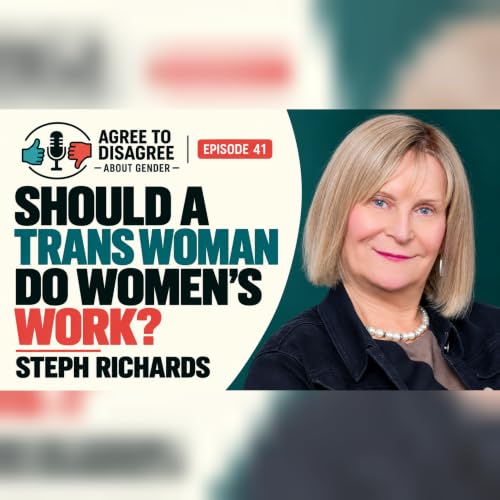
Episode 41 - Should A Trans Women Do Woman's Work - Steph Richards
Failed to add items
Add to cart failed.
Add to wishlist failed.
Remove from wishlist failed.
Follow podcast failed
Unfollow podcast failed

Episode 41 - Should A Trans Women Do Woman's Work - Steph Richards
-
Narrated by:
-
Written by:
This week, we are joined by Steph Richards, a trans woman in her 70s who is the founder and chair of Translucent UK, a trans-led UK advocacy and human rights organization whose mission is to advance the visibility, social acceptance, legal recognition and healthcare of transgender and gender-diverse people.
Through this organization recently has been focused on preserving the accommodations which trans people in the UK had previously enjoyed prior to the UK Supreme Court ruling which ruled that trans women are considered to be men in the application of the 2010 Equality Act, and on the implementation of the law regarding public sex-segregated spaces and services. She has become one of the more recognizable faces of trans advocacy in the UK, and has become a frequent target of criticism and vilification from gender critical advocates and the lay public She has also been extensively involved in women's health advocacy, and had previously served as head of Endometriosis South Coast UK, and prior to that had roles with other women's and children's health focused charities.
Earlier, this year, she " faced public and poltiical criticism when she was appointed as a parliamentary liasion for Endometriosis South Coast, a non-public facing position. Suella Braverman, a prominent Reform UK Member of parliament, went as far as to call her appointment to this position "insulting and inappropriate", essentially forcing her to resign from this position. In spite of this, Richards remains a steadfast commitment to her cause, speaking publicly in defense of her positions in the mainstream media and on podcasts like our own
In this episode, we discuss Richards's personal journey, her advocacy for trans people, and on the ethics and appropriateness of trans women being intimately involved in work involving conditions they cannot experience, and on one it mean to represent one's self as a woman's advocate as someone born male. We also discuss the health system implications of the UKSC ruling, and her concerns about how this will negatively impact the health and dignity of trans people seeking medical care in the UK.