Season's Savings | ₹5/mo for 3 months

₹199/month after first 3 months. Renews automatically. Terms apply.
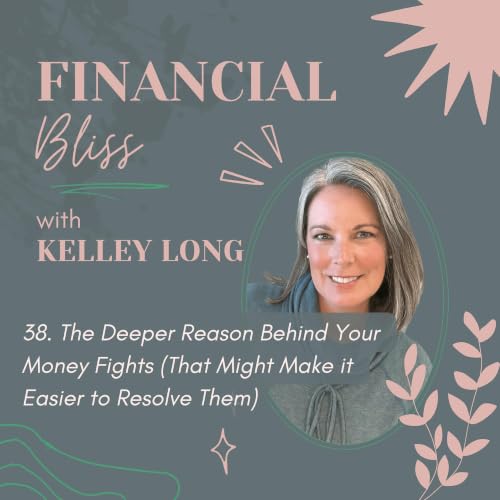
Financial Bliss with Kelley Long cover art

Financial Bliss with Kelley Long

Financial Bliss with Kelley Long

Written by: Kelley C. Long CFP® CPA/PFS
Listen for free

About this listen
Achieving financial bliss goes beyond financial planning knowledge and strategies. It starts with getting to the root cause of WHY you don't behave with money in a way that supports your bigger dreams and goals. Author of the book "But Who Will Take Care of You When You're Old? Financial Planning for People Without Kids," Kelley C. Long, CFP®, CPA/PFS is a financial coach who uses her decades of experience and work with over 3,000 individuals and couples to break down the psychological and practical barriers that get in the way of making the most of your money.Kelley C. Long, CFP®, CPA/PFS Economics Personal Finance
Episodes
  • The Deeper Reason Behind Your Money Fights (That Might Make It Easier to Resolve Them) | E38
    Nov 10 2026

    Kelley sits down with Emily Bouchard, co-author of The Little Book of Trust and Money to explore one of the most overlooked sources of financial conflict in relationships: the breakdown of trust that often hides beneath arguments about money. Drawing on Emily's decades of experience helping families navigate wealth and relationships, they unpack the four essential elements of trust: care, sincerity, reliability, and competence. Kelley and Emily explain why disagreements about spending, budgeting, and financial responsibilities are rarely just about the numbers, and how identifying the specific element of trust that's missing can transform an argument into a productive conversation. Through examples of couples struggling with financial expectations, missed commitments, and unequal financial knowledge, they show how partners can build stronger relationships by developing skills together rather than assigning blame. They also discuss the importance of financial transparency before marriage, the risks of undisclosed debts and financial problems, and why vulnerability can actually strengthen trust. If money conversations have become a recurring source of tension in your relationship, this episode offers a practical framework for understanding what's really going wrong and how to work together to repair it.


    Key Takeaways:

    • Trust involves making something valuable to you vulnerable to another person's actions, which is why financial disagreements can feel so personal.

    • The four essential elements of trust are care, sincerity, reliability, and competence, and each plays a distinct role in financial relationships.

    • A single missed financial commitment may represent an isolated reliability problem, while repeated failures can raise additional questions about sincerity, care, or competence.

    • Anxiety can influence financial behaviors, including overspending and avoidance, making it important to understand the emotional motivations behind money decisions.

    • Vulnerability can increase trust when someone openly acknowledges financial difficulties and demonstrates a willingness to address them.

    • Healthy financial relationships require more than technical money-management skills; they depend on communication, honesty, emotional awareness, and a shared commitment to maintaining trust.


    Key Timestamps:

    (03:05) - How Money Arguments Reveal Deeper Trust Issues

    (05:41) - The Four Elements of Trust

    (07:03) - Financial Competence and Traditional Gender Roles

    (12:15) - Repairing Breakdowns in Trust

    (14:32) - The Importance of Financial Transparency Before Marriage


    Key Topics Discussed:

    Kelley Long, Financial Bliss, Money Mindset, Financial Psychology, Money Psychology, Behavioral Finance, Financial Anxiety, Money Stress, Wealth Mindset, Healthy Relationship With Money, Financial Habits, Money Beliefs, Financial Decision Making, Spending Habits, Saving Habits, Investing Psychology, Financial Confidence, Financial Wellness, Wealth Building, Personal Finance, Financial Planning, Retirement Planning, Financial Independence, Financial Goals, Money and Happiness, Money and Relationships, Scarcity Mindset, Abundance Mindset, Fear of Spending, Fear of Investing, Financial Avoidance, Lifestyle Inflation, Financial Freedom, Values-Based Financial Planning


    More of Financial Bliss:

    Get Your Copy of My Book: http://financialblisscoach.com/book

    Follow on Instagram: http://instagram.com/financialblisscoach


    More on Emily Bouchard:

    https://trustmoneyfamilies.com/

    https://emilybouchard.com/

    Show More Show Less
    20 mins
  • The Difference Between Being Prepared and Just Being Paranoid - E37
    Oct 20 2026

    Kelley explores how to prepare financially and emotionally for climate uncertainty without allowing fear, doomscrolling, or an obsession with control to take over. Using forecasts of unusually disruptive weather as a starting point, she argues that genuine preparedness is not about predicting every possible disaster or buying every emergency product—it is about strengthening the financial and psychological resilience that allows you to respond when circumstances change. Kelley shares practical strategies for building that resilience, including protecting your cash reserves, understanding what your insurance actually covers, making flexible travel plans, maintaining reasonable emergency supplies, and resisting the temptation to overspend in the name of preparedness. She also examines the mental side of uncertainty, explaining how algorithms can amplify frightening content, how perfectionism can become a response to feeling powerless, and why deliberately managing what receives your attention can help prevent anxiety from spiraling. Drawing on her own experience learning to release her attachment to plans going exactly as expected, Kelley makes the case that flexibility itself is a skill that can be practiced through everyday disruptions before a genuine crisis arrives. Ultimately, she encourages listeners to replace rumination with practical action, prepare for what they reasonably can, and build confidence from the knowledge that resilience is not the ability to prevent difficult things from happening—it is the ability to adapt, make informed decisions, and keep moving when they do.


    Key Takeaways:

    • Financial preparedness and emotional resilience are closely connected when dealing with uncertainty.

    • Focus your attention on what you can control rather than exhausting yourself trying to manage circumstances you cannot.

    • Building or protecting an emergency reserve can reduce both the financial and emotional stress associated with an unexpected event.

    • Travel insurance can help in some circumstances, but it should not automatically be assumed to cover every weather-related disruption.

    • No amount of financial planning can completely eliminate uncertainty from life.

    • The goal of preparedness is not to guarantee that nothing bad happens; it is to have enough financial resources, flexibility, and resilience to respond effectively when something does.


    Key Timestamps:

    (02:06) – Self-Awareness, Control, and the Algorithm

    (09:39) – #1: Be Prepared, but Don’t Go Overboard

    (11:33) – #2: Build Up or Protect Your Cash Reserve

    (12:50) – #3: Check Your Insurance

    (14:26) – #4: Be Mindful of Your Travel Plans

    (16:06) – #5: Be Flexible

    (22:58) – #6: Foster Your Confidence and Resilience


    Key Topics Discussed:

    Kelley Long, Financial Bliss, Money Mindset, Financial Psychology, Money Psychology, Behavioral Finance, Financial Anxiety, Money Stress, Wealth Mindset, Healthy Relationship With Money, Financial Habits, Money Beliefs, Financial Decision Making, Spending Habits, Saving Habits, Investing Psychology, Financial Confidence, Financial Wellness, Wealth Building, Personal Finance, Financial Planning, Retirement Planning, Financial Independence, Financial Goals, Money and Happiness, Money and Relationships, Scarcity Mindset, Abundance Mindset, Fear of Spending, Fear of Investing, Financial Avoidance, Lifestyle Inflation, Financial Freedom, Values-Based Financial Planning


    More of Financial Bliss:

    Get Your Copy of My Book: https://www.google.com/url?q=http://financialblisscoach.com/book&sa=D&source=docs&ust=1787278536772124&usg=AOvVaw3Vv2EfFMi0OktlKwJf2C9T

    Show More Show Less
    25 mins
  • Are You Waiting for the “Perfect” Time to Live? l E36
    Sep 15 2026

    What’s keeping you from making the changes you know you need to make? The idea of a “growth edge” describes that uncomfortable space where fear, uncertainty, or perfectionism can keep you stuck—even when you know what you want is on the other side. Growth looks different for everyone, and what feels easy to one person can feel genuinely intimidating to another. The same idea applies to money. The best financial decision isn’t always the one that looks optimal on paper. Sometimes, the better choice is the one that supports the life you actually want—even if it isn’t technically perfect. Letting go of the pressure to “do it right” can create the freedom to take action, embrace imperfection, and move toward what matters most. If you’ve been waiting for the perfect time, the perfect plan, or the confidence to finally make a change, there may be a better way to think about what comes next.


    Key Takeaways:

    • A growth edge is the point where you begin moving beyond your familiar comfort zone toward something you know you want or need to change.

    • Growth edges are highly individual; what feels effortless to one person can be deeply uncomfortable for someone else.

    • Self-awareness means distinguishing between “I can't” and “I am not choosing to prioritize this right now.”

    • The best way to avoid unwanted advice is sometimes to clearly own a choice rather than frame it as an inability or external constraint.

    • Growth often involves consciously choosing which responsibilities you are willing to take on—and which ones you are not.

    • Spending more, paying more taxes, or accepting a less-than-optimal financial outcome is not necessarily a mistake when it is an informed choice in service of a person's goals.


    Key Timestamps:

    (00:00) – Reintroduction

    (03:36) – Stepping Out

    (07:00) – Commitment and Consistency

    (08:54) – Growing the Podcast

    (13:04) – Podcasting More Frequently

    (14:58) – Selling the Book

    (19:57) – Freedom and Choice

    (22:27) – Change One Thing


    Key Topics Discussed:

    Kelley Long, Financial Bliss, Money Mindset, Financial Psychology, Money Psychology, Behavioral Finance, Financial Anxiety, Money Stress, Wealth Mindset, Healthy Relationship With Money, Financial Habits, Money Beliefs, Financial Decision Making, Spending Habits, Saving Habits, Investing Psychology, Financial Confidence, Financial Wellness, Wealth Building, Personal Finance, Financial Planning, Retirement Planning, Financial Independence, Financial Goals, Money and Happiness, Money and Relationships, Scarcity Mindset, Abundance Mindset, Fear of Spending, Fear of Investing, Financial Avoidance, Lifestyle Inflation, Financial Freedom, Values-Based Financial Planning


    More of Financial Bliss:

    Get Your Copy of My Book: https://www.google.com/url?q=http://financialblisscoach.com/book&sa=D&source=docs&ust=1787278536772124&usg=AOvVaw3Vv2EfFMi0OktlKwJf2C9T

    Show More Show Less
    24 mins
adbl_web_anon_alc_button_suppression_t1
No reviews yet