Foreign Countries cover art

Foreign Countries

Foreign Countries

Written by: Foreign Countries
Listen for free

About this listen

Conversations in Archaeology patron.podbean.com/ForeignCountriesCopyright 2020 All rights reserved. Science World
Episodes
  • 5.2 Archaeology of Later Prehistoric Europe: Cultural Transformations in Neolithic Central Europe
    Oct 5 2021

    Support future seasons of the show: https://patron.podbean.com/ForeignCountries

    Buy Foreign Countries a coffee:

    https://ko-fi.com/foreigncountriespodcast

    https://www.paypal.com/donate?hosted_button_id=9G7GV9X432PN6


    Dr.. Dr. Nils Müller-Scheeßel, Institut für Ur- und Frühgeschichte, Christian-Albrechts-Universität zu Kiel

    https://www.sfb1266.uni-kiel.de/de/mitglieder/copy_of_mueller


    Publication:

    Nils Müller-Scheeßel, Zuzana Hukeľová, John Meadows, Ivan Cheben, Johannes Müller & Martin Furholt. 2021. “New burial rites at the end of the Linearbandkeramik in south-west Slovakia” in Antiquity Vol. 95 (379): 65–84.

    The recent discovery of several late Linearbandkeramik (LBK) sites in Central Europe, including Vráble in south-west Slovakia, has revealed evidence for increasing diversity in Neolithic mortuary practices, which may reflect inter-community war and sociopolitical crisis at the end of the LBK. Here, the authors combine osteological and radiocarbon analyses of inhumations from Vráble. Rather than a straightforward sign of inter-community conflict and war, this development reflects a culmination of internal conflict and a diversification in the ritual treatment of human bodies. The emerging variability in LBK methods of manipulating and depositing dead bodies can be interpreted as an experimental approach in how to negotiate social conflicts and community boundaries.


    Dr. Ana Grabundžija, Institute for Prehistoric Archaeology, Free University of Berlin, Germany.

    https://www.researchgate.net/profile/Ana-Grabundzija 


    Publication:

    Ana Grabundžija, Helmut Schlichtherle, Urs Leuzinger, Wolfram Schier & Sabine Karg. 2021. “The interaction of distant technologies: bridging Central Europe using a techno-typological comparison of spindle whorls” in Antiquity Vol. 95 (381): 627–647.

    The study of prehistoric textile production requires the excavation of sites with exceptional organic preservation. Here, the authors focus on thread production using evidence from two fourth-millennium BC pre-Alpine wetland sites: Arbon-Bleiche 3 in Switzerland and Bad Buchau-Torwiesen II in southern Germany. A comparison of the spindle whorls from these two settlements with a contemporaneous East-Central European dataset suggests that multiple culture-historical groups with distinct technological signatures inhabited Neolithic Central Europe. Furthermore, the spatial distribution of conical spindle whorls within the pre-Alpine settlements suggests the immigration of both people and technology from the east, thereby illuminating the wider themes of mobility and innovation in prehistoric Europe.


    This is a podcast about new and innovative research in archaeology.

    Each episode I talk with pioneering and influential archaeologists about their journal papers, books and research projects.

    Season 1 is all about the latest research into the Archaeology of the Roman West.

    Season 2 is on Innovative Research in Australia.

    Season 3 is on Early Medieval Europe.

    Season 4 is on the Earliest Peopling of North America. 

    Future Seasons:  Well, I'm open to suggestions!  

    So, if you would like to hear  more, then you might like to become a Patron of the show. Just click the Patron button:

    https://patron.podbean.com/ForeignCountries

    Show More Show Less
    36 mins
  • 5.1 Archaeology of Later Prehistoric Europe: State Societies in Bronze Age Spain & Crete
    Sep 4 2021
    Support future seasons of the show: https://patron.podbean.com/ForeignCountries Buy Foreign Countries a coffee: https://ko-fi.com/foreigncountriespodcast https://www.paypal.com/donate?hosted_button_id=9G7GV9X432PN6   Dr.. Roberto Risch, Departament de Prehistòria, Universitat Autònoma de Barcelona. https://www.uab.cat/web/qui-som/roberto-risch/english-1345812342658.html  http://www.la-bastida.com/inicio/index.html   Publications: Vicente Lull, Cristina Rihuete-Herrada , Roberto Risch, Bárbara Bonora, Eva Celdrán-Beltrán, Maria Inés Fregeiro, Claudia Molero, Adrià Moreno, Camila Oliart, Carlos Velasco-Felipe , Lourdes Andúgar, Wolfgang Haak , Vanessa Villalba-Mouco & Rafael Micó. 2021. “Emblems and spaces of power during the Argaric Bronze Age at La Almoloya, Murcia”. Antiquity 2021 Vol. 95 (380): 329–348. The recent discovery of an exceptionally rich grave at La Almoloya in south-eastern Spain illuminates the political context of Early Bronze Age El Argar society. The quantity, variety and opulence of the grave goods emphasise the technological, economic and social dimensions of this unique culture. The assemblage includes politically and ideologically emblematic objects, among which a silver diadem stands out. Of equally exceptional character is the building under which the grave was found—possibly one of the first Bronze Age palaces identified in Western Europe. The architecture and artefacts from La Almoloya provide new insight into emblematic individuals and the exercise of power in societies of marked economic asymmetry.   Roberto Risch, Harald Meller, Selina Delgado-Raack, and Torsten Schunke. 2.21. “The Bornhöck Burial Mound and the Political Economy of an Únˇetice Ruler”, in S. Gimatzidis and R. Jung (eds.), The Critique of Archaeological Economy, Frontiers in Economic History, https://doi.org/10.1007/978-3-030-72539-6_6. Beyond the teleological meaning that the different state theories have attached to this historical category, most of them probably coincide in relating the appearance of the state to the existence of stratified or class societies, in which individuals and social groups can clearly be distinguished in terms of their asymmetric access to wealth and power.2 These privileges are warranted and legitimised in space and time through different mechanisms and institutions. Legally, this requires the imposition of some form of permanent, usually hereditary, property rights and the establishment of territorial limits, within which these privileges are imposed. The dynastic rule is another institution by which economic and political privileges are often fixed in time. Effectively, the enforcement of law and domination demands the existence of specific mechanisms of coercion and the concentration of means of violence in the hands of a dominant class. Apart from the violent imposition of privileges and rights, states always develop their own mechanism of psychological coercion, for example through rituals and imagery of violence, in order to give rise to individual fear and obedience, which form the subjective fabric of domination and hegemony. In general, the ideological and ceremonial paraphernalia of the state are essential to its legitimation.   Prof. Jan Driessen, UC Louvain. https://uclouvain.be/fr/repertoires/jan.driessen  https://www.researchgate.net/profile/Jan-Driessen-2/5 https://sarpedon.be/   Publications: Jan Driessen. 2021. "Revisiting the Minoan palaces: ritual commensality at Sissi". Antiquity 2021 Vol. 95 (381): 686–704. Scholars have long hypothesised that the central courts of the elaborate Minoan complexes of Crete (c. 1950–1450 BC) were used for ritualised, communal gatherings. New archaeological evidence from the court centre at the site of Sissi offers unique insights into the social practices, regional history and political organisation of this Bronze Age island civilisation. The remains of consumption rituals practised at Sissi’s central court, along with the absence of evidence for other specific functions, provide the basis for a more nuanced understanding of the role of different types of Minoan palace. Furthermore, deliberate incorporation of earlier ruins within the Sissi complex suggests that the social power of Minoan palaces drew, in part, on ancestral practices.     This is a podcast about new and innovative research in archaeology. Each episode I talk with pioneering and influential archaeologists about their journal papers, books and research projects. Season 1 is all about the latest research into the Archaeology of the Roman West. Season 2 is on Innovative Research in Australia. Season 3 is on Early Medieval Europe. Season 4 is on the Earliest Peopling of North America.  Future Seasons:  Well, I'm open to suggestions!   So, if you would like to hear  more, then you might like to become a Patron of the show. Just click the Patron button: https://patron.podbean.com/ForeignCountries
    Show More Show Less
    52 mins
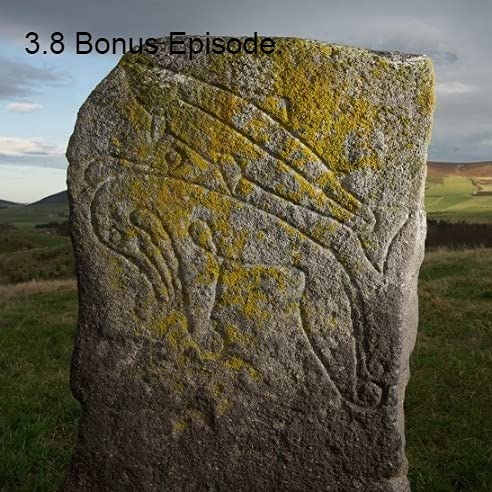
  • 3.8 Bonus Episode. Archaeology of Early Medieval Europe: A Powerful Place of Pictland!
    Jul 11 2021

    Support future seasons of the show: https://patron.podbean.com/ForeignCountries

    Buy Foreign Countries a coffee:

    https://ko-fi.com/foreigncountriespodcast

    https://www.paypal.com/donate?hosted_button_id=9G7GV9X432PN6


    Prof. Gordon Noble, University of Aberdeen.

    https://www.abdn.ac.uk/geosciences/people/profiles/g.noble#panel_research

    https://www.facebook.com/groups/417334508372858

    https://twitter.com/northernpicts

    @northernpicts


    Publications:

    GORDON NOBLE, MEGGEN GONDEK, EWAN CAMPBELL, NICHOLAS EVANS, DEREK HAMILTON & SIMON TAYLOR (2019) 'A Powerful Place of Pictland: Interdisciplinary Perspectives on a Power Centre of the 4th to 6th Centuries AD', Medieval Archaeology, 63:1, 56-94, DOI: 10.1080/00766097.2019.1588529

    To link to this article: https://doi.org/10.1080/00766097.2019.1588529


    OUR UNDERSTANDING of the nature of late and post-Roman central places of northern Britain has been hindered by the lack of historical sources and the limited scale of archaeological investigation. New work at Rhynie, Aberdeenshire, Scotland (NJ 49749 26345), has begun to redress this through extensive excavation and landscape survey. This has revealed a Pictish central place of the 4th to 6th centuries AD that has European connections through material culture, iconography and site character. In addition to reviewing the place-name and historical context, this article outlines preliminary reflections on five seasons of excavation and survey in the Rhynie landscape. The article also provides a detailed consideration of chronology, including radiocarbon dating and Bayesian statistical analysis. The results reveal the multi-faceted nature of a major, non-hillfort elite complex of Pictland that comprised a highstatus residence with cult dimensions, a major centre for production and exchange, and a contemporary cemetery. A series of sculptured stones stood in association with the settlement and cemetery and the iconography of the stones, along with the wider archaeological evidence, provides a rich dataset for a renewed consideration of the central places of early medieval northern Britain with broader implications for the nature of power and rulership in late and post-Roman Europe.


    Noble, G. 2020. 'The problem of the Picts: Searching for a lost people in northern Scotland', Current Archaeology 364 p28-35.

    The Picts are a fascinating but archaeologically elusive people who thrived in parts of Scotland in the 4th to 10th centuries AD. What has recent research added to this often obscure picture?


    This is a podcast about new and innovative research in archaeology.

    Each episode I talk with pioneering and influential archaeologists about their journal papers, books and research projects.

    Season 1 is all about the latest research into the Archaeology of the Roman West.

    Season 2 is on Innovative Research in Australia.

    Season 3 is on Early Medieval Europe.

    Future Seasons:  Well, I'm open to suggestions!  

    Medieval Europe, Osteoarchaeology, Mesoamerica, Pacific Archaeology, Prehistoric Burials, Post-Medieval, Scientific Techniques, South-east Asia, Bronze Age Monuments. You tell me!

    So, if you would like to hear  more, then you might like to become a Patron of the show. Just click the Patron button:

    https://patron.podbean.com/ForeignCountries

    Show More Show Less
    32 mins
No reviews yet