Episodes

  • 5.2 Archaeology of Later Prehistoric Europe: Cultural Transformations in Neolithic Central Europe
    Oct 5 2021

    Support future seasons of the show: https://patron.podbean.com/ForeignCountries

    Buy Foreign Countries a coffee:

    https://ko-fi.com/foreigncountriespodcast

    https://www.paypal.com/donate?hosted_button_id=9G7GV9X432PN6


    Dr.. Dr. Nils Müller-Scheeßel, Institut für Ur- und Frühgeschichte, Christian-Albrechts-Universität zu Kiel

    https://www.sfb1266.uni-kiel.de/de/mitglieder/copy_of_mueller


    Publication:

    Nils Müller-Scheeßel, Zuzana Hukeľová, John Meadows, Ivan Cheben, Johannes Müller & Martin Furholt. 2021. “New burial rites at the end of the Linearbandkeramik in south-west Slovakia” in Antiquity Vol. 95 (379): 65–84.

    The recent discovery of several late Linearbandkeramik (LBK) sites in Central Europe, including Vráble in south-west Slovakia, has revealed evidence for increasing diversity in Neolithic mortuary practices, which may reflect inter-community war and sociopolitical crisis at the end of the LBK. Here, the authors combine osteological and radiocarbon analyses of inhumations from Vráble. Rather than a straightforward sign of inter-community conflict and war, this development reflects a culmination of internal conflict and a diversification in the ritual treatment of human bodies. The emerging variability in LBK methods of manipulating and depositing dead bodies can be interpreted as an experimental approach in how to negotiate social conflicts and community boundaries.


    Dr. Ana Grabundžija, Institute for Prehistoric Archaeology, Free University of Berlin, Germany.

    https://www.researchgate.net/profile/Ana-Grabundzija 


    Publication:

    Ana Grabundžija, Helmut Schlichtherle, Urs Leuzinger, Wolfram Schier & Sabine Karg. 2021. “The interaction of distant technologies: bridging Central Europe using a techno-typological comparison of spindle whorls” in Antiquity Vol. 95 (381): 627–647.

    The study of prehistoric textile production requires the excavation of sites with exceptional organic preservation. Here, the authors focus on thread production using evidence from two fourth-millennium BC pre-Alpine wetland sites: Arbon-Bleiche 3 in Switzerland and Bad Buchau-Torwiesen II in southern Germany. A comparison of the spindle whorls from these two settlements with a contemporaneous East-Central European dataset suggests that multiple culture-historical groups with distinct technological signatures inhabited Neolithic Central Europe. Furthermore, the spatial distribution of conical spindle whorls within the pre-Alpine settlements suggests the immigration of both people and technology from the east, thereby illuminating the wider themes of mobility and innovation in prehistoric Europe.


    This is a podcast about new and innovative research in archaeology.

    Each episode I talk with pioneering and influential archaeologists about their journal papers, books and research projects.

    Season 1 is all about the latest research into the Archaeology of the Roman West.

    Season 2 is on Innovative Research in Australia.

    Season 3 is on Early Medieval Europe.

    Season 4 is on the Earliest Peopling of North America. 

    Future Seasons:  Well, I'm open to suggestions!  

    So, if you would like to hear  more, then you might like to become a Patron of the show. Just click the Patron button:

    https://patron.podbean.com/ForeignCountries

    Show More Show Less
    36 mins
  • 5.1 Archaeology of Later Prehistoric Europe: State Societies in Bronze Age Spain & Crete
    Sep 4 2021
    Support future seasons of the show: https://patron.podbean.com/ForeignCountries Buy Foreign Countries a coffee: https://ko-fi.com/foreigncountriespodcast https://www.paypal.com/donate?hosted_button_id=9G7GV9X432PN6   Dr.. Roberto Risch, Departament de Prehistòria, Universitat Autònoma de Barcelona. https://www.uab.cat/web/qui-som/roberto-risch/english-1345812342658.html  http://www.la-bastida.com/inicio/index.html   Publications: Vicente Lull, Cristina Rihuete-Herrada , Roberto Risch, Bárbara Bonora, Eva Celdrán-Beltrán, Maria Inés Fregeiro, Claudia Molero, Adrià Moreno, Camila Oliart, Carlos Velasco-Felipe , Lourdes Andúgar, Wolfgang Haak , Vanessa Villalba-Mouco & Rafael Micó. 2021. “Emblems and spaces of power during the Argaric Bronze Age at La Almoloya, Murcia”. Antiquity 2021 Vol. 95 (380): 329–348. The recent discovery of an exceptionally rich grave at La Almoloya in south-eastern Spain illuminates the political context of Early Bronze Age El Argar society. The quantity, variety and opulence of the grave goods emphasise the technological, economic and social dimensions of this unique culture. The assemblage includes politically and ideologically emblematic objects, among which a silver diadem stands out. Of equally exceptional character is the building under which the grave was found—possibly one of the first Bronze Age palaces identified in Western Europe. The architecture and artefacts from La Almoloya provide new insight into emblematic individuals and the exercise of power in societies of marked economic asymmetry.   Roberto Risch, Harald Meller, Selina Delgado-Raack, and Torsten Schunke. 2.21. “The Bornhöck Burial Mound and the Political Economy of an Únˇetice Ruler”, in S. Gimatzidis and R. Jung (eds.), The Critique of Archaeological Economy, Frontiers in Economic History, https://doi.org/10.1007/978-3-030-72539-6_6. Beyond the teleological meaning that the different state theories have attached to this historical category, most of them probably coincide in relating the appearance of the state to the existence of stratified or class societies, in which individuals and social groups can clearly be distinguished in terms of their asymmetric access to wealth and power.2 These privileges are warranted and legitimised in space and time through different mechanisms and institutions. Legally, this requires the imposition of some form of permanent, usually hereditary, property rights and the establishment of territorial limits, within which these privileges are imposed. The dynastic rule is another institution by which economic and political privileges are often fixed in time. Effectively, the enforcement of law and domination demands the existence of specific mechanisms of coercion and the concentration of means of violence in the hands of a dominant class. Apart from the violent imposition of privileges and rights, states always develop their own mechanism of psychological coercion, for example through rituals and imagery of violence, in order to give rise to individual fear and obedience, which form the subjective fabric of domination and hegemony. In general, the ideological and ceremonial paraphernalia of the state are essential to its legitimation.   Prof. Jan Driessen, UC Louvain. https://uclouvain.be/fr/repertoires/jan.driessen  https://www.researchgate.net/profile/Jan-Driessen-2/5 https://sarpedon.be/   Publications: Jan Driessen. 2021. "Revisiting the Minoan palaces: ritual commensality at Sissi". Antiquity 2021 Vol. 95 (381): 686–704. Scholars have long hypothesised that the central courts of the elaborate Minoan complexes of Crete (c. 1950–1450 BC) were used for ritualised, communal gatherings. New archaeological evidence from the court centre at the site of Sissi offers unique insights into the social practices, regional history and political organisation of this Bronze Age island civilisation. The remains of consumption rituals practised at Sissi’s central court, along with the absence of evidence for other specific functions, provide the basis for a more nuanced understanding of the role of different types of Minoan palace. Furthermore, deliberate incorporation of earlier ruins within the Sissi complex suggests that the social power of Minoan palaces drew, in part, on ancestral practices.     This is a podcast about new and innovative research in archaeology. Each episode I talk with pioneering and influential archaeologists about their journal papers, books and research projects. Season 1 is all about the latest research into the Archaeology of the Roman West. Season 2 is on Innovative Research in Australia. Season 3 is on Early Medieval Europe. Season 4 is on the Earliest Peopling of North America.  Future Seasons:  Well, I'm open to suggestions!   So, if you would like to hear  more, then you might like to become a Patron of the show. Just click the Patron button: https://patron.podbean.com/ForeignCountries
    Show More Show Less
    52 mins
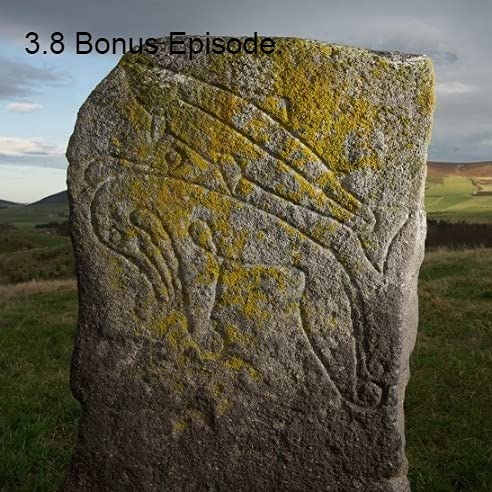
  • 3.8 Bonus Episode. Archaeology of Early Medieval Europe: A Powerful Place of Pictland!
    Jul 11 2021

    Support future seasons of the show: https://patron.podbean.com/ForeignCountries

    Buy Foreign Countries a coffee:

    https://ko-fi.com/foreigncountriespodcast

    https://www.paypal.com/donate?hosted_button_id=9G7GV9X432PN6


    Prof. Gordon Noble, University of Aberdeen.

    https://www.abdn.ac.uk/geosciences/people/profiles/g.noble#panel_research

    https://www.facebook.com/groups/417334508372858

    https://twitter.com/northernpicts

    @northernpicts


    Publications:

    GORDON NOBLE, MEGGEN GONDEK, EWAN CAMPBELL, NICHOLAS EVANS, DEREK HAMILTON & SIMON TAYLOR (2019) 'A Powerful Place of Pictland: Interdisciplinary Perspectives on a Power Centre of the 4th to 6th Centuries AD', Medieval Archaeology, 63:1, 56-94, DOI: 10.1080/00766097.2019.1588529

    To link to this article: https://doi.org/10.1080/00766097.2019.1588529


    OUR UNDERSTANDING of the nature of late and post-Roman central places of northern Britain has been hindered by the lack of historical sources and the limited scale of archaeological investigation. New work at Rhynie, Aberdeenshire, Scotland (NJ 49749 26345), has begun to redress this through extensive excavation and landscape survey. This has revealed a Pictish central place of the 4th to 6th centuries AD that has European connections through material culture, iconography and site character. In addition to reviewing the place-name and historical context, this article outlines preliminary reflections on five seasons of excavation and survey in the Rhynie landscape. The article also provides a detailed consideration of chronology, including radiocarbon dating and Bayesian statistical analysis. The results reveal the multi-faceted nature of a major, non-hillfort elite complex of Pictland that comprised a highstatus residence with cult dimensions, a major centre for production and exchange, and a contemporary cemetery. A series of sculptured stones stood in association with the settlement and cemetery and the iconography of the stones, along with the wider archaeological evidence, provides a rich dataset for a renewed consideration of the central places of early medieval northern Britain with broader implications for the nature of power and rulership in late and post-Roman Europe.


    Noble, G. 2020. 'The problem of the Picts: Searching for a lost people in northern Scotland', Current Archaeology 364 p28-35.

    The Picts are a fascinating but archaeologically elusive people who thrived in parts of Scotland in the 4th to 10th centuries AD. What has recent research added to this often obscure picture?


    This is a podcast about new and innovative research in archaeology.

    Each episode I talk with pioneering and influential archaeologists about their journal papers, books and research projects.

    Season 1 is all about the latest research into the Archaeology of the Roman West.

    Season 2 is on Innovative Research in Australia.

    Season 3 is on Early Medieval Europe.

    Future Seasons:  Well, I'm open to suggestions!  

    Medieval Europe, Osteoarchaeology, Mesoamerica, Pacific Archaeology, Prehistoric Burials, Post-Medieval, Scientific Techniques, South-east Asia, Bronze Age Monuments. You tell me!

    So, if you would like to hear  more, then you might like to become a Patron of the show. Just click the Patron button:

    https://patron.podbean.com/ForeignCountries

    Show More Show Less
    32 mins
  • 4.5 Latest Research on the Peopling of North America: Parsons Island and the Chesapeake Bay
    Jul 10 2021
    Support future seasons of the show: https://patron.podbean.com/ForeignCountries Buy Foreign Countries a coffee: https://ko-fi.com/foreigncountriespodcast https://www.paypal.com/donate?hosted_button_id=9G7GV9X432PN6   Dr. Darrin Lowery, Director of Chesapeake Watershed Archaeological Research Foundation, supported by the Maryland Historical Trust, the Smithsonian Institution. http://cwar.org/About/default.html https://si.academia.edu/DarrinLowery https://www.researchgate.net/profile/Darrin-Lowery   Publication: Lowery, D.L. 2021. Parsons Island, Maryland: Synthesis of Geoarchaeological Investigations, 2013-2020. Chesapeake Watershed Archaeological Research Foundation, the Maryland Historical Trust, the Smithsonian Institution. On May 20th, 2013, Dr. John Wah and myself visited Parsons Island, Maryland (see Figures 1.1 and 1.2). The expedition on that day represented my second excursion to Parsons in twenty-one years. My first visit to Parsons occurred in 1992 as part of a collective multi-year archaeological survey of the Kent Island area (see Lowery 1993), which was conducted for the Kent Island Heritage Society, the University of Delaware, and the Maryland Historical Trust. In 1992, Parsons Island encompassed 99-acres (see Figure 1.2) and when we re-visited the island in 2013, the island had eroded to ~78-acres. In 2019, the island had been reduced to ~71-acres and presently Parsons consists of ~69-acres. The perimeter of exposed shoreline also changed markedly during this period of time. In 1992, the island had 2.11 linear miles (3.4 km or 11,159 feet) of coastline and by 2019 the amount of coastline had been reduced to 1.65 linear miles (2.66 km or 8,716 feet). Over the twenty-seven-year period, the island has collectively lost about one-acre of land per year to coastal erosion. With the gradual reduction in linear miles of shoreline over this period, it is clear that the rate of annual land loss has actually increased in recent years. Notably, most of the land loss is focused along the island’s southwest margin.  Our re-visit to Parsons Island on May 20th, 2013 (see Figure 1.3), originated as a result of our late Pleistocene stratigraphic and geoarchaeological investigations conducted at nearby Miles Point, Talisman Farm, and Barnstable Hill (see Figure 1.4). The collective research conducted at Parsons Island over the succeeding seven years culminated into a better understanding of the Middle Atlantic’s Paleo-American archaeological record (see Figure 1.4), a higher-resolution evaluation of the region’s late Pleistocene upland stratigraphy, and a means to quantify some of the site formation processes along eroding coastal margins. This monograph synthesizes the results of these investigations. Regardless of the possible age of the Paleo-American record noted at Parsons Island, the primary objective has always been salvage. Some “academicians” and a few “cultural resource managers” view investigations at eroding coastal archaeological sites in the Chesapeake Bay region as being “biased” and “anecdotal” (see Custer 2018: 202). It should be obvious, the erosive effects by the estuarine water of the Chesapeake Bay are unbiased and these waters will indiscriminately destroy both historic sites, as well as prehistoric sites. The results of our collective investigation at Parsons Island also proves that if follow-up investigations are made at “untrustworthy” (Ibid) sites, “anecdotal” discoveries can make major contributions to the regional, as well as North America’s geoarchaeological record.  In 2019, the Chesapeake Watershed Archaeological Research foundation applied for a non-capital grant from the Maryland Historical Trust. The goal of the proposal was to synthesize all of the prior work at Parsons Island, document the island’s archaeological record, and conduct limited excavations inland of the shoreline at 18QU1047 to determine if any in-situ cultural deposits remained. Earlier work conducted by the Smithsonian Institution in 2017 had uncovered a small in-situ quartz flake and charcoal located two-meters beneath the ground surface and within a buried paleosol. Like several other radiometric ages on charcoal associated with lithic artifacts found in-situ and exposed along the eroding bank, the Smithsonian date was greater than 20,000 years old. Paleo-botanical remains from this surface are consistent with the presumed age and the OSL-ages on the overlying sediments indicate comparable estimates for the underlying buried surface.  This monograph, which was funded by the Maryland Historical Trust’s Historic Preservation Non-Capital Grant program, attempts to synthesize the collective analytical results conducted by various researchers. The monograph also shows that the discoveries at Parsons Island are not “anecdotal” (Ibid). The follow-up testing at 18QU1047 funded by the non-capital grant indicate additional in-situ archaeological remains occur ...
    Show More Show Less
    35 mins
  • 4.4 Latest Research on the Peopling of North America: Human Presence, Expansion, and Settlement in Florida over Four Millennia
    Jun 18 2021

    Support future seasons of the show: https://patron.podbean.com/ForeignCountries

    Buy Foreign Countries a coffee:

    https://ko-fi.com/foreigncountriespodcast

    https://www.paypal.com/donate?hosted_button_id=9G7GV9X432PN6


    Dr. Michael Faught, Vice President, Treasurer, Archaeological Research Cooperative Courtesy Appointments, University of Arizona and University of Florida 

    Senior Advisor SEARCH Inc.

    http://www.mfaught.org/

    https://www.researchgate.net/profile/Michael-Faught


    Dr. Charlotte D. Pevny, Project Manager, SEARCH Inc.

    https://www.searchinc.com/pages/staff-charlotte-d-pevny


    Publication:

    Michael K. Faught & Charlotte Donald Pevny 2019. 'Pre-Clovis to the Early Archaic: Human Presence, Expansion, and Settlement in Florida over Four Millennia', PALEOAMERICA 5(1) 73-87.

    In this article, we review evidence for the initial presence, later expansion, and subsequent settling in of first Floridians during times when climate change and sea level rise decreased the amount of habitable land. We present projectile-point and formal-tool sequences and estimated chronologies that describe Florida’s: (1) pre-Clovis presence (exploration); (2) Clovis presence focused on river channels, springs, chert resources, and possibly megafauna (colonization); (3) continuation and proliferation of Clovis-related, but post-megafauna late Paleoindian lanceolate point makers that remained focused on river channels, springs, and chert (expansion); (4) transition to side- and corner-notched points and a plethora of formal tools, along with significant population increase and landscape use occurring away from waterways (settlement); and (5) possible population decline or abandonment, or both, by 10,000 calendar years ago or soon thereafter.


    This is a podcast about new and innovative research in archaeology.

    Each episode I talk with pioneering and influential archaeologists about their journal papers, books and research projects.

    Season 1 is all about the latest research into the Archaeology of the Roman West.

    Season 2 is on Innovative Research in Australia.

    Season 3 is on the Archaeology of Early Medieval Europe.

    Season 4 is on Latest Research on the Peopling of North America.

    Future Seasons:  Well, I'm open to suggestions!  

    Medieval Europe, Osteoarchaeology, Mesoamerica, Pacific Archaeology, Prehistoric Burials, Post-Medieval, Scientific Techniques, South-east Asia, Bronze Age Monuments. You tell me!

    So, if you would like to hear season 5 and more, then you might like to become a Patron of the show. Just click the Patron button:

    https://patron.podbean.com/ForeignCountries

    Show More Show Less
    24 mins
  • 4.3 Latest Research on the Peopling of North America: The Timing & Effect of the Earliest Human Arrivals
    Jun 11 2021

    Support future seasons of the show: https://patron.podbean.com/ForeignCountries

    Buy Foreign Countries a coffee:

    https://ko-fi.com/foreigncountriespodcast

    https://www.paypal.com/donate?hosted_button_id=9G7GV9X432PN6


    Dr. Lorena Becerra-Valdivia, School of Archaeology, Oxford University

    https://www.arch.ox.ac.uk/people/dr-lorena-becerra-valdivia#/


    Professor Tom Higham, Director, Radiocarbon Accelerator Unit, School of Archaeology, Oxford University

    https://www.arch.ox.ac.uk/people/higham-tom#/


    Publications:

    Lorena Becerra-Valdivia & Thomas Higham 2020.  ‘The timing and effect of the earliest human arrivals in North America’, Nature 584.

    The peopling of the Americas marks a major expansion of humans across the planet. However, questions regarding the timing and mechanisms of this dispersal remain, and the previously accepted model (termed ‘Clovis-first’)—suggesting that the first inhabitants of the Americas were linked with the Clovis tradition, a complex marked by distinctive fluted lithic points1—has been effectively refuted. Here we analyse chronometric data from 42 North American and Beringian archaeological sites using a Bayesian age modelling approach, and use the resulting chronological framework to elucidate spatiotemporal patterns of human dispersal. We then integrate these patterns with the available genetic and climatic evidence. The data obtained show that humans were probably present before, during and immediately after the Last Glacial Maximum (about 26.5–19 thousand years ago)2,3 but that more widespread occupation began during a period of abrupt warming, Greenland Interstadial 1 (about 14.7–12.9 thousand years before ad 2000)4. We also identify the near-synchronous commencement of Beringian, Clovis and Western Stemmed cultural traditions, and an overlap of each with the last dates for the appearance of 18 now-extinct faunal genera. Our analysis suggests that the widespread expansion of humans through North America was a key factor in the extinction of large terrestrial mammals.


    Higham, T, Douka, K, Wood, R, Ramsey, CB, Brock, F, Basell, L, Camps, M, Arrizabalaga, A, Baena, J, Barroso-Ruíz, C, Bergman, C, Boitard, C, et al 2014. 'The timing and spatiotemporal patterning of Neanderthal disappearance', Nature: 512(7514) pp.306 - 309


    This is a podcast about new and innovative research in archaeology.

    Each episode I talk with pioneering and influential archaeologists about their journal papers, books and research projects.

    Season 1 is all about the latest research into the Archaeology of the Roman West.

    Season 2 is on Innovative Research in Australia.

    Season 3 is on the Archaeology of Early Medieval Europe.

    Season 4 is on Latest Research on the Peopling of North America.

    Future Seasons:  Well, I'm open to suggestions!  

    Medieval Europe, Osteoarchaeology, Mesoamerica, Pacific Archaeology, Prehistoric Burials, Post-Medieval, Scientific Techniques, South-east Asia, Bronze Age Monuments. You tell me!

    So, if you would like to hear season 5 and more, then you might like to become a Patron of the show. Just click the Patron button:

    https://patron.podbean.com/ForeignCountries

    Show More Show Less
    17 mins
  • 4.2 Latest Research on the Peopling of North America: Clovis Points & Social Life in the Glaciated North East
    May 14 2021

    Support future seasons of the show: https://patron.podbean.com/ForeignCountries

    Buy Foreign Countries a coffee:

    https://ko-fi.com/foreigncountriespodcast

    https://www.paypal.com/donate?hosted_button_id=9G7GV9X432PN6


    Emeritus Prof. Chris Ellis, Dept. of Anthropology, University of Western Ontario.

    https://anthropology.uwo.ca/people/faculty/chris_ellis.html

    Dr. Jonathan Lothrop, Curator of Archaeology, New York State Museum.

    http://www.nysm.nysed.gov/research-collections/archaeology/native-american-archaeology/dr-jonathan-lothrop


    Publication:

    Christopher J. Ellis and Jonathan C. Lothrop. 2019. "Early Fluted-biface Variation in Glaciated Northeastern North America", PaleoAmerica 5(2): 121-131.

    Most researchers argue that archaeological evidence for the Clovis technological complex, although documented across most of unglaciated North America, is absent in the glaciated Northeast, suggesting that early Paleoindian populations in the latter region were descendent from early Native American peoples associated with Clovis technology. If so, what are the earliest flutedbiface forms in glaciated northeastern North America? To refine developmental and relative chronological relationships of early Paleoindian fluted bifaces in the region, we examine fluted-biface-reduction sequences at the Rogers (Ontario) and West Athens Hill (WAH) (New York) sites, and (2) compare fluted-point samples from early Paleoindian sites in the Northeast and vicinity. For Rogers and WAH, our results document variable frequencies of overshot and overface flaking during fluted-point manufacture – features linked elsewhere to Clovis biface reduction. In addition, analyses identify several early Paleoindian fluted-point samples in the Northeast that bear similarities to Clovis points but differ from, and therefore likely predate Gainey and Gainey-related early Paleoindian point forms in the glaciated Northeast.


    This is a podcast about new and innovative research in archaeology.

    Each episode I talk with pioneering and influential archaeologists about their journal papers, books and research projects.

    Season 1 is all about the latest research into the Archaeology of the Roman West.

    Season 2 is on Innovative Research in Australia.

    Season 3 is on the Archaeology of Early Medieval Europe.

    Season 4 is on Latest Research on the Peopling of North America.

    Future Seasons:  Well, I'm open to suggestions!  

    Medieval Europe, Osteoarchaeology, Mesoamerica, Pacific Archaeology, Prehistoric Burials, Post-Medieval, Scientific Techniques, South-east Asia, Bronze Age Monuments. You tell me!

    So, if you would like to hear season 5 and more, then you might like to become a Patron of the show. Just click the Patron button:

    https://patron.podbean.com/ForeignCountries

    Show More Show Less
    36 mins
  • 4.1 Latest Research on the Peopling of North America: Fluted Points & Migrations in the Ice-Free Corridor, Canada.
    May 1 2021

    Support future seasons of the show: https://patron.podbean.com/ForeignCountries

    Buy Foreign Countries a coffee:

    https://ko-fi.com/foreigncountriespodcast

    https://www.paypal.com/donate?hosted_button_id=9G7GV9X432PN6


    Prof. Jack Ives, Dept. of Anthropology, University of Alberta.

    https://apps.ualberta.ca/directory/person/jives

    Dr. Gabriel Yanicki, Curator of Western Archaeology, Canadian Museum of History. 

    https://www.historymuseum.ca/learn/research/

    Assoc. Prof. Kisha Supernant, Dept. of Anthropology, University of Alberta.

    https://sites.ualberta.ca/~supernan/

    Courtney Lakevold, Archaeological Information Coordinator, Archaeological Survey, Historic Resources Management Branch, Alberta Culture and Tourism.

    https://ca.linkedin.com/in/courtney-lakevold-13330393


    Publications:

    John W. Ives, Gabriel Yanicki, Kisha Supernant & Courtney Lakevold (2019) Confluences: Fluted Points in the Ice-Free Corridor, PaleoAmerica, 5:2, 143-156, DOI: 10.1080/20555563.2019.1600136

    We undertake an expanded analysis of the Western Canadian Fluted Points database. Given clear evidence of biotic habitability along the entire Corridor by 13,000 years ago, fluted point spatial clusters likely reflect both Clovis contemporaneous and later fluted point instances. Points were overwhelmingly fashioned on local toolstones, featuring a bimodal length distribution (larger, relatively unaltered fluted points versus reworked, smaller fluted points at the end of their use life), mainly found in dispersed landscape settings rather than major kills or campsites. The temporal cline from older Clovis forms south of the ice masses to younger fluted points in Alaska suggests fluted point makers traversing the Corridor eventually met populations bearing eastern Beringian traditions. Corridor fluted point morphologies may indicate the degree to which diffusion or demic expansion mediated north-south interactions: deeper bases, parallel sides and multiple basal thinning flakes reflect intermediate forms similar to Younger Dryas-aged Alaskan fluted points.

    John W. (Jack) Ives. 2015. 'Kinship, Demography, and Paleoindian Modes of Colonization: Some Western Canadian Perspectives' in Michael David Frachetti & Robert N. Spengler III (eds.) Mobility and Ancient Society in Asia and the Americas: Proceedings of the Second International Conference on “Great Migrations” Held at Columbia University in December 1-2, 2011. Springer International Publishing Switzerland.

    Unlike many avenues of social science enquiry, the study of variability in human kinship has been almost uniquely the domain of anthropologists. Kinship provided core subject matter for more than a century of anthropological thought (Trautmann 2001 ), and until quite recently, important theoretical trends in anthropology were founded with signifi cant reference to kinship studies. Despite its centrality as anthropological subject matter, detecting organizing features connected with kinship in archaeological records or using kin structures in understanding the past have been subsidiary activities in anthropological archaeology.


    This is a podcast about new and innovative research in archaeology.

    Each episode I talk with pioneering and influential archaeologists about their journal papers, books and research projects.

    Season 1 is all about the latest research into the Archaeology of the Roman West.

    Season 2 is on Innovative Research in Australia.

    Season 3 is on the Archaeology of Early Medieval Europe.

    Season 4 is on Latest Research on the Peopling of North America.

    Future Seasons:  Well, I'm open to suggestions!  

    Medieval Europe, Osteoarchaeology, Mesoamerica, Pacific Archaeology, Prehistoric Burials, Post-Medieval, Scientific Techniques, South-east Asia, Bronze Age Monuments. You tell me!

    So, if you would like to hear season 5 and more, then you might like to become a Patron of the show. Just click the Patron button:

    https://patron.podbean.com/ForeignCountries

    Show More Show Less
    38 mins