Episodes

  • Carving Season · Paul Michael Merhige - The Jupiter Thanksgiving Shootings
    Nov 16 2026

    Thanksgiving night, 2009. Jupiter, Florida, at the very top of Palm Beach County. At six minutes past ten, a woman calls 911. She's just heard gunshots, about ten of them, and then people screaming. And somewhere in the middle of it, a woman's voice yelling three words: "Get the kids."


    Earlier that same evening, inside that house, a family had been singing around a piano. Grandparents and parents, aunts and uncles and cousins, and a little girl, not quite seven, who had recited a psalm for all of them.


    Every person in that house was family. Including the man with the gun.


    This is the story of that family: a grandmother who always showed up, twin sisters who sang, a little girl named Makayla who loved the piano, and the people who were left to carry on after that night. It's the story of the search that followed and the night it ended, of a court file that took two years to open, and of a decision that a grieving family couldn't agree on.


    Welcome to Carving Season: all November long, Forgotten True Crime is telling the stories of crimes that happened around Thanksgiving. So when you sit down with the family this year, consider this your friendly warning. Be careful what you say at dinner.


    Content note: this episode includes gun violence, the killing of a child, talk of suicide, and talk of mental illness. Some of the people in this story are still living. If you or someone you love is struggling, you can call or text 988, the Suicide and Crisis Lifeline, any time, day or night.


    ON THE BLOG: The court file from this case is at Section29.com, under The Jupiter Thanksgiving Shootings.


    SOURCES: The Palm Beach County court file, State of Florida v. Paul Michael Merhige, and the Jupiter Police Department's probable cause affidavit; Knight v. Merhige, Florida Fourth District Court of Appeal, 2014; the Florida Department of Corrections; The Palm Beach Post, through Newspapers.com; reporting from the Associated Press, CNN, HLN, Fox News, NBC 6 Miami, CBS Miami, WPBF, WPTV, WFLX and UPI. Photographs by Lynne Sladky and Rick Silva of the Associated Press, Taylor Jones, Richard Graulich, John Lantigua and Brandon Kruse of The Palm Beach Post, and family photographs shared through WPTV; other images credited on screen.


    HAVE A CASE? If there's a forgotten case you'd like me to dig into, reach out at Section29.com. I'm always looking for the next forgotten story.


    Forgotten True Crime is an independent podcast. One man doing the research, the writing, the recording and the editing. Narrated by me. AI used in post to improve the audio.


    MUSIC: Music by TrackTribe, copyright-free music for creators. TrackTribe is Mike Chiavaro, Gunnar Olsen, Otis McDonald, and Fred Beteille. https://www.tracktribe.com · https://www.instagram.com/tracktribemusic/


    FIND THE SHOW

    Blog: https://section29.com

    YouTube: https://www.youtube.com/@sect29

    Apple Podcasts: https://podcasts.apple.com/us/podcast/forgotten-true-crime/id1524457435

    All links: https://linktr.ee/forgottentruecrime


    Subscribe wherever you're listening so you know when the next one drops. And if this episode got you, leave a review and share it with somebody who loves true crime. For an independent show, that's worth more than you'd think.

    Show More Show Less
    52 mins
  • The Killing of John Gorrell, Part 2: A Roman Holiday
    Nov 14 2026

    February 1935. Pawnee, Oklahoma. The trial has been moved out of Tulsa, and the town fills up anyway: reporters, wire photographers, and a crowd that pushes through the courthouse doors to get a seat. At one table sits a federal judge and his son. Across from them sits a Tulsa dentist whose son has been dead for eleven weeks.


    When the state calls Dr. J. F. Gorrell to the stand, they ask him one question that matters. Is your son living or dead?


    Then the defense brings out a letter. Phil Kennamer takes the stand and tells the jury his side of what happened on Forest Boulevard, under oath, and says it came down to his life or John's. The trial turns into an argument over a dead boy's name, and over whether a judge's son can be treated just like any other citizen.


    This is the second and final part of the story, told through John's father. It follows the trial day by day and then keeps going: the grand jury, the appeals, the letters, and what became of the young crowd from the Quaker in the years after. It's built from the Tulsa front pages for trial week, the wire stories and photographs that carried it across the country, and the court's own record.


    Part 1, Keep Your Mouth Shut, comes first. If you haven't heard it, start there.


    Content note: this episode involves violence and the deaths of young men. If you or someone you love is struggling, you don't have to carry it alone. In the U.S., call or text 988, any time.


    ON THE BLOG: The trial-week front pages, the courtroom photographs and the court's opinion are all at Section29.com, under The Killing of John Gorrell.


    IF YOU KNOW SOMETHING: If your family knew the Gorrells, the Kennamers or the Wilcoxes, if you have photographs from the Pawnee County Courthouse in February 1935, or if you've ever come across newsreel footage of the trial, I'd love to hear from you. Reach out at Section29.com. And if you have a forgotten Oklahoma case you'd like me to dig into, send it along.


    Listening on the Forgotten True Crime feed? Okie Investigations is now home to every Oklahoma case we do. Find Okie Investigations wherever you're listening and subscribe, so you'll know when the next one drops.


    Okie Investigations, by Forgotten True Crime. Narrated by me. AI used in post to improve the audio.


    MUSIC: Music by TrackTribe, copyright-free music for creators. TrackTribe is Mike Chiavaro, Gunnar Olsen, Otis McDonald, and Fred Beteille. tracktribe.com


    FIND THE SHOW: Blog: Section29.com · YouTube: Forgotten True Crime · Facebook: Forgotten True Crime


    Subscribe wherever you're listening, and if this episode got you, leave a review and share it with somebody who loves true crime. For an independent show, that's worth more than you'd think.

    Show More Show Less
    1 hr and 18 mins
  • Carving Season · The Murder of Greg Nickell
    Nov 12 2026

    Thanksgiving weekend, 1972. Greg Nickell was 21, home in Vernal, Utah, after thirteen months in Vietnam. He'd broken a date that Saturday night so his sister's friend, visiting from Idaho, wouldn't be left out. After a dance, the two of them drove out to the scenic overlook on U.S. 40, west of town, to see the valley. A man came to the window and said he needed help.


    Greg said sure.


    By dawn on Sunday, an 18-year-old girl was running down the highway toward a farmhouse near Duchesne, on the far side of the Uinta Basin. What she told the sheriff that morning set off what the hometown paper called probably the largest manhunt ever organized in the Basin. It came up empty.


    Twenty years later, a man was arrested for the killing, and a DNA test showed he wasn't one of the two men. Fifty-two years later, to the day, another man was arrested. He has pleaded not guilty, and as of November 2026 his case is still waiting for a trial.


    This is Carving Season: all November long, Forgotten True Crime is telling the stories of crimes that happened around Thanksgiving. So when you sit down at the table with the family this year, be careful what you say at dinner.


    CONTENT WARNING: This episode includes a killing with a gun, a body that was burned, and the kidnapping and sexual assault of a young woman.


    THIS CASE IS OPEN. As of November 2026, the man charged in 2024 has pleaded not guilty and has not been tried or convicted of anything in this case. Accusations in this episode are attributed to the people who made them. When there's an outcome, we'll update this episode.


    CHAPTERS

    0:00 Cold Open

    2:23 Show Introduction

    4:11 Home

    7:58 The Dance

    10:56 Sure

    14:59 Good Chick

    19:03 The Book Cliffs

    23:10 Emphatically Yes

    28:26 Bingo

    33:23 The Pants

    38:02 Gene


    THE RECORDS

    The front pages from Thanksgiving weekend 1972 and the hometown paper's own photographs are on our blog: Section29.com


    IF YOU KNOW SOMETHING

    At the 2024 arrest, the Uintah County Sheriff's Office asked anyone with information to call 435-781-6700 or email coldcase@uintah.utah.gov.


    IF YOU NEED SUPPORT

    RAINN, the National Sexual Assault Hotline: 800-656-HOPE (800-656-4673) or rainn.org. Free, confidential, 24/7.


    Forgotten True Crime is an independent podcast. Subscribe, and tell a friend. That's how a show like ours grows. Find us on YouTube and Facebook at Forgotten True Crime.


    SOURCES

    Newspapers: Deseret News; Vernal Express; Salt Lake Tribune. Later coverage: KSL, KUTV, KVEL.


    PHOTOS

    John Vachon, Duchesne County, Utah, 1942. Library of Congress (loc.gov/item/2017815107, 2017815108, 2017815139)

    John Margolies, Vernal, Route 40, 1991. Library of Congress (loc.gov/item/2017704088, 2017703845)

    Nationwide Post Card Co., Millecam's Motel 40, Vernal, c. 1950s. Via Wikimedia Commons (public domain)

    An Errant Knight, Ashley Valley from Asphalt Ridge, 2017. Via Wikimedia Commons (CC BY-SA 4.0)

    Famartin, Uintah County and the Book Cliffs from the air, 2022. Via Wikimedia Commons (CC BY-SA 4.0)

    Bruce McAllister, Salt Lake City, 1972. DOCUMERICA, National Archives (public domain)

    SSgt Harry G. Giffen, SP5 Frank R. Sullivan III, SP4 James Ensign: U.S. Army in Vietnam, 1970. Via Wikimedia Commons (public domain). None show Greg's unit.


    MAPS

    State of Utah shaded relief map, U.S. Bureau of Land Management, 1993. Library of Congress (loc.gov/item/95682023)

    United States, Central Intelligence Agency, 1975. Library of Congress (loc.gov/item/76695655)

    State of Utah, 1937, and State of Idaho, 1939, U.S. General Land Office. Via Wikimedia Commons (public domain)

    Washington, Collier's New Encyclopedia atlas, 1921. Via Wikimedia Commons (public domain)


    Music: "I Drank Alone" by TrackTribe.


    Also in this episode: Willard Dale Taylor , Daniel Arthur Bell (named by the sheriff’s office in 2022; never charged; died 2019), and Darrel Eugene Choate.


    #TrueCrime #ColdCase #Utah

    Show More Show Less
    49 mins
  • Carving Season: The Murder of Hildegard Clark
    Nov 9 2026

    Thanksgiving night, 1949. Bethel Island, out in the Sacramento–San Joaquin Delta. Two sheriff's deputies pull up in front of a small cottage at twenty-five past seven. A woman is lying on the front lawn, where she's been since about four o'clock. Inside, the potatoes for the day's dinner are still cooking on the stove, and the table has been set and, in the paper's words, "gaily decorated."


    Nobody ever sat down to that dinner.


    Next door, five of her guests have been hiding for three hours, afraid the man with the gun is still out there in the dark. Neither house has a telephone.


    And the man who did it never kept it a secret. The night before, according to the man he shared a room with, he said out loud that he was going to wipe out a Thanksgiving dinner party. The man he told paid no attention.


    The papers gave Hildegard Clark a single line: a widow, 58. They even got her age wrong. The records give her a whole life: a girl from Sweden who crossed an ocean by herself at twenty-two, married a soldier home from France, cut hair for a living, buried her husband, saved her money, and ended up with a little house of her own on an island in the Delta.


    This is her story, built from the Thanksgiving-weekend front pages of 1949 and the records she left behind, from a Swedish emigration list to a troopship manifest to the census.


    Welcome to Carving Season: all November long, Forgotten True Crime is telling the stories of crimes that happened around Thanksgiving. So when you sit down with the family this year, consider this your friendly warning. Be careful what you say at dinner.


    Content note: this episode includes a killing with a gun and a suicide attempt. If you or someone you love is struggling, you can call or text 988, the Suicide and Crisis Lifeline, any time, day or night.


    ON THE BLOG: The front pages from Thanksgiving weekend, 1949, and Hildegard's emigration record from Sweden are at Section29.com, under The Murder of Hildegard Clark.


    SOURCES: The Richmond Independent, the Oakland Post-Enquirer, the Oakland Tribune, the Martinez News-Gazette and the Selma Enterprise, through Newspapers.com; Swedish emigration records; U.S. Army transport passenger lists, 1919; federal census records, California voter registers, the California Death Index and the Social Security Death Index; court and probate notices of Contra Costa County; and a 1943 photograph of San Quentin by Ann Rosener, at the Library of Congress.


    HAVE A CASE? If there's a forgotten case you'd like me to dig into, reach out at Section29.com. I'm always looking for the next forgotten story.


    Forgotten True Crime is an independent podcast. One man doing the research, the writing, the recording and the editing. Narrated by me. AI used in post to improve the audio.


    MUSIC: Music by TrackTribe, copyright-free music for creators. TrackTribe is Mike Chiavaro, Gunnar Olsen, Otis McDonald, and Fred Beteille. https://www.tracktribe.com · https://www.instagram.com/tracktribemusic/


    FIND THE SHOW

    Blog: https://section29.com

    YouTube: https://www.youtube.com/@sect29

    Apple Podcasts: https://podcasts.apple.com/us/podcast/forgotten-true-crime/id1524457435

    All links: https://linktr.ee/forgottentruecrime


    Subscribe wherever you're listening so you know when the next one drops. And if this episode got you, leave a review and share it with somebody who loves true crime. For an independent show, that's worth more than you'd think.

    Show More Show Less
    1 hr and 14 mins
  • The Killing of John Gorrell, Part 1: Keep Your Mouth Shut
    Nov 7 2026

    Thanksgiving night, 1934. Tulsa, Oklahoma. In the back of the Owl Tavern, two doors from the Quaker Drug Store, nineteen-year-old Phil Kennamer, a federal judge's son, opens his coat to show a friend the hunting knife on his belt. He has a date tonight, he says. With Gorrell. At eleven o'clock.


    He walks out the front door and yells back that he'll be back in five minutes. He never does come back.


    For nine days before that night, Phil had been telling his friends what he was going to do. He showed them a note. He sent one of them a telegram from Kansas City that ended, "Keep your mouth shut." By the county attorney's count, at least ten people had seen that note. As far as the record shows, not one of them went to the police.


    John Gorrell was twenty-one: a licensed pilot, a first-year dental student, home for Thanksgiving. This is the story of how he died, and of the young crowd at the Quaker who heard it coming, told through Jack Snedden, the friend Phil called to the Owl that night. It's built from the Tulsa front pages, the wire stories that carried it across the country, and the court's own record of what was said under oath.


    Back in August 2020, this case got about ten minutes tucked inside another episode. This time it gets two. Part 1 follows it from the fall of 1934 into the winter of 1935. Part 2, A Roman Holiday, is next.


    Content note: this episode involves violence and the deaths of young men, and one of those deaths was ruled a suicide. If you or someone you love is struggling, you don't have to carry it alone. In the U.S., call or text 988, any time.


    ON THE BLOG: The Tulsa front pages from that winter, the wire photographs and the court's opinion are all at Section29.com, under The Killing of John Gorrell.


    IF YOU KNOW SOMETHING: If your family knew the Sneddens, the Gorrells or the Wilcoxes, if you have a photograph of Jack Snedden or of Dr. J. F. Gorrell, or if you've ever come across newsreel footage shot in Tulsa in December 1934, I'd love to hear from you. Reach out at Section29.com. And if you have a forgotten Oklahoma case you'd like me to dig into, send it along.


    Listening on the Forgotten True Crime feed? Okie Investigations is now home to every Oklahoma case we do. Find Okie Investigations wherever you're listening and subscribe, so you'll know when the next one drops.


    Okie Investigations, by Forgotten True Crime. Narrated by me. AI used in post to improve the audio.


    MUSIC: Music by TrackTribe, copyright-free music for creators. TrackTribe is Mike Chiavaro, Gunnar Olsen, Otis McDonald, and Fred Beteille. tracktribe.com


    FIND THE SHOW: Blog: Section29.com · YouTube: Forgotten True Crime · Facebook: Forgotten True Crime


    Subscribe wherever you're listening, and if this episode got you, leave a review and share it with somebody who loves true crime. For an independent show, that's worth more than you'd think.

    Show More Show Less
    1 hr and 7 mins
  • The Murder of Joseph Calloway. Part two. Three Trials and a Traveling Chair
    Nov 5 2026

    Two people were in that rice field with Joseph Calloway, and each said the other pulled the trigger. Louisiana would try Toni Jo Henry three times. While her case went up to the state Supreme Court and back, the man who was with her that night waited. The state wouldn’t execute one of them while the other’s fate was still undecided. Meanwhile Louisiana gave up the gallows for an electric chair that could be taken to the parish where the prisoner was convicted.

    Then, in November 1942, Claude “Cowboy” Henry broke out of a Texas prison farm under gunfire, telling the papers he wanted to see his wife. This is the end of the story: the courtroom, the death cell, and what became of everyone the case touched, including the family Joseph Calloway left behind.

    Content note: violence and an execution.

    Narrated by me. AI used in post to improve the audio.

    Music by TrackTribe — copyright-free music for creators. TrackTribe is Mike Chiavaro, Gunnar Olsen, Otis McDonald, and Fred Beteille. tracktribe.com

    Show More Show Less
    1 hr and 13 mins
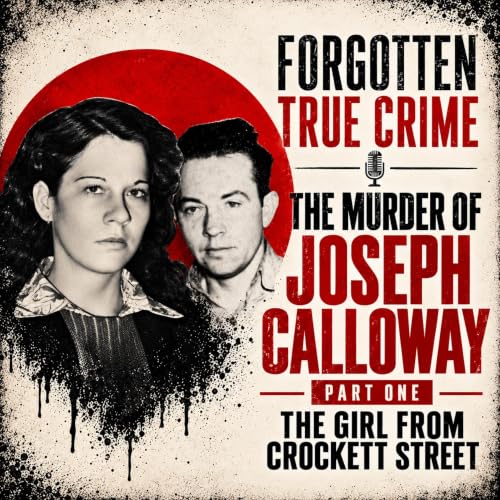
  • The Murder of Joseph Calloway — Part One: The Girl from Crockett Street
    Nov 2 2026

    On Valentine’s night, 1940, Joseph P. Calloway, a Houston tire salesman doing some friends a favor, stopped for two hitch-hikers on the Old Spanish Trail near Orange, Texas. Nobody reported him missing. Three days later, a young woman picked up in Shreveport over a burglary told Louisiana state police there was a dead man in a rice field south of Lake Charles. Then she spent six hours leading them to him.

    Most tellings of this case give Calloway a name and nothing more. In this episode we follow his own records, from a farm in the North Carolina mountains to the open road. We also meet the people in the car with him that night: Annie Beatrice “Toni Jo” Henry, her husband Claude “Cowboy” Henry, sitting in a Texas prison, and a young Army deserter called “Arkie.” She said she shot him. Then she said she didn’t. Then he said she did.

    Content note: violence, and descriptions of exploitation and drug addiction.

    Narrated by me. AI used in post to improve the audio.

    Music by TrackTribe — copyright-free music for creators. TrackTribe is Mike Chiavaro, Gunnar Olsen, Otis McDonald, and Fred Beteille. tracktribe.com

    Show More Show Less
    1 hr and 12 mins
  • The Oklahoma Cannibal: The Death of Theodore Canatis
    Oct 31 2026

    On a Thursday night in May 1977, two Midwest City patrolmen met a few blocks from an apartment complex at Southeast 25th and Douglas so neither one would have to walk in alone. They’d been sent on a welfare check: a man nobody had seen all week. What the older officer found when he opened the refrigerator stayed with him for the rest of his life.

    The man was Theodore Canatis, a retired Air Force man who worked maintenance at the OU Health Sciences Center. Six months earlier his son Gregory, nineteen and just out of Hawaii, had come to live with him. By the following morning, police said Gregory had told them he killed his father.

    What came after is the stranger story. Gregory was charged with first-degree murder, but he was never tried and never convicted. Doctors called him insane, the court sent him to a state hospital, and the charge was dropped three years later. Then came a lawsuit over the warning nobody gave, a federal ruling that rewrote Oklahoma’s commitment law, and a grocery store in Norman. For thirty-seven years, nobody could quite decide what to do with him.

    We first told this story in August 2020. This is the full version, rebuilt from the newspapers of 1977 through 2017, the court filings and the press photographs.

    Content warning: violence, dismemberment, cannibalism, serious mental illness and self-harm.

    The newspaper coverage and links to the 1977 press photographs (Oklahoma Historical Society) are at Section29.com.

    Follow us at https://www.youtube.com/@Sect29

    https://open.spotify.com/show/0TzmO5YuMYA2ECbTiCKdEt

    If you or someone you know is struggling, call or text 988, the Suicide & Crisis Lifeline, any time in the U.S.

    Okie Investigations, by Forgotten True Crime. Hosted by Trevor Shelby.

    Show More Show Less
    44 mins