Global Perspectives on Digital Health cover art

Global Perspectives on Digital Health

Global Perspectives on Digital Health

Written by: Shubs Upadhyay
Listen for free

About this listen

🌍 Global Perspectives on Digital Health A podcast unpacking the stories, insights, and innovation shaping health systems and underserved communities. 🎧 Listen on Apple, Spotify. Watch on YouTubeShubs Upadhyay Hygiene & Healthy Living Physical Illness & Disease
Episodes
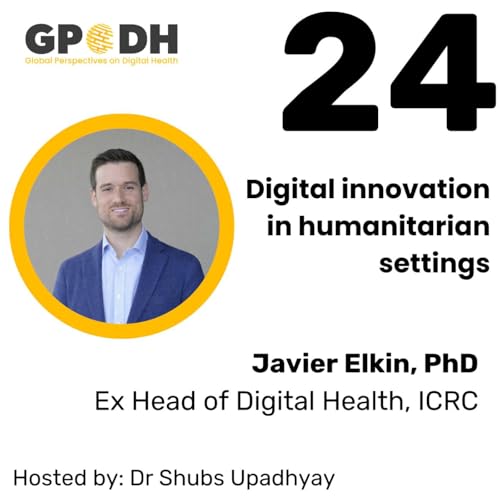
  • Digital innovation in humanitarian settings
    Feb 17 2026

    How do global organizations built to respond and aid in conflict respond to digital transformation? The International Committee of the Red Cross (ICRC) : you’re probably familiar with the work that happens here : emergencies, conflict zones, disasters, working at the last mile in difficult circumstances. How does an organization like even begin to approach “tech innovation” There’s clearly lots of need.


    What do you prioritize when everyone needs improvements now?


    PLUS How do you adapt off the shelf LLM models for remote humanitarian contexts?


    Javier Elkin spent 3 years as Head of Digital Health at ICRC. He set the unit up from scratch. Coming in at a time, post COVID, the opportunities for tech addressing unmet need proliferated. And in parallel trying to create stability with multiple financial crises and organizational challenges.


    If you’re in digital health and wrestling with the global scale and local trust and value tradeoffs, have a listen to how an actual global organization dealt with it.


    Some standouts for me from our convo:


    1. We spoke about context : correctness vs being useful


    If you ask a LLM : What do I do for this gunshot or limb trauma, it might be reasonable to say that a response like : call emergency services is universally correct.

    But in a conflict zone or very rural setting, that has zero value compared to “take two pieces of wood to act as a splint”, or try X to stem blood loss.

    How did the ICRC digital team work (with partners at EPFL) on their validation and evaluation to get better at these aspects?


    Your LLM might be technically, and even medically correct, but completely useless on the ground for someone.


    Want to find out more about the MOOVE initiative? Take me there

    2. Prioritization based on outcomes, constraints, feasibility

    Link to assessment framework


    3. We get some proper concrete examples that cover:


    • How they used tech to aid a handover to a local healthcare system in Western Nigeria after years of being there.
    • How they used an open source tool already being used in the field to help spin up digital workflow solutions FAST
    • How they partnered with EPFL to develop testing, validation and evaluation pipelines for LLM decision support specific and relevant for conflict settings (some absolute gold in here)


    We also get Javier’s honest reflections about the humanitarian sector in general : how the financial crises (esp the last year with huge funding challenges) have manifested, what next for the humanitarian sector and what could be done differently.


    Packed with lessons this one, do not miss it.


    Chapters:

    00:00 Introduction to Digital Health and Javier's Journey
    07:55 Approach to creating a digital health unit from scratch
    13:53 Prioritization Framework at the digital health
    22:32 Innovative Solutions in Humanitarian Health
    29:21 Strategic Handover and Local Ownership
    35:20 Integrating Digital Health in Conflict Zones
    41:21 Evaluating AI in Humanitarian Settings
    53:26 Reflections on Trust and the Humanitarian Sector


    Show More Show Less
    59 mins
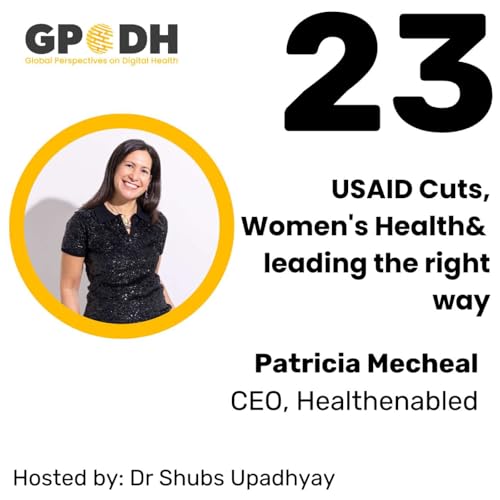
  • USAID cuts, women's health and leading the right way
    Jan 28 2026

    At the end of last year I got the chance to record the first episode of the show in an actual studio. Still a lot to learn about this versus virtually, but Patty Mecheal was a gracious and very awesome guest.


    Patty, CEO of healthenabled brings nearly three decades of mHealth and digital health experience into this discussion we recorded during the Global Digital Health Forum in Nairobi in December 2025.

    After a tumultuous year of policy shifts with USAID funding, WHO shifts and the cascading challenges globally, our conversation examines how we got here and where we need to go when ethics and inclusivity are politically sidelined.


    What we cover:

    • The state of 2025 - USAID cuts and their ripple effects on healthcare and digital health in underserved communities
    • Lessons from the 1990s to now - what patterns keep repeating, and what fundamental mistakes we're still making
    • Women as decision-makers AND consumers - why this isn't just the "right thing to do" (though it is), but represents massive unmet market opportunity
    • Value and context in evaluation - how to actually assess digital health and AI tools in ways that matter
    • Leadership with values - Patty's honest reflections on what she's learned and gotten wrong
    • Building responsibly when the incentives don't reward it - what does ethical implementation look like now?


    This episode is for you if you:

    • Build digital health or AI solutions
    • Make policy or funding decisions
    • Research or evaluate health interventions
    • Are working on impact in women’s health


    Unfiltered, real insights from someone who's seen it all.


    Chapters and Timestamps


    00:00 Introduction to Global Perspectives on Digital Health

    01:24 Reflections on the Global Digital Forum

    04:03 Patti's Journey and Background

    08:20 Aha Moments in Public Health

    11:46 The Importance of Data in Health Interventions

    16:01 Learning from low resource settings

    21:55 Building Trust in Digital Health Solutions

    24:50 Balancing Scalability and Trust

    30:22 The Role of Compassion in Healthcare

    40:53 The Theory of Change in Digital Health

    46:13 Bootstrapping Innovations in Digital Health

    52:49 Compassionate Leadership and Ethical Practices

    57:08 The Role of Women in Health and Technology

    About Patty:
    Dr. Patricia (Patty) Mechael is a global digital health leader, speaker, and award-winning author with nearly 30 years of experience shaping equity-centered health and technology initiatives across more than 45 countries. She is Co-Founder and CEO of health.enabled, where she leads the Global Digital Health Monitor and Digital Health and AI Strategy efforts with Gavi, the Vaccine Alliance, WHO, UNICEF, and others. She is also a Senior Associate Professor at the Johns Hopkins Bloomberg School of Public Health where she serves as the Co-Principal Investigator for the Gates Foundation’s Digital Health Exemplars and where she also teaches a course on Gender-intentional Digital Health. Known for translating complex ideas into human, actionable insights, Patty writes and speaks widely on responsible AI, gender equity, and the future of work and health—bringing a grounded, compassion-driven leadership lens shaped by both evidence and lived experience.

    Show More Show Less
    1 hr and 7 mins
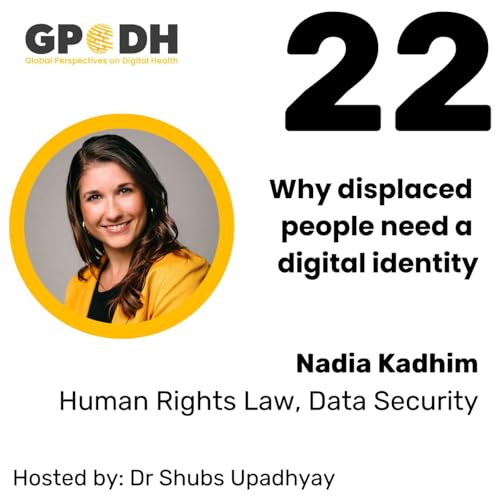
  • Why displaced people need a digital identitiy
    Jan 14 2026


    I sat down to talk to Nadia Kadhim, co-founder of Naq about digital identity and healthcare for displaced people.


    Nadia’s father was a refugee, and we hear about her journey into human rights law and eventually into data security and compliance.


    We cover:

    • That digital identity for displaced people is messed up.
    • How this creates very real barriers to care (with examples)
    • How healthcare systems aren’t set up for real access or meaningful care for refugees
    • Can we even do anything about this when political agenda in many places cares less and less about this?
    • Why, even so, we should wake up - the likelihood of us being displaced due to conflict or climate change is going up. How would we want to be cared for?
    • This is an everybody problem, which is part of why it’s so hard to solve.


    If you’re into policy, data security, health and digital for displaced people, or building tools that could be being used by refugees, you’ll gain a lot from spending less than an hour on this topic.


    If you care about this topic you should also listen to the episode with Aral Surmeli. Inspiring in equal measure.

    Chapters
    00:00 Introduction to Digital Health and Human Rights
    07:19 Data, Identity, and Access to Healthcare
    10:39 Challenges Faced by Refugees in Healthcare
    15:21 Real-Life Stories of Refugees and Healthcare Access
    20:32 Why no solution yet?
    23:01 The Future of Healthcare for Displaced People
    30:29 The Role of Funding and Multi-Stakeholder Approaches
    31:59 Data and Human Lives: The Health Data Poverty Problem
    34:22 Ethics and Regulatory Compliance in Digital Health
    38:22 Ownership and Security of Health Data
    43:13 Nadia's Recommendations for Policy Makers and Digital Health Founders


    ----

    Global Perspectives on digital health shares the insights of innovators, donors, policy makers and researchers on what it takes to create impact at the last mile with digital health and AI in underserved communities around the world through audio and video.


    We’re telling the underreported stories of impact that the digital health industry needs to pay more attention to.


    There’s a growing back catalogue of over 20 engaging, inspiring and real conversations about the places in the world where the biggest challenges lie, but where the deepest impact in healthcare is happening. Tune in on gpodh.org

    Subscribing and sharing really helps get this to the noggins of people who care about this topic. If you found this useful, please leave us a comment and some review stars.


    Show More Show Less
    50 mins
No reviews yet