Grow My Cleaning Company's Podcast cover art

Grow My Cleaning Company's Podcast

Grow My Cleaning Company's Podcast

Written by: Mike Campion Author Speaker serial entrepreneur and bad dinner guest hel
Listen for free

About this listen

Do less and grow FAST. Mike shares the secrets to building a million dollar cleaning company without being a slave to your business.Freaking Genius, LLC Economics Leadership Management & Leadership
Episodes
  • Why Your Cleaning Company Marketing Feels Like It's Failing
    May 8 2026

    "Marketing Doesn't Work for Me"

    Mike Campion and Jackson Pinkoski tackle one of the most common things cleaning company owners say when they're frustrated: "Marketing doesn't work for me." Maybe Facebook ads felt like a waste. Maybe Google leads seemed bad. Maybe mailers worked for a while and then suddenly slowed down. The problem is, most owners jump straight to blaming the marketing before they actually know what happened.

    Feelings Are Not Data

    Jackson points out that marketing has ups and downs. What worked in January might feel slower in April, but that doesn't automatically mean the whole strategy is broken. Mike brings it back to the real issue: if you're not tracking, you're not making decisions based on truth. You're making decisions based on stress, memory, and whatever felt bad that week. That's dangerous because a campaign can feel broken even when it's actually working.

    Track the Simple Stuff First

    The good news? Tracking doesn't have to be complicated. Jackson says owners just need a starting point. How many calls came in? How many leads? How many bids? How many became customers? Mike adds one more big number: how much did you spend? You don't need a giant fancy spreadsheet to start. You just need enough numbers to stop guessing.

    Stop Killing What Might Be Working

    A lot of cleaning company owners panic too early. They get a few bad calls, a slow week, or some leads that don't close, and suddenly they want to shut everything off. Mike and Jackson push back on that hard. Sometimes the problem isn't the lead source. It might be the offer, the follow-up speed, the sales process, the target audience, or just not enough time. If you don't have the numbers, you might kill something that was actually making you money.

    The Real Homework: Get the Data

    The big takeaway is simple: before you say your marketing failed, prove it. Track your spend, leads, bids, sales, and recurring revenue. Once you have the data, you can make real decisions. Without it, you're just guessing — and guessing is expensive. Marketing becomes way less scary when you can actually see what's happening.

    Podcast Show Notes

    In this episode, Mike Campion and Jackson Pinkoski break down why so many cleaning company owners feel like their marketing "isn't working." The real issue usually isn't Facebook, Google, mailers, or bad leads — it's that the owner isn't tracking enough to know what's actually happening. Mike and Jackson explain why feelings are not data, why owners panic too early, and what simple numbers every cleaning company should track before making marketing decisions. If you've ever wanted to shut off your ads, blame the lead source, or say "marketing doesn't work for me," this episode will help you slow down, look at the numbers, and stop guessing.

    Show More Show Less
    16 mins
  • Grow Your Cleaning Company Without Losing Control
    May 8 2026
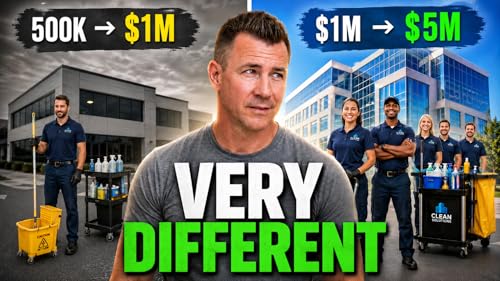
    Growing a cleaning company sounds great until the team gets bigger, cleaners are spread across different job sites, and you no longer personally know every person representing your company. In part two of Mike's conversation with Luke Embree, they talk about what changes when a cleaning company goes from $1M to $5M — especially around culture, values, and keeping the team aligned when the owner is not in the room every day. The Problem With Growth Nobody Talks About When Luke grew Commercial Cleaning with Commonwealth to around 65 team members, the challenge was not just getting more contracts or hiring more cleaners. The bigger question became: how do you keep the same culture when the company is no longer small enough for the owner to personally touch everything? At the beginning, culture is easy. You know everyone. Everyone knows you. Your values get passed around naturally because the team is close to you. But once cleaners are working across multiple locations, and some employees barely interact with you, culture needs more than good intentions. Core Values Cannot Just Live in the Interview Luke shares that one of the best decisions he made early on was building the company around short, clear values: show up, do good, make money, and empower others. Those values helped with hiring, retention, and client fit. But as the company grows, values can start to drift. Mike points out that core values become even more important as the company gets bigger, not less. It is easy to think values are "soft" compared to sales, hiring, and operations, but for seven-figure cleaning companies, values become part of the operating system. Weekly Meetings, Monthly Parties, Quarterly Reviews Mike gives Luke a simple rhythm for keeping culture alive: -Weekly meetings. -Monthly parties. -Quarterly reviews. The point is not to make the company feel corporate. The point is to create repeated moments where people hear the values, see them recognized, and understand what the company actually rewards. Weekly meetings should be short and mostly focused on core values, not endless admin. Monthly parties should feel like something people want to attend, not something they are pressured into. Quarterly reviews give the owner or leadership team a structured way to talk about values, attendance, feedback, performance, and fit. Build Culture Before You Need It One of the strongest ideas from this episode is that cleaning owners should not wait until they have a big team to build culture. Mike compares it to budgeting. You do not get rich first and then start budgeting. You build the habit first, and that helps create the result. Same with culture. You do not wait until you have a large team and then suddenly try to install values. You build the culture early so the team can grow into it. That is the part most owners miss. Culture is not something you fix after the company gets messy. It is something you build before the mess shows up. Give People Responsibility Earlier Mike also talks about giving cleaners more authority earlier than most owners are comfortable with. That means employees helping with group interviews, one-on-one interviews, working interviews, training, and even leading meetings when needed. The idea is not to dump responsibility on people randomly. It is to build a company where power is not trapped with the owner or one manager. When good people are trusted early, a lot of them rise. When everyone has to wait for the owner or supervisor to make every decision, the business just creates a new bottleneck. Supervisors Are Not Always Freedom One of Mike's stronger points is that a lot of owners think the answer is finding the perfect ops manager or supervisor. But that can just move the bottleneck. If the owner was the choke point before, and now the supervisor is the choke point, the business is not really free. It just depends on a different person. Mike's preference is decentralized power: a team where people understand the values, know how to do the work, and can make decisions without needing constant babysitting. Podcast Show Notes Growing your cleaning company sounds great. More cleaners. More job sites. More revenue. But what happens when the team gets bigger and the owner starts losing touch with the people actually doing the work? In part two of Mike's conversation with Luke Embree, they talk about how to grow a cleaning company without losing control of the culture. Luke has grown Commercial Cleaning with Commonwealth to around 65 team members and is looking toward the next stage: going from $1M to $5M. Mike breaks down why culture cannot just be something you mention during the interview, how weekly meetings and quarterly reviews help reinforce values, and why giving employees more responsibility earlier can actually create more freedom for the owner. This episode is for cleaning company owners who are growing, hiring, and realizing that a bigger team does not automatically mean more control.
    Show More Show Less
    19 mins
  • Are Bigger Commercial Cleaning Contracts Actually Worth It?
    May 8 2026

    Most commercial cleaning owners think a bigger contract is automatically a win. Bigger account, bigger monthly revenue, bigger company. But in this episode, Mike Campion talks with Luke Embry of Commercial Cleaning with Commonwealth about the part most owners don't slow down to look at: margin, cost of goods sold, payment terms, and whether that "big opportunity" is actually making the business stronger — or just busier. Luke started his company in 2021, grew to around 65 team members, and hit his first million-dollar year in 2025, so this is a real scaling question from someone already in the game.

    Bigger Doesn't Automatically Mean Better

    Luke brings up a problem a lot of commercial cleaning owners eventually run into: as the contracts get bigger, the pressure to lower margins gets stronger. It feels reasonable at first. A larger client wants a better price, the contract is worth more money, and the owner starts thinking, "Maybe I can take a smaller percentage because the total pie is bigger."

    Mike's response is blunt: the math matters more than the excitement. A bigger contract with thin margins can create more risk, more payroll pressure, and more stress without creating much actual profit.

    The "Smaller Piece of a Bigger Pie" Trap

    The dangerous part is that "smaller piece of a bigger pie" sounds smart. But Mike points out that the details matter. If your cost of goods sold moves from 50% to 60%, 70%, or even 75%, you may not be taking a smaller piece of a bigger pie — you may be giving away the whole pie.

    That's the part a lot of owners miss. Revenue goes up, but payroll, overhead, risk, and payment delays go up too. If the margin disappears, the big client can become a liability instead of a win.

    Payment Terms Can Make a Bad Deal Worse

    Mike also digs into payment terms, especially for commercial cleaning companies. If you're paying cleaners before the client pays you, you're basically financing the client's cleaning service.

    That may not feel like a big deal on a small account. But on a large contract, one slow-paying client can put serious pressure on cash flow. Thin margins plus bad payment terms can turn a "great" contract into a business problem fast.

    Price Isn't the Only Thing You Can Negotiate

    One of the strongest takeaways from this conversation is that owners don't always have to negotiate price. They can negotiate scope.If a prospect has a smaller budget, that doesn't automatically mean you should discount the same level of service. It may mean offering a different package, a different scope, or a different level of result. That keeps the business from quietly absorbing the cost just to win the account.

    Know the Difference Between Revenue and Profit

    Luke shares that he once looked at a million-dollar contract that would have more than doubled the company's revenue, but after digging into the numbers, it would have meant working twice as hard for almost nothing. That's the real lesson of this episode: revenue is not the prize if the profit isn't there.

    Most cleaning owners don't need more big accounts. They need better accounts, better math, and the confidence to walk away when the numbers don't work.

    Podcast Show Notes

    A bigger commercial cleaning contract sounds like the dream.

    More revenue. Bigger client. Bigger company.

    But what happens when that big contract comes with smaller margins, slower payment terms, and way more risk?

    In this episode, Mike Campion talks with Luke Embree of Commercial Cleaning with Commonwealth about the hidden side of larger commercial contracts. Luke has grown his company to around 65 team members and hit his first million-dollar year, but now he's facing the next-level question: should bigger clients mean lower margins?

    Mike breaks down why "smaller margin on a bigger contract" can be dangerous, how cost of goods sold actually impacts profit, why payment terms matter, and why cleaning business owners need to stop celebrating revenue before they check the math.

    If you've ever looked at a big commercial account and wondered whether you should lower your price to win it, this episode is for you.

    Show More Show Less
    37 mins
adbl_web_anon_alc_button_suppression_c
No reviews yet