• The Persians and the Greeks, Part II: Darius, Great King, King of Kings
    Feb 15 2026

    Emily and Cam continue their discussion of the conflict between the Persians and the ancient Greek world. In this episode, they chat about Cyrus’ son Cambyses, about the rise to power of Darius, and about Darius’ relationships with Greeks on the western frontier of his empire.

    Visit our homepage to subscribe, to find us on social media, and to contact us by email:

    1. https://havetogawilltravel.com

    Episode Links

    1. The first episode in this series (The Persians and the Greeks, Part I: The Rise of the Persian Empire).
    2. Part I of our series on the Athens Marathon, which includes a discussion of the Battle of Marathon and the legend of Pheidippides.
    3. Wikipedia’s article on Darius’ Bisitun Inscription, which includes photos.

    ----------

    00:13 - Introduction

    01:31 - Sources for the reigns of Cambyses and Darius

    1. 01:49 - Herodotus’ Persian stories
    2. 02:41 - Inscriptions and papyri documenting Persian kings

    03:01 - Cambyses, son of Cyrus: portraits of his Reign

    1. 03:27 - Herodotus’ take on Cambyses: a mad and murderous king
    2. 11:59 - A more sympathetic take: the Apis inscriptions, the Udjahorresnet inscription, and what they tell us about Cambyses

    16:35 - The Death of Cambyses and the rise of Darius

    1. 17:01 - Herodotus’ tale of the usurper Smerdis and the (Persian) Magnificent Seven
    2. 21:06 - Darius’ Bisitun Inscription and the “Official” story of his rise to power

    28:02 - Darius and the Greeks

    1. 28:41 - Darius’ Scythian Expedition and the Greeks of Ionia and Aeolia
    2. 32:01 - The Ionian Revolt and its causes: Aristagoras and Naxos, plus the problem of tyranny, tribute, and triremes
    3. 39:39 - The Athenians and the sack of Sardis
    4. 43:00 - The Marathon Campaign: Darius seeks revenge

    44:58 - Wrap-up

    Show More Show Less
    46 mins
  • The Persians and the Greeks, Part I: The Rise of the Persian Empire
    Feb 1 2026

    Emily and Cam talk about the ancient Persians and the growth of their empire in the first episode of a series on the conflict between the Persians and the ancient Greek world.

    Visit our homepage to subscribe, to find us on social media, and to contact us by email:

    1. https://havetogawilltravel.com

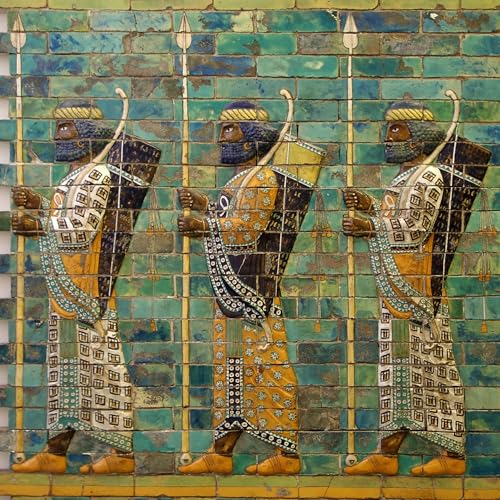
    Cover photo adapted from an image by Jakub Hałun (Persian Warriors, Pergamon University, Berlin)


    ----------

    00:12 - Introduction

    01:07 - Who were the Persians?

    1. 01:11 - The ancient Persians, the ancient Iranians, and the Indo-European dispersion
    2. 02:52 - The Old Persian language (and a digression on Persian names)
    3. 08:35 - Zoroastrianism and the religion of the ancient Persians

    13:59 - The Rise of the Persian Empire

    1. 14:23 - The Middle East in the 6th Century BCE: Persia and its neighbors
    2. 16:29 - Herodotus and the legend of Cyrus the Great
    3. 20:06 - Cyrus the Great and his conquests
    4. 24:04 - Cyrus’ successors: Cambyses and Darius
    5. 24:48 - The Persian Empire in 500 BCE

    25:12 - The Structure of the Persian Empire

    1. 25:25 - Cooperative local elites and the obligations of empire
    2. 26:35 - Satraps, provinces, and the Iranian diaspora

    28:45 - The Ideology of the Persian Empire

    1. 29:04 - Cyrus as champion of local gods in Babylon and Judah
    2. 30:49 - Darius as champion of Ahura Mazda

    32:47 - The Mechanics of Empire in the Age of Darius

    1. 32:52 - Imperial ideology and imperial violence
    2. 34:00 - Local elites and imperial entanglements: the story of Syloson of Samos

    38:04 - Wrap-up

    Show More Show Less
    40 mins
  • Aeschylus' "Persians": The OG Greek Tragedy
    Jan 17 2026

    Emily and Cam break down “The Persians”—the oldest surviving Greek tragedy, which offers a surprisingly sympathetic take on the enemies of Athens.

    Visit our homepage to subscribe, to find us on social media, and to contact us by email:

    1. https://havetogawilltravel.com

    Cover photo adapted from an image of the Salamis Soldiers' monument, by Ziegler175:

    1. https://commons.wikimedia.org/wiki/File:SalamisPaloukiaSchlacht2.jpg


    ----------

    00:10 - Introduction

    01:43 - Aeschylus and his historical context

    1. 01:56 - The subject of the play (and its peculiarity)
    2. 03:06 - The Battle of Salamis and the Persian Wars
    3. 05:10 - Aeschylus’ Career

    06:22 - The Persians in performance

    1. 06:30 - The Dionysia of 472 BCE and Aeschylus’ tetralogy
    2. 08:35 - Pericles as producer (choregos)
    3. 09:09 - A synopsis of the play
    4. 11:12 - The structure of Greek Tragedies (or, how do we know that the Persians only needs two actors apart from the chorus?)

    14:03 - Interpreting the play: sympathy for the Persians?

    1. 15:06 - The survival of the play: evidence of its popularity?
    2. 16:04 - Triumphalism vs. a recognition of common experience
    3. 17:06 - Differences between Greek and Persians in the play: archers vs. spearmen, autocracy vs. autonomy, proskynesis and lamentation
    4. 20:36 - Aeschylus argues for common experiences: the Persians as Homeric heroes, the horrors and the costs of battle, and Aeschylus’ rejection of the “effeminate Persians” trope

    26:37 - The play’s main theme: empire and hubris

    1. 27:00 - Xerxes and his bad decisions
    2. 27:56 - The gods’ desire to punish Xerxes
    3. 28:53 - The hubris of Xerxes, or the hubris of the Empire? (Featuring Emily’s rant about hubris in ancient and modern thought)
    4. 34:27 - Aeschylus, the gods, and Athenian imperialism
    5. 36:55 - The social function of tragedy: thinking through big problems
    6. 37:28 - What staging the Persians can tell us about the play

    39:12 - Wrap-up

    Show More Show Less
    40 mins
  • At Play in the Theater of Dionysus
    Jan 5 2026

    At Play in the Theater of Dionysus

    The Theater of Dionysus as Aeschylus, Sophocles, and Euripides knew it was very different than the theater whose remains you see today in Athens. Listen to Emily and Cam walk you through the development of the space, and through the creation of the genre associated most strongly with it: Greek tragedy.

    Visit our homepage to subscribe, to find us on social media, and to contact us by email:

    1. https://havetogawilltravel.com


    For images of the Theater and Sanctuary of Dionysus, visit our blog:

    1. https://havetogawilltravel.com/blog/the-sanctuary-and-theater-of-dionysus


    ----------


    00:10 - Introduction

    01:37 - Visiting the Theater and Sanctuary

    1. 01:42 - Where to find the Theater and Sanctuary
    2. 02:16 - Don’t confuse it with the Odeion of Herodes Atticus!
    3. 03:26 - An overview of the physical remains

    04:01 - The Origins of the Sanctuary, the Theater, and the Festival

    1. 04:02 - The Sanctuary, the Festival, and the Temples of Dionysus
    2. 04:58 - The Theater through Time: The Fifth Century, the Lycurgan Theater, the Hellenistic Theater, and the Roman Theater
    3. 07:59 - The Festivals of Dionysus: The Origins of the City Dionysia and celebrations for Dionysus in Ikaria and other demes

    11:44 - The Origins of Scripted Drama in Athens

    1. 11:50 - The Dithyramb
    2. 12:41 - The legend of Thespis, the first actor
    3. 13:15 - The importance of the chorus in Greek drama
    4. 14:10 - Masking and actors playing multiple characters
    5. 14:30 - The Development of the Three-Actor Model in the Age of Aeschylus, Sophocles, and Euripides

    19:09 - The City Dionysia

    1. 19:42 - The Schedule: The Procession and its Ithyphallic Floats; the Dithyrambic Competitions; the Dramatic Competitions
    2. 22:50 - Dionysus, the most important spectator
    3. 23:48 - The Organization of the Dramatic Competitions: Tragedies, Satyr Plays, Choruses, and Choregoi!

    30:09 - The Performance Space and its Evolution

    1. 30:20 - The Fifth-Century Theater: the Orchestra, the Skēnē, and the Paradoi
    2. 33:30 - Technical Innovations: the ekkyklēma and the mechanē
    3. 36:36 - The Deus Ex Machina in ancient Drama
    Show More Show Less
    45 mins
  • Emily and Cam’s Excellent Adventure (in Athens and Rome, of course!)
    Dec 20 2025

    Emily and Cam talk about their recent trip to Athens and Rome in an episode that features some talk about marathons, tsipouro, and cats.

    Visit our homepage to subscribe, to find us on social media, and to contact us by email:

    • https://havetogawilltravel.com

    For images of the Museum of the Forma Urbis, visit our blog post:

    • https://havetogawilltravel.com/blog/the-museum-of-the-forma-urbis


    Links to some of the places we mention in this episode:

    • Athena’s Cook
    • Paradosiako Serron
    • Noctua Brewing
    • Esthio
    • Βαυβώ (Vafvo)
    • Hotel Santa Maria
    • San Clemente Archaeological Zone
    • Museum of the Forma Urbis


    ----------


    00:10 - Introduction

    01:25 - Our second walk through the Athens Marathon

    • 01:38 - Faliro: tourist sites, getting there, and the Marathon Expo
    • 05:06 - Carb loading before the Marathon
    • 06:32 - The trip to Marathon and the wait in the Stadium
    • 09:27 - The race itself (drinking tsipouro in the footsteps of Spiridon Louis!)


    15:19 - Our stay in Athens

    • 15:41 - How we travel
    • 17:11 - Old neighborhoods (Plaka and Monastiraki) and ancient sites (the Acropolis and the Theatre of Dionysus)
    • 19:01 - A field trip to Ilion (the Athens suburb, not Troy!) to eat at Paradosiako Serron
    • 21:06 - Modern Athens: Pangrati
    • 23:23 - Modern Athens: Koukaki and its restaurants (including Esthio) and our view of the Acropolis
    • 29:36 - Modern Athens: Neos Kosmos and Βαυβώ


    33:41 - Our Stay in Rome

    • 33:53 - Rome’s “feel” compared to Athens: geography and tourism
    • 35:39 - Trastevere and the Hotel Santa Maria
    • 37:12 - Culture shock: coffee and language issues
    • 40:01 - The Archaeological Zone at San Clemente
    • 43:45 - Castel Sant’Angelo
    • 44:42 - The Museum of the Forma Urbis
    • 46:34 - Wandering the city (and the Temple of Vibia Sabina and Hadrian)
    • 49:30 - Hangin’ on the Janiculum


    50:26 - Wrap-up

    Show More Show Less
    52 mins
  • Something for everyone! Plautus and “A Funny Thing Happened on the Way to the Forum”
    Dec 1 2025

    Emily and Cam tackle “A Funny Thing Happened on the Way to the Forum”—an uproarious adaptation of Plautus’ Roman comedy.

    Visit our homepage to subscribe, to find us on social media, and to contact us by email:

    • https://havetogawilltravel.com

    Some plays of Plautus referenced in this episode:

    • Pseudolus
    • Mostellaria
    • Miles Gloriosus
    • Menaechmi


    Cover Image:

    • Mosaic of Masks. Second or third century CE. Found on the Aventine, possibly on the site of the ancient Thermae Decianae; now held in the Capitoline Museums. Photo by Carole Raddato, Wikimedia Commons.


    ----------


    00:11 - Introduction

    • 00:38 - A Funny thing Happened on the Way to the Forum: Sonheim’s Musical and the 1966 film

    03:19 - Our approach to reviewing adaptations of ancient literature

    05:20 - Plautus and Roman Comedy

    • 05:29 - What we know about Plautus himself (his dates, his name, his background)
    • 09:41 - Plautus' style: Roman comedy, exotic settings, stock plots, and stock characters

    17:56 - A Funny Thing Happened on the Way to the Forum: Plautus on Screen

    • 18:51 - The setting: “A less fashionable suburb of Rome”
    • 19:44 - The characters (Pseudolus, Hysterium, Marcus Lycus, Hero, Philia, Miles Gloriosus, and others)
    • 23:33 - The plot, in all of its messiness
    • 27:15 - The movie’s sources: Plautus’ Pseudolus, Mostellaria, Miles Gloriosus, and other plays
    • 33:01 - Metatheatre in Plautus and in A Funny Thing
    • 36:25 - The movie’s departures from Plautus: More is more! (Expansive sets, elaborate scenes, and exaggerated physical comedy)

    43:36 - Cam and Emily discuss their reactions (and we learn the dirty secrets of Emily’s history with this film!

    49:01 – Wrap-up

    Show More Show Less
    50 mins
  • Stranger Things: Eleven’s Heroic Journey
    Nov 15 2025

    Emily and Cam break down the character arc of Eleven in Stranger Things and argue that she is on a “heroic journey” like that of Herakles.

    Visit our homepage to subscribe, to find us on social media, and to contact us by email:

    • https://havetogawilltravel.com/

    For more information about Herakles and about “heroes” in Ancient Greece, listen to our previous episode:

    • https://havetogawilltravel.com/episode/holding-out-for-a-hero-in-ancient-greece

    Key literature mentioned in this episode:

    • Joseph Campbell, The Hero with A Thousand Faces
    • David Adams Leeming, Mythology: The Voyage of the Hero
    • Maureen Murdock, The Heroine’s Journey
    • Valerie Estelle Frankel, From Girl to Goddess

    —————

    00:11 - Introduction

    01:28 - Reprise: The Hero’s Journey

    • 01:47 - Campbell’s “Everyman” model
    • 04:06 - Leeming’s “Chosen One” model
    • 06:04 - Herakles and Eleven as Leeming-style, “Chosen One” Heroes
    • 08:24 - Gender and the Hero’s Journey: Maureen Murdock and Valerie Estelle Frankel

    11:29 - Eleven’s Heroic Journey so far: Eleven as Herakles with a Gendered Twist

    • 11:59 - Stranger Things: An Overview
    • 13:10 - Season One: Eleven as a character in the model of Obi Wan?
    • 16:54 - Season Two: Eleven emerges as a Hero on a Leeming-style journey, with elements of Murdock’s and Frankel’s models
    • 25:11 - Season Three: the (metaphorical) death of the hero, Eleven
    • 28:21 - Season Four: Eleven descends to the underworld, and is reborn?
    • 33:28 - Recap: Leeming’s model and the stages of Eleven’s Heroic Journey

    37:30 - Predictions for Season Five: How will Eleven’s Heroic Journey end?

    • 38:14 - The three basic possibilities: (1) Eleven as superhero; (2) Eleven as Campbell-style “Everyman” hero; (3) Eleven as a “Chosen One” hero
    • 41:52 - What Herakles’ journey tells us about Eleven and about Stranger Things

    43:26 - Wrap-up

    Show More Show Less
    46 mins
  • Holding Out for a Hero (in Ancient Greece)
    Nov 1 2025

    What’s a “hero”, and what kinds of stories do we tell about them? Emily and Cam explore how heroes were imagined in ancient Greece as they lay the groundwork for next episode’s discussion of Eleven’s heroic journey in Stranger Things.

    Visit our homepage to subscribe, to find us on social media, and to contact us by email:

    • https://havetogawilltravel.com


    Links:


    • NYPL’s list of “Heroines in Fairytales, Folklore, Fables and Legends for Young Readers


    Cover Image:


    Pylades, Orestes, and Elektra perform rites at the tomb of Agamemnon. Painted in the late fourth century BCE on an amphora made in one of the Greek cities of southern Italy (which is now held at the MFA in Boston). Photo by Emily.


    ----------


    00:11 - Introduction

    01:15 - What is a hero?

    • 01:33 - Some modern definitions of hero
    • 02:52 - The roots of the word “hero” in ancient Greek (and maybe earlier)
    • 04:12 - The various meanings of “hero” in ancient Greece: leaders, godlike heroes, and mortals given divine honors
    • 13:09 – The flexibility of the hero concept in ancient Greece, and some examples: Achilles, Sarpedon, Theagenes of Thasos, and Kleomedes of Astypalaia
    • 20:15 – Death and the hero in ancient Greece, and some strange cases: Asklepios and Herakles

    26:51 - The stories we tell about heroes

    • 27:39 – Two models of the “hero’s journey”: Joseph Campbell, “The Hero with a Thousand Faces”, and David Adams Leeming, “Mythology”
    • 30:57 - A digression on problematic treatments of gender in hero studies
    • 33:40 - Odysseus as the Cambell-style “everyman” hero
    • 36:00 - Herakles as the Leeming-style “Chosen One”
    • 42:26 – Coda: Alexander the Great and Herakles

    44:17 - Wrap-up and teaser for our next episode on Stranger Things’ “Eleven”

    Show More Show Less
    46 mins