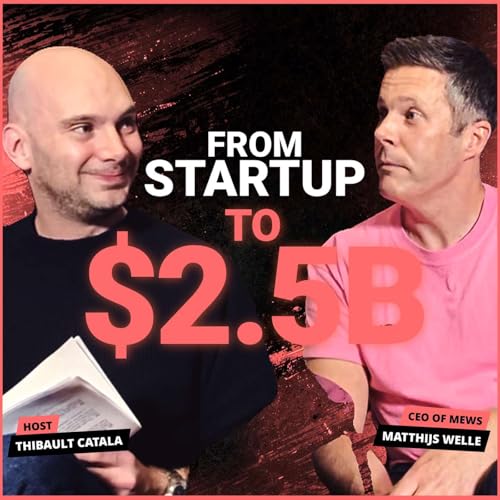
• Mews PMS from Startup to $2.5B valuation. Matthijs Welle | Ep. 006
    May 6 2026

    From two hotel guys with no tech skills to a $2.5 billion valuation. How do you reinvent an industry from the inside and what does it take to survive when no one will fund you?

    🎙 Episode 006 of HXD212: unfiltered conversations with leaders, rebels, and builders shaping what's next.

    Matthijs Welle, CEO of Mews, took the path most hotel professionals dream about — Hilton's management track, a fast career, a clear trajectory. Then he quit. At 30, with no mortgage, no kids, and no tech experience, he bet everything on building a cloud-native PMS with co-founder Richard Valtr in Prague. The early years were brutal: no funding, no sales, and never making payroll on time.

    Today, Mews serves ~15,000 customers, processes nearly $20 billion in payments, has completed 15 acquisitions, and is valued at $2.5 billion. Yet Matthijs argues the hotel industry is still only scratching the surface of what technology can do and that the best luxury hotels still have the worst tech.

    In this episode, Thibault Catala and Matthijs Welle explore:
    ◼️ Why two hotel guys with zero tech experience decided to build a PMS
    ◼️ The brutal early years: no funding, no sales, never paying salaries on time
    ◼️ Why legacy systems held the industry back for decades
    ◼️ How Mews rethought everything from night audit to the reception desk
    ◼️ The open-API marketplace strategy that changed their trajectory
    ◼️ Why RevPAR is dead and RevPAG is the future of hotel revenue
    ◼️ How payments became the backbone of guest spend attribution
    ◼️ The case for dynamic pricing beyond rooms
    ◼️ Why revenue managers need to become experimentation-led strategists
    ◼️ Mews' AI roadmap: semantic layers, agentic workflows, and automation
    ◼️ Why the best luxury hotels still have the worst technology
    ◼️ The vision for invisible hospitality and what hotels look like in 2035
    ◼️ IPO ambitions, scaling inflection points, and why likely the US

    🎧 Follow Matthijs Welle & Mews:
    Matthijs Welle on LinkedIn. https://www.linkedin.com/in/matthijswelle/
    Mews. https://www.mews.com/
    Matt Talks Hospitality Podcast. https://youtube.com/playlist?list=PLkaLcjp3VYOIES-_1Tp8nzzvMcBUMZ_AM&si=HVthwoaule5j0RfZ

    🔥 Follow Thibault & HXD212:
    Follow Thibault Catala on LinkedIn. https://www.linkedin.com/in/thibaultcatala
    Follow HXD212 on Instagram. https://instagram.com/hxd212
    Follow HXD212 on TikTok. https://www.tiktok.com/@hxd212podcast
    Catala Consulting. https://catalaconsulting.co.uk
    Revenue Management Online Course. https://learn.thibaultcatala.com/revenuemanagement

    #Startups #Entrepreneurship #hoteltech #founderstory

    Show More Show Less
    1 hr and 5 mins
  • Why Vienna Could Become Europe’s Next Startup Hub. Markus Raunig | Ep. 005
    Apr 15 2026

    Can Austria become a real startup nation. Or will it stay comfortable playing small?

    🎙️ Episode 005 of HXD212: unfiltered conversations with leaders, rebels, and builders shaping what's next.

    Markus Raunig, Executive Chairman of AustrianStartups, sits at the center of the Austrian entrepreneurial ecosystem. He works with founders, policymakers, investors, and universities to push one simple idea: Entrepreneurship should be a normal career path, not an exception.

    Austria has talent, capital, and quality of life. Yet the country still struggles with risk culture, slow decision making, and a system that often rewards stability more than experimentation. The result. A startup ecosystem that moves forward, but slower than it could.

    In this episode, Markus explains why the biggest barriers are rarely funding or ideas. The real constraint is mindset. How a country thinks about failure, ownership, and ambition.

    In this conversation, Thibault Catala and Markus Raunig explore:
    ◼️ Why Austria still struggles with a real risk-taking culture
    ◼️ Why entrepreneurship should be taught early in schools
    ◼️ Markus’s founder journey and the lessons from building SponsorBar
    ◼️ What failure actually teaches founders
    ◼️ The gap between policy discussions and founder reality
    ◼️ How ecosystems like Berlin or London built momentum
    ◼️ Why Vienna has real potential as a startup hub in Europe
    ◼️ The role of universities in shaping future entrepreneurs
    ◼️ Why many talented people still choose corporate safety over building companies
    ◼️ What governments can do to unlock more entrepreneurship
    ◼️ The mindset shift Europe needs to compete globally
    ◼️ Why building companies is ultimately about people, courage, and long-term thinking

    0:00 – Intro & Guest Introduction
    2:19 – Is Austria's Startup Image Changing?
    4:17 – What Austrian Startups Does
    7:06 – Entrepreneurship in Schools: The "Ski Course" Approach
    11:24 – Markus's Origin Story: From SponsorBar to Austrian Startups
    15:27 – 56% Impact-Driven Startups: Why Austria Is Purpose-Led
    19:33 – The Austrian Startup Landscape: AI, Fintech & Life Science
    24:04 – Why Ecosystem Growth Stalled
    27:52 – Austria's Argument vs Berlin, London & Paris
    34:01 – Advice to Founders: Be Naive, Be Bold, Just Start
    38:03 – Success Stories: Bitpanda, GoStudent & Open Claud
    41:00 – Three Policy Priorities for the Austrian Chancellor
    48:46 – The FlexCo: What It Is and Why It Matters
    54:27 – "America Innovates, Europe Regulates" – Is It Changing?
    1:00:32 – Risk of Austria Being Left Behind
    1:04:46 – Vision: Entrepreneurship as Common as Skiing
    1:10:11 – Can Vienna Become a Startup Hub?
    1:13:03 – Wrap-Up & Final Thoughts

    🎧 Follow Markus & AustrianStartups:
    Markus Raunig on LinkedIn. https://www.linkedin.com/in/markusraunig/
    AustrianStartups. https://austrianstartups.com/
    Future Weekly Podcast. https://futureweekly.buzzsprout.com/

    🔥 Follow Thibault & HXD212:
    Follow Thibault Catala on LinkedIn. https://www.linkedin.com/in/thibaultcatala
    Follow HXD212 on Instagram. https://instagram.com/hxd212
    Follow HXD212 on TikTok. https://www.tiktok.com/@hxd212podcast
    Catala Consulting. https://catalaconsulting.co.uk
    Revenue Management Online Course. https://learn.thibaultcatala.com/revenuemanagement

    Show More Show Less
    1 hr and 17 mins
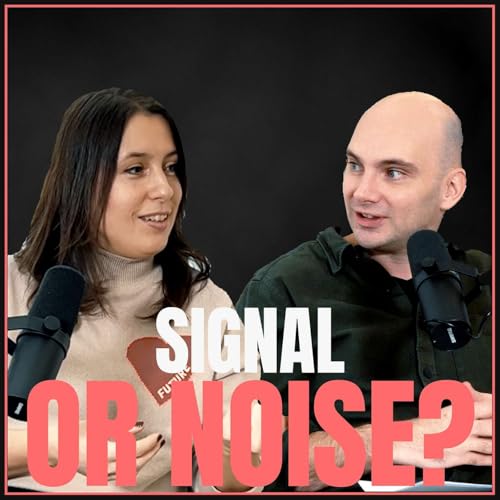
  • Signal vs Noise. Why Most Leaders Get It Wrong. Delia Wieser | Ep. 004
    Mar 24 2026

    We live in a world flooded with trends, predictions, and “what’s next” reports. AI. Sustainability. Digital transformation. The next big shift.But how much of what we call important is actually signal. And how much is just noise?

    🎙️ HXD212: Turning up the heat in hospitality. Unfiltered conversations with leaders, rebels, and builders shaping what comes next. Human-to-Human. At 212°F.

    --

    Delia Wieser is one of the sharpest thinkers on how real change happens.She works at the intersection of innovation strategy, expectation shifts, and cultural change. Helping organisations understand why most trend reports fail and why real transformation rarely comes from following hype.

    Delia is the co-author of Trend-Driven Innovation, a framework used by companies to understand how expectations reshape markets. She also wrote Road Trip to Innovation, exploring how innovation actually unfolds in the real world. Her TEDx talk challenges one of the most common misconceptions in business. That change comes from technology, when in reality it comes from shifting expectations.

    Alongside her innovation work, she founded Mama Matters, a project focused on redefining how society supports mothers. Built on a simple but powerful idea. When a baby is born, a mother is born too.In this episode, Delia explains why most organisations misunderstand the future, why innovation often turns into performance, and why judgment and clarity matter more than information.

    In this conversation, Thibault Catala and Delia Wieser explore:

    • Why most of what we call “important” today is actually noise
    • Why smart teams still follow the wrong signals
    • When innovation turned into something we perform instead of practice
    • Why more information does not lead to better decisions
    • The dangerous shortcut of following trends instead of thinking
    • How expectations shape the real direction of change
    • Why leaders should look at expectation-setters instead of customers
    • Where culture quietly drives decisions people think are rational
    • What hospitality might be focusing on that actually doesn’t matter
    • Why judgment and taste are underrated leadership skills today
    • How to operate in a world full of noise
    • Why spotting signals early matters more than predicting trends

    --

    🎧 Follow Delia :

    • Delia Wieser on LinkedIn. https://www.linkedin.com/in/deliawieser/
    • TEDx: https://www.youtube.com/watch?v=zLtikYOrjA0
    • Mama Matters. https://mama-matters.com/
    • Book: Road Trip to Innovation: https://amzn.eu/d/04eyBX8z
    • Book: Trend-Driven Innovation: Beat accelerating customer expectations https://amzn.eu/d/0f5EVvU6

    🔥 Follow Thibault & HXD212:

    • Follow Thibault Catala on LinkedIn. https://www.linkedin.com/in/thibaultcatala
    • Follow HXD212 on Instagram. https://instagram.com/hxd212
    • Follow HXD212 on TikTok. https://www.tiktok.com/@hxd212podcast
    • Catala Consulting. https://catalaconsulting.co.uk
    • Revenue Management Online Course. https://learn.thibaultcatala.com/revenuemanagement

    --

    If this episode resonated, follow HXD212 and share it with someone who cares about the future of hospitality.

    Show More Show Less
    54 mins
  • Hotel Trends Decoded: What’s Real, What’s Noise, What’s Next. Rita J Varga | Ep. 003
    Mar 4 2026

    How do you tell what’s a real hotel trend. And what’s just conference noise?

    🎙️ HXD212: Turning up the heat in hospitality. Unfiltered conversations with leaders, rebels, and builders shaping what comes next. Human-to-Human. At 212°F.

    --

    Rita J Varga, founder of RaizUp and one of the sharpest voices in hospitality commercial leadership, breaks down why the same “trends” repeat for 10–15 years. Data. Guest experience. AI. Sustainability. Different labels. Same frameworks. The real bottleneck is rarely technology. It’s leadership, trust, and execution.

    Rita sits at the intersection of hospitality talent, tech, and leadership recruitment, running programs and communities that surface what hotel teams actually struggle with day-to-day. In this episode, she explains why hotels overestimate digital maturity, why “pilot mode” kills progress, why GEO only matters if SEO basics are strong, and why accessibility is a revenue gap, not CSR.

    In this conversation, Thibault Catala and Rita J Varga explore:

    • Why hotel “trends” keep recycling with no real progress
    • The truth about data. If there’s no action, it’s useless
    • Leadership and trust as the constraint behind innovation
    • Net revenue. Real trend, but not step one
    • Retailing and attribute-based pricing. What guests would actually pay for
    • SEO vs GEO. Don’t skip the fundamentals
    • AI reality. It doesn’t replace people. It removes the tasks people hate
    • Why people don’t leave hospitality. They leave bad processes and bad leadership
    • Talent development. What hotels should do instead of “tick-box” training
    • Gender equality stats that expose a major business blind spot
    • Accessibility. A massive underserved market. And a pricing mistake hotels keep making

    --

    ⏱️ Episode chapters

    • 00:00 Introduction & Overview
    • 01:12 Data as a Trend - 15 Years of Talk
    • 03:04 Guest Experience Economy
    • 06:20 Leadership & Mindset - The Real Issue
    • 13:23 Trust & Employee Decision Making
    • 19:06 Net Revenue Discussion25:30 Future of Revenue Management
    • 29:46 SEO vs GEO - Mattering Noise
    • 37:30 Digital Maturity & AI Hype
    • 43:53 AI & Automation - Replacing People?
    • 49:43 Skills for the Future Workforce
    • 54:08 Gender Equality in Hospitality
    • 01:00:09 Talent Development Gap
    • 01:04:36 Accessibility as Revenue Opportunity
    • 01:06:29 Staffing Shortage Solutions
    • 01:09:08 Rapid Fire Questions
    • 01:12:20 Final Thoughts - Hospitality is Cool

    --

    🎧 Follow Rita & RaizUp:

    • Rita Varga on LinkedIn. https://www.linkedin.com/in/ritajvarga/
    • RaizUp. https://weraizup.com/
    • Revenue Leadership Program. https://weraizup.com/revenue-leadership-program

    🔥 Follow Thibault & HXD212:

    • Follow Thibault Catala on LinkedIn. https://www.linkedin.com/in/thibaultcatala
    • Follow HXD212 on Instagram. https://instagram.com/hxd212
    • Follow HXD212 on TikTok. https://www.tiktok.com/@hxd212podcast
    • Catala Consulting. https://catalaconsulting.co.uk

    --

    If this episode resonated, follow HXD212 and share it with someone who cares about the future of hospitality.
    Show More Show Less
    1 hr and 19 mins
  • Decisions Beat Dashboards: What Hotels Get Wrong About AI | Ep. 002
    Feb 11 2026

    How do you make good decisions in a world flooded with data and AI?

    🎙️ HXD212: Turning up the heat in hospitality. Unfiltered conversations with leaders, rebels, and builders shaping what comes next. Human-to-Human. At 212°F.

    --

    Jason Noronha, co-founder & CEO of D3x, explains why decisions beat dashboards, why “data-driven” is often a way to avoid ownership, and how AI should remove busywork so humans can focus on taste, emotion, and guest experience.

    Jason comes from hotel operations. After building a PMS, he started D3x to verticalise AI for hotels and automate guest communication across channels (chat, email, WhatsApp, social, SMS, voice). He’s seen 1M+ guest queries, and shares what guests actually ask, what guardrails hotels need, and why the next “AI wave” hasn’t fully hit hospitality yet.

    In this conversation, Thibault Catala and Jason Noronha explore:

    • Why more data doesn’t guarantee better decisions
    • How leaders use data to justify decisions already made
    • What AI is doing better than humans today (speed, consistency, no fatigue)
    • What humans still win on (taste, vibes, judgment, ownership)
    • Why the biggest risk is doing nothing. And how to “sandbox” experiments to cap downside
    • The future: premium human service vs automated everything

    --

    D3x was also featured in A16z and Andreessen Horowitz’s AI Voice Agents: 2025 Update market map (B2B) under Hospitality, alongside other vertical voice-agent platforms.

    --

    🎧 Follow Jason & D3x:

    • Jason's Linkedin - https://www.linkedin.com/in/jasonnoronhareal/
    • D3x - https://www.d3x.ai/

    🔥 Follow Thibault & HXD212:

    • Follow Thibault Catala on LinkedIn. https://www.linkedin.com/in/thibaultcatala
    • Follow HXD212 on Instagram. https://instagram.com/hxd212
    • Follow HXD212 on TikTok. https://www.tiktok.com/@hxd212podcast
    • Catala Consulting. https://catalaconsulting.co.uk
    • Revenue Management Online Course. https://learn.thibaultcatala.com/revenuemanagement
    Show More Show Less
    53 mins
  • Tradition vs Innovation: Hotel Sacher's Honest Answer | Ep. 001
    Jan 21 2026

    How does a 150-year-old luxury hotel adopt AI without losing its soul?

    --

    🎙️ HXD212: Turning up the heat in hospitality.

    Unfiltered conversations with leaders, rebels, and builders shaping what comes next. Human-to-Human. At 212°F.

    --

    In this first episode, Paul Sorantin, Commercial Director of Hotel Sacher, shares how one of the world’s most iconic heritage hotels embraces innovation without compromising what truly matters.

    Hotel Sacher in Vienna is a global symbol of tradition. Behind the scenes, it is also a modern commercial organisation navigating AI, data, revenue, leadership, and constant change.

    Over coffee, Thibault Catala and Paul explore how legacy hotels can innovate without breaking what makes them special, how technology can make service warmer rather than colder, and why judgement, storytelling, and alignment matter more than dashboards.

    --

    In this episode, we discuss:

    • Why heritage can help organisations move faster, not slower
    • Which traditions at Sacher are non-negotiable
    • What should have been automated years ago, and why it wasn’t
    • How AI can improve service without dehumanising teams
    • The biggest data challenges guests never see
    • Why luxury is shifting from perfection to presence
    • Why people resist uncertainty more than technology
    • What still makes hospitality unforgettable in an age of AI

    --

    ⏱️ Episode chapters

    • 00:00 Heritage Reloaded. Inside Hotel Sacher
    • 01:18 Revenue Management and the Future of Hospitality
    • 06:42 Tradition vs Innovation at Hotel Sacher
    • 11:09 The Human Element Behind the Data
    • 12:23 The Skills That Will Matter Most in the Future
    • 16:13 Using Technology to Make Hospitality Warmer
    • 20:04 Why People Resist Uncertainty More Than Technology
    • 25:25 The Original Sacher Torte and What It Represents
    • 28:06 What Truly Makes the Sacher Experience Special
    • 30:26 How Technology Enables Personalised Guest Experiences
    • 33:18 Human vs Tech. Where the Line Should Be
    • 37:14 Breaking Silos Between Commercial, Ops, and Leadership
    • 39:25 Key Lessons from Inside Hotel Sacher
    • 41:00 Advice for the Next Generation of Hoteliers
    • 44:15 Final Reflections

    --

    🎧 Follow Hotel Sacher & Paul

    • Hotel Sacher. https://www.sacher.com
    • Instagram. https://www.instagram.com/sacherhotels
    • Paul Sorantin on LinkedIn. https://www.linkedin.com/in/paul-sorantin-843791a8/

    🔥 Follow Thibault & HXD212:

    • Follow Thibault Catala on LinkedIn. https://www.linkedin.com/in/thibaultcatala
    • Follow HXD212 on Instagram. https://instagram.com/hxd212
    • Follow HXD212 on TikTok. https://www.tiktok.com/@hxd212podcast
    • Catala Consulting. https://catalaconsulting.co.uk
    • Revenue Management Online Course. https://learn.thibaultcatala.com/revenuemanagement

    --

    If this episode resonated, follow HXD212 and share it with someone who cares about the future of hospitality.

    Show More Show Less
    46 mins