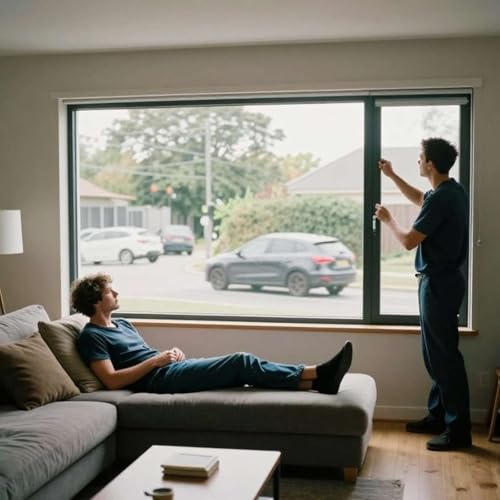
• Silent by Design: How Window Assemblies Really Block Noise (and Where They Fail
    Jan 12 2026

    In this eye-opening episode of Beyond the Glass, hosts Jan Verhoeven and Marie Dubois dive deep into why expensive "soundproof" windows often fail to deliver the peace and quiet homeowners expect. Through practical examples, real-world case studies, and expert insights, they reveal that most noise problems aren't about glass quality—they're about system failures in assembly, installation, and airtightness.


    Runtime: ~60 minutes
    Hosts: Jan Verhoeven (Building Systems Expert) & Marie Dubois (Homeowner Advocate)

    If you're dealing with noise and considering window upgrades, the message is clear: Stop guessing and start diagnosing. The solution to your noise problem is probably simpler and cheaper than you think—but only if you understand your window assembly as a complete system, not just a glass product.

    The quietest glass in the world can't beat a 1-millimeter gap. Fix the gaps first.

    🔗 Get the tools and expertise you need: https://solo.to/chassisplus

    Show More Show Less
    5 mins
  • Installation Proof, Not Promises: The Compliance Checklist for High-Performance PVC Windows
    Jan 12 2026

    In this comprehensive episode of Beyond the Glass, host Jan Verhoeven tackles one of the most critical—yet often overlooked—aspects of window performance: the installation itself. While homeowners and builders focus on choosing premium PVC windows with triple glazing and advanced hardware, the uncomfortable truth is that even the best window can perform like a cheap one if the installation fails.

    Jan delivers a practical, step-by-step compliance checklist that covers every phase of a high-performance PVC window installation: what to verify before the frame arrives on site, what to document while the work is happening, and what evidence you need after the job is finished to prove it was done correctly.


    What You'll Learn

    This episode breaks down the three pillars of window performance—the Performance Triangle:

    1. Airtightness (comfort and energy efficiency)
    2. Water management (durability and mold prevention)
    3. Thermal continuity (preventing cold bridges and condensation)

    Jan emphasizes a critical insight: most window failures happen at the interfaces—the junctions between the wall and frame, the sill connections, and the reveal transitions. Not the glass. Not the PVC profile. The edges.


    The Three-Phase Compliance Checklist


    Phase 1: Before Installation

    • Site and opening verification (measuring at multiple points, checking substrate condition)
    • Product and spec confirmation (matching install method to wall type)
    • Materials planning using the 3-Layer Concept: inner airtight layer, middle insulation layer, outer weather layer
    • Setting client expectations and documentation standards


    Phase 2: During Installation

    • Frame positioning with proper packer placement at load transfer points
    • Fixings and anchoring without over-tightening (a common mistake that warps frames)
    • Airtightness layer continuity—the most critical segment of any install
    • Thermal bridge prevention at reveals and sills
    • Water management details including sill pans, end dams, and proper drainage paths
    • Movement and expansion allowances for PVC's thermal behavior


    Phase 3: After Installation

    • Functional verification (operability, gasket compression consistency)
    • Creating an evidence pack with comprehensive photo documentation
    • Optional but powerful testing (smoke pencil, thermal imaging)


    The 7 "Looks Fine, Fails Later" Mistakes

    Jan identifies the seven most common installation errors that pass visual inspection but lead to callbacks within months:

    1. Foam-only sealing without a continuous airtight layer
    2. No sill drainage plan
    3. Over-tightening fixings
    4. Ignoring corner detailing
    5. Thermal bridges at reveals or sills
    6. Exterior seals that trap moisture
    7. Handover with zero documentation


    Real-World Case Study

    The episode includes a detailed callback scenario: a new build with premium triple-glazed windows that developed drafts, noise issues, and condensation within three months. The problem? Airtight tape that stopped 50mm short of the corners on both sides. The fix cost three times what it would have cost to do it right the first time—and could have been prevented with proper documentation and testing.


    Homeowner Takeaway

    For listeners planning window replacements, Jan provides 10 essential questions to ask any installer—from "How do you ensure airtightness around the full perimeter?" to "What documentation will I receive at handover?" These questions help homeowners separate professional installers from those relying on "trust me" assurances.


    Why This Matters

    As Jan emphasizes throughout the episode: performance is installed, not purchased. Whether you're working with a specialized window supplier in Overijse or any other provider, the quality of the installation determines whether your investment delivers the promised energy savings, comfort, and durability—or becomes a source of callbacks and complaints.

    Show More Show Less
    5 mins
  • Thermal Bridging – How Microscopic Details Cost Thousands in Energy Losses, and How to Eliminate Them at Design Phase
    Dec 31 2025

    Here's something shocking: in modern buildings, tiny construction details you can barely see can waste up to 60% of your heating energy. Most building owners have no idea it's happening.

    Welcome to Episode 2 of Beyond the Glass, where we dive deep into thermal bridging—the invisible enemy of building efficiency. These aren't dramatic structural failures. They're millimeter-scale decisions made during design and construction that create shortcuts for heat to escape around your insulation.

    In this conversation, we uncover:

    • Why thermal bridges are like wearing a winter coat with metal buttons—the coat is warm, but those metal spots create cold points right against your body

    • The four types of thermal bridges plaguing modern construction: geometry, material, junction, and repeating bridges

    • How to measure the problem with psi-values—and why Passive House sets the bar at less than 0.01 W/mK

    • The connection between cold spots, condensation, and those mysterious mold problems that appear in corners and around windows

    • Why you absolutely cannot retrofit your way out of thermal bridging—it must be eliminated at the design phase

    • The breakthrough concept of continuous insulation—being able to trace the insulation layer around an entire building without lifting your finger

    • How eliminating thermal bridges in commercial buildings could reduce heating energy use by up to 30%—a massive win for climate goals


    What makes this episode especially eye-opening is the realization that in super well-insulated modern buildings, thermal bridges become even more critical. It's like plugging all the big holes in a bucket only to realize there are dozens of pinpricks still draining away your investment.

    Whether you're an architect planning your next project, a contractor executing critical details, or a building owner wondering why your energy bills are higher than expected, this episode reveals the invisible details that separate good buildings with efficient pvc windows from great ones.

    Show More Show Less
    5 mins
  • Why Condensation Isn't a Window Problem
    Dec 31 2025

    Beyond the Glass Podcast – Episode 1


    Episode Description

    Why Condensation Isn't a Window Problem

    Water droplets on your new triple-glazed windows? Before you call the installer, you need to hear this.

    In this inaugural episode of Beyond the Glass, we dismantle the most common misconception in residential construction: that condensation means you've got bad windows. Spoiler alert – you don't.

    Drawing on 30 years of installations across Overijse and Flemish Brabant, we explain why modern high-performance windows often reveal moisture problems that were always hiding in plain sight. You'll learn the real science behind dew point, vapor migration, and why your old drafty windows never had condensation (hint: it's not because they were better).

    In this episode:

    • Why an average family produces 10-15 liters of water vapor daily – and where it goes
    • The "glass blame trap" that wastes thousands in callbacks and remediation
    • Real case study: €15,000 passive house windows in a 1930s Overijse home that "failed" after 8 weeks (spoiler: they didn't)
    • The critical difference between interior air sealing and exterior weatherproofing
    • Installation mistakes that turn windows into aquariums
    • How to communicate condensation issues to clients without finger-pointing
    • Why Belgium made mechanical ventilation mandatory – and what that means for your project

    Perfect for: Builders, installers, architects, renovation contractors, and homeowners planning high-performance upgrades in Belgium.

    Key takeaway: Condensation isn't a flaw – it's a signal. Understanding that signal means better buildings, longer lifespans, and fewer costly surprises.

    Resources: Visit ChassisPlus for condensation risk assessments, thermal imaging diagnostics, and engineered window-to-wall integration for projects across Flemish Brabant.


    Show More Show Less
    5 mins