Episode DescriptionParents of neurodivergent children are often forced into an impossible decision frame: push or protect.
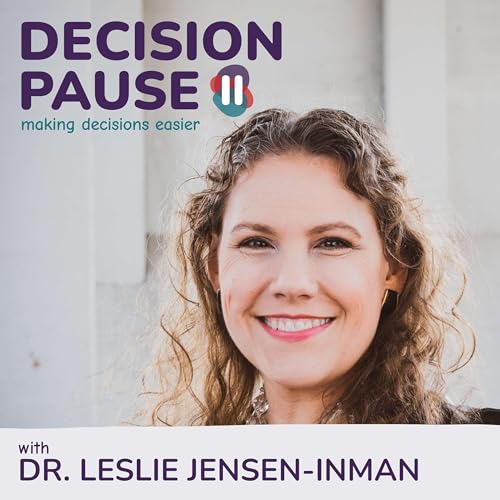
In this episode of Decision Pause, Dr. Leslie Jensen-Inman explores why this binary causes so much stress—and why the problem isn’t your ability to decide, but the question itself.
We talk about fluctuating capacity, invisible data, recovery costs, and why responsiveness is not the same as inconsistency. This episode offers a gentler way to think about decisions that honors real life, real constraints, and real nervous systems.
What You’ll Hear in This Episode- Why “push or protect” is a false and harmful binary
- How fluctuating capacity makes prediction impossible
- The hidden emotional weight many parents carry when they choose to protect
- Why changing your mind isn’t failure—it’s responsiveness
- The invisible data parents of neurodivergent children are constantly tracking
- A gentler reframe for making decisions without guilt or judgment
A Gentler ReframeInstead of asking “Should I push or protect?”, consider asking:
- What does capacity look like right now?
- What is the recovery cost of this decision?
- What am I protecting—and what am I supporting—with this choice?
- What would make this moment gentler?
Sometimes what you’re protecting is your child’s nervous system.
Sometimes it’s trust, safety, or your relationship.
Sometimes it’s your own capacity.
Those are not small things.
Key TakeawayYou are not failing when you refuse a false choice.
You are allowed to make decisions that don’t fit neatly into someone else’s framework.
And you’re allowed to decide differently at different times—without having to justify that change.
Coming Up NextIn the next episode, we’ll talk about the cost that doesn’t show up until later:
The meltdown after the activity, the next-day exhaustion, and the impacts that don’t fit neatly into reports or data.
Thank you for being here.
This has been Decision Pause—and we’ll pause again next time.


 7 mins