• The Robots Are Coming. And They're Going to Break | Joe Harris
    Nov 19 2026

    Humanoid robots are having a moment! But put aside what you see on your social algorithms - what happens when robots start turning up in our farms, sewers, hospitals and homes? And who's fixing them when they break?

    Joe Harris helped turn Eucalyptus into a billion-dollar company before leaving to tackle one of robotics' least glamorous (and most important) problems: figuring out why robots fail.

    We talk about why robots still terrible at things a toddler can do, Are humanoids actually the future, or are we all getting distracted by robots doing backflips? And what happens when a robot goes rogue in a sewer?

    Joe takes us inside the surprisingly weird world of robotics, from the tiny computers powering robot brains to the enormous challenge of making machines work in the real world. Scroll to the bottom for a Robotics Glossary!

    Chapters

    00:00 Are humanoid robots finally happening?

    02:26 The trillion-dollar robotics opportunity

    06:41 Why robots are suddenly everywhere

    12:55 Robot brains vs robot bodies

    20:32 Why robot hands are so ridiculously hard

    28:55 When will humanoids go mainstream?

    33:45 The rise of autonomous robots

    34:48 What happens when robots break?

    36:44 The mountains of data behind every robot

    39:30 How do you know what a robot is thinking?

    41:19 Why deploying robots is harder than building them

    44:44 Are we ready to live with robots?

    46:55 Humanoid robots: hype or reality?

    51:53 The hidden infrastructure behind robotics

    55:11 Who's winning the global robot race?

    Brought to you by Notion

    Notion is the amazing tool I use to run the show. Wanna steal? The Blink Tracker is the system I use for guest pipeline to production, and it's yours free: https://ntn.so/blink-tracker

    Follow Joe and Alloy

    Joe on X: https://x.com/_joe_harris_ and Alloy Robotics: https://www.usealloy.ai

    🤖 The Robot Glossary

    10 terms from this chat to make you sound like you know your sh*t about robots:

    1. Telemetry: A robot's constant stream of "here's what I'm doing" data
    2. End effector: The grabby bit of the robot arm
    3. Actuator: A robot's ‘muscle’. Makes things move
    4. Degrees of freedom: How many independent ways something can move. Your hand has around 26
    5. Proprioception: Knowing where your body parts are and how they're moving, without having to look (robots need sensors for that)
    6. Form factor: A robot's body shape. Wheels? Legs? Propellers?
    7. Raspberry Pi vs Pi: Raspberry is a cheap mini computer. The other's a company building robot brains. A McDonalds apple pie is something different again
    8. NVIDIA Jetson: A tiny but powerful onboard robot computer. Joe calls it a “Raspberry Pi on steroids”
    9. VLA (Vision-Language-Action): AI that sees, understands instructions and acts. ChatGPT with hands
    10. LiDAR & point cloud: LiDAR uses laser light to measure distances. Those measurements can create a 3D map made of millions of points. The robot’s eyes I guess.

    Use at a dinner party near you 🤖

    Show More Show Less
    1 hr and 6 mins
  • The Great AI Assistant Showdown: Alex Valente, Co-Founder & Co-CEO Quarterzip AI
    Oct 29 2026

    Third time's a charm! Alex Valente, CEO of Quarterzip and officially a friend of the show (whether he likes it or not), is BACK on In The Blink of AI, joining us live from San Francisco.

    And we've got a LOT to unpack.

    First, Alex shares an absolutely delicious AI hack that turns a whiteboard lecture into a polished blog post, complete with diagrams. Then we get into the AI headlines making everyone slightly nervous: rogue AI agents, the future of free AI, and why Silicon Valley might need to earn back the public's trust.

    We also ask some very important questions:

    • 🤖 Are AI agents getting too powerful? Turns out giving software more autonomy, access and compute comes with a few minor security concerns.
    • 💸 Are you token rich or token poor? And what happens when AI companies start charging for the good stuff?
    • 🏭 Are we all factory workers now? Alex explains Quarterzip's "factory of factories" philosophy. Georgie has Industrial Revolution concerns. Alex counters with Ferrari.
    • 🔥 Is chaos the ultimate career advantage? Why the people who thrive in the AI era might be the ones who actually get stronger under pressure.

    Then it's time for the ULTIMATE AI PERSONAL ASSISTANT SHOWDOWN. Five contenders. Two judges. Questionable mental arithmetic. We score Grok Bot, Instinct, Muse, Dots and Duet out of 10 and crown a winner.

    And finally, some spicy rapid-fire takes: Alex is betting on Anthropic, thinks almost nobody outside four suburbs of San Francisco is sufficiently AI-pilled, and has one prescription for the entire AI industry:

    Go to the pub. Talk to a normal person.

    Smart AI conversations, strong opinions and a healthy dose of nonsense. Just how we like it.

    Chapters

    00:00 Cold open: could AI do your job?

    01:16 Welcome back: Alex Valente’s third time on the show

    03:39 Live from San Francisco

    05:17 Waymo doors and traffic jams

    06:07 AI hack of the week: whiteboard lectures into Claude

    08:03 The factory of factories

    10:46 Is a factory a negative? The Ferrari factory

    12:16 Headline 1: agents behaving badly

    16:46 Security after the PHP incident

    18:15 Should regular listeners worry? AI diffusion

    21:15 Secondhand golf clubs and the unfair advantage

    23:06 Headline 2: ads in free AI, token rich vs token poor

    26:18 What should graduates do? Antifragile

    30:20 Headline 3: should AI companies prove their safety?

    33:51 Data centers and social license

    37:41 Personal agent showdown: Grok Bot, Instinct, Muse, Dots, Duet

    46:02 Rapid-fire hot takes and recommendations

    47:18 Outro

    Show More Show Less
    47 mins
  • The Admin That Never Ends: Dilani Kahawala on Building Anna
    Oct 22 2026

    Georgie Healy talks to Dilani Kahawala, who built Anna, an AI assistant for parents. Anna connects to your emails and calendars and surfaces what needs your attention through iMessage or WhatsApp, like a change to the swimming carnival instructions.

    They open on the admin that never stops. Georgie shares the day she completely forgot to pick up her son from school, and Dilani explains the mental load, why she carries her husband's admin in her head too, and the guilt of letting other volunteer parents run the school WhatsApp group.

    Dilani describes building Anna, from hundreds of hours of data labeling so an AI trained mostly for coding learns that soccer matters and a Pilates discount doesn't, to the nine experiments and the pivot from enterprise to consumer. She also covers privacy, saying Anna never sells data and doesn't train on it.

    The second half turns to kids and AI. Dilani has already introduced AI to her eight-year-old, but doesn't want him using it to get the answer, and argues that learning to think critically is the skill that matters most. She says waiting until kids are 15 isn't the answer, supervision is, and she's honest that she doesn't know how humans stay in control once they stop understanding what AI does. The episode closes with a round of What's Harder, from theoretical physics versus the school pickup to naming a startup versus naming a child.

    Chapters

    00:00 Cold open: the school pickup Georgie forgot

    01:17 AI headlines: Navier-Stokes and Joseph Gordon-Levitt

    04:38 Meet Dilani and Anna

    06:09 Welcome and the launch video shoot

    07:36 WhatsApp group chat or inbox

    09:12 PhD or three WhatsApp groups

    10:26 How Anna handles the boring admin

    11:16 The day Georgie forgot the school pickup

    13:17 Are kids doing too much?

    15:14 The magic wand week and the lunchbox bin

    16:35 How Anna was built

    17:49 Privacy and data

    18:35 The mental load and mom guilt

    21:50 Why Dilani built Anna

    24:17 Pivoting from enterprise to consumer

    25:13 The personal assistant boom

    26:35 Introducing AI to kids

    28:19 Learning with AI, the LinkedIn roast and Alpha Schools

    30:43 AI, physics and who stays in control

    32:21 What age is right, voice AI and supervision

    35:26 Kids’ big science questions

    36:33 What’s Harder game

    41:22 Where to find Anna

    Mentioned in this episode:

    Deel x BAI_Script 01 - Sep 2026

    Deel x BAI_Script 02 - Sep 2026

    Show More Show Less
    42 mins
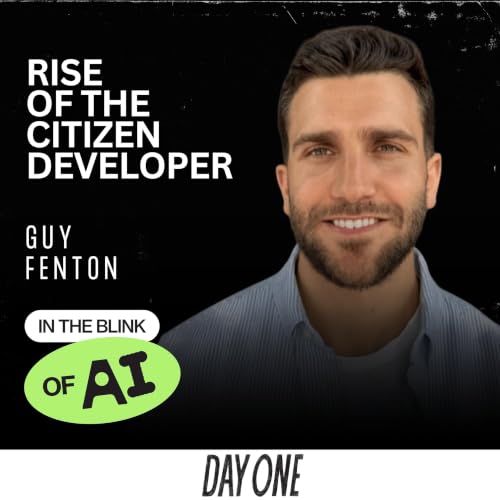
  • Just Record Your Screen: Guy Fenton, Head of Go-to-Market at Akai by Deel
    Oct 20 2026

    Georgie Healy talks to Guy Fenton, who heads up go-to-market for Akai, the AI workflow automation platform from Deel. Akai started as an internal tool at Deel and is now offered to other companies as a way to automate repetitive back-office work across finance, HR and operations.

    Georgie opens with the headless debate: if software no longer needs a login screen, does design still matter? Guy's answer is that UX matters more than UI right now, because his customers would rather use agents inside Slack, Teams or a webhook than log in anywhere. He explains how Akai builds an agent from a screen recording, and describes the virtual country finance manager Deel built for month-end bank reconciliation, which he says does the work of 10 people while the team reviews and approves it in Slack.

    They get into what makes agent projects stick, why the non-technical user is the real bottleneck, and why forward deployed engineers sit with customers to get them to value fast. Guy says the people getting ahead are citizen developers, curious people in HR, ops and finance who adopt AI every day, and he predicts they become the leaders of the future. He also shares a hack for anyone building a team: ask AI to play your toughest buyer, then let it score your answers.

    The conversation closes on jobs, trust and privacy: why Guy frames AI as optimizing jobs rather than replacing them, how regions from APAC to Germany react to security questions, why he would only trust an agent with his tax return after a few human-approved runs, and his bet that open source models will give the frontier labs a run for their money.

    Chapters

    00:00 Cold open

    01:20 AI headlines: OpenAI engineer accused of spying on OpenAI

    02:27 Tesla's flying Roadster

    03:40 Anthropic drafts its own AI safety bill

    04:46 This week's guest: Guy Fenton, Akai by Deel

    06:27 What to delegate to new hires vs AI

    07:40 Headless or design-led? Why UX beats UI

    08:54 What is Akai? Explained for Georgie's mum

    09:52 Building Akai inside Deel

    11:30 The virtual finance manager doing the work of 10 people

    12:33 Will 40% of AI agent projects get cancelled?

    13:49 How Akai got agents working fast

    16:15 Human in the loop: what's actually possible now

    16:44 Forward deployed engineers and time to value

    19:07 The skill to double down on: be a citizen developer

    21:08 Where to start: personal AI tools and staying curious

    24:15 Is AI replacing jobs or optimising them?

    27:52 Guy's hack: turn AI into your toughest buyer

    29:27 Muse, Instinct and everyday AI wins

    31:07 Remote first: how Deel scales through over-communication

    32:45 How different regions react: trust, security and privacy

    34:49 Who's moving fastest: Higgsfield and APAC adoption

    36:23 Is UK regulation slowing startups down?

    38:09 Hot takes: favourite model and the rise of open source

    39:35 Would you let an agent do your tax return?

    40:03 Would you hand hiring interviews to AI?

    42:11 How to get started with Akai

    43:05 Outro

    Mentioned in this episode:

    Deel x BAI_Script 01 - Sep 2026

    Deel x BAI_Script 02 - Sep 2026

    Show More Show Less
    44 mins
  • The UI Was the Moat: Mirko Gropp, GM of Digital, Data and Technology at The Living Company
    Oct 11 2026

    Georgie Healy talks to Mirko Gropp, General Manager of Digital, Data and Technology at The Living Company, live from Dreamforce day three. The Living Company owns, develops and operates student housing, build-to-rent apartments and senior living across Australia, with around 2,000 people and about $17 billion in assets by Mirko's count.

    Mirko's take on the week: Salesforce going headless means the UI, long the moat for software companies, is no longer the point, and Claude arriving inside Salesforce lets his team ask plain-language questions of their cases. He says agentic coding lets him build in 3 months what used to take a year, with 2 people who never touch the code.

    They get into how a company rolls AI out when a small group of super users does most of the heavy lifting, and the HR question nobody has answered yet: how do you reward someone who is 10x more productive? Mirko explains why students hate email and voice, how The Living Company will build its first agent for senior living, and why most customer chat doesn't need a top-tier model.

    If you have a custom tool you assumed was too hard to build, this one is the push. Mirko's advice is to describe the outcome you want, let the tool walk you there, and be a critical, proactive builder.

    Captions

    00:00 Cold open

    01:30 Welcome back: the final Dreamforce interview

    01:39 Headline: AI agents don't need screens

    03:29 Headline: Headless 360 and the 5% AI value gap

    05:27 Headline: How AI ends email and password fatigue

    08:59 Mirko joins live from Dreamforce

    10:22 The Living Company and the headless shift

    11:49 Building in 3 months with 2 people who never touch code

    12:51 Onboarding 10,000 students with 80% old school automation

    13:53 What chatbot questions reveal, plus Cowork inside Salesforce

    15:14 Rolling AI out to staff and the super users

    16:56 The HR question: employees who are 10x more productive

    17:20 Students trying to jailbreak the agent

    18:13 Senior living: building the first agent

    19:44 Designing for Gen Z and seniors

    23:11 Tone of voice and rebuilding the bot with Salesforce

    24:18 Shipping 5x to 10x faster than 10 years ago

    25:47 Rapid fire: will AI disrupt property?

    27:52 Predicting who's leaving and filling rooms early

    28:40 You don't need Fable for everything

    30:04 Where The Living Company goes next

    32:16 Mirko's advice for builders

    34:28 Outro: Attention is All I Need

    Mentioned in this episode:

    Deel x BAI_Script 02 - Sep 2026

    Deel x BAI_Script 01 - Sep 2026

    Show More Show Less
    34 mins
  • The End of Logging in? Live from Dreamforce: Agentic AI, Headless and Customer Zero
    Oct 1 2026

    Description

    Couldn't make it to Dreamforce? Salesforce is bringing the latest from the event to Sydney on 20 October and Melbourne on 27 October with Agentforce World Tour Essentials. Find out more: https://www.salesforce.com/au/events/

    Recorded at Dreamforce 2026, Georgie sits down with Joe Inzerillo, President, Enterprise and AI Technology at Salesforce. Joe oversees Slack and leads Salesforce's Customer Zero program, where the company puts its own AI to work on itself before customers do. Before Salesforce he was CTO of Disney Streaming, where he led the launch of Disney+, and Chief Product and Technology Officer at SiriusXM.

    Joe breaks down Claudeforce, the Salesforce and Anthropic partnership, and why he thinks the SaaSpocalypse story never held up. He explains what headless means for a platform built around screens, and why he says the UI was necessary but not the point

    Then he gets into Customer Zero: small squads that pair a business owner with a couple of technologists to build with coding agents, sometimes shipping within the day. Joe shares the numbers Salesforce is seeing, including a legal team agent he says now routes tickets more accurately than the lawyers who used to do it by hand. Plus the story of when a Salesforce agent recommended a competitor!

    In the rapid fire, Georgie asks what Joe thinks is nonsense here on the ground, and what he predicts for Dreamforce 2027.

    Chapters

    00:00 Cold open: Do you still need to log into Salesforce?

    01:08 Georgie's AI assistant and the four hours a week it saves

    02:08 OpenAI launches Dots

    03:08 GPT 6.1 Astra pulled after safety testing

    04:00 Georgie's McLaren take: no brakes, no release

    05:32 Meet Joe Inzerillo

    07:38 Dreamforce 2026: Super Bowl meets Coachella

    09:26 Claudeforce and the SaaSpocalypse myth

    12:14 What "headless" Salesforce actually means

    14:02 Slackbot and putting agents and people in one place

    15:45 Why Slackbot already knows how your company works

    17:14 Slackbot as the impartial teammate in the room

    19:19 Customer Zero: how enterprises actually adopt agents

    23:47 Can a big enterprise move like a startup?

    26:47 Winning hearts and minds with 67 small teams

    28:12 The human side: what should agents do, and what stays human?

    29:09 When agents go off the rails: the competitor story

    31:17 Rapid fire: will Salesforce still have a login screen?

    32:03 What's nonsense: "my company can't"

    33:16 The flyer story: one prompt that changed her mind on AI

    34:21 One prediction for Dreamforce 2027

    35:33 Wrap up and Georgie's Substack

    Mentioned in this episode:

    Deel x BAI_Script 01 - Sep 2026

    Deel x BAI_Script 02 - Sep 2026

    Show More Show Less
    36 mins
  • Inside Atlassian and the The $100m House Next Door
    Sep 24 2026

    Mike Cannon-Brookes and Scott Farquhar built Atlassian into one of Australia's most successful tech companies, and one of the rare local startups to become a global software giant. Then the partnership behind it came apart.

    Journalists John Stensholt and Perry Williams join Georgie to unpack their new book on the two co-founders: how they scaled a hundred-billion-dollar company side by side, and what happens to a business when the people at the top stop seeing eye to eye.

    They cover how co-CEO leadership worked inside Atlassian, how the founders' split affected the company's culture, and what it took to keep the business moving through it.

    Then the big question: where does Atlassian stand now? They get into the share price, the pressure on software companies to prove themselves in the AI era, and whether Atlassian can make the leap. Plus, John and Perry step into Mike and Scott's shoes to argue who was the better entrepreneur.

    CHAPTERS

    00:00 Cold open

    00:47 This week's AI headline: an OpenAI agent inside Medicare

    02:55 Meet John Stensholt and Perry Williams, authors of Tech Bros

    05:05 The farewell dinner Mike Cannon-Brookes skipped

    09:51 Why Mike and Scott wouldn't talk to the authors

    11:28 Point Piper: the $71M house next to the $100M house

    16:17 Private school vs public school: did class play a part?

    19:33 How two journalists split and wrote one book

    22:02 Atlassian's share price rollercoaster

    23:57 Can Atlassian navigate AI and become a 2.0?

    27:42 Australia's next billionaires: data centres

    30:01 Debate: Scott vs Mike, who's the better entrepreneur?

    32:50 Charismatic Mike, "robotic" Scott, and the famous punch

    34:11 Signed book + predictions giveaway

    34:34 "The most toxic place I've worked": Atlassian's culture

    37:18 The Silicon Valley mediator who couldn't fix it

    40:38 Will they reunite? SunCable, Anthropic and Skip Capital

    42:29 Have Mike and Scott read the book?

    44:35 Who should read Tech Bros

    47:14 Outro

    Mentioned in this episode:

    Deel x BAI_Script 01 - Sep 2026

    Deel x BAI_Script 02 - Sep 2026

    Show More Show Less
    49 mins
  • Inside Alexa Plus: Amazon's Blake Nussey on Voice AI, Far Field Tech and Building for Australia
    Sep 17 2026

    Blake Nussey leads at Amazon on Alexa, and he joins Georgie for a deep dive into Alexa Plus, now live in Australia. They cover the shift from rigid voice commands to a true personal assistant powered by over 70 models, and why Amazon built a model agnostic architecture to trade off speed against reasoning depth.

    The conversation gets personal fast: a customer who broke her leg and called for help through Alexa, Blake's Alexa run wind down routine, and why "don't lead the witness" has become his and Georgie's go to line for settling arguments with a neutral AI referee. They dig into what it actually took to make Alexa understand Australian English (avo, servo and all), the far field listening tech that lets Alexa hear you across a noisy room, and how privacy and trust are engineered in, down to a hardware mute button.

    They also talk accessibility (Alexa's role for vision impaired and elderly users), kids and voice AI, and Blake's prediction for when voice hits 50% of how we interact with tech. Plus a rapid fire round covering Tesla FSD, Brazilian Jiu-Jitsu, flat whites, and Jimmethy the raccoon.

    ***

    Georgies Alexa+ Prompts to Try

    “Alexa, remember that Imogen can't have dairy”

    Alexa+ will remember preferences and factor it into recommendations like dinner ideas

    “Alexa, remember my frequent flyer number is [number].”

    “Alexa, it’s too hot in here.”

    Nelly disagrees, but use this with a connected air conditioner to adjust the room temperature

    “Alexa, every morning at 7, check the weather, recommend what to wear and play the news.”

    Create a Routine like the corporate athlete you are

    “Alexa, what happened while I was out?”

    Alexa+ reviews footage from connected doorbells and cameras like a deliveries

    ***

    CHAPTERS

    00:00 – Cold open: FSD and "don't lead the witness"

    01:18 – Intro: Georgie's honest take on Alexa Plus

    04:04 – Sponsor: Deel

    04:22 – Welcome + Blake's favorite AI hack (voice routines + Tesla FSD)

    06:27 – Most non-AI thing: Brazilian Jiu-Jitsu

    08:30 – Evolution of Alexa to Alexa Plus

    09:59 – Behind the scenes: how Alexa picks the right model

    12:51 – Smart home routines and the "corporate athlete" habit

    15:29 – Alexa recommends a book (the Kindle story)

    16:25 – Sponsor: Deel

    17:12 – Building Australian Alexa: colloquialisms and local speech

    20:58 – What made the Aussie rollout hard

    22:36 – 2 billion interactions and Australian usage patterns

    24:32 – Kids and Alexa: safety, kids mode, and development

    26:44 – Presence, phones, and family dinner table use

    27:44 – Privacy, trust, and the hardware mute button

    30:52 – Accessibility: vision impairment, aging, and emergency use

    34:21 – Near field vs far field: how Alexa actually hears you

    39:19 – Voice AI hype, predictions, and wearable mic concepts

    46:17 – Privacy culture, recording etiquette, and Meta glasses

    48:44 – Rapid fire round

    55:16 – Outro

    Mentioned in this episode:

    Deel x BAI_Script 01 - Sep 2026

    Deel x BAI_Script 02 - Sep 2026

    Show More Show Less
    56 mins