• Elite Performance: 50 years as a Sport Psychologist
    Nov 18 2026

    What separates good athletes from legends?

    Working with elite athletes for 30+ years, Dr Gary Hermansson shares his learnings.

    In this conversation he explains the unhelpful part of pressure coming from expectations, how mind and body can get out of sync, and what to do when it shows up. Particularly helpful is the "Go Left" model from 00:38:58.

    Gary is Professor Emeritus at Massey University (New Zealand) and an Officer of the New Zealand Order of Merit. He has worked as a psychologist for 50 years, and specifically in sports performance for 30!

    We talk about his beginnings in psychology and sport, the nature of performance mindset and how sport is an intensification of what we all experience in life.

    In this episode:

    • Why pressure comes from expectations about the future, while delivery happens in the present moment

    • Mind and body in alignment, the survival response (fight, flight, freeze) and how apprehension turns into choking

    • The Go Left model: using attention like "mental power steering" to get back to what you can control (from Gary's 2012 paper with Ken Hodge, "Uncontrollable outcomes: Managing expectations at the Olympics")

    • What a team psychologist actually does at an Olympics, and how labels, confidentiality and being "everyone's person" play out

    • Young athletes, parents, narrowing down too early, and what happens to identity when sport is all you are

    • A career that wasn't planned: failing School Certificate, rugby, studying in the US, and saying yes to opportunities

    • What makes NZ athletes different, welcome ceremonies in the Olympic village, and being the underdog

    • Sports such as archery that require fine moto skills, ADHD and attention • Competitiveness, and a story about Kobe Bryant

    • The post-Games slump, what the work teaches the practitioner, ageing and retirement

    • Gary's advice for listeners

    This is a general conversation, not therapy or medical advice.

    Inked Psycho is hosted by Matt Hegan, a registered psychologist in Tauranga, Aotearoa New Zealand.

    00:00:00 Opening highlights

    00:01:06 Welcome, Gary Hermansson

    00:06:14 Failing School Certificate

    00:11:19 Rugby, Berkeley and the road to Massey

    00:18:07 Why narrowing down too early is risky for young athletes

    00:22:06 Parents, pressure and what kids need

    00:28:11 What a team psychologist is actually there to do

    00:32:23 When your worth gets tied to the result

    00:38:58 The Go Left model for Elite Performance-intro

    00:42:26 The Go Left model for Elite Performance-unpacked

    00:43:03 How apprehension turns into choking 00:53:08 Athlete pushback and the sport psychologist label

    00:58:43 Confidentiality and handling multiple roles as a psychologist

    01:04:57 Supporting an athlete under gold-medal expectations

    01:11:20 The post-Games slump

    01:14:52 NZ identity, welcome ceremonies and the Olympic village

    01:19:03 What makes NZ athletes different

    01:26:44 Underdogs and having something to lose

    01:35:40 Fine motor skill sports like Archery, and imagery

    01:43:12 ADHD, attention and high performance

    01:47:45 Kobe Bryant

    01:52:46 Competitiveness and identity

    01:55:24 Physicality, mindset and how the game has changed

    02:00:35 Athletes who play week after week vs every four years

    02:04:11 Gary's own controllable triggers

    02:07:07 What the work taught the practitioner

    02:21:06 Gary's advice for listeners

    Hey! I'd love to hear your thoughts, send me a voice note.

    Show More Show Less
    2 hrs and 23 mins
  • From Prisons to Boardrooms: A Forensic Psychologist on Neurodiversity and Change
    Oct 28 2026

    Meet a forensic psychologist with 30 years experience in prisons, boardrooms and "normal" people: what drives behaviour, why neurodiversity matters, and what burnout taught him.

    Anton Ashcroft trained as a forensic psychologist in the UK prison service. He worked with people experiencing homelessness, then moved to New Zealand, where he developed the Adult Sex Offender Treatment Program and prison Alcohol and Drug interventions.

    He now consults on neurodiversity and leadership.

    In this conversation with Matt, Anton covers:

    💎How prisons moved from punishment to rehabilitation, and why radical candor beats both “teddy bear” and punitive approaches.

    💎Why he believes a need can never be antisocial, and whether anyone is truly “evil”

    💎Working with narcissists and psychopaths, in prison and in senior management

    💎Living with ADD, and why playing to your strengths beats fixing deficits

    💎Why neurodiversity matters at work, and recruiting for brain wiring over competencies

    💎Burnout, Lyme disease and the “mental health spoons” idea

    💎Advice for anyone considering a career in therapy: “sort your own s*** out first”

    Hey! I'd love to hear your thoughts, send me a voice note.

    Show More Show Less
    1 hr and 27 mins
  • Psychology AND Spirit: decades of bicultural practice
    Oct 14 2026

    What happens when Te Ao Māori and Western clinical psychology meet in some of the country’s highest-risk environments?

    In this episode of Inked Psycho, cultural consultant and therapist Mate Webb shares his remarkable journey—from carver to postgraduate CBT practitioner working in a specialized child sex offender treatment unit.

    Mate explains how holding indigenous wisdom and clinical practice side by side creates a powerful framework for real rehabilitation.

    We dive into what Western clinical frameworks often overlook—from wairua and matakite to collective identity—and why his approach centers on "leaving the taiaha at the door and bringing a feather."

    Whether you are a psychologist, counsellor, social worker, student, or curious about the intersection of culture, faith, and healing, Mate’s insights offer profound lessons for practice in Aotearoa and beyond.

    In this conversation:

    • From woodcarver to forensic treatment unit: 18 years at Te Piriti

    • Learning CBT and being told to "park the Māori stuff"

    • Te Whare Tapa Whā & the double-hulled waka (tikanga takirua)

    • "Leave the taiaha at the door, bring a feather": Leading from humility

    • Wairua, makutu, and matakite: Why seeing a spirit isn't necessarily schizophrenia

    • Utu, muru, and understanding collective identity

    • Mentoring the next generation of psychologists in Aotearoa

    • Walking between Catholic faith, Māori worldview, and clinical ethics

    • What genuine rehabilitation requires after prison release

    #Psychology #IndigenousPsychology #MentalHealth #Aotearoa #Counselling

    Hey! I'd love to hear your thoughts, send me a voice note.

    Show More Show Less
    1 hr and 21 mins
  • Learnings from 30 years of Narrative Therapy
    Oct 2 2026

    What if the problem isn't who you are?

    Narrative therapist Dr Donald McMenamin has spent 30 years and thousands of conversations helping people separate themselves from their problems and step into more nourishing stories about who they can be.

    In this episode, we talk about his "two islands and a boat" metaphor, a kid at risk of expulsion who went from E's to A's, and why Donald believes problems are like bullies: they want all the air time.

    We also get into restorative practice in schools, what people actually come to therapy for, why he cut his caseload from 30 clients a week to about 6, and how his faith, his family and optimistic worldview help shape the way he works and lives.

    If you're a counsellor, therapist, student or just curious about how stories shape identity, this one is for you.

    In this conversation:

    💎 The person isn't the problem. Externalising problems, "two islands and a boat," and identity as a library of stories.

    💎Identity needs an audience. Communities that notice and witness a new story.

    💎Assuming an ethical self. People move toward the good. This is a gift you can give as a therapist.

    💎Restorative over punitive. The school examples, from expulsion hearings to the undercover teams.

    💎Maturing as a practitioner. Learn the scales, then play the jazz. Be yourself but not naively. Relax into the work and trust that something will turn up.

    💎What people come for: Listening, skills of living, identity, restoring relationships.

    💎Suffering and hope. Difficulty doesn't get to define you, and we can be present with each other in pain.

    💎Sustainability and the arc of a career. Caseload, fees, portfolio work, and retiring into "play" (woodturning, singing, tramping, possibly priesthood).

    Hey! I'd love to hear your thoughts, send me a voice note.

    Show More Show Less
    2 hrs
  • Bomb-sniffing dogs, human actions and risk: Learnings from a career in Psychology Research
    Sep 14 2026

    Dr. Rebecca Sargisson is a behavior analyst whose career in research has taken her from chicken labs to war zones to climate psychology in the Netherlands.

    A candid, surprising conversation about risk, behaviour change, and why humans are a lot more like dogs (and pigeons) than we'd like to admit.

    In this conversation:

    🔹 Why an entire UN landmine-detection program had to be shut down

    🔹 Bees, elephants, and giant rats: the strange animals being trained to detect landmines and disease

    🔹 Why playgrounds have gotten "too safe", and what kids lose because of it

    🔹 The behaviourist case that your attitudes don't shape your behaviour- your behaviour shapes your attitudes

    🔹 Why demographics barely predict who cares about the environment

    🔹 How AI is quietly eroding critical thinking in university students

    A wide-ranging conversation about risk, behavior change, and what actually drives human (and animal) decision-making.

    Hey! I'd love to hear your thoughts, send me a voice note.

    Show More Show Less
    1 hr and 35 mins
  • 30+ Years with Criminal Minds: what Psychopaths taught me about life, change and meaning.
    Sep 13 2026

    Dr. Nick Wilson is one of New Zealand's foremost forensic and clinical psychologists- a former police officer and nightclub bouncer who went on to conduct the largest long-term study of its kind: tracking psychopathic offenders after release.

    He has created numerous assessment tools used around the world, and is a sought after keynote speaker at conferences.

    In this episode, Dr Nick shares:

    🔹 Inside look at psychopathy research and behaviour change

    🔹 Why "psychopath" doesn't mean "untreatable", why avoidance can sometimes be a helpful strategy, and what actually changes risk

    🔹 The truth about why self-help books end up in the bargain bin

    🔹 Viktor Frankl, logotherapy, and finding meaning in suffering

    🔹 Why everyone wants an ADHD or autism diagnosis- and nobody wants a personality disorder one

    🔹 How he manages his mental health and the emotional weight of 30 years in this field

    🔹 What the future of psychology looks like in the age of disruption and AI

    A masterclass in psychology, criminal justice, and what it really means to help people change.

    Hey! I'd love to hear your thoughts, send me a voice note.

    Show More Show Less
    2 hrs and 24 mins
  • Beyond Labels: A Child Psychologist's Perspective on Helping Kids
    Sep 13 2026

    For more than 30 years, Dr. Peter Stanley worked as a child psychologist, teacher, academic, police officer, and probation officer.

    In this conversation, he reflects on the biggest lessons from a lifetime of helping children and families with their behaviours and mental health challenges. We explore why he believes psychologists should always be "working for the child," why he moved away from an expert-driven model of psychology, and why he holds differing views about diagnosis and labels.

    Whether you're a psychologist, teacher, parent, or simply interested in mental health, this conversation will challenge many assumptions about how we understand children's behaviour and how meaningful change actually happens.

    In this episode we discuss:

    • Dr. Stanley's journey into psychology
    • Why psychologists should always work for the child
    • The evolution of educational psychology Inclusion vs exclusion in schools
    • Diagnosis
    • The importance of parenting and relationships
    • Applied Behaviour Analysis (ABA)
    • Incredible Years parenting programmes
    • Lessons from over three decades in psychology

    Hey! I'd love to hear your thoughts, send me a voice note.

    Show More Show Less
    1 hr and 3 mins
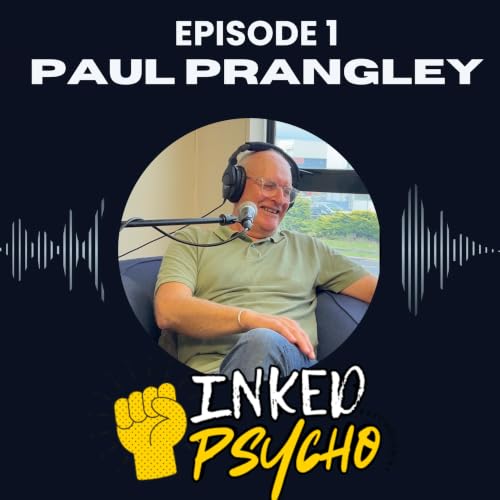
  • Lessons From Experience : 40 Years in Psychology (Paul Prangley, Psychologist)
    Sep 12 2026

    What does 40+ years as a psychologist teach you about being human and mental health? Paul Prangley began his career as a teacher before training as one of the country's earliest registered psychologists.

    In this wide-ranging conversation, he shares with Inked Psycho what he's learned from working with thousands of clients and systems: street kids in Auckland, complex family court cases, supporting schools through suicide clusters, and helping his own daughters navigate adolescence- with a rum-and-coke bottle and a taxi account that asked no questions.

    Paul reflects on the neuroscience of stress, why diagnosis can be both liberating and a trap, what it really costs to sit with other people's pain, and why the most useful thing psychology ever gave him was the ability to look for what's going right.

    Whether you're in the helping professions, curious about mental health, or just want to raise resilient kids, this episode is full of hard-won wisdom.

    Trigger warning: some discussion around topic of suicide

    Hey! I'd love to hear your thoughts, send me a voice note.

    Show More Show Less
    1 hr and 45 mins