

Leading Beyond the OR: Lessons from U.S. Surgeon General Jerome Adams
Failed to add items
Add to cart failed.
Add to wishlist failed.
Remove from wishlist failed.
Follow podcast failed
Unfollow podcast failed

Leading Beyond the OR: Lessons from U.S. Surgeon General Jerome Adams
-
Narrated by:
-
Written by:
Technical excellence has always been central to anesthesiology. Increasingly, however, the future of the specialty will depend on something equally important: leadership, communication, and the ability to build trust.
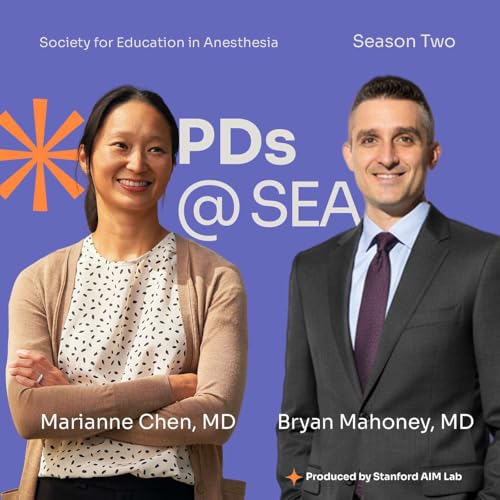
In this episode of PDs at SEA, Dr. Marianne Chen welcomes former U.S. Surgeon General Dr. Jerome Adams for a wide-ranging conversation about what anesthesiology educators should be teaching beyond clinical knowledge. Drawing on his experience as a practicing anesthesiologist, state health commissioner, U.S. Surgeon General, and current Director of Purdue University’s Center for Health Equity, Dr. Adams reflects on how trust shapes patient care, public health, and the future of medicine.
The discussion explores why communication deserves to be taught with the same rigor as procedural skills, how advocacy should begin with the needs of patients rather than the profession, and why leadership training can no longer be viewed as optional for physicians. Dr. Adams also shares practical ideas for incorporating communication, systems thinking, artificial intelligence, and leadership development into residency education while encouraging educators to identify and cultivate future physician leaders.
The conversation concludes with reflections on mentorship, service, and the importance of saying “yes” to opportunities early in one’s career. Throughout, Dr. Adams offers a compelling vision of anesthesiologists as clinicians, educators, advocates, and trusted leaders capable of improving not only individual patient encounters but the healthcare system itself.
Key Takeaways From This Episode
- Trust is one of the most important determinants of effective patient care and public health.
- Communication should be taught, practiced, and assessed with the same intentionality as procedural skills.
- Advocacy is most effective when it begins with patients’ interests rather than physicians’ interests.
- Leadership, systems thinking, and health policy should become core components of anesthesiology training.
- Artificial intelligence will change anesthesiology, making adaptability and critical evaluation essential skills.
- Early involvement in organized medicine and advocacy creates opportunities for future leadership.
- Mentorship shapes careers by helping learners recognize possibilities they cannot yet see in themselves.
Especially Useful For
Program directors, associate program directors, clerkship directors, faculty educators, residents interested in leadership and advocacy, department chairs, and anyone interested in preparing anesthesiologists to lead both inside and beyond the operating room.
Related Episodes
- Early Exposure, Better Advice: Medical Student Education and the Future of Anesthesiology
- Everything You Wanted to Know About Being a Program Director
- Global Health Opportunities in Anesthesia