• A Conversation with Author & Self-Advocate Helen Simpson
    Feb 23 2026

    In this episode of Living with FASD, host Patti Kasper and fellow author & self-advocate Helen Simpson explore their personal journeys with Fetal Alcohol Spectrum Disorder (FASD), the difference early diagnosis can make, and the importance of advocacy and community support. They share their experiences with bullying, the challenges of parenting children with FASD, and the need for more resources and understanding in the medical and educational systems. They also discuss the power of storytelling and literature in creating positive narratives for those affected by FASD, emphasizing the importance of compassion and support within the community.

    Takeaways

    Early diagnosis can significantly change the support and resources available to individuals with FASD.

    Social challenges and bullying are common experiences for those with FASD.

    Literature can empower children with FASD by providing positive narratives.

    Advocacy is crucial for improving resources and support for individuals with FASD and their families.

    Parenting children with FASD requires patience and understanding of their unique challenges.

    Community support through social media has transformed advocacy for FASD.

    There is a need for more programs focused on women in recovery from substance abuse.

    Compassion and understanding are essential in addressing the challenges faced by birth mothers of children with FASD.

    Self-care and finding joy are important for individuals living with FASD and their families.

    If you want to reach Patti to discuss either FASD training or life coaching, you can schedule a call using this links: https://calendly.com/kaspertrainingandcoaching/consultation . Additional training topics can be found on her website, www.patriciakasper.com .

    If you want to pick up a copy of Patti’s book, Sip by Sip: Candid Conversations with Adults Living with FASD, go to either www.books.by/yourfasdcoach or Amazon (https://a.co/d/3XLnCyw ) Both are print-on-demand from a printer near you, but books.by pays its authors a few more dollars in royalties.

    If you want to pick up a copy of ABC’s of FASD, here is Helen’s Amazon link: https://a.co/d/fXI9grB .

    Chapters

    00:00 Introduction to Living with FASD

    01:46 Personal Journeys: Diagnosing FASD

    09:28 The Impact of Diagnosis on Life

    14:22 Creating Positive Narratives through Literature

    20:41 Advocacy and Community Support

    25:04 Parenting Challenges and Insights

    30:41 Future Aspirations for FASD Awareness

    36:34 Compassion and Understanding in the FASD Community

    Show More Show Less
    40 mins
  • Understanding Emotional Regulation in Neurodivergent Individuals
    Feb 16 2026

    In this episode of Living with FASD, host Patti Kasper talks with AJ Locascio, founder of Umbrella ND, about the emotional regulation challenges neurodivergent people face, including those with FASD, autism, and ADHD. They explore how sensory environments, trauma histories, & everyday microaggressions can lead to dysregulation, panic, and disconnection, and why understanding individual sensory profiles and creating supportive spaces is so important. AJ shares her journey from middle school teacher to community advocate, emphasizing the value of connection, self-advocacy, and accommodations in schools, medical settings, and public spaces.

    Patti and AJ also dive into language, communication, and the role of curse words as a coping strategy for some neurodivergent individuals, explaining how the brain can retain emotionally charged words even when other language skills are compromised. They call for more nuanced, context-aware interpretations of behavior that prioritize safety, self-awareness, and emotional regulation over compliance. Throughout the conversation, they highlight how advocacy is both necessary and exhausting, reinforcing that no one should have to do it alone and that community support is essential for emotional well-being.

    Takeaways:

    • Emotional regulation is crucial for neurodivergent individuals.
    • Microaggressions can significantly affect emotional responses.
    • Supportive, sensory-aware environments help reduce dysregulation.
    • Knowing one’s sensory profile allows for better support and accommodations.
    • Community and connection are vital for long-term well-being and advocacy.

    Memorable quotes:

    • “When we are losing our ability to use language, we hang on to any words that get a big reaction from people.”
    • “There’s no such thing as a bad word; it’s context specific.”
    • “Connection can definitely happen even when you’re alone.”
    • “Self-awareness is the key to becoming regulated when you’re dysregulated.”
    • “Advocacy is exhausting; we all need advocates.”

    Stay connected:

    • Like, share, and follow the Living with FASD podcast to help spread awareness and understanding.
    • Contact Patti: livingwithfasdpodcast@gmail.com | www.patriciakasper.com
      Schedule a complimentary call: https://calendly.com/kaspertrainingandcoaching/consultation
    • Patti’s book, Sip by Sip: Candid Conversations with Adults Living with FASD: www.books.by/yourfasdcoach or Amazon.
    • Connect with AJ and Umbrella in D: www.umbrelland.org | All AJ’s links: https://dot.cards/ajlocashio

    Recommended resources:

    • Jaak Panksepp’s TED Talk: https://www.youtube.com/watch?v=65e2qScV_K8
    • Burnout by Emily & Amelia Nagoski: https://a.co/d/eJaSFDR
    Show More Show Less
    1 hr and 10 mins
  • Exploring Neurodivergence: Communication Challenges
    Feb 2 2026

    This conversation explores the complexities of communication challenges faced by individuals with neurodivergence, particularly focusing on FASD and autism. Host Patti Kasper and special guest Carolyn Kiel, host of the podcast Beyond 6 Seconds, discuss the importance of storytelling, the impact of sensory overload, and the need for understanding and support within the neurodivergent community. They emphasize the significance of recognizing diverse experiences and the necessity of inclusive conversations that involve those with lived experiences. The discussion also touches on the stigma surrounding prenatal alcohol exposure and the importance of self-advocacy and grace in navigating these challenges.

    Takeaways

    Stories are relational and bring emotional learning.

    Communication challenges vary widely across neurodivergence.

    Expressive language skills can mask comprehension deficits.

    Sensory overload can lead to communication breakdowns.

    Safe spaces are crucial for emotional regulation.

    Self-regulation strategies are essential for neurodivergent individuals.

    Understanding one's neurodivergence can lead to self-acceptance.

    Inclusive conversations are necessary for effective support.

    The stigma of prenatal alcohol exposure affects diagnosis.

    Support should be tailored to individual needs.

    To reach Patti Kasper, perhaps to suggest topics or guests, or to ask questions, or even just to say hello, email her at livingwithfasdpodcast@gmail.com .

    To reach Patti to explore FASD Life Coaching for yourself as an adult or as a parent of a little, or to arrange for professional development or community agency training on FASD, you can arrange for a consult at https://calendly.com/kaspertrainingandcoaching/consultation

    To order a copy of Patti’s book, Sip by Sip: Candid Conversations with Adults Living with FASD, visit books.by/yourfasdcoach or Amazon. (Both are print on demand at a printer near you, but books.by offers its authors a few dollars more in royalties.)

    To listen (and subscribe) to Carolyn’s podcast, Beyond 6 Seconds, you can find it here: https://open.spotify.com/show/43W7RSYBMRsT4ktoFSHpau?si=77ec834a13c443a9

    You can also visit her website at www.beyond6seconds.net.

    Please remember to like, subscribe & share this podcast so that more people can discover it and learn about FASD.

    Chapters

    00:00 Introduction and Collaboration

    02:48 The Power of Storytelling

    04:01 Communication Challenges in Neurodivergence

    10:26 Expressive vs. Receptive Language Skills

    18:31 The Impact of Sensory Overload

    25:08 The Importance of Safe Spaces

    30:33 Finding Balance and Self-Regulation

    34:19 Understanding Neurodivergence

    39:22 The Stigma of Prenatal Alcohol Exposure

    46:30 The Need for Inclusive Conversations

    51:44 Supporting Neurodivergent Individuals

    56:55 Conclusion and Future Topics

    Show More Show Less
    51 mins
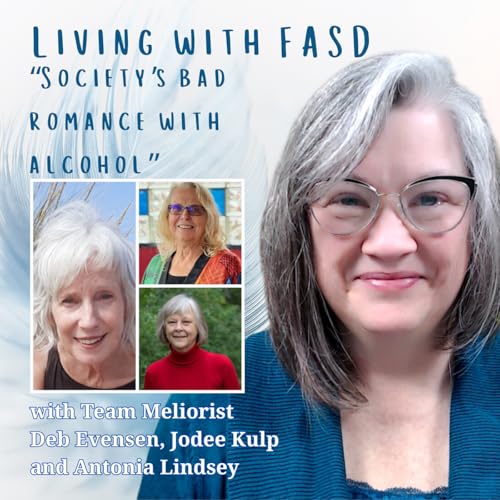
  • FASD Meliorists Take on Society’s Bad Romance with Alcohol
    Jan 26 2026

    This conversation delves into the complexities surrounding Fetal Alcohol Spectrum Disorders (FASD) and the societal implications of alcohol consumption, particularly during pregnancy. The Meliorists discuss the stigma associated with alcohol use, the powerful lobbying of the alcohol industry, and the need for greater awareness and support for those affected by FASD. Personal stories highlight the challenges of sobriety and the importance of community support. The discussion emphasizes the need for open conversations about alcohol's impact on fetal development and the role of trauma in addiction. Ultimately, the speakers advocate for a cultural shift towards understanding and supporting individuals with FASD and their families.

    Takeaways

    Alcohol is a neurotoxin that affects fetal development.

    The alcohol industry has a powerful influence on societal norms.

    Sobriety can be a challenging journey for many individuals.

    Support systems for pregnant women are often lacking.

    Community initiatives can raise awareness about FASD.

    Trauma plays a significant role in alcohol use and addiction.

    Cultural norms often normalize alcohol consumption in social settings.

    Education about fetal development is crucial for preventing FASD.

    Conversations about alcohol and its effects need to be more open.

    Embracing neurodiversity can lead to a more inclusive society.

    Jodee mentioned that all four of us have FASD books out. Here are the links:

    Deb Evensen: Thirteen Beams of Moonlight: Gentle Guidance for Families & Communities Living with FASD. https://a.co/d/fvdrZmU

    Patricia Kasper: Sip by Sip: Candid Conversations with Adults Living with FASD www.books.by/yourfasdcoach

    Jodee Kulp: Embracing Zak: Community Compassion is a Powerful Force https://a.co/d/fvdrZmU

    Antonia Rathbun Lindsey: Parenting Your Porcupine: A Toolkit for Children with FASD, Other Drug Effects & Neurodiversity https://a.co/d/dBCjKJK

    If you would like to reach Patti, you can email her at livingwithfasdpodcast@gmail.com. Visit her website at www.patriciakasper.com to learn more about her coaching and professional development training services, or visit ttps://calendly.com/kaspertrainingandcoaching/consultation to schedule a complimentary call.

    As always, please remember to like, subscribe & share this podcast, so that more people can discover it and learn more about Fetal Alcohol Spectrum Disorders.

    Chapters

    00:00 Introduction to FASD and Alcohol's Impact

    03:08 The Social Acceptance of Alcohol

    05:57 Personal Stories and Sobriety Challenges

    08:50 Support Systems for Pregnant Women

    11:45 Community Initiatives and Awareness

    15:05 The Role of Trauma in Alcohol Use

    17:59 Cultural Norms and Alcohol Consumption

    21:07 The Disconnect in Understanding Fetal Development

    24:10 The Importance of Conversations

    27:12 The Need for Education and Awareness

    30:09 The Power of Community Action

    32:55 Legacy and Future Generations

    35:53 Embracing Neurodiversity

    39:01 Conclusion and Future Discussions

    Show More Show Less
    42 mins
  • Understanding Perseveration in FASD with Tami Eller
    Jan 19 2026

    In this episode of Living with FASD, host Patti and guest Tami Eller discuss the complexities of living with Fetal Alcohol Spectrum Disorder (FASD), focusing on the concept of perseveration, which refers to the tendency to get stuck on certain thoughts or activities. They explore the impact of privilege, trauma, and misconceptions surrounding FASD, emphasizing the importance of caregiver support and emotional regulation. The conversation highlights strategies for managing perseveration, the significance of closure, and the need for radical acceptance in navigating the challenges of neurodiversity. Tami shares her personal experiences and insights as a clinician working with youth affected by FASD, advocating for understanding and support within families and communities.

    Takeaways

    Perseveration is a common challenge for individuals with

    FASD.

    Closure is essential for individuals to move on from tasks.

    Privilege and trauma significantly impact outcomes for those with FASD.

    Misconceptions about FASD can lead to emotional distress.

    Caregivers play a crucial role in managing perseveration.

    Radical acceptance helps in coping with FASD challenges.

    Assertive communication is vital for expressing needs.

    Planning ahead can minimize instances of perseveration.

    Understanding neurodiversity is key to effective support.

    Emotional regulation is important for both caregivers and individuals.

    As always, please remember to like, share, and follow the Living with FASD podcast to help spread awareness and understanding.

    If you would like to reach Patti, you can email her at livingwithfasdpodcast@gmail.com. Visit her website at www.patriciakasper.com to learn more about her coaching and professional development training services, or visit ttps://calendly.com/kaspertrainingandcoaching/consultation to schedule a complimentary call.

    If you would like to pick up a copy of Patti’s book, Sip by Sip: Candid Conversations with Adults Living with FASD, visit www.books.by/yourfasdcoach or Amazon. (Both print on demand, but due to lower overhead costs, books.by is able to pay its authors a few more dollars in royalties.)

    Chapters

    00:00 Introduction to FASD and Guest Background

    03:11 Understanding Perseveration and Its Impact

    05:54 The Role of Privilege and Support in FASD

    08:51 The Misconceptions of FASD and Intelligence

    12:01 Navigating Emotional Responses and Expectations

    14:52 Perseveration: Challenges and Strategies

    17:56 The Importance of Closure in Perseveration

    20:59 Perseveration in Arguments and Family Dynamics

    24:00 Reframing Perseveration as a Strength

    26:52 Conclusion: Managing Perseveration for Positive Outcomes

    28:36 The Power of Tenacity and Acceptance

    30:01 Managing Mental Load in Caregiving

    32:51 Learning Through Repetition and Support

    33:42 Understanding Neurodiversity and Personal Experience

    40:11 Navigating ADHD and Autism in Neurodiversity

    45:23 Radical Acceptance and Self-Regulation in Caregiving

    48:24 Assertive Communication in Relationships

    Show More Show Less
    47 mins
  • The Intersection of FASD & ADHD: Insights from Todd Capes' Research Journey
    Jan 12 2026

    In this enlightening episode of Living with FASD, host Patti Kasper welcomes Todd Capes, a dedicated PhD student at at Birmingham City University in the UK who is passionately researching the differentiation between Fetal Alcohol Spectrum Disorders (FASD) and Attention Deficit Hyperactivity Disorder (ADHD). Todd shares his journey into the world of FASD, detailing his systematic review that sparked his interest and led him to pursue a PhD focused on improving differential diagnosis and identifying the differences in attention and decision-making between FASD and ADHD, using an experimental and computational approach.

    The conversation delves into the complexities surrounding the comorbidity of FASD and ADHD, exploring the nuances of diagnosis and the significance of understanding the overlap between these conditions. Todd highlights the challenges of recruiting participants for his research, particularly adults with FASD, and the importance of building a comprehensive understanding of the spectrum.

    Listeners will gain insights into Todd's innovative research methods, including attention and decision-making tasks designed to uncover the distinct cognitive profiles of individuals with FASD and ADHD. The discussion also touches on the implications of prenatal alcohol exposure, the role of executive functioning, and the critical need for tailored interventions that address the unique challenges faced by individuals on the spectrum.

    As Patti and Todd explore these vital topics, they emphasize the importance of advocacy, awareness, and informed care for individuals living with FASD. This episode is essential for parents, caregivers, educators, and anyone interested in the complexities of FASD and the potential for positive change through research and understanding.

    As always, please remember to like, share, and follow the Living with FASD podcast to help spread awareness and understanding.

    If you would like to reach Patti, you can email her at livingwithfasdpodcast@gmail.com. Visit her website at www.patriciakasper.com to learn more about her coaching and professional development training services.

    To learn more about Todd's research and how you can participate, go to todd.capes@mail.bcu.ac.uk

    #FASD #LivingWithFASDpodcast #ADHD #Research #Awareness #Advocacy #Support

    Show More Show Less
    50 mins
  • Passage of the FASD Respect Act: Next Steps in Advocacy
    Feb 9 2026

    In this episode of Living with FASD, Patti talks with FASD United’s Jen Wisdahl and Susan Shepard Carlson about the recent signing of the FASD Respect Act into law, highlighting the journey of advocacy that led to this significant achievement. They emphasize the importance of community involvement, storytelling, and continued advocacy on both State and Federal levels to ensure the successful implementation of the Act. The conversation also touches on upcoming events, educational initiatives, and the need for ongoing support and engagement within the FASD community.

    To get involved, visit www.fasdunited.org

    To reach Patti, for FASD training or life coaching, visit https://calendly.com/kaspertrainingandcoaching/consultation to schedule a call, or visit her website at www.patriciakasper.com.

    To get a copy of Patti's book, Sip by Sip: Candid Conversations with Adults Living with FASD, visit books.by/yourfasdcoach or find it on Amazon. (Both are print on demand, but books.by has less overhead and pays its authors a few dollars more in royalties.)

    Chapters

    00:00 Introduction to the FASD Respect Act

    03:01 The Journey to Legislative Success

    06:01 Community Advocacy and Engagement

    08:59 The Role of Stories in Advocacy

    12:03 Understanding the FASD Respect Act

    15:08 Next Steps for Implementation

    17:50 The Importance of Continued Advocacy

    21:01 Educational Initiatives and Community Involvement

    24:08 Building a Supportive Community

    26:47 Upcoming Conferences and Events

    30:00 The Power of Personal Stories

    33:08 Call to Action for Advocacy

    35:50 The Future of FASD Advocacy

    38:56 Conclusion and Gratitude

    Show More Show Less
    1 hr and 2 mins
  • Understanding Neurodiversity: Beyond FASD with Carl Young
    Jan 5 2026

    In this episode, host Patti Kasper and guest Carl Young discuss the launch of Season Four of 'Living with FASD,' emphasizing the importance of humor in coping with life’s challenges. They explore the intersection of FASD with other neurodiverse conditions, the impact of trauma, and the challenges of understanding cause and effect in neurodiversity. The conversation also touches on health challenges, personal growth, the significance of education, and the need for a supportive community for those affected by FASD. They reflect on their experiences and the importance of open dialogue about these topics.

    Takeaways

    Humor is essential for coping with health challenges.

    Understanding neurodiversity requires looking beyond FASD alone.

    Trauma significantly impacts individuals with FASD.

    Cause and effect can be difficult for neurodiverse individuals to grasp.

    FASD often coexists with other diagnoses like ADHD and autism.

    COVID-19 has affected awareness and understanding of FASD.

    Physical health issues are common among those with FASD.

    Personal growth often comes from understanding one's challenges.

    Education systems need to adapt to neurodiverse needs.

    Community support is crucial for families affected by FASD.

    Sound bites:

    "You have to keep your humor."

    "Kids are not inherently evil."

    "We need a broad blanket of support."

    Links:

    Carl Young’s links:

    www.embracinghopebook.com

    Patti’s links:

    www.patriciakasper.com

    books.by/yourfasdcoach

    Please remember to like, subscribe and share this podcast so that more people can discover and learn about FASD.

    Chapters

    00:00 Introduction to Living with FASD

    01:44 The Journey of Seasons and Health

    04:14 Embracing Humor in Health Challenges

    07:06 Understanding Neurodiversity and FASD

    09:36 Impulse Control and Cause-Effect Relationships

    11:15 Misdiagnosis and Its Implications

    12:24 The Impact of COVID-19 on FASD Awareness

    15:05 Broadening the Neurodiverse Community

    17:13 The Physical Impact of FASD

    20:25 Reflections on Regrets and Growth

    22:00 Reframing Challenges and Personal Growth

    23:36 Navigating Education and Neurodiversity

    25:31 Understanding Neurodiversity: Challenges vs. Behaviors

    27:03 The Importance of Diagnosis and Lived Experience

    29:45 Parenting Neurodiverse Children: Lessons Learned

    32:55 The Need for Support Systems in Neurodiversity

    34:18 Identity and the Language of Neurodiversity

    34:46 Embracing Neurodiversity in Society

    Show More Show Less
    39 mins