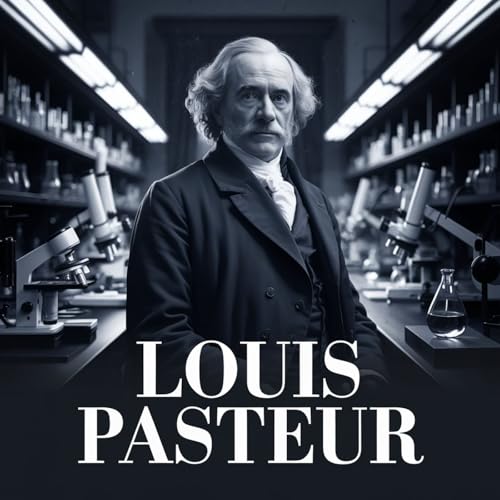
Episodes

  • Saving the Silkworms: Pasteur's First Medical Victory
    May 14 2026
    In this episode of the Louis Pasteur podcast, Dr. Sarah Quinn explores how Louis Pasteur saved France's collapsing silk industry in 1865 and laid the foundation for modern medical science. When silkworms across France were dying from mysterious diseases, threatening an industry worth millions of francs, the government turned to Pasteur for help. Despite having no background in entomology, Pasteur applied his scientific methodology to identify two distinct diseases: pebrine and flacherie. Through microscopic examination, he discovered these diseases were caused by parasites and bacteria that could be transmitted through infected eggs. His solution - examining adult moths before breeding to eliminate infected bloodlines - completely restored France's silk production. This work was revolutionary because it proved that microscopic organisms cause disease in living creatures and that diseases could be prevented through scientific intervention. The silkworm investigation established key principles of germ theory and gave Pasteur the credibility to tackle human diseases like anthrax and rabies. This episode examines how Pasteur's persistence, methodical approach, and willingness to enter unfamiliar fields transformed him from a chemist into a medical pioneer, ultimately changing our understanding of disease transmission and prevention forever.
    Show More Show Less
    6 mins
  • Invisible Enemies: The Birth of Germ Theory
    May 7 2026
    Explore the fascinating history of germ theory and how invisible microorganisms revolutionized our understanding of disease. This episode of Louis Pasteur examines the groundbreaking work of scientists like Antonie van Leeuwenhoek, Louis Pasteur, Robert Koch, and John Snow who challenged centuries of medical dogma. Learn about Pasteur's famous swan-neck flask experiments that disproved spontaneous generation, Koch's systematic approach to identifying disease-causing bacteria, and Snow's epidemiological investigation of cholera in Victorian London. Discover how Semmelweis's observations about handwashing in maternity wards, though initially rejected, contributed to our modern understanding of infection control. The episode traces the gradual acceptance of germ theory from the 1600s through the 1880s, highlighting key discoveries in fermentation, vaccination, and antiseptic surgery. Understand how this scientific revolution transformed public health, sanitation practices, and surgical procedures. Perfect for science history enthusiasts, students, and anyone curious about how paradigm shifts occur in scientific understanding. Features detailed accounts of Pasteur's vaccine demonstrations, the economic impact on French industries, and the broader implications for human civilization.
    Show More Show Less
    5 mins
  • Spontaneous Generation Dies: The Swan-Neck Flask Experiments
    Apr 30 2026
    In this episode of Louis Pasteur, Dr Sarah Quinn explores one of history's most decisive scientific experiments. Louis Pasteur's swan-neck flask experiments of the 1860s finally disproved the ancient theory of spontaneous generation, which held that life could arise from non-living matter. For over 2,000 years, from Aristotle onward, scientists believed that maggots, mold, and microorganisms could spontaneously emerge from decaying organic matter. When French naturalist Félix Pouchet published experiments in the 1850s seemingly supporting spontaneous generation, Pasteur designed an elegant counter-experiment. Using specially crafted flasks with curved, swan-like necks, Pasteur created sterile nutrient broths that remained open to air but protected from contamination. The curved necks trapped airborne microorganisms while allowing gases to pass through. The results were conclusive: sterile broths remained clear indefinitely, but immediately developed microbial growth when exposed to trapped contaminants. This groundbreaking work established that microorganisms come from pre-existing life forms, laying the foundation for germ theory and modern medicine. Some of Pasteur's original flasks remain sterile today, testament to his revolutionary methodology. Join us for this fascinating exploration of how one elegant experiment changed our understanding of life itself and transformed medical science forever.
    Show More Show Less
    7 mins
  • Mirror Images: Pasteur's Discovery of Molecular Chirality
    Apr 23 2026
    Discover how 25-year-old Louis Pasteur revolutionized chemistry and biology through his groundbreaking 1848 discovery of molecular chirality. This episode explores Pasteur's meticulous investigation of tartaric acid crystals, which led to the first understanding of mirror-image molecules and molecular handedness. Learn how Pasteur's patient observation and manual separation of crystals solved a puzzling optical mystery and established the foundation for stereochemistry. We examine the far-reaching implications of this discovery, from pharmaceutical development to enzyme function, and how it revealed fundamental principles about life's preference for specific molecular orientations. The episode highlights Pasteur's exceptional analytical skills and methodical approach that would define his legendary scientific career. Through this elegant discovery, we see how careful observation of seemingly minor anomalies can unlock profound scientific truths. Perfect for chemistry enthusiasts, students of scientific history, and anyone fascinated by molecular biology. Keywords: Louis Pasteur, molecular chirality, stereochemistry, tartaric acid, optical rotation, polarized light, crystallography, 19th century chemistry, scientific discovery, molecular handedness, racemic acid.
    Show More Show Less
    5 mins
  • The Fermentation Revolution: Wine, Beer, and Scientific Method
    Apr 16 2026
    Join Dr Sarah Quinn as she explores Louis Pasteur's groundbreaking fermentation research that revolutionized wine and beer production while establishing modern microbiology. In the 1850s, French wine and beer industries faced devastating spoilage problems that threatened entire regional economies. When local distillery owner sought Pasteur's help with failed fermentation, it sparked investigations that would transform both science and industry forever. Discover how Pasteur's microscopic observations revealed fermentation as biological process driven by specific microorganisms, not mysterious chemical decomposition as previously believed. Learn about his systematic experimental methodology that became model for modern scientific investigation, including controlled studies with sterile solutions and variable conditions. Explore the practical revolution that followed: pasteurization techniques, contamination prevention methods, and stable production processes that transformed wine, beer, dairy, and food industries. This episode examines how Pasteur bridged pure science with industrial application, showing rigorous scientific method could solve practical problems while advancing fundamental knowledge. His fermentation work laid crucial groundwork for germ theory of disease and established microorganisms as agents of natural change. Perfect for listeners interested in scientific history, industrial revolution, food science, and development of experimental methodology that continues guiding research today.
    Show More Show Less
    5 mins
  • From Chemistry to Life: The Making of Louis Pasteur
    Apr 12 2026
    Discover how Louis Pasteur transformed from a humble tanner's son with artistic ambitions into one of history's most influential scientists. This episode explores Pasteur's fascinating journey from studying crystal formations to revolutionizing our understanding of microorganisms and fermentation.

    Learn about Pasteur's early academic years at École Normale Supérieure in Paris, where his passion for chemistry first ignited through crystallography research. We examine his groundbreaking doctoral work on tartaric acid crystals and molecular asymmetry, which earned him initial scientific recognition and laid the foundation for his later microbiological discoveries.

    The episode traces Pasteur's evolution from chemistry to biology, highlighting his famous fermentation studies that proved living microorganisms, not chemical processes, caused wine and beer fermentation. Discover how his elegant swan-neck flask experiments definitively disproved the centuries-old theory of spontaneous generation.

    We explore Pasteur's practical applications of scientific principles, from saving France's silk industry by identifying silkworm disease causes to developing pasteurization processes that made beverages safer. The episode also covers his remarkable resilience, continuing groundbreaking research for twenty-seven years after suffering a debilitating stroke in 1868.

    Perfect for science enthusiasts, history buffs, and anyone interested in how curiosity-driven research can solve real-world problems, this episode illuminates the methodical approach and cross-disciplinary thinking that made Pasteur's contributions to modern microbiology possible.
    Show More Show Less
    5 mins