• The Real Ones
    May 22 2026

    This week on The Sidebar Podcast, Leise Winny and Royce ask a simple question with complicated answers:
    Who are the real ones anymore?

    The episode opens with global politics, internet culture, and identity all colliding at once. From conversations around political corruption and the optics of the Trump–China trip, to asking whether Drake is actually back, the hosts break down how performance, branding, and perception shape modern culture.

    Things quickly spiral into classic Sidebar territory with a hilarious but painfully real conversation about Black men on vacation attire, bigger men at the beach or pool, and why some people transform into yacht influencers the second they leave the country.

    The hosts also tackle a growing cultural frustration:
    Can we stop inviting everybody to the proverbial Black picnic?
    The conversation dives into “honorary Black people,” cultural boundaries, identity, and why some communities struggle to protect spaces without feeling guilty about it.

    Royce leads the second segment with one of the episode’s deepest conversations:
    “Vulnerability today is harder than sex.”
    In a world driven by hookup culture, attraction often starts and ends with appearances. The hosts unpack emotional unavailability, surface-level dating, and the idea that some people are beautiful physically but impossible to truly connect with emotionally — like their personality is behind a paywall.

    Leise shifts the conversation into a broader social critique:
    Why do we victim-blame before we critique society itself?
    Using viral stories and public reactions, the discussion explores the “fast girl” narrative, public shame, and society’s tendency to punish individuals while ignoring the systems that shape behavior in the first place.

    Royce then zooms out philosophically with a conversation about belief:
    “Adults call it belief because imagination is for kids.”
    From religion and manifestation to conspiracy theories and dating expectations, the hosts unpack how adults build entire identities around things they choose to believe — whether those beliefs are healthy, comforting, or dangerous.

    Leise closes the episode with a simple but powerful reminder:
    “It’s OK to be Black.”
    The final segment reflects on identity, self-acceptance, cultural pride, and the pressure many Black people feel to constantly explain themselves, soften themselves, or make others comfortable.

    Funny, layered, chaotic, and honest — The Real Ones is about authenticity in a world built on performance.

    • Political corruption & the Trump–China trip
    • Is Drake back?
    • Black men on vacation culture
    • “Honorary Black people” discourse

    Vulnerability Today Is Harder Than Sex

    • Hookup culture & emotional disconnect
    • Attraction vs emotional intimacy
    • Paying to “download” personality

    Victim-Blaming & Society

    • The “fast girl” narrative
    • Viral outrage & public judgment
    • Systems vs individuals

    Belief vs Reality

    • Religion, manifestation & conspiracy culture
    • Why adults cling to belief systems

    It’s OK to Be Black

    • Identity & authenticity
    • Cultural pride & self-acceptance

    Show More Show Less
    1 hr and 17 mins
  • Fear Is a Campaign Strategy
    May 18 2026

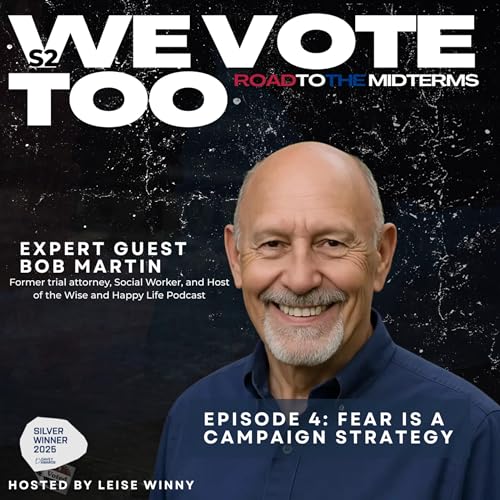
    Fear has always been a powerful political tool — but in today’s media environment, it feels constant. Fear of crime. Fear of immigrants. Fear of losing democracy. Fear of “the other side.” Fear is everywhere. But what is all of this fear actually doing to us psychologically? And why does it work so well politically?

    In Episode 4 of We Vote Too, we go beyond outrage and ask a deeper question: What happens to people when fear becomes the foundation of political communication?

    Joining us is Bob Martin — former trial attorney during Miami’s infamous Cocaine Cowboy era, now a social worker, meditation teacher, wellness professor, and host of the Wise and Happy Life Podcast. Bob brings a rare perspective that blends psychology, neuroscience, Taoist philosophy, and lived experience to unpack how fear shapes how people think, react, vote, and engage with the world around them.

    Together, we explore:

    • Why fear-based messaging is so effective
    • How media and politics reinforce emotional conditioning
    • The psychological impact of outrage cycles
    • Why anxious populations are easier to influence
    • How fear shapes political identity and polarization
    • And what people can do to stay informed without being emotionally consumed

    This conversation isn’t about telling people what to think politically. It’s about understanding the emotional machinery underneath modern politics — and how to navigate it consciously.

    Because fear doesn’t just influence elections. It influences people.

    Show More Show Less
    43 mins
  • 2.0
    May 15 2026

    This week on The Sidebar Podcast, Leise Winny and Royce bounce between politics, culture, aging, survival mode, and the emotional games people play — all with the kind of humor and uncomfortable honesty that makes Sidebar feel like a group chat that accidentally became therapy.

    The episode opens with a Mother’s Day check-in before shifting into growing concern around the hantavirus outbreak and how quickly fear spreads in the age of social media. From there, the conversation turns personal and cultural: can people age out of relevance, ambition, or even certain lifestyles? Or are we all just pretending we aren’t afraid of getting older?

    The discussion then pivots into deeper territory, with conversations about voting rights under attack, the controversial “catch print” trend, and whether modern culture is pushing people toward performance over authenticity.

    One of the most reflective parts of the episode explores a growing reality for a lot of people:
    Are people actually living anymore… or just surviving?
    The hosts unpack burnout, emotional exhaustion, and how adulthood can quietly slip into maintenance mode rather than fulfillment.

    Leise leads a sharp conversation about relationships, legacy, and responsibility with the segment “Watch How You Procreate,” challenging people to think more critically about who they build futures with and the emotional consequences that can follow.

    The episode closes with two-layered discussions: emotional gerrymandering — the manipulation of emotions, narratives, and boundaries in relationships and society — and the difficult topic of self-hating Blackness, identity, and internalized bias within the community.

    Funny, reflective, chaotic, and brutally honest — 2.0 feels like trying to reboot yourself while the world glitches around you.

    0:33 — Happy Mother’s Day
    2:37 — Hantavirus concerns
    12:35 — Can you get too old?
    15:20 — Voting rights under attack
    24:33 — Catch print: bad or good?
    36:25 — People don’t live, they just survive
    42:00 — Watch how you procreate
    1:00:49 — Emotional gerrymandering
    1:10:36 — Self-hating Black people
    1:33:15 — Outro

    Survival vs living.
    Growth vs stagnation.
    Reality vs performance.

    Welcome to 2.0.

    Show More Show Less
    1 hr and 34 mins
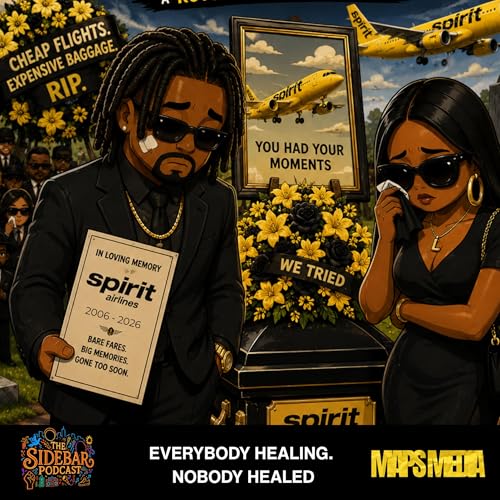
  • Everybody Healing. Nobody Healed
    May 8 2026

    This week, Leise and Royce jump from the glamour of the Met Gala to the chaos of internet culture, politics, identity, and healing — all in one unfiltered conversation.

    They break down the biggest moments from Beyoncé and the MET, react to conversations around strip clubs shutting down, and unpack updates from the White House Correspondents’ Dinner. Then the conversation shifts deeper into voting rights, the feeling that “the spirit died” in culture, and why people still casually use “gay” as an insult in 2026.

    The episode also dives into reactions surrounding Ray J and Cam’ron’s interview, whether society gives Michael Jackson too much grace, and a brutally honest discussion about whether people actually heal — or just learn how to rebrand their trauma.

    Later, Leise and Royce discuss the controversy surrounding Dr. Cheyenne Bryant and the ongoing online conversations about credentials, accountability, and expertise in the self-help era.

    Funny, messy, serious, and painfully real — this episode moves from celebrity culture to personal growth without losing the humor in between.

    Topics Include:

    • Beyoncé & the MET
    • Strip clubs are shutting down
    • WHCD updates
    • Voting rights
    • “The spirit died” conversation
    • “Gay” used as an insult
    • Ray J & Cam’ron interview reactions
    • Do we give Michael Jackson too much grace?
    • Do people actually heal?
    • Dr. Cheyenne Bryant's controversy

    Show More Show Less
    1 hr and 16 mins
  • Built the Movement. Did It Build Power?
    May 4 2026

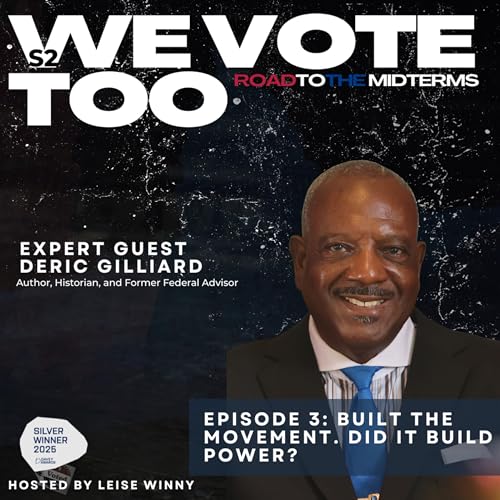
    Built the Movement. Did It Build Power? | ft. Deric Gilliard

    Did the Civil Rights Movement actually redistribute power in America — or just expand access without changing who holds it?

    In this episode of We Vote Too, we sit down with author, historian, and former federal advisor Deric Gilliard to break down the real impact of the Civil Rights Movement and what it means for democracy today.

    From the Freedom Riders to federal policy, this conversation connects history to the present — exploring how movements shape institutions, and whether those institutions truly serve the people.

    Show More Show Less
    38 mins
  • The Looking Glass
    May 1 2026

    This week on The Sidebar Podcast, Leise Winny and Royce move through culture, politics, and identity with their signature mix of humor and real talk — all from a Black millennial POV that doesn’t shy away from uncomfortable questions.

    Leise opens the show with a wide-ranging check-in that jumps from war updates to sports and entertainment. From the NFL Draft, to LeBron and the Lakers, to ongoing conversations around Stefon Diggs, the episode blends headlines with hot takes.

    Leise leads a powerful and layered segment on Black women and the “ride or die” myth, unpacking the pressure to stay loyal at all costs — even when it becomes dangerous.

    That naturally opens the door to one of the most complex cultural debates: the N-word. Who can say it? Should it still be used at all? And how has Gen Z reshaped its meaning — from something rooted in history to something that’s often used casually or performatively?

    Royce brings his perspective into the mix, pushing the conversation toward how culture, perception, and personal responsibility collide in real time.

    The final major segment tackles a conversation that continues to spark debate: Black people and conservative views. Using recent backlash toward KevOnStage as a jumping-off point, the hosts explore how political and social beliefs are policed within the community — and what happens when someone steps outside expected norms, especially around topics like sexuality and identity.

    The episode closes with a recap and final reflections that tie everything together — culture, accountability, identity, and the constant negotiation between personal belief and public expectation.


    Show More Show Less
    1 hr and 25 mins
  • Accountability Wars
    Apr 24 2026

    The Sidebar Podcast — Accountability Wars

    This week on The Sidebar Podcast, Leise Winny and Mr. Royce step into one of the messiest conversations out right now: accountability — who gets it, who avoids it, and who decides?

    The episode opens with a rapid-fire mix of headlines and cultural moments — from global tension over the Strait of Hormuz to political absurdity to the question nobody asked but we’re asking anyway: does everyone need a Cardi-style haircare line? It all lands on a sobering story about loneliness in the digital age, where an older man loses his savings to an AI scam — setting the tone for a bigger question about vulnerability, connection, and responsibility.

    From there, Royce leads a sharp breakdown of what he calls the accountability gap. We constantly hear about men being held accountable — but is that standard applied equally? The conversation digs into how trauma doesn’t pick sides, but sympathy often does, and how public narratives shape who gets grace and who gets judgment.

    Leise takes the conversation deeper — and more uncomfortable — by challenging the foundation of marriage itself. Was it built with equality in mind, or control? The discussion weaves through modern relationship expectations, delusion vs. reality, and real-world cases that highlight how power, gender, and violence intersect in devastating ways.

    Royce closes by pulling the lens back to the culture: internet justice vs. real-life action. Why are people quicker to go live than to go talk? When did accountability become content? And what happens when real problems get turned into performative moments for an audience instead of being handled offline?

    It’s layered, it’s uncomfortable, and it doesn’t pick a side — it forces you to question all of them.

    • Opening welcome & cultural check-in

    • Strait of Hormuz tensions

    • Political absurdity & public figures

    • Do we really need another celebrity product line?

    • Loneliness, AI scams & vulnerability

    The Accountability Gap (Royce)

    • Who gets held accountable — and who doesn’t

    • Sympathy vs. responsibility

    Marriage, Power & Reality (Leise)

    • Was marriage built for equality?

    • Gender expectations vs. lived reality

    • When relationships turn dangerous

    Internet Justice vs. Real Life (Royce)

    • Turning problems into content

    • Avoiding confrontation in real life

    • Accountability vs. performance

    Men vs. women. Accountability vs. excuses.
    Real life vs. the internet.

    Pick your side — or question all of them.

    Show More Show Less
    1 hr and 21 mins
  • WE VOTE TOO- We Forgot About USAID: What Happens When Global Aid Disappears?
    Apr 20 2026

    What happens when the systems designed to support global stability quietly fade into the background—or worse, get ignored altogether? In this episode of We Vote Too, host Leise Winny sits down with Clifford Brown, a retired Senior U.S. Foreign Service Officer and author of Inside USAID: An Odyssey of Foreign Assistance, to unpack the role the U.S. Agency for International Development actually plays in the world—and why most Americans don’t think about it until it’s too late.

    From his early days working on tugboats and traveling through Latin America during moments of political upheaval, to leading U.S. development missions in West Africa, Clifford brings decades of firsthand experience to a conversation that feels more urgent than ever. Together, we explore how foreign aid connects directly to U.S. national interests, what happens when that support is reduced or politicized, and why development work is often misunderstood at home.

    This episode challenges the idea that foreign aid is optional—and instead reframes it as a critical tool for global stability, diplomacy, and long-term peace. Because when we “forget” about institutions like USAID, the consequences don’t stay overseas—they come back home.

    🎧 Listen to We Vote Too on all major podcast platforms, including Spotify, Apple Podcasts, iHeartRadio, and Amazon.
    Follow Leise Winny @Leisewinny on Instagram, TikTok, and Threads, and @MapsMedia on YouTube

    Show More Show Less
    40 mins