Episodes

  • What's in a name? Part 3: Who decides what's 'normal'?
    Dec 23 2025

    So your name’s been mistreated by autocorrect. What harm does that cause? And what would it take to fix it?

    In this episode, Northeastern University law professor Rashmi Dyal-Chand discusses her research into autocorrect's bias and shares her blueprint for change - from what consumers can do to where the law might need to step in.

    Plus: journalist Dhruti Shah on her viral 2018 BBC article that first brought the issue to light.

    This is Part 3 of "What's in a Name?", our mini-series about autocorrect and inclusive technology.

    --

    New to the series? Start with Part 1 and Part 2

    Listen to the trailer

    Enjoying the show? Leave a rating to help others discover it, or share your autocorrect story at madeforuspod@gmail.com

    --

    About Rashmi Dyal-Chand

    Rashmi Dyal-Chand is a law professor at Northeastern University. Her research and teaching focus on property law, poverty, economic development and consumer law. She is the author of the article, “Autocorrecting for Whiteness”, published in the Boston University Law Review in 2021.

    Learn more about Rashmi Dyal-Chand: https://law.northeastern.edu/faculty/dyal-chand/

    Read the “Autocorrecting for Whiteness” article: https://www.bu.edu/bulawreview/files/2021/03/DYAL-CHAND.pdf

    About Dhruti Shah

    Dhruti Shah is a creative practitioner, storyteller and journalist who focuses extensively on belonging. She is a collaborator with I Am Not A Typo.

    Read Dhruti’s article: https://www.bbc.co.uk/news/business-46362259

    Follow Dhruti on LinkedIn: https://www.linkedin.com/in/dhrutishahstoryteller/

    Follow Dhruti on Instagram: https://www.instagram.com/dhruti_journo/

    --

    Connect with Made for Us

    Show notes and transcripts: https://made-for-us.captivate.fm/

    Newsletter: https://madeforuspodcast.beehiiv.com/

    Social media: LinkedIn and Instagram

    Show More Show Less
    29 mins
  • What's in a name? Part 2: Did tech companies actually change?
    Dec 20 2025

    The I Am Not a Typo campaign managed to get tech companies' attention. So what happened next?

    We hear from one of the campaign organisers about the conversations with tech giants - and whether anything actually changed.

    This is Part 2 of “What’s in a name?”, a new mini-series about autocorrect and inclusive technology.

    --

    New to the series? Start with Part 1

    Listen to the trailer

    Enjoying the show? Leave a rating to help others discover it, or share your autocorrect story at madeforuspod@gmail.com

    --

    About Cathal Wogan

    Cathal Wogan is a lead collaborator with I Am Not A Typo, a collective aiming to create social change so no one feels like an oversight. I Am Not A Typo looks at the link between identity and technology, and its flagship UK-based campaign asks tech giants to update their name dictionaries to better reflect the modern multi-cultural United Kingdom.

    Cathal is a Senior Consulting Director at communications consultancy Blurred, the agency that convenes I Am Not A Typo and its many cross-industry collaborators.

    Learn more about I Am Not A Typo: https://www.iamnotatypo.org/

    Follow Cathal on LinkedIn: https://www.linkedin.com/in/cathal-wogan/

    --

    Connect with Made for Us

    Show notes and transcripts: https://made-for-us.captivate.fm/

    Newsletter: https://madeforuspodcast.beehiiv.com/

    Social media: LinkedIn and Instagram

    Show More Show Less
    16 mins
  • What's in a name? Part 1: When your device thinks you're a typo
    Dec 19 2025

    For years, people added their "unusual" names to their phone's dictionary, treating it as a minor inconvenience. Then some decided to fight back.

    In this episode, we meet the people whose names are constantly "corrected" by their devices and hear how I Am Not A Typo, a grassroots campaign to fix autocorrect, got the attention of tech giants.

    This is Part 1 of “What’s in a name?”, a new mini-series about autocorrect and inclusive technology.

    Listen to Part 1 and Part 2

    --

    If someone came to mind while you were listening, send this episode their way. And if you have an autocorrect story of your own, we'd love to hear it. Email us at madeforuspod@gmail.com.

    --

    Guests

    Cathal Wogan, Xaymaca Awoyungbo, Vedrana Koren, Wanyu Zhang and Angharad Planells

    Learn more about I Am Not A Typo

    Website: https://www.iamnotatypo.org/

    Instagram: https://www.instagram.com/iamnotatypo

    LinkedIn: https://www.linkedin.com/company/i-am-not-a-typo/

    --

    Connect with Made for Us

    Show notes and transcripts: https://made-for-us.captivate.fm/

    Social media: LinkedIn and Instagram

    Show More Show Less
    26 mins
  • What's in a name? A new mini-series from Made For Us
    Dec 13 2025

    Across the world, millions of people's names are treated as errors by our devices. In the UK alone, 41% of baby names are flagged as "incorrect."

    In a new mini-series, we'll meet the people pushing tech companies to do better and explore what autocorrect reveals about how - and for whom - technology gets built.

    Subscribe now so you don't miss new episodes.

    ---

    Connect with Made for Us

    Show notes and transcripts: https://made-for-us.captivate.fm/

    Newsletter: https://madeforuspodcast.beehiiv.com/

    Social media: LinkedIn and Instagram

    Show More Show Less
    2 mins
  • The power of compassionate design, with Marcus Engel
    Jun 19 2025

    If some of the conversations you've heard in this season of Made For Us have felt like a glimpse into the future, then you're not alone.

    Our final guest of season 2, Marcus Engel, feels like he's already living in the future, thanks to AI, apps like Be My Eyes and other assistive devices.

    Marcus is a speaker, author and compassion consultant. He's also an advisor to Haptic, whose founder, Kevin Yoo, was our guest last week. Haptic is the company behind one of the world's first touch-based navigation apps and it was a meeting with Marcus that inspired Kevin to start the company.

    Today, we'll hear Marcus' story, how surviving massive trauma led him to become a compassion consultant and how he thinks haptic technology could impact mobility for people who are blind or low vision.

    You’ll learn:

    • Haptic technology's potential to guide people living with sight loss
    • Marcus’s four-part definition of compassion and how it’s different to empathy
    • Which products Marcus considers to be ‘compassionate'

    Enjoyed the episode? Text it to a friend. Loved the episode? Tell the world with a 5-star review.

    You might also like:

    Navigation you can feel: the startup making the world accessible through touch

    How to design a fairer healthcare system

    ---

    About Marcus Engel

    Marcus Engel is an adjunct professor at the University of Notre Dame teaching compassion science to pre-meds. He's also a survivor of massive trauma, a keynote speaker, author and hospital/system consultant. He's written two books that have been adopted by scores of nursing and health profession programs across the country.

    Learn more about Marcus Engel: www.MarcusEngel.com

    Compassion & Courage podcast

    Compassion is Action training video

    Books by Marcus Engel

    Follow Marcus on LinkedIn

    ---

    Connect with Made for Us

    • Show notes and transcripts: https://made-for-us.captivate.fm/
    • Social media: LinkedIn and Instagram
    • Newsletter: https://madeforuspodcast.beehiiv.com/

    Show More Show Less
    38 mins
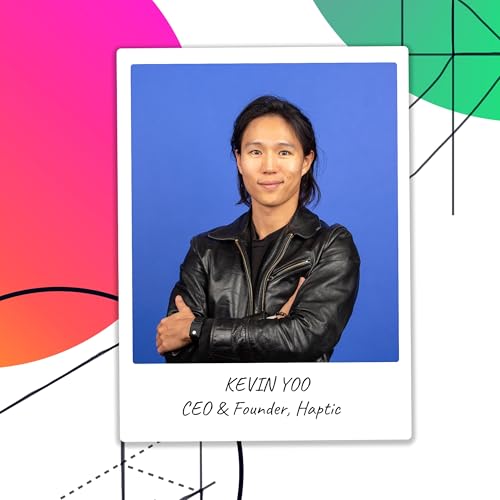
  • Navigation through touch: the haptic tech startup mapping an accessible future | Kevin Yoo
    Jun 12 2025

    What if navigating the world didn't rely on sight at all? In this episode, Kevin Yoo, the CEO and founder of Haptic, joins us to tell the story of one of the world’s first haptic navigation apps.

    Kevin shares how he was motivated by his friend’s experience of becoming blind, how haptic technology is shaping a more accessible future and the challenges that come with rethinking how we move through the world.

    This episode dives into:

    - Why the sense of touch has been underutilized in tech and how Haptic is trying to change that

    - What guiding a blind runner at the New York City Marathon revealed about the potential of haptic technology for blind and low vision runners

    - Kevin’s experience of putting himself in the shoes of a blind person for a few weeks and the lessons that came from it

    ⭐️Enjoyed the episode? Leave us a 5-star rating on Apple Podcasts and help more listeners discover the show!

    You might also like:

    Be My Eyes: the app powering a global volunteer movement for accessibility | Hans Jørgen Wiberg

    'I don't need fixing - the world does.' Lucy Edwards on redefining disability

    ---

    About Kevin Yoo

    Kevin is the CEO and Founder of Haptic, a technology company creating a universal language of touch. Haptic is developing products and experiences that communicate information through vibrations. Kevin’s mission is to redefine the way we intake information through technology, especially for people with disabilities. Haptic's flagship product, HapticNav, made history by guiding the first blind runner in the NYC Marathon without sighted or audio assistance.

    Learn more about Haptic: https://haptic.works/

    Download HapticNav on IOS and Android

    Follow Haptic on Instagram and LinkedIn

    Follow Kevin Yoo on Instagram

    ---

    Connect with Made for Us

    • Show notes and transcripts: https://made-for-us.captivate.fm/
    • Social media: LinkedIn and Instagram
    • Newsletter: https://madeforuspodcast.beehiiv.com/

    Show More Show Less
    38 mins
  • How to design a fairer healthcare system, with Layal Liverpool and Tessa Davis
    Jun 5 2025

    When science journalist Layal Liverpool was finally diagnosed with eczema as a teenager, it came as a shock. Not because of the condition itself, but because only one doctor had recognized it on her skin tone.

    Pediatrician Tessa Davis had a similar wake-up call: she noticed that a Google search for common skin conditions only returned images of white patients. So she started collecting images of conditions on diverse skin tones, and launched a movement in the process.

    In this episode, Layal Liverpool, author of Systemic: How Racism is Making Us Ill, and Tessa Davis, a consultant at the Royal London Hospital, shed light on how racial inequities show up in diagnosis, treatment and outcomes — and how more inclusive care can lead to better health for all.

    We discuss:

    • How racial health inequities harm not just marginalised communities, but all of us
    • The alarming disparities in maternal health in the UK and US that can’t be explained by income alone
    • The lack of diversity in medical textbooks and efforts to diversify the medical curriculum

    If you found this episode as eye-opening as we did, share it with a friend and leave us a 5-star review on Apple Podcasts or Spotify to spread the word!

    ---

    About Layal Liverpool:

    Layal Liverpool is a science journalist and author of SYSTEMIC: How Racism is Making Us Ill,’ a book exploring the health harms of racism. She was a reporter for Nature and New Scientist and worked as a biomedical researcher at University College London and the University of Oxford. She holds a PhD in virology and immunology from the University of Oxford.

    Learn more about Layal Liverpool: https://layalliverpool.com/

    Follow Layal Liverpool on Instagram

    About Tessa Davis:

    Tessa is a Paediatric Emergency Medicine Consultant at the Royal London Hospital, and an Honorary Clinical Reader at Queen Mary University of London. She is also an interview coach helping doctors in the UK prep for their NHS Consultant Interviews.

    Learn more about Skin Deep: www.DFTBSkinDeep.com

    Follow Tessa on Instagram

    ---

    Connect with Made for Us

    • Show notes and transcripts: https://made-for-us.captivate.fm/
    • Social media: LinkedIn and Instagram
    • Newsletter: https://madeforuspodcast.beehiiv.com/

    Show More Show Less
    40 mins
  • REPLAY: Reflections on creating the headscarf emoji, with Rayouf Alhumedhi
    May 29 2025

    This week, we’re rewinding back to one of our most popular episodes from Season 1, with Rayouf Alhumedhi, creator of the headscarf emoji. (The episode was also shortlisted for last year's International Women’s Podcast Awards in the ‘Moment of Insight from a Role Model’ category.)

    Rayouf launched the Hijab Emoji Project at the age of 16 to push for digital representation for Muslim women around the world. She was named one of Time magazine’s most influential teens and also featured on the Forbes 30 under 30 list.

    Rayouf has a Bachelor’s degree in Product Design and an MS in Mechanical Engineering from Stanford University. She currently works as an investor at Bessemer Venture Partners.

    In this episode, Rayouf shares:

    • Her motivation for creating the headscarf emoji
    • What it takes to design a brand new emoji and get it approved
    • The praise and backlash she received during her campaign
    • How Gen Z is pushing inclusive design to the forefront

    Know someone who’d be inspired by this? Why not share it with them - and help even more people discover this show by leaving a 5-star rating or review wherever you listen!

    You might also like:

    The emoji puzzle: how to fit everyone in

    ---

    Learn more about Rayouf Alhumedhi: https://www.rayouf.com/

    Follow Rayouf on Instagram

    ---

    Connect with Made for Us

    • Show notes and transcripts: https://made-for-us.captivate.fm/
    • Social media: LinkedIn and Instagram
    • Newsletter: https://madeforuspodcast.beehiiv.com/

    Show More Show Less
    29 mins