Majorities and Minorities cover art

Majorities and Minorities

Majorities and Minorities

Written by: Bipin Sebastian
Listen for free

About this listen

Through a series of conversations with experts this podcast seeks to critically unpack the commonsense understandings around the categories of majorities and minorities that have come to define politics in many countries around the world. Hosted by Bipin Sebastian, currently a PhD candidate with the program of Rhetoric and Public Culture at Northwestern University, this podcast is made possible with the support of Alice Kaplan Insitute for the Humanities at Northwestern University.Bipin Sebastian Science Social Sciences
Episodes
  • Prathama Banerjee on Majority-Minority Politics in India
    Sep 13 2024

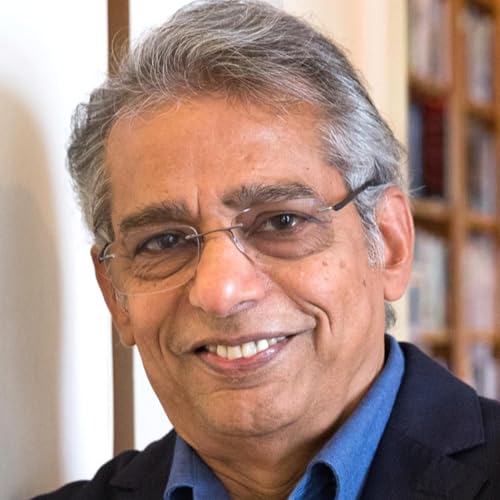
    Prathama Banerjee is Professor at the Centre for the Study of Developing Societies in Delhi, India.


    “The elections are ongoing in India as we speak. There may be surprises there which will force us to rethink some of the things we discussed today. But yes, politics is on the go,” concludes Banerjee, rather presciently, in this conversation recorded in May 2024.


    Banerjee points out that the now common-sense categories of majority and minority emerged out of two primary sources: politics of demographics and voter count. The former was the result of the rise of the statistical state during colonial times that transformed society into enumerated groups, and the latter, the by-product of the modern-day reincarnation of democracy that legitimized numerical superiority as the legitimate basis for decision-making.


    The unresolved paradox of having to simultaneously fight elite minority rule on the one hand, and oppressive majoritarian rule on the other, puts modern democracies in a very tricky state that needs to be handled with extreme care.


    Hindu nationalist organizations in India have always made the claim that their activities are social and cultural, rather than political, in nature. In fact, it is the long decades of consistent ideological work dubbed as cultural activism that has enabled the rise to power of the Hindu majoritarian party of Narendra Modi. However, Banerjee calls this into question by arguing that this so-called cultural work wouldn’t have been possible without the undergirding imagination of a Hindu polity.


    What might seem today as the sudden eruption of religion into the political public has a long and entrenched history from colonial times. The diversity and heterogeneity of the pre-colonial world has been consolidated and flattened out into what we today call world religions that battles each other. Religion was seen as co-terminus with the nation. And as such, religious communities were seen as legitimate claimants of political and cultural autonomy in a way that gender and caste groups are not. The Shah Bano case in the 1980s had opened up possibilities for the secular government at the time to redefine minority also in gender terms, which they squandered by re-entrenching religion as its sole legitimate basis.


    The emancipatory majority that Mouffe and Laclau talked about never took shape. We will need alternative imaginaries and long and patient ideological work to shape inclusive majorities of oppressed groups.


    Sound Production: Khalid Siraj

    Image Credit: CSDS website

    Show More Show Less
    44 mins
  • Dilip Gaonkar on Majoritarianism and Democracy
    May 10 2024

    Dilip Gaonkar⁠ is Professor of Rhetoric and Public Culture and the Director of Center for Global Culture and Communication at Northwestern University. This conversation takes cue from the book, Degenerations of Democracy (2022), that he co-authored with Charles Taylor and Craig Calhoun.


    Highlights:

    All national formations have, inherent in them, some form of cultural majoritarianism or hegemony. Our present condition is marked by the transformation of such cultural majoritarianisms into political majoritarianisms, making use of democratic systems like elections and universal adult franchise. In other words, this has led to majority rule becoming majoritarian rule degenerating democracy from within.

    Political communities oscillate between phases of cosmopolitan and ethno-religious conceptions of nationhood. However, a lot of factors need to fall in place for this particular political conjuncture to emerge. There is immense ideological labor that goes into the construction of an ethno-religious unity like this that overrides many other forms of economic and cultural differences. New fictional identities that enable majoritarian mobilization need to be created. It is not very clear as to whether majoritarian cultural politics comes from the top layer of society (as many tend to believe) or from the common people at the bottom. Further, politics is conjunctural and contingent enabling numerous possibilities. The question we need to ask is how this has come about in the present?

    Those who devised the representative system as a means to operationalize democracy and popular sovereignty saw it also as a means to filter out the many (the poor demos) from wielding state power directly. However, they never foresaw that the system would also eventually facilitate and sustain ethno-religious majoritarian rule.

    Majoritarianism is fueled by different kinds of desires and temporalities. Unlike the West, the postcolonial states of the Global South did not have a slow and staggered evolution over decades and centuries into a democratic system. They started off as mass democracies where all adults received franchise and political equality at one go, facilitated through well-crafted constitutions like in India. As a result, the two have broadly different democratic temporalities. This also means that the nature of the democratic institutions was also different. Moreover, the postcolonies had much more of a raw diversity in their populations, compared to Europe. The second temporal difference is that of a particular form of capitalist transformation that the West went through. More than cultural differences, countries like India had to address the more pressing question of poverty. As a result, such states became massive. Whereas in America, for instance, the primary concern was with limiting state power.


    Sound Production: Khalid Siraj

    Image Credit: Institute for Human Sciences (IWM)

    Show More Show Less
    1 hr and 2 mins
  • Elizabeth Hurd on Religious Minorities
    Apr 30 2024

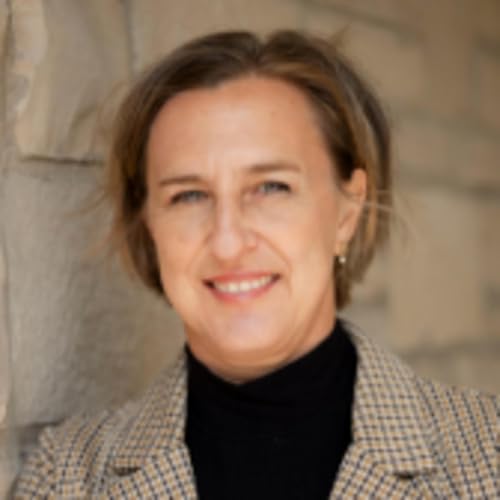
    Elizabeth Shakman Hurd is Professor and Chair of Religious Studies and Professor of Political Science at Northwestern University.

    Through this conversation, Hurd helps us critically reflect on the meanings of “religious minority” in global politics as religion has emerged as probably the most prominent pivot around which the majority-minority division is being mobilized. As a result of it being a wide register encompassing different aspects of affective, existential, and collective experience, and what it means to be human, religion becomes an easy way to categorize people. She problematizes the importance attributed to religion as a determining category in citizenship, governance and law. Something as vast and fluid as religion cannot be defined without exclusions. The same goes for nationalist conceptions that seek to define certain religious groups as minorities and some others as the majority. She also problematizes easy binaries such as sacred and secular, "good" religion and "bad religion", and majority and minority, especially as those that are imbricated in histories of colonialism, empire, and racism. Rather than adopting pluralism as a normative fixed framework of governance and politics, Hurd points to the idea of "pluralization" (William Connolly) as a process and continuum, which can be more open and inclusive.


    Sound Production: Khalid Siraj

    Image Credit: Northwestern University

    Show More Show Less
    50 mins
No reviews yet