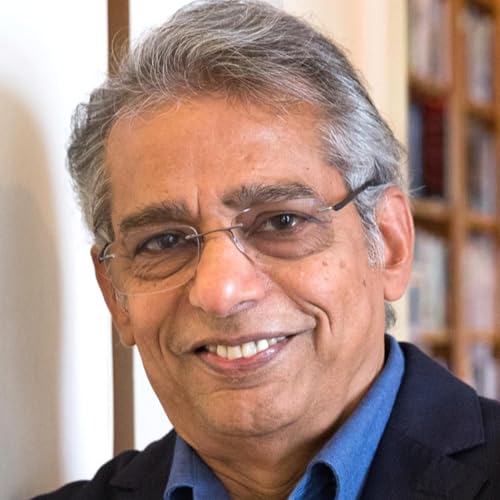
Prathama Banerjee is Professor at the Centre for the Study of Developing Societies in Delhi, India.
“The elections are ongoing in India as we speak. There may be surprises there which will force us to rethink some of the things we discussed today. But yes, politics is on the go,” concludes Banerjee, rather presciently, in this conversation recorded in May 2024.
Banerjee points out that the now common-sense categories of majority and minority emerged out of two primary sources: politics of demographics and voter count. The former was the result of the rise of the statistical state during colonial times that transformed society into enumerated groups, and the latter, the by-product of the modern-day reincarnation of democracy that legitimized numerical superiority as the legitimate basis for decision-making.
The unresolved paradox of having to simultaneously fight elite minority rule on the one hand, and oppressive majoritarian rule on the other, puts modern democracies in a very tricky state that needs to be handled with extreme care.
Hindu nationalist organizations in India have always made the claim that their activities are social and cultural, rather than political, in nature. In fact, it is the long decades of consistent ideological work dubbed as cultural activism that has enabled the rise to power of the Hindu majoritarian party of Narendra Modi. However, Banerjee calls this into question by arguing that this so-called cultural work wouldn’t have been possible without the undergirding imagination of a Hindu polity.
What might seem today as the sudden eruption of religion into the political public has a long and entrenched history from colonial times. The diversity and heterogeneity of the pre-colonial world has been consolidated and flattened out into what we today call world religions that battles each other. Religion was seen as co-terminus with the nation. And as such, religious communities were seen as legitimate claimants of political and cultural autonomy in a way that gender and caste groups are not. The Shah Bano case in the 1980s had opened up possibilities for the secular government at the time to redefine minority also in gender terms, which they squandered by re-entrenching religion as its sole legitimate basis.
The emancipatory majority that Mouffe and Laclau talked about never took shape. We will need alternative imaginaries and long and patient ideological work to shape inclusive majorities of oppressed groups.
Sound Production: Khalid Siraj
Image Credit: CSDS website


 44 mins
 May 10 20241 hr and 2 mins
 Apr 30 202450 mins