MercyCast cover art

MercyCast

MercyCast

Written by: Let My People Go
Listen for free

About this listen

Have you ever hit a wall and asked yourself, "What do I do now? How will I ever get past this?" If you are human and have a pulse, you probably have. The MercyCast is a podcast dedicated to learning the subtle art of compassion through the adversity of everyday life. Join Raleigh Sadler, the host, as he has honest and thought-provoking conversations with friends he has met along the way. Each Wednesday, listen to the encouraging true stories of people, like you and me, who are learning compassion through hard times. For more information and show notes, go to mercycast.com.

All rights reserved.
Christianity Economics Hygiene & Healthy Living Management Management & Leadership Ministry & Evangelism Psychology Psychology & Mental Health Relationships Self-Help Social Sciences Spirituality Success
Episodes
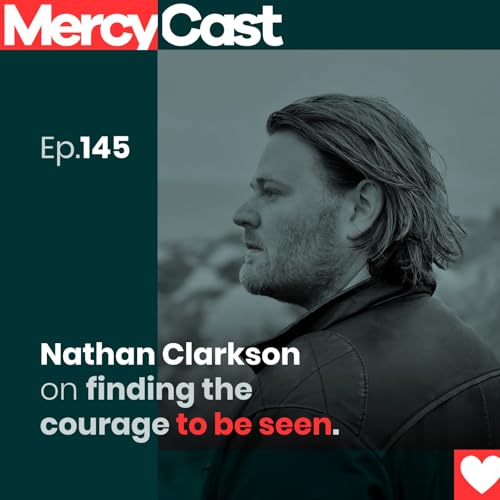
  • Nathan Clarkson on finding the courage to be seen.
    Feb 4 2026

    What happens if the shoe doesn’t drop? What happens if you find the thing that you were looking for?

    In this episode of MercyCast, I sit down with Nathan Clarkson—actor, filmmaker, and author of the new book I Am the Worst: How Freedom Is Found in Admitting Our Faults—for one of the most honest conversations we’ve ever had about identity, acceptance, and healing.

    We talk about why Jesus tells us to pay attention to the log in our own eye before we reach for the speck in someone else’s—and why doing that isn’t about shame, but about freedom. Nathan shares how learning to face his own failures, cracks, and darkness didn’t destroy him. Instead, it became “not a wall that broke me, but a bridge to healing that recreated me.”

    We explore how busyness often disguises itself as virtue, especially in fast-paced places like New York, and how noise can become a way of avoiding stillness—because stillness forces us to look inward. As Nathan puts it, “Stillness is hard because it forces us to listen to the parts of ourselves we’d rather drown out.”

    This episode goes deep into how many of us build our identity on what we do—our productivity, success, relationships, or reputation—and how fragile that foundation really is. Nathan shares vulnerably about seasons where his ability to “do” was taken away, forcing him to confront a terrifying but liberating truth that you are not loved because of what you accomplish, but because you are made in the image of God.

    We also talk about the power of community, why healing never happens alone, and how asking for help is not weakness—it’s faith. Sometimes, the holiest prayer we can pray is just one word: help.

    At the core of this conversation is a truth we all need to hear again and again:

    You are more broken than you want to admit—and more loved than you ever dared to believe.

    What We Talk About in This Episode

    • Why acceptance is the first step toward real change
    • How facing our own faults leads to freedom, not shame
    • The danger of confusing busyness with worth
    • Why identity rooted in accomplishment always leads to exhaustion
    • The role of stillness in spiritual and emotional healing
    • How vulnerability becomes a bridge to grace
    • Why community is essential for redemption
    • How asking for help opens the door to transformation
    • What it truly means to be loved unconditionally


    Key Takeaways

    • Healing begins when we stop hiding
    • Stillness reveals what busyness conceals
    • Our identity cannot survive on performance alone
    • Weakness, when admitted, becomes a doorway to grace
    • Community carries us when we can’t carry ourselves
    • Freedom is found on the other side of honesty
    • Our worth is rooted in being God’s image-bearers—not our achievements


    If you’re tired of trying to prove yourself…

    If you’re exhausted from holding it all together…

    If you’re afraid of what you might find if you slow down…

    This episode is for you.

    Listen now and discover why admitting our faults may be the first step toward real freedom.

    Find Nathan’s new book, I’m the Worst.

    You can follow MercyCast on Instagram, Twitter, and Facebook.

    You can follow Raleigh on Twitter and Instagram.

    Thanks for listening. We want to hear from you!

    Email us at info@mercycast.com.


    Support this podcast at — https://redcircle.com/the-mercycast/exclusive-content
    Show More Show Less
    39 mins
  • Rachel Krentzman on healing when it's not linear.
    Jan 28 2026

    Sometimes life doesn’t fall apart all at once.

    Sometimes it cracks.

    In this episode of MercyCast, I sit down with Rachel Krentzman, author of As Is: A Memoir on Healing the Past through Yoga, to talk about what happens when the world you thought you understood suddenly looks different—and you can’t unsee it. Rachel shares the story behind her memoir, including the cost of vulnerability, the courage it took to tell the truth, and the long, uneven road of healing that followed.

    We talk about what it means to go first, to name discomfort instead of escaping it, and to learn compassion not from a distance but from the inside of our own pain. Rachel reflects on how practices like yoga, writing, and time in nature helped her separate her identity from her experiences—and how being truly seen and accepted changed everything.

    This conversation is honest, tender, and grounded in the reality that healing is rarely quick or tidy. It’s about learning to sit with what hurts, trusting that growth isn’t linear, and discovering that we are always more than our stories.

    If you’ve ever felt broken—but not destroyed—this episode is for you.

    Listen now, and if this conversation resonates, I’d love for you to share it with someone who needs permission to slow down, be seen, and begin again.

    In This Episode, We Explore:

    • How compassion is often learned through adversity, not comfort
    • Why vulnerability always costs us something—and why it’s still worth it
    • The power of writing as a way to process pain and tell the truth
    • Why healing is not linear and what it means to honor the ups and downs
    • How mindfulness helps us notice thoughts without letting them define us
    • The importance of sitting with discomfort instead of numbing or escaping it
    • Why nature has a grounding, restorative effect on our minds and bodies
    • The role of safe community in healing—and why being seen matters
    • How professional guides can help us see what we can’t see alone
    • What it looks like to transform pain into compassion for others


    If something in this episode stirred something in you, I’d love to hear from you.


    Reach out, share your story, or let us know how you’re learning the art of compassion through adversity.

    You’re not alone—and you don’t have to rush the healing.


    Find Rachel’s new book on Amazon.

    You can follow MercyCast on Instagram, Twitter, and Facebook.

    You can follow Raleigh on Twitter and Instagram.


    Thanks for listening. We want to hear from you!

    Email us at info@mercycast.com.


    Support this podcast at — https://redcircle.com/the-mercycast/exclusive-content
    Show More Show Less
    42 mins
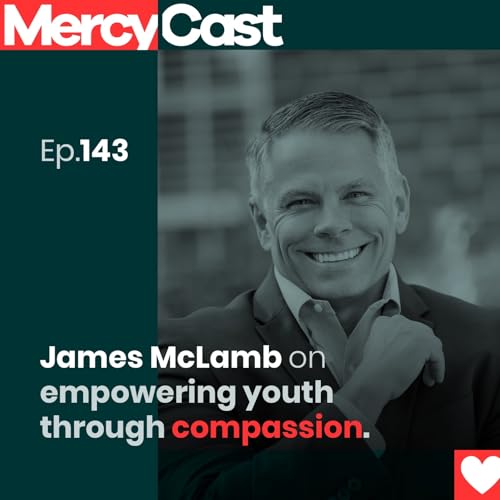
  • James McLamb on empowering youth through compassion.
    Jan 21 2026

    What works better: connection or correction?

    We answer this question and others in this week’s episode.  Today I had the privilege of speaking with James McLamb, a National Youth Empowerment Strategist and founder and CEO of Generation Youth. Our conversation centered on the powerful role mentorship plays in young people's lives.

    As someone who believes deeply in the transformative power of mercy and guidance, I was struck by how James highlighted the importance of connection over correction. Too often, we focus on fixing rather than understanding. But when we choose to show up, to be present, and to invest our time, we build the trust that youth need to flourish.

    We dug into how adversity, though difficult, can actually shape our leadership skills and teach resilience. James reminded me—and I hope you—that hope deferred is not hope lost. With the right support, that hope can be realized. This is where mentorship becomes so crucial: a mentor’s influence can alter the entire trajectory of a young person’s life, helping them discover their identity and purpose.

    Parenting is never easy, and James and I talked honestly about the challenges of raising children with resilience and independence. It’s not about control but about empowerment—giving our kids the tools and confidence to lead themselves and others. Mercy in our guidance fosters not just growth but real understanding, both for the youth we serve and ourselves.

    Ultimately, this episode is a call to action for all of us. Whether we’re parents, mentors, or simply caring adults, we have a unique opportunity to empower the next generation. Let’s choose compassion, lead with hope, and remember that we’re all learning and healing together. That’s where true connection—and lasting impact—begins.

    Episode Highlights:

    • Compassion is developed through shared experiences and mentorship. Mentorship can profoundly impact youth, shaping their future.
    • Hope deferred is not lost; it can be realized with support.
    • Building trust with youth requires time and presence.
    • Connection is more important than correction in guiding youth.
    • Adversity teaches resilience and leadership skills.
    • Parents should aim to empower rather than control their children.
    • Identity plays a crucial role in how we guide others.
    • Mercy in guidance fosters growth and understanding. We are all on a journey of learning and healing together.


    Learn more about James and his ministry with Generation Youth.

    You can follow MercyCast on Instagram, Twitter, and Facebook.

    You can follow Raleigh on Twitter and Instagram.


    Support this podcast at — https://redcircle.com/the-mercycast/exclusive-content
    Show More Show Less
    37 mins
No reviews yet