Episodes

  • Nathan Clarkson on finding the courage to be seen.
    Feb 4 2026

    What happens if the shoe doesn’t drop? What happens if you find the thing that you were looking for?

    In this episode of MercyCast, I sit down with Nathan Clarkson—actor, filmmaker, and author of the new book I Am the Worst: How Freedom Is Found in Admitting Our Faults—for one of the most honest conversations we’ve ever had about identity, acceptance, and healing.

    We talk about why Jesus tells us to pay attention to the log in our own eye before we reach for the speck in someone else’s—and why doing that isn’t about shame, but about freedom. Nathan shares how learning to face his own failures, cracks, and darkness didn’t destroy him. Instead, it became “not a wall that broke me, but a bridge to healing that recreated me.”

    We explore how busyness often disguises itself as virtue, especially in fast-paced places like New York, and how noise can become a way of avoiding stillness—because stillness forces us to look inward. As Nathan puts it, “Stillness is hard because it forces us to listen to the parts of ourselves we’d rather drown out.”

    This episode goes deep into how many of us build our identity on what we do—our productivity, success, relationships, or reputation—and how fragile that foundation really is. Nathan shares vulnerably about seasons where his ability to “do” was taken away, forcing him to confront a terrifying but liberating truth that you are not loved because of what you accomplish, but because you are made in the image of God.

    We also talk about the power of community, why healing never happens alone, and how asking for help is not weakness—it’s faith. Sometimes, the holiest prayer we can pray is just one word: help.

    At the core of this conversation is a truth we all need to hear again and again:

    You are more broken than you want to admit—and more loved than you ever dared to believe.

    What We Talk About in This Episode

    • Why acceptance is the first step toward real change
    • How facing our own faults leads to freedom, not shame
    • The danger of confusing busyness with worth
    • Why identity rooted in accomplishment always leads to exhaustion
    • The role of stillness in spiritual and emotional healing
    • How vulnerability becomes a bridge to grace
    • Why community is essential for redemption
    • How asking for help opens the door to transformation
    • What it truly means to be loved unconditionally


    Key Takeaways

    • Healing begins when we stop hiding
    • Stillness reveals what busyness conceals
    • Our identity cannot survive on performance alone
    • Weakness, when admitted, becomes a doorway to grace
    • Community carries us when we can’t carry ourselves
    • Freedom is found on the other side of honesty
    • Our worth is rooted in being God’s image-bearers—not our achievements


    If you’re tired of trying to prove yourself…

    If you’re exhausted from holding it all together…

    If you’re afraid of what you might find if you slow down…

    This episode is for you.

    Listen now and discover why admitting our faults may be the first step toward real freedom.

    Find Nathan’s new book, I’m the Worst.

    You can follow MercyCast on Instagram, Twitter, and Facebook.

    You can follow Raleigh on Twitter and Instagram.

    Thanks for listening. We want to hear from you!

    Email us at info@mercycast.com.


    Support this podcast at — https://redcircle.com/the-mercycast/exclusive-content
    Show More Show Less
    39 mins
  • Rachel Krentzman on healing when it's not linear.
    Jan 28 2026

    Sometimes life doesn’t fall apart all at once.

    Sometimes it cracks.

    In this episode of MercyCast, I sit down with Rachel Krentzman, author of As Is: A Memoir on Healing the Past through Yoga, to talk about what happens when the world you thought you understood suddenly looks different—and you can’t unsee it. Rachel shares the story behind her memoir, including the cost of vulnerability, the courage it took to tell the truth, and the long, uneven road of healing that followed.

    We talk about what it means to go first, to name discomfort instead of escaping it, and to learn compassion not from a distance but from the inside of our own pain. Rachel reflects on how practices like yoga, writing, and time in nature helped her separate her identity from her experiences—and how being truly seen and accepted changed everything.

    This conversation is honest, tender, and grounded in the reality that healing is rarely quick or tidy. It’s about learning to sit with what hurts, trusting that growth isn’t linear, and discovering that we are always more than our stories.

    If you’ve ever felt broken—but not destroyed—this episode is for you.

    Listen now, and if this conversation resonates, I’d love for you to share it with someone who needs permission to slow down, be seen, and begin again.

    In This Episode, We Explore:

    • How compassion is often learned through adversity, not comfort
    • Why vulnerability always costs us something—and why it’s still worth it
    • The power of writing as a way to process pain and tell the truth
    • Why healing is not linear and what it means to honor the ups and downs
    • How mindfulness helps us notice thoughts without letting them define us
    • The importance of sitting with discomfort instead of numbing or escaping it
    • Why nature has a grounding, restorative effect on our minds and bodies
    • The role of safe community in healing—and why being seen matters
    • How professional guides can help us see what we can’t see alone
    • What it looks like to transform pain into compassion for others


    If something in this episode stirred something in you, I’d love to hear from you.


    Reach out, share your story, or let us know how you’re learning the art of compassion through adversity.

    You’re not alone—and you don’t have to rush the healing.


    Find Rachel’s new book on Amazon.

    You can follow MercyCast on Instagram, Twitter, and Facebook.

    You can follow Raleigh on Twitter and Instagram.


    Thanks for listening. We want to hear from you!

    Email us at info@mercycast.com.


    Support this podcast at — https://redcircle.com/the-mercycast/exclusive-content
    Show More Show Less
    42 mins
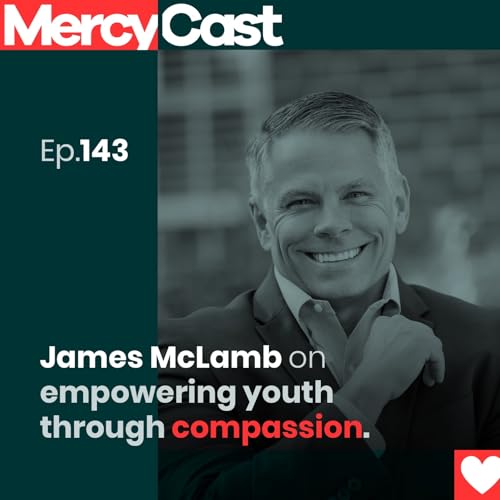
  • James McLamb on empowering youth through compassion.
    Jan 21 2026

    What works better: connection or correction?

    We answer this question and others in this week’s episode.  Today I had the privilege of speaking with James McLamb, a National Youth Empowerment Strategist and founder and CEO of Generation Youth. Our conversation centered on the powerful role mentorship plays in young people's lives.

    As someone who believes deeply in the transformative power of mercy and guidance, I was struck by how James highlighted the importance of connection over correction. Too often, we focus on fixing rather than understanding. But when we choose to show up, to be present, and to invest our time, we build the trust that youth need to flourish.

    We dug into how adversity, though difficult, can actually shape our leadership skills and teach resilience. James reminded me—and I hope you—that hope deferred is not hope lost. With the right support, that hope can be realized. This is where mentorship becomes so crucial: a mentor’s influence can alter the entire trajectory of a young person’s life, helping them discover their identity and purpose.

    Parenting is never easy, and James and I talked honestly about the challenges of raising children with resilience and independence. It’s not about control but about empowerment—giving our kids the tools and confidence to lead themselves and others. Mercy in our guidance fosters not just growth but real understanding, both for the youth we serve and ourselves.

    Ultimately, this episode is a call to action for all of us. Whether we’re parents, mentors, or simply caring adults, we have a unique opportunity to empower the next generation. Let’s choose compassion, lead with hope, and remember that we’re all learning and healing together. That’s where true connection—and lasting impact—begins.

    Episode Highlights:

    • Compassion is developed through shared experiences and mentorship. Mentorship can profoundly impact youth, shaping their future.
    • Hope deferred is not lost; it can be realized with support.
    • Building trust with youth requires time and presence.
    • Connection is more important than correction in guiding youth.
    • Adversity teaches resilience and leadership skills.
    • Parents should aim to empower rather than control their children.
    • Identity plays a crucial role in how we guide others.
    • Mercy in guidance fosters growth and understanding. We are all on a journey of learning and healing together.


    Learn more about James and his ministry with Generation Youth.

    You can follow MercyCast on Instagram, Twitter, and Facebook.

    You can follow Raleigh on Twitter and Instagram.


    Support this podcast at — https://redcircle.com/the-mercycast/exclusive-content
    Show More Show Less
    37 mins
  • Abdu Murray on navigating identity in the age of AI.
    Jan 14 2026

    Is our dependence on artificial intelligence a good thing?

    In this episode of MercyCast, I sit down with Abdu Murray, the author of “Fake ID,” for an honest conversation about faith, technology, and what really makes us who we are. We dig deep into the intersection of artificial intelligence, identity, and Christianity—topics that are shaping how we see ourselves and each other in a rapidly changing world.

    Abdu shares his journey from Islam to Christianity, revealing how deeply personal and relational the path to faith can be. Together, we examine how the Imago Dei—the image of God—grounds our identity and purpose, even as artificial intelligence and technology push the boundaries of creativity and relationships. Abdu’s insights challenge us to consider the dangers of over-reliance on AI, emphasizing the irreplaceable value of genuine human connection and compassion.

    Episode Highlights:

    • AI can streamline our lives, but it also complicates our sense of identity.
    • Abdu’s personal story illustrates how faith journeys are rooted in real relationships.
    • Understanding the Imago Dei is essential for discovering who we truly are.
    • The rise of AI prompts big questions about human creativity and purpose.
    • Overusing AI can lead to cognitive debt and a false sense of companionship.
    • We discuss why AI should be a tool—not a crutch—and how the Bible anticipated many of today’s technological challenges.
    • Human relationships remain central to spiritual growth, compassion, and creativity, even in a tech-dominated world.
    • Grounding ourselves in faith gives us wisdom and resilience to navigate technology’s pitfalls.

    Tune in for a conversation that is both timely and timeless, exploring the role of AI, identity, and the Imago Dei in our lives. Whether you’re curious about technology, faith, or the creative process, you’ll find encouragement and insight here. Subscribe to MercyCast and leave a review.

    Read Abdu’s book, Fake ID: How AI and Identity Ideology are Collapsing Reality.

    You can follow MercyCast on Instagram, Twitter, and Facebook.

    You can follow Raleigh on Twitter and Instagram.


    Support this podcast at — https://redcircle.com/the-mercycast/exclusive-content
    Show More Show Less
    45 mins
  • Elizabeth Cole on finding hope as a solo parent.
    Jan 7 2026

    How do you come to terms with the fact that what you thought your life was gonna look like is not what it looks like?

    Elizabeth Cole, VP of Solo Parent, a leading nonprofit supporting single parents, stops by to discuss the real-life challenges and journeys of solo parenting. We discuss how single parents navigate life after divorce, the importance of building a strong support network for solo parents, and why vulnerability and authentic community are essential for healing. Elizabeth shares powerful insights on practicing self-compassion, overcoming shame and guilt, and understanding your past to foster personal growth. Throughout our conversation, we highlight how encouragement and practical support can make a world of difference for single moms and dads facing life’s toughest moments.

    Whether you’re a single parent, know someone raising kids alone, or want to learn more about solo parenting, this episode is packed with practical advice and hope-filled encouragement. We cover why creating healthy routines can improve solo-parent family life and how spiritual support—often found through caring people—can help single parents heal and thrive. If you’re searching for resources, inspiration, or community for solo parents, you’re in the right place. Remember: you’re not alone, and every step forward is a victory.

    Takeaways

    • Solo parenting and single-parent families face unique challenges.
    • Community support and resources are vital for solo parents.
    • Vulnerability builds connection and emotional healing.
    • Self-compassion helps single parents overcome shame and guilt.
    • Understanding your story fosters personal growth for solo moms and dads.
    • Embrace the ongoing journey of healing as a single parent.
    • Encouragement and support matter for solo parent mental health.
    • Healing is a process, not a destination.
    • Healthy routines benefit solo-parent families.
    • Spiritual support and faith communities often help single parents.
    • Let’s keep returning—to ourselves, to each other, and to the love that makes us whole. Do us a favor. Subscribe to MercyCast and leave a review.


    Learn more about Elizabeth’s work and the team at soloparent.org.

    You can follow MercyCast on Instagram, Twitter, and Facebook.

    You can follow Raleigh on Twitter and Instagram. Thanks for listening. We want to hear from you!

    Email us at info@mercycast.com.


    Support this podcast at — https://redcircle.com/the-mercycast/exclusive-content

    Show More Show Less
    48 mins
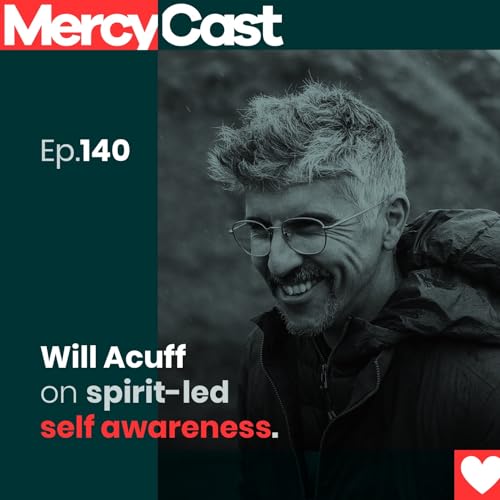
  • Will Acuff on spirit-led self awareness.
    Dec 31 2025
    Sanctification is returning to your true self as God’s Beloved.Hey friends, Raleigh here. We all know that we want to change things about ourselves. Maybe we want to shed a few pounds, or learn a new language. You are probably making your resolutions right now. For this New Year’s Eve, I had the honor of sitting down with Will Acuff, author of the new book, No Elevator to Everest: Shift from Survive to Thrive through Spirit-led Self Awareness, for an important conversation about becoming self-aware. Will opened up about his profound journey of self-discovery—one marked by deep connection, honest reflection, and a powerful return to his roots.We talked about what it means to truly meet yourself, even in the hardest places; when life cracks you open. Will described what it was like to touch the unconditional love of God—a moment so utterly transformative that it reshaped how he viewed himself and the world around him. It wasn’t just a mountaintop experience; he knew he was coming home to a hard context. Yet, in that vulnerability, he found the strength to return to himself.This episode is about the power of connection, the necessity of returning to our roots, and the way unconditional love can pivot our entire lives. Will’s journey is deeply personal, but I think you’ll find something of yourself in his story.Here’s what we explore in this episode:Why is connection key to self-discovery?How can unconditional love become a turning point?The importance of returning to your roots, especially when life gets toughTakeawaysJoy is Available Now, Even in PainThe Christian journey isn’t just about enduring suffering until we reach heaven; Jesus offers us life “to the full” right now. Even in the midst of sorrow and hardship, transcendent joy is possible and can carry us through.You Can’t Fix Everything—Including Yourself and OthersMany of us are “fixers,” trying to solve every problem, especially for those we love. But real healing comes not from control or constant problem-solving, but from presence, love, and acceptance—especially when facing challenges that can’t be fixed.True Growth Comes from Self-Compassion and Curiosity, Not CritiqueSelf-awareness and healing begin when we sit with our pain and emotions in compassion and curiosity, rather than self-criticism. Asking “why am I feeling this?” and allowing ourselves to be present breaks cycles of fear, anger, and shame.Alignment with God Means Being Present and AttunedSpiritual formation is not just about knowing God, but also knowing ourselves. Being “in tune” with God and our true selves requires daily practices of listening, noticing, and being present—in nature, in silence, and in our emotions.We Are Loved as We Are—Not as We ‘Should Be’We are not “dung heaps” barely tolerated by God; we are beloved image bearers. The story of the prodigal son shows that God’s love is unconditional, scandalous, and welcoming, no matter our shame or striving. Living in this love frees us to experience joy, self-acceptance, and deeper community.Sanctification isn’t about becoming someone else or earning God’s approval. it’s the process of shedding shame, brokenness, and false identities to return to your original, God-given self. Through Christ, we’re restored to who we were created to be—fully human, fully loved, and free to live out of that identity.Thanks for joining me on MercyCast this New Year’s Eve. Let’s keep returning—to ourselves, to each other, and to the love that makes us whole.Subscribe to MercyCast and leave a review.Pick up a copy of Will’s new book, No Elevator to Everest.You can follow MercyCast on Instagram, Twitter, and Facebook.You can follow Raleigh on Twitter and Instagram. Thanks for listening. We want to hear from you!Email us at info@mercycast.com. For more conversations like this one, check out my book, Vulnerable: Rethinking Human Trafficking.Support this podcast at — https://redcircle.com/the-mercycast/exclusive-content
    Show More Show Less
    41 mins
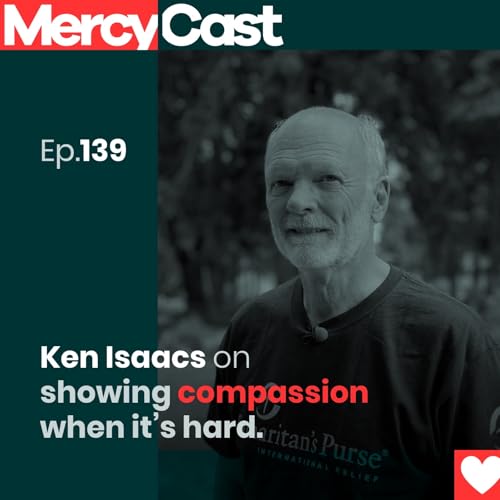
  • Ken Isaacs on showing compassion when it's hard.
    Dec 24 2025

    Is it possible to be impartial when caring for people on both sides of a conflict?

    In this episode of the MercyCast, I sit down with Ken Isaacs, Vice President of Samaritan’s Purse and author of “Running to the Fire: Helping in Jesus’ Name.” Together, we dive deep into how Christian compassion, faith, and practical love can make a real difference in some of the world’s most challenging conflict zones.

    One of the most powerful moments from our conversation was hearing Ken share about his firsthand experiences, including a story where an ISIS member questioned why anyone would show them kindness. It reminded me how transformative acts of compassion can be—even in the darkest situations.

    If you’re passionate about Justice, Mercy, humanitarian stories, or want to learn how faith and practical love can make a difference in a divided world, this episode is for you. Give it a listen—I know you’ll be inspired by Ken’s incredible journey and the stories we share.

    Here’s what we explore in this episode:

    • The impact of Christian faith and humanitarian aid in places where hope seems lost.
    • Real stories from the front lines of disaster relief and conflict, showing how kindness can challenge hatred.
    • Why practical demonstrations of Jesus’ love matter, and how they can actually disarm adversaries.
    • The importance of dialogue, empathy, and building bridges across cultural and religious divides.
    • How faith-based service is essential for peacebuilding and reconciliation.

    Takeaways

    • Kindness, compassion, and love aren’t just ideals—they’re powerful tools for peacemaking.
    • Bearing witness through faith-driven service can inspire genuine transformation, even among those we consider adversaries.
    • Dialogue and understanding are essential for real humanitarian work and lasting peace.
    • Faith in action truly bridges divides and brings hope into the most broken places.
    • Subscribe to MercyCast and leave a review.

    Pick up a copy of Ken’s new book, Running to the Fire.

    You can follow MercyCast on Instagram, Twitter, and Facebook.

    You can follow Raleigh on Twitter and Instagram.

    Thanks for listening. We want to hear from you!

    Email us at info@mercycast.com.


    Support this podcast at — https://redcircle.com/the-mercycast/exclusive-content
    Show More Show Less
    44 mins
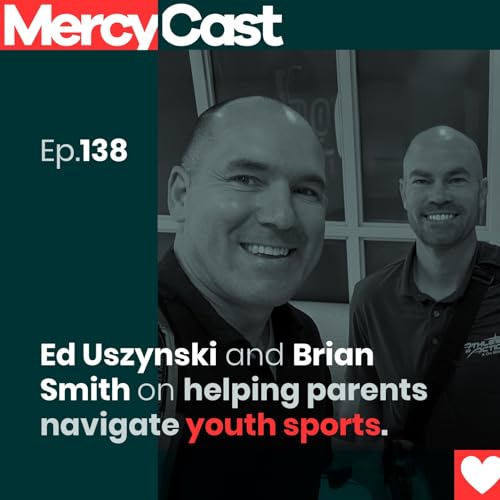
  • Ed Uszynski and Brian Smith on helping parents navigate youth sports.
    Dec 17 2025

    In this episode of MercyCast, I talk with Brian Smith and Ed Uszynski, authors of Away Game: A Christian Parent’s Guide to Navigating Youth Sports, about parenting, sports pressure, and how Christian faith shapes our engagement with youth sports.

    Brian and Ed help us confront the challenges families face in today’s sports culture, especially how pressures and expectations in youth sports can redefine family dynamics and affect both parent and child identities. This conversation addresses the frustration, anxiety, and exhaustion many parents feel.

    Our conversation shifts the focus of youth sports from mere achievement to discipleship, showing how every practice and game can serve as a chance to teach grace, identity in Christ, and real connection. By prioritizing relationships over results, we rediscover the true joy of sports for families.

    If you’re facing the challenges of youth sports, this episode invites you to pause, reflect, and choose a better way—rooted in grace, truth, and love.

    Takeaways

    • Youth sports can quickly become a major source of stress for parents.
    • The youth sports industrial complex creates constant pressure to perform and succeed.
    • As parents, we often project our own fears and identity struggles onto our kids.
    • Sports provide meaningful opportunities for discipleship and spiritual formation.
    • Prioritizing enjoyment and connection helps preserve sports joy.
    • Excessive pressure to perform in sports can lead to burnout in young athletes.
    • Christian faith offers a countercultural vision for identity beyond wins and losses.
    • Honest conversations strengthen family dynamics and trust.
    • Grace-centered parenting fosters deeper, healthier relationships.
    • It’s never too late to change how we show up for our kids in youth sports.

    Subscribe to MercyCast and leave a review.

    Pick up a copy of Brian and Ed’s book, Away Game.

    You can follow MercyCast on Instagram, Twitter, and Facebook.

    You can follow Raleigh on Twitter and Instagram.

    Thanks for listening. We want to hear from you!

    Email us at info@mercycast.com.


    Support this podcast at — https://redcircle.com/the-mercycast/exclusive-content
    Show More Show Less
    45 mins