• Nothing beside remains
    Jan 11 2026

    When power grows impatient with restraint, poetry remembers.

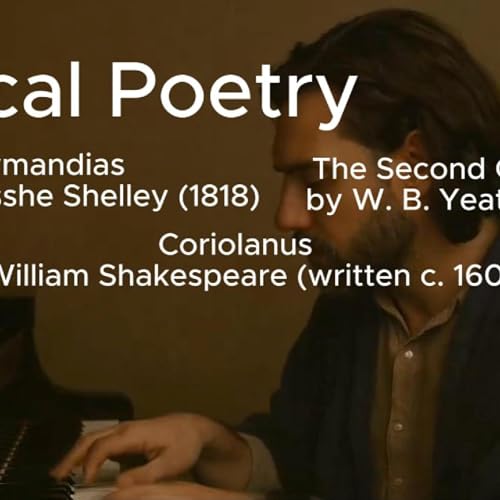
    This episode of Musical Poetry brings together three voices from three centuries in a single musical conversation:

    Ozymandias by Percy Bysshe Shelley — written in the shadow of Napoleon’s fall, reflecting on power after history has passed judgment.

    The Second Coming by W. B. Yeats — written after the First World War, sensing a world where balance fails and something ancient begins to stir.

    Coriolanus by William Shakespeare — offering the human voice of authority convinced that necessity excuses everything.

    Rather than adapting or modernising these works, this episode lets them speak to one another — as prophecy, personality, and aftermath.

    At the centre of the episode is an original musical piece built entirely from their words, arranged to reveal a pattern that repeats across history:

    how power rises, how it justifies itself, and how time eventually responds.

    This is not a political argument.

    It is not a prediction.

    It is a listening exercise, across centuries.

    Stay with the episode to the end, where the three voices converge and the question they leave us with becomes unavoidable.

    Show More Show Less
    12 mins
  • The Darkling Thrush, by Thomas Hardy
    Dec 28 2025

    These are the days between Christmas and New Year, when celebration has faded, time slows, and the future has not yet begun.


    In this episode of Musical Poetry, we present


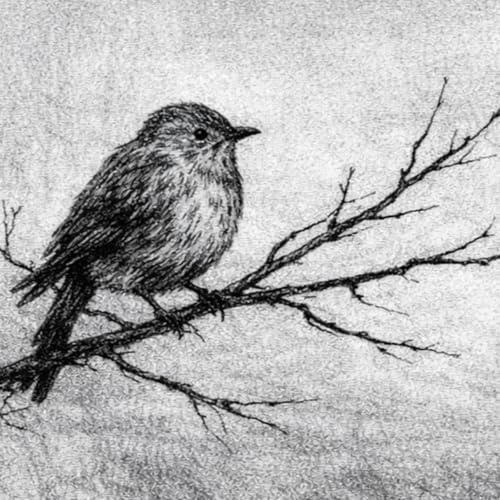
    “The Darkling Thrush” by Thomas Hardy.

    Written at the very end of 1900 and first published in 1901, the poem stands at the threshold between centuries.


    Hardy looks at a winter landscape that feels exhausted and silent, and then hears a small bird sing, without reason, without explanation.


    This episode sets Hardy’s words against a melancholic, minimalist R&B soundscape, paired with a black-and-white animation that moves slowly, allowing silence and stillness to speak.

    Show More Show Less
    7 mins
  • Dulce et Decorum Est by Wilfried Owen
    Dec 21 2025

    The bells of war are sounding louder again — and yet, have they ever really stopped?In this episode of Musical Poetry, we present Dulce et Decorum Est by Wilfred Owen, one of the most powerful anti-war poems ever written.Owen wrote this poem during the First World War, after witnessing combat at close range. Before the war, he was a teacher and a poet. He was killed in action on 4 November 1918, just one week before the war ended. The poem was published after his death, in 1920.Its final line comes from an old Latin saying:“It is sweet and fitting to die for one’s country.”Owen called this idea the old lie.This reading is offered in remembrance of those who suffer today — in Sudan, in Ukraine, and wherever the bells of war continue to sound.It is also a refusal to ask the young to give their lives for the comfort, possessions, or survival of the old.This is not a call to action.It is an act of witness.

    Show More Show Less
    8 mins
  • Christina Rossetti's A Christmas Carol (1872)
    Dec 12 2025

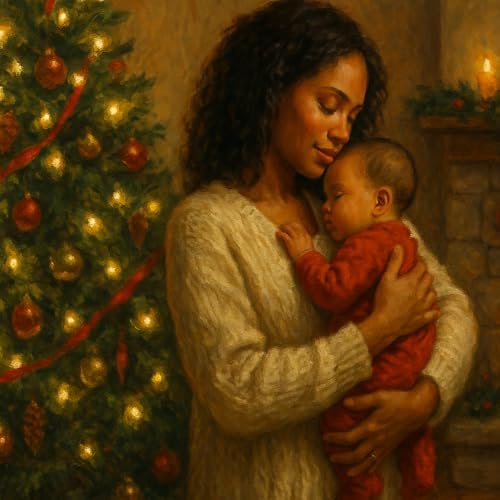
    Immerse yourself in the quiet beauty of Christmas with this special episode of Musical Poetry. Today’s reading features Christina Rossetti’s beloved poem “A Christmas Carol” — better known by its opening line, “In the bleak midwinter.”Through tender words and timeless imagery, Rossetti captures the holiness of a winter night, the humility of the manger, and the simple, profound truth that the greatest gift we can offer is the gift of our heart.This episode includes a beautifully crafted visual journey:❄️ A winter landscape set in the quiet of midwinter🕯️ A warm and intimate Christmas setting🐂 A serene manger scene with gentle animals✨ Angels watching over the nativity💛 A child holding a glowing light, symbolizing love freely givenLet these images and Rossetti’s word bring stillness, warmth, and wonder into your Christmas season.Wishing you a warm, joyful Merry Christmas.And remember… where words fail, poetry still speaks.

    Show More Show Less
    5 mins
  • A Visit from St. Nicholas by Clement Clarke Moore
    Nov 30 2025

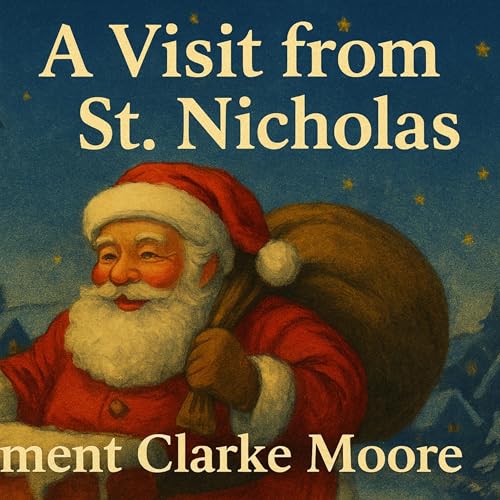
    In this festive edition of Musical Poetry, Michael invites the ever-charming Opa Cohen to open and close the episode with his warm, storytelling voice. Together, they bring to life one of the most beloved Christmas poems of all time: “A Visit from St. Nicholas” by Clement Clarke Moore.Set against gentle jazz tones and supported by cinematic winter imagery, this episode captures the magic, mischief, and timeless wonder of Christmas Eve — from the silent snowy house to Santa’s moonlit departure.Perfect for your morning, afternoon, evening, or night, this poetic journey offers a moment of calm and joy during the Advent season.Sit back, relax, and rediscover the poem that shaped the modern image of Santa Claus.

    Show More Show Less
    9 mins
  • Dover Beach by Matthew Arnold (1867)
    Nov 24 2025

    Today’s poem is “Dover Beach” by Matthew Arnold — a timeless piece from 1867 that speaks with quiet power about a world losing its sense of unity. Arnold, a poet and cultural critic of the Victorian era, captured the feeling of a society drifting apart long before our modern age gave it new forms. His imagery of the calm moonlit sea, slowly revealing deeper currents of uncertainty and longing, still resonates deeply with us today.

    This episode blends a gentle "hip/hop r&b" reading of the poem with atmospheric music and imagery, creating a space to breathe, think, and feel.

    Show More Show Less
    5 mins
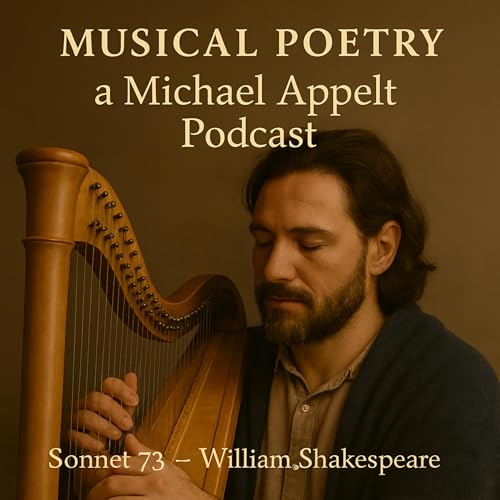
  • Sonnet 73 - William Shakespeare
    Nov 21 2025

    In this episode of Musical Poetry, we explore one of Shakespeare’s most intimate and contemplative works: Sonnet 73. Through images of fading autumn leaves, dying daylight, and a fire resting on its own ashes, the sonnet reflects on time, aging, and the deepening strength of love in the face of impermanence.

    Join me as we journey through these powerful metaphors — from bare winter branches to the last glow of a campfire — and experience how Shakespeare captures the fragile beauty of life’s late season.

    This episode includes a video version with atmospheric visuals and English and German subtitles to enrich the poetic experience.

    Show More Show Less
    7 mins
  • The Canterbury Tales - Prologue
    Nov 8 2025

    In this episode of Musical Poetry, we travel back to 14th-century England and step into the world of Geoffrey Chaucer’s Canterbury Tales — one of the greatest journeys ever written in the English language.

    The episode begins with a brief reflection on the Prologued, a living tapestry of medieval society, where knights, friars, merchants, and storytellers share the same road toward Canterbury.

    Then, something unexpected happens:
    a soul band from the 1970s is accidentally sent back in time and commanded by the king himself to perform Chaucer’s Prologue.

    What follows is a playful fusion of centuries, a rhythm-filled recitation of Middle English poetry, alive with groove, fire, and imagination.

    Show More Show Less
    7 mins