Episodes

  • Borders, Belonging and Climate Change
    Sep 29 2026

    In the Sundarbans, storms and cyclones have long forced families across the India-Bangladesh border to survive. In her new book, ‘The Undocumented: One Family’s Journey from Bangladesh to India’, journalist and author Nidhi Dugar Kundalia traces one such journey, that of Safrat and her two children, drawing on thirteen years of fieldwork in a Kolkata slum. On this episode, we talk to Nidhi about why people leave home, the perilous crossings into India, the trafficking networks, the lives of people in slums, and what it really means to live undocumented, from a hospital that won’t release a body without papers to a mother fighting to get her son into school.


    References:

    1. Nidhi Dugar Kundalia: Instagram, X, LinkedIn
    2. The Undocumented: One Family’s Journey from Bangladesh to India by Nidhi Dugar Kundalia
    3. Other books by the author: The Lost Generation: Chronicling India’s Dying Professions, White as Milk and Rice: Stories of India’s Isolated Tribes, 10 Indian Tribes and the Unique Lives They Lead
    4. The Past is Beautiful: Virginia Woolf
    5. How Delhi Police Sent Six Indians To a Bangladeshi Prison by The Telegraph India
    6. ‘Disappeared’: In Bengal, Muslims picked up from homes in midnight raids, sent to detention centres by Rokibuz Zaman
    7. Last hope: Family of Bangladeshi girl ‘shot by India’s BSF’ waits for justice from Supreme Court by Ariful Islam Kurigram
    8. Home by Warsan Shire
    9. Why border killing has not stopped by Jamal Uddin
    10. How the Climate Crisis Is Impacting Bangladesh by Diego Rojas
    11. New Town slum fire sparks political slugfest by The Statesman
    12. Episode 9: Journalism, Narratives and Syeda X: In conversation with Neha Dixit
    Show More Show Less
    57 mins
  • Debating Women’s Citizenship in India: 1930–1960
    Sep 14 2026

    Women’s citizenship in India is a deeply contested subject. Even in the decades preceding independence, a generation of women leaders in India was closely engaging with the Indian state and society, negotiating ideas of citizenship and gender justice across various public spheres. These women leaders did not all share the same views. They were often in deep contention with one another over issues like women’s health, reservation, the rescue and repatriation of abducted women, social service and family planning.

    South African Historian Annie Devenish closely examines these complex debates by studying the ideas and activism of leading figures within the All India Women’s Conference and the National Federation of Indian Women, and in India’s Constituent Assembly. Dive into this conversation to know more.


    References:

    1. Debating Women’s Citizenship in India, 1930–1960 by Annie Devenish
    2. A Passage to India by E.M. Forster
    3. The Raj Quartet (four-volume novel sequence) by Paul Scott: The Jewel in the Crown, The Day of the Scorpion, The Towers of Silence, A Division of the Spoils
    4. The God of Small Things by Arundhati Roy
    5. SEWA (Self-Employed Women’s Association) and Ela Bhatt
    6. Sarojini Varadappan, Sarla Sharma, Vidya Munshi
    7. Founding Mothers of the Indian Republic: Gender Politics of the Framing of the Constitution by Achyut Chetan
    8. The Women’s Library at London School of Economics and Political Science
    9. Hilda Seligman, Lady Dhanvanthi Rama Rau, Mridula Sarabhai, Muthulakshmi Reddi
    10. Kerala Story by Sudipto Sen
    Show More Show Less
    1 hr and 7 mins
  • The Diaspora’s Fight Against India’s Emergency
    Jul 20 2026
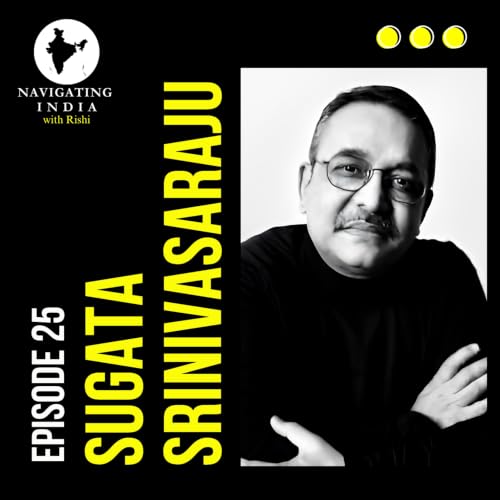
    Fifty years on, the story of the Emergency proclaimed by Indira Gandhi (1975–77) has been told and retold, in popular histories, academic studies, memoirs. But one story has remained almost entirely untold: the resistance mounted from abroad by a small, largely unknown group of Indian diaspora who had no political affiliation or ties to any ideological formation. Organizing themselves as ‘Indians for Democracy’, individuals like Anand Kumar, Ravi Chopra, S.R. Hiremath, Shrikumar Poddar, along with Americans like Mavis Sigwalt, Paula Bronstein, Horace Alexander, and George Willoughby, worked to build international pressure against the Emergency from outside India. In this episode, we are joined by Sugata Srinivasaraju, author of ‘The Conscience Network: A Chronicle of Resistance to a Dictatorship’, who brings this forgotten chapter of history to light, the story of fascinating individuals who fought for Indian democracy from thousands of miles away.References: Sugata Srinivasaraju: Blogspot, X, InstagramThe Conscience Network: A Chronicle of Resistance to a Dictatorship by Sugata SrinivasarajuOther works by Sugata Srinivasaraju: Furrows in a Field: The Unexplored Life of H.D. Deve Gowda, Strange Burdens: The Politics and Predicaments of Rahul Gandhi, Pickles from Home: The Worlds of a Bilingual, Keeping Faith with the Mother Tongue: The Anxieties of a Local Culture, Phoenix and Four Other Mime PlaysPenguin Book of Socialist Verse by Alan Bold (Editor) Ki. Ram. Nagaraj, Chandrashekhar Patil, G. S. Shivarudrappa, PrasannaThe Life and Times of George Fernandes by Rahul Ramagundam (Episode 5)Rama Bhima Soma: Cultural Investigations into Modern Karnataka by Srikar Raghavan (Episode 10)India after Gandhi by Ramachandra GuhaSamuel Beckett and Marcel MarceauSmall Is Beautiful: A Study of Economics as if People Mattered by E F SchumacherJayaprakash Narayan, Ram Manohar Lohia, Narendra Deva, George Fernandes, Prakash Karat, Ramnath Goenka, Triloki Nath Kaul, Fazlur Rahman Khan, Ram Jethmalani, Subramanian Swamy, YB Chavan, Khushwant SinghLuce-Celler Act, signed by President Harry S. Truman in July 1946Ashis Nandy, Indian political psychologistMary McGrory, Homer Jack, Bayard Rustin, Horace Alexander
    Show More Show Less
    1 hr and 17 mins
  • Carrying Worlds Across Languages
    Apr 11 2026

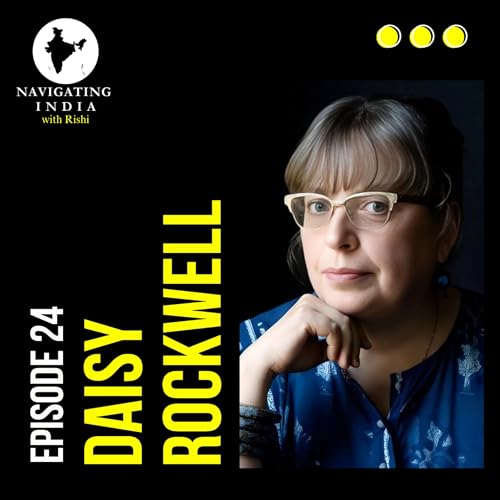
    Daisy Rockwell is an author, translator, and painter based in the United States, who translates from Hindi and Urdu into English, and has brought some of the most significant voices of South Asian literature to readers across the world. Her translation of Geetanjali Shree’s Tomb of Sand won the International Booker Prize in 2022, the first Hindi-language novel to receive that distinction.

    In this episode, I am in conversation with Daisy to talk about her journey into Hindi and Urdu, the craft of literary translation, her first encounter with India, what artificial intelligence means for the future of the craft of translation, and much more. Dive into the episode to find out.

    References:

    1. Daisy Rockwell: Website, Instagram
    2. Alice Sees Ghosts: A Novel by Daisy Rockwell
    3. Works translated by Daisy Rockwell: Tomb of Sand by Geetanjali Shree, Falling Walls by Upendranath Ashk, The Women’s Courtyard by Mastur Khadija, Tamas by Bhisham Sahni
    4. Yashpal: This Is Not That Dawn: Jhootha Sach, Dada Comrade
    5. Speaking of Siva by A.K. Ramanujan
    6. Lessons learned: Susanne and Lloyd Rudolph, in memoriam
    Show More Show Less
    1 hr and 2 mins
  • What Women Want: Understanding The Female Voter in Modern India
    Apr 5 2026

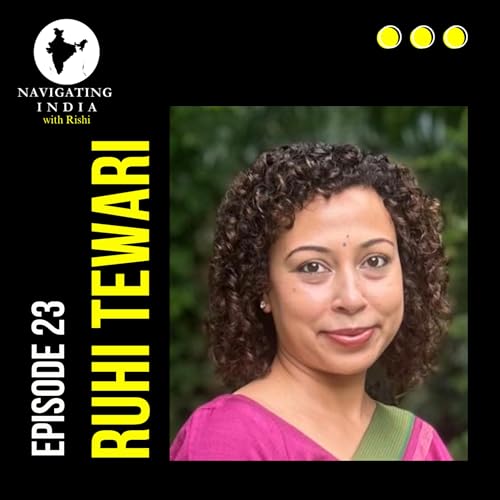
    In the long history of post-Independence India, the woman voter was invisible, rarely spoken about, and almost never listened to. But today, something has changed. Women are voting in greater numbers than ever before, making independent choices and holding politicians accountable. Journalist Ruhi Tewari draws on two decades of travelling across various states in India, covering elections, to trace the emergence of this 'Mahila voter'. She explores how women vote, and why. Tune in to the episode to find out more.

    References:

    1. Ruhi Tewari: Instagram, X, LinkedIn
    2. Book: What Women Want: Understanding The Female Voter in Modern India by Ruhi Tewari
    Show More Show Less
    43 mins
  • A Woman of No Consequence: Memory, Letters and Resistance in Madras
    Mar 30 2026

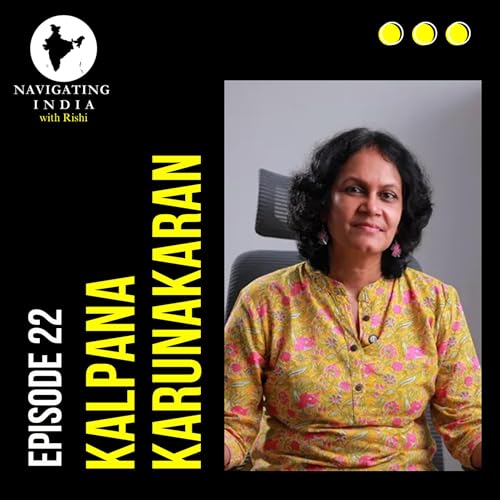
    What does it mean to recover the life of a woman who called herself a ‘humble housewife tied to mundane work’? In this episode, I am in conversation with Kalpana Karunakaran to discuss her book, ‘A Woman of No Consequence: Memory, Letters and Resistance in Madras’, a remarkable excavation of the life of Pankajam, a woman who defies easy categorisation.

    Pankajam was a voracious reader who sought freedom from a fractured relationship with her husband. Her memories are vivid and layered, marked by a deep love for children, a spirit of travel, friendships forged across distances, and an attentiveness to nature, birds, and animals. Through it all, she reinvented motherhood entirely on her own terms. We explore why it matters to study a woman like Pankajam, someone who does not fit neatly into the conventional subject of feminist discourse and what her life reveals about resistance, memory, and selfhood. We also talk with Kalpana about her own mother, Mythily Sivaraman, a well-known Indian women’s rights activist.

    References:

    1. Kalpana Karunakaran: Profile, Instagram
    2. Book: A Woman of No Consequence: Memory, Letters and Resistance in Madras by Kalpana Karunakaran
    3. Tamil Nadu Science Forum
    4. Mythily Sivaraman, Fragments of a Life: A Family Archive by Mythily Sivaraman (Life story of Subbalakshmi)
    5. Indian Association of Women’s Studies, Vina Mazumdar
    6. Jane Austen, Louisa May Alcott (Little Women), Anton Chekhov, Alexander Pushkin, Leo Tolstoy, Katha Prize Stories
    7. Women’s India Association, All India Women’s Conference
    8. Sarda Act: Child Marriage Restraint Act, 1929
    9. Katherine Mayo and her book, Mother India (1927)
    10. Mary Rajamani, Valentina Tereshkova
    Show More Show Less
    1 hr and 23 mins
  • Faith and Fury: COVID Dispatches from India’s Hinterlands
    Mar 22 2026

    In this episode of Navigating India, released on March 22nd, 2026, exactly six years after India observed the Janta Curfew, an initiative by the Government of India to combat COVID, we are joined by journalist Jyoti Yadav to discuss her book 'Faith and Fury: Covid Dispatches from India's Hinterlands'. While much of India locked itself indoors during the pandemic, she set out from Delhi to the rural heartlands of Uttar Pradesh and Bihar, documenting the hardships faced by migrant workers, the shortage of oxygen cylinders, the undercounting of deaths, children orphaned by the virus, and the collapse of the state's health infrastructure. Her book is an important record of India's pandemic years, raising serious questions that the nation has been too eager to forget, at a time when the media has largely written Covid off as a closed chapter.


    References

    1. Jyoti Yadav: Website, X, LinkedIn
    2. Book: Faith and Fury: COVID Dispatches from India’s Hinterland by Jyoti Yadav
    Show More Show Less
    1 hr and 1 min
  • Periyar: The Life and Times of an Iconoclast
    Nov 29 2025
    Why is Periyar E.V. Ramasamy Naicker, who passed away over half a century ago, still a controversial yet unavoidable and crucial figure in Tamil Nadu? While this year marks 100 years of the Self-Respect Movement, initiated by Periyar, he was also labelled anti-national, anti-Hindu, anti-Brahmin, and anti-Dalit, generating extreme hate and accusations. Who was Periyar? How did his ideas evolve? What are his key contentions? Did he want a separate country? What was his relationship with Ambedkar, Annadurai, and Kamaraj? How did he leave a lasting impact on the people of Tamil Nadu? In this episode, I’m joined by A. R. Venkatachalapathy and Karthick Ram Manoharan to delve deeper into the life and ideas of Periyar.References:The Cambridge Companion to Periyar, Edited by A. R. Venkatachalapathy and Karthick Ram ManoharanA. R. Venkatachalapathy: Profile, XKarthick Ram Manoharan: Profile, XBooks by A. R. Venkatachalapathy: In Those Days There Was No Coffee, Swadeshi Steam: V.O. Chidambaram Pillai and the Battle against the British Maritime Empire, Who Owns that Song?: The Battle for Subramania Bharati’s Copyright, Tamil Characters: Personalities, Politics, Culture, The Province of the Book: Scholars, Scribes, and Scribblers in Colonial Tamilnadu, The Brief History of A Very Big Book: The Making of the Tamil EncyclopaediaBooks by Karthick Ram Manoharan: Periyar: A Study in Political Atheism, Frantz Fanon: Identity and ResistanceDravidian Movement and Saivites, 1927-1944 by A. R. VenkatachalapathySudras and the Nation: Periyarist Explorations, Freedom from God: Periyar and Religion, In the path of Ambedkar: Periyar and the Dalit question by Karthick Ram ManoharanM.S.S. Pandian: Denationalising the Past-Nation in E V Ramasamy's Political Discourse, Brahmin and Non-Brahmin: Genealogies of the Tamil Political Present V Geetha: Periyar, Women and an Ethic of Citizenship, Towards a Non-Brahmin Millennium: From Iyothe Thass to Periyar (Co-authored with S.V. Rajadurai)Anandhi S.: Women’s Question in the Dravidian Movement c. 1925-1948Robert L Hardgrave Jr: The Nadars of Tamilnad: The Political Culture of a Community in Change Selig S. Harrison: Caste and the Andhra CommunistsLloyd I. Rudolph and Susanne Hoeber Rudolph: The Political Role of India’s Caste AssociationsB.R. Ambedkar: Annihilation of Caste (An Introduction by Arundhati Roy)Vignesh Rajahmani: The Dravidian Pathway: How the DMK Redefined Power and Identity in South IndiaEpisode 18: The Dravidian Pathway: How the DMK Redefined Power and Identity in South India by Vignesh RajahmaniD. Veeraraghavan: Half a Day for Caste? Education and Politics in Tamil Nadu, 1952-55 Nellai R. Jebamani, Cho Ramaswamy, Maraimalai Adigal, K. Veeramani, Maniammai, C.N. Annadurai, K. Kamaraj, J. JayalalithaaBipin Chandra, Aditya Mukherjee, Ranajit Guha, Partha Chatterjee, K. A. Nilakanta Sastri, D.D. Kosambi, Romila Thapar, M.N. Srinivas, Namdeo Dhasal
    Show More Show Less
    2 hrs and 51 mins