Episodes

  • From University to Industry - Building the Next Generation of Engineers with Kenza Benyaich & Sean Quilty
    Nov 22 2026

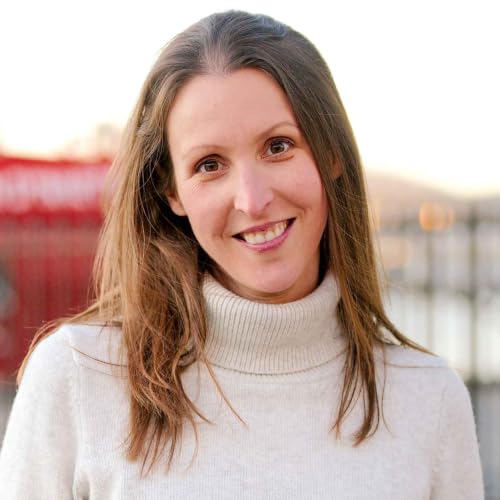
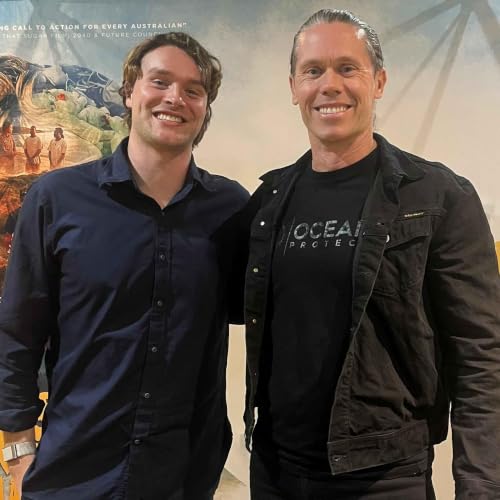
    In this episode of the Ocean Protect Podcast, Brad is joined by Ocean Protect Design Engineer Kenza Benyaich and engineering educator Sean Quilty to discuss the transition from university to the engineering industry and how we can better prepare the next generation of engineers. In this chat, they explore the challenges facing engineering graduates, particularly international students, the importance of practical work experience and mentoring, and why networking and building a professional brand can make all the difference when trying to land that first job. They also discuss the role industry needs to play in supporting emerging engineers and the technical skills graduates should be developing to set themselves up for success.


    Useful links:

    • Kenza on Linkedin (here)
    • Sean on LinkedIn (here)
    • Quilty Engineering Hub (here)
    • Engineers Australia – Early Career Resources
    • Stormwater Australia
    • Stormwater Queensland
    • eWater MUSIC – Stormwater Modelling Software
    • QGIS – Geographic Information System
    • HEC-RAS – Hydraulic Modelling Software


    For further information about Ocean Protect, check us out at www.oceanprotect.com.au

    Hosted on Acast. See acast.com/privacy for more information.

    Show More Show Less
    39 mins
  • Chelsea Golding on the High Seas Treaty & why ocean governance matters
    Oct 25 2026

    Chelsea Golding is an emerging ocean policy professional working at the intersection of marine science, climate policy and international governance. In this chat, we dive into the fascinating world of ocean governance - exploring who is responsible for protecting our oceans, what happens beyond national borders, and why international cooperation is so important for ocean health. We discuss Australia's recent ratification of the High Seas Treaty, the challenges of enforcing international agreements, the role of economic penalties in tackling illegal fishing, and the disturbing links between illegal fishing and modern-day slavery at sea. Plus, we discuss what the treaty could mean for offshore activities such as deep-sea mining, the ongoing challenge of plastic pollution, and the lessons ocean governance can offer other global environmental issues, including climate change. It's a fascinating conversation about the systems, collaboration and accountability needed to protect our shared ocean — and a reminder that good science only goes so far if it isn't translated into action.


    Useful links:

    • Chelsea on LinkedIn (here)
    • UN World Ocean Assessment - Global overview of ocean governance (here):
    • United Nations Decade of Ocean Science for Sustainable Development (2021-2030) (here)
    • Agreement on Marine Biological Diversity of Areas Beyond National Jurisdiction (BBNJ Agreement) (overview)


    For further information about Ocean Protect, check us out at www.oceanprotect.com.au

    Hosted on Acast. See acast.com/privacy for more information.

    Show More Show Less
    35 mins
  • Australian Sea Lions: A race against the clock with Dirk Holman
    Oct 11 2026

    Dirk Holman is a Threatened Species Researcher with Sea Shepherd Australia, working on research, monitoring and conservation efforts for Australia's endemic Australian sea lion. Dirk returns to the Ocean Protect Podcast for his second appearance — this time for a wide-ranging conversation about the growing pressures facing one of Australia's most vulnerable marine mammals. In this chat, we discuss the alarming decline in Australian sea lion populations, the devastating impact of the recent harmful algal bloom, the arrival of H5N1 bird flu in Australia and the potential risks it poses to sea lion colonies.

    Dirk also shares an update on the innovative pup shelter project, which is providing much-needed shade and protection for pups on islands where natural vegetation has been lost. Plus, we hear about some of the sea lion rescues Dirk and the Sea Shepherd team have undertaken after animals became entangled in fishing and other marine debris, and explore the less visible pressures facing these animals — from pollution and disease to changes in food availability and their broader marine habitat. It's a fascinating look at the science, challenges and hands-on conservation work involved in protecting Australia's sea lions — and why collaboration is becoming increasingly important.


    Useful links:

    • Sea Shepherd Australia's Sea Lion Defence Campaign (here)
    • Protecting Australian Sea Lions with Dirk Holman — Ocean Protect Podcast, Season 7, Episode 15 (here)
    • Dirk on LinkedIn (here)


    For further information about Ocean Protect, check us out at www.oceanprotect.com.au

    Hosted on Acast. See acast.com/privacy for more information.

    Show More Show Less
    44 mins
  • Dr Jennifer Lavers on what long-term data shows about population impacts of ocean plastic pollution
    Sep 27 2026

    Dr Jennifer Lavers is a marine eco-toxicologist, seabird and island conservation expert, and researcher at Adrift Lab - and returns for her second appearance on the Ocean Protect Podcast. In this chat, we delve into recent ground-breaking research on plastic pollution impacts on seabirds at Lord Howe Island - and discuss the findings from over 15 years of data, and what key actions we can take to beat plastic pollution.


    Useful links:

    • Dr Jennifer Lavers on Linkedin (here)
    • Adriftlab
    • Dr Jennifer Lavers on the plastic in seabirds (Ocean Protect Podcast, Season 2, Episode 15, June 2020) (here)
    • AdriftLab article (August 2026) The Birds That Never Came Home: Long-Term Data Reveal Population-Level Impacts of Ocean Plastic Pollution (here)
    • J.L. Lavers, H. Worthington, & A.L. Bond, Ingested plastics reduce recruitment and survival of an Australian seabird, Proc. Natl. Acad. Sci. U.S.A. 123 (34) e2613782123, https://doi.org/10.1073/pnas.2613782123 (2026). https://www.pnas.org/doi/10.1073/pnas.2613782123
    • Lavers, J. L., de Jersey, A. M., Rivers-Auty, J., & Bond, A. L. (2026). Abrupt recent increases in plastic ingestion by Sable Shearwaters (Ardenna carneipes). Earth's Future, 14, e2026EF008572. https://doi.org/10.1029/2026EF008572
    • Ingrid L. Pollet, William M. Connelly, Michelle L. Feenstra, Alix M. de Jersey, Alexander L. Bond, Jennifer L. Lavers, Jack Rivers-Auty, Plastic ingestion alters stomach anatomy and biomechanics in sable shearwaters (Ardenna carneipes), Journal of Hazardous Materials: Plastics, Volume 5, 2026, 100080, ISSN 3051-0600, https://doi.org/10.1016/j.hazmp.2026.100080


    For further information about Ocean Protect, check us out at www.oceanprotect.com.au

    Hosted on Acast. See acast.com/privacy for more information.

    Show More Show Less
    48 mins
  • Lottie Dalziel with 365+ Ways to Save the Planet & Your Money at the Same Time
    Aug 30 2026

    Lottie Dalziel is on a mission to make sustainability simple, accessible, and impactful - returning for her second appearance on the podcast. In this chat, we hear all about BRAD (the Banish Recycling And Disposal Program) and get some insights into her debut book "365+ Ways to Save the Planet and Your Money at the Same Time".


    Useful links:

    • Lottie on LinkedIn (here)
    • "365+ Ways to Save the Planet and Your Money at the Same Time" (here)
    • BRAD (Banish Recycling And Disposal Program): https://banish.com.au/pages/recycling-program
    • https://banish.com.au/


    For further information about Ocean Protect, check us out at www.oceanprotect.com.au

    Hosted on Acast. See acast.com/privacy for more information.

    Show More Show Less
    40 mins
  • Kal Glanznig on turning the tide on The Plastic Country
    Aug 9 2026

    Kal Glanznig is a filmmaker, ocean advocate and Sutherland Shire Councillor. In this chat, we discuss Kal's latest film, "The Plastic Country" - a confronting, timely and deeply personal Australian documentary that challenges how we think about plastic, our health, our ocean and the systems that shape the world around us. From remote beaches and stormwater drains to supermarket shelves, scientific laboratories and the halls of Parliament, this powerful documentary asks a difficult question: how did Australia become one of the world’s biggest plastic waste producers per person, and what will it take to turn the tide?


    Useful links:

    • "The Plastic Country" (here)
    • Kal Glanznig on Linkedin (here)
    • Kal's website (here)
    • Blue Minds (here)
    • "Kal Glanznig on youth, plastics, politics, & Rising Up for a better world" (Ocean Protect Podcast, Season 7, Episode 18)

    For further information about Ocean Protect, check us out at www.oceanprotect.com.au

    Hosted on Acast. See acast.com/privacy for more information.

    Show More Show Less
    39 mins
  • Dr Amelia Harry on the Plastic Exposure Reduction Transforms Health (PERTH) Trial
    Jun 21 2026

    Dr Amelia Harry is an experienced Advanced Accredited Practising Dietitian, Accredited Nutritionist, and plastics, diet & human health researcher. In this chat, we discuss the latest publication (in Nature Medicine) that Dr Amelia co-authored on the results of the Plastic Exposure Reduction Transforms Health (PERTH) Trial - which assessed phthalates and bisphenols in humans and what impact a change in diet had. We discuss the methodology, results (it's good news !!) and how you can minimise plastic ingestion in your own life (and why you should).


    Useful links:

    • Dr Amelia on LinkedIn (here)
    • eatsustainably.com.au
    • Journal paper, Low-plastic diet and urinary levels of plastic-associated phthalates and bisphenols: the randomized controlled PERTH Trial (here)


    Hosted on Acast. See acast.com/privacy for more information.

    Show More Show Less
    42 mins
  • Harry Maher on how much does bioretention cost ?
    Jun 7 2026

    Harry Maher is a Water Engineer at Optimal Stormwater, with several years experience in the stormwater industry in Australia as both a consultant and with Council. In this chat, we discuss Harry's recent study compiling and assessing "real world" life cycle cost data for bioretention systems in Australia, and how stormwater professionals and asset managers can reduce the costs of bioretention and improve their stormwater treatment function.


    Useful links:

    • Harry on LinkedIn (here)
    • Report, How much does bioretention cost? A review of life cycle costs for conventional bioretention systems in Australia (here)


    Hosted on Acast. See acast.com/privacy for more information.

    Show More Show Less
    43 mins