• Living and Working at Energy Vets Taranaki with Vet Nurse Alana Howard - 1030
    Feb 27 2026
    Energy Vets, Taranaki | Why Alana Came Back


    In this REAL+STORY episode, Julie South speaks with vet nurse Alana Howard about why she returned to Energy Vets after starting her nursing career there 20 years ago and then spending years working in Australia.

    Alana talks about what made coming back feel like the right decision — not just professionally, but personally. She compares different clinic environments and explains what stands out at Energy Vets: how nurses are trusted to use their skills, how new graduates are supported in surgery, and how the team steps in when things get busy.

    This isn’t about job titles or polished culture statements. It’s about what day-to-day teamwork actually feels like — no behind-the-scenes friction, people sharing knowledge freely, and a team that works across two rural clinics without things falling apart.

    Alana also reflects on raising a family in Taranaki, commuting without traffic lights, and why rural schooling and coastal living have been part of the decision to stay.

    Across this conversation, you hear what steady support sounds like from a nurse’s perspective — not from leadership, but from someone working on the floor every day.

    In This Episode

    00:00Introduction to the REAL+STORY series with Energy Vets
    02:20Why Alana chose to return
    03:04What feels different about this clinic
    07:31Nurses using their full clinical skillset
    09:52Supporting a new graduate in surgery
    11:27How the clinic has grown over time
    12:36Living and raising a family in Taranaki

    Hiring Link

    If you’re an experienced small animal vet exploring your next step, you can find out more about current opportunities at Energy Vets Taranaki

    About Julie South

    Julie South is the founder of VetClinicJobs and host of Veterinary Voices.

    She works with veterinary clinics that want to show what working there is really like — not just list job requirements. Through VetClinicJobs, she helps clinics make their culture clear and recognisable, so vets and nurses can tell whether a clinic is Their Kind of Clinic long before a vacancy appears.


    Struggling to get results from your job advertisements?
    If so, then shining online as a good employer is essential to attracting the types of veterinary professionals who're a perfect cultural fit for your clinic.

    The VetClinicJobs job board is the place to post your next job vacancy - to find out more get in touch with Lizzie at VetClinicJobs


    Show More Show Less
    16 mins
  • Why Spending More on Job Ads Doesn't Equal More Applicants - 260
    Feb 24 2026

    Why Spending More on Job Ads Doesn’t Work

    By month three of advertising, most vet clinics assume the problem is reach.

    Not enough applications? Then not enough visibility.
    Not enough visibility? Spend more.

    Premium placement.
    Featured listings.
    Boosted posts.
    Maybe even a recruitment agency.

    But the real problem isn’t reach.
    It’s recognition.

    In this episode of Veterinary Voices, Julie South unpacks what actually happens around week ten of the recruitment cycle—when rewriting hasn’t worked, posting everywhere hasn’t worked, and the numbers start looking impressive while the applications still don’t.

    Because exposure isn’t the same as recognition. And paying to be seen doesn’t fix being unknown.

    Julie explains why month three is when budgets escalate, agencies start circling, and something more dangerous begins to build: the wrong kind of recognition. The clinic that’s been advertising for 10 weeks. The clinic people start questioning.

    This episode contrasts two very different outcomes:

    The clinic that keeps upgrading listings and reinforcing concern… And the clinic that fills a role within days—not because their ad was premium, but because they weren’t unknown.

    Stay to the end for two questions about what your recruitment budget is actually building.

    In This Episode

    00:00 – Introduction: Month three and the instinct to spend more
    01:44 – Premium placement and the visibility trap
    02:30 – Exposure vs recognition: why big numbers don’t mean results
    03:33 – The uncomfortable money conversation
    05:07 – The recognition you’re building (and why it’s not good)
    06:12 – What actually creates the right kind of recognition
    07:26 – Why premium placement amplifies but doesn’t create trust
    08:13 – The exhausted clinic at the $2,000 mark
    09:01 – The clinic that fills the role in three days
    09:53 – Two questions about what you’re really paying for

    About Julie South

    Julie South is the founder of VetClinicJobs and host of Veterinary Voices.

    She works with forward-thinking veterinary clinics that want to stop escalating job ad spend and instead build recognition before they need to hire—so when they do advertise, they’re not paying to be unknown.

    Struggling to get results from your job advertisements?
    If so, then shining online as a good employer is essential to attracting the types of veterinary professionals who're a perfect cultural fit for your clinic.

    The VetClinicJobs job board is the place to post your next job vacancy - to find out more get in touch with Lizzie at VetClinicJobs


    Show More Show Less
    12 mins
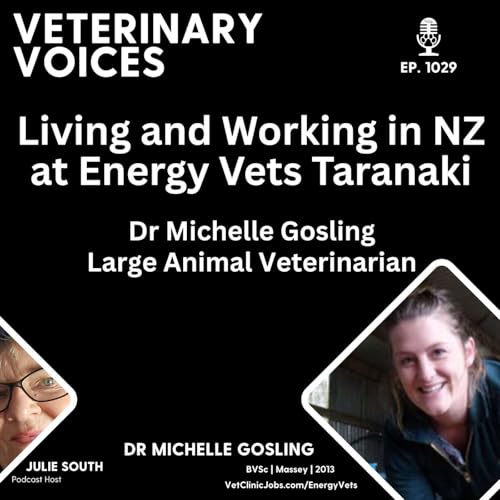
  • Living and Working at Energy Vets Taranaki with Large Animal Veterinarian - Dr Michelle Gosling - 1029
    Feb 20 2026

    Energy Vets, Taranaki | Growing a Career That Grows With You

    In this REAL+STORY episode, Julie South speaks with Dr Michelle Gosling about what it looks like to build a long-term veterinary career in one place — and why she never felt the need to leave Energy Vets after joining as a new graduate in 2013.

    Michelle reflects on her journey from new grad to senior large animal vet, working parent, farm services manager and, most recently, shareholder in the business. Rather than focusing on titles, this conversation traces how responsibility, trust and flexibility have expanded alongside different stages of her life.

    What emerges quietly throughout is a picture of a clinic that adapts as people change — supporting maternity leave, part-time work, leadership development and ownership without forcing people into a single version of “progression”.

    This episode will resonate with vets who are thinking beyond their next job and trying to picture whether a clinic can still fit years down the track — as careers deepen, families grow and priorities shift.

    In This Episode

    00:00 – Introduction to the Real Story series with Energy Vets
    01:05 – Michelle’s journey from new graduate to shareholder
    02:27 – Moving to Taranaki and settling into the region
    03:56 – Family life, schooling and working four days a week
    05:12 – Support, flexibility and parenting at Energy Vets
    06:38 – The role of farm services manager and developing people
    08:14 – Being invited into ownership
    09:24 – Who fits best at Energy Vets
    14:12 – What long-term progression really looks like in practice

    Hiring link

    If you’re an experienced small animal vet exploring your next step, you can find out more about current opportunities at Energy Vets Taranaki at: vetclinicjobs.com/energyvets

    About Julie South

    Julie South is the founder of VetClinicJobs and host of Veterinary Voices.

    She works with forward-thinking veterinary clinics that want to show what working there is really like — not just list job requirements. Through VetClinicJobs, Julie helps clinics make their culture recognisable and familiar, so vets and nurses can tell whether a clinic is Their Kind of Clinic long before a vacancy appears.

    Struggling to get results from your job advertisements?
    If so, then shining online as a good employer is essential to attracting the types of veterinary professionals who're a perfect cultural fit for your clinic.

    The VetClinicJobs job board is the place to post your next job vacancy - to find out more get in touch with Lizzie at VetClinicJobs


    Show More Show Less
    17 mins
  • Why Better Job Ads Don’t Work (And What Actually Does) - ep. 259
    Feb 17 2026

    When a job ad doesn’t deliver suitable applicants, most clinics assume the problem is the wording.

    So they rewrite it.
    Add more detail.
    Highlight mentoring.
    Emphasise work-life balance.
    Polish the benefits.

    And wait.

    In this episode of Veterinary Voices, Julie South explores what’s really happening in month two of the recruitment cycle—when “posting everywhere” hasn’t worked, and rewriting feels like the logical next step.

    But vets and nurses aren’t analysing your headline. They’re pattern-matching. And when your clinic is unfamiliar, even the best-written ad becomes just another unknown name making familiar claims.

    This episode unpacks why better copy doesn’t fix a recognition problem—and why some clinics fill roles without obsessing over wording at all.

    Stay to the end for a question that may change how you think about every job ad you’ve rewritten.

    In This Episode

    00:00 – Introduction: Month two of the recruitment cycle
    01:14 – The rewrite instinct and why it feels productive
    03:03 – Pattern matching: how vets and nurses actually scroll
    04:41 – Why even professional copywriters can’t solve this
    07:45 – What job ads are really designed to do
    08:52 – Two clinics, two very different outcomes
    09:44 – The question about how many times you’ve rewritten the same ad
    10:55 – What happens in month three

    About Julie South

    Julie South is the founder of VetClinicJobs and host of Veterinary Voices.

    She works with forward-thinking veterinary clinics that want to stop relying on reactive job advertising and instead build recognition over time—so when they do need to hire, they’re not starting from cold.

    Struggling to get results from your job advertisements?
    If so, then shining online as a good employer is essential to attracting the types of veterinary professionals who're a perfect cultural fit for your clinic.

    The VetClinicJobs job board is the place to post your next job vacancy - to find out more get in touch with Lizzie at VetClinicJobs


    Show More Show Less
    12 mins
  • Living and Working at Energy Vets Taranaki with Mixed Animal Veterinarian - Dr Sam Armstrong - pt 2/2 - 1028
    Feb 13 2026

    Energy Vets | What Makes the Job Work Long-Term (Part 2)

    Settling into a role is one thing.
    Staying in it — sustainably — is another.

    In this episode, Julie South continues her conversation with Dr Sam Armstrong, a mixed animal vet at Energy Vets in Taranaki, looking at what work feels like once the initial settling-in period has passed.

    Sam talks candidly about after-hours, workload, seasonal pressure points, and how the structure around him makes the job feel manageable over time. He also reflects on commuting, working across clinics, and what overseas vets benefit from knowing before making the move to New Zealand.

    This is Part Two of a two-part conversation with Energy Vets, offering a grounded look at how support, systems, and everyday decisions shape whether people stay — not just how they start.

    In This Episode

    00:00 – Introduction and context for Part Two
    01:01 – Life after the settling-in period
    02:04 – After-hours work and how it’s managed
    03:59 – Recovery time, sleep, and safety
    04:51 – Using a regional after-hours clinic
    05:43 – Commuting, call-outs, and New Zealand roads
    07:49 – What overseas vets benefit from knowing
    09:22 – Visas, residency, and practical logistics
    11:27 – Team culture and why people stay
    12:08 – Closing reflections on sustainability and support
    14:04 – Final sign-off

    If you’re an experienced small animal vet exploring your next step, you can find out more about current opportunities at Energy Vets at:
    vetclinicjobs.com/energyvets

    About Julie South

    Julie South is the founder of VetClinicJobs and host of Veterinary Voices.

    She works with forward-thinking veterinary clinics that want to show what working there is really like — not just list job requirements. Through VetClinicJobs, Julie helps clinics make their culture recognisable and familiar, so vets and nurses can tell whether a clinic is Their Kind of Clinic long before a vacancy appears.

    Struggling to get results from your job advertisements?
    If so, then shining online as a good employer is essential to attracting the types of veterinary professionals who're a perfect cultural fit for your clinic.

    The VetClinicJobs job board is the place to post your next job vacancy - to find out more get in touch with Lizzie at VetClinicJobs


    Show More Show Less
    15 mins
  • Why Posting Your Job Ad Everywhere Doesn't Work - ep. 258
    Feb 10 2026

    This episode begins a new series looking at why the familiar recruitment playbook keeps failing veterinary clinics. Julie South starts with the first and most common response to a vacancy: posting job ads everywhere and hoping one platform will finally deliver a different outcome.

    Using current data from across Australia and New Zealand, Julie explains how rotating job boards and increasing spend doesn’t change what vets and nurses experience when they scroll. The problem isn’t effort or intent — it’s that clinics are trying to solve a recognition problem with reach.

    This episode addresses a moment many clinic owners and managers recognise: doing what’s expected, paying for multiple platforms, and still waiting. Julie unpacks how pattern-matching and familiarity shape attention, and why exposure without recognition simply adds to the noise.

    In This Episode

    00:00 – Framing the series and why “posting everywhere” is the first strategy clinics try
    01:02 – The scale of job advertising across Australia and New Zealand
    02:40 – Why rotating platforms isn’t trying something new — it just creates noise
    05:22 – How vets and nurses pattern-match job ads and filter out unknown clinics
    07:56 – The wrong question clinics ask — and the reframing that actually matters
    09:32 – The closing question about job boards, cost, and results

    About Julie South

    Julie South is the founder of VetClinicJobs and host of Veterinary Voices.

    She works with forward-thinking veterinary clinics that want to show what working there is really like — not just list job requirements. Through VetClinicJobs, Julie helps clinics make their culture recognisable and familiar, so vets and nurses can tell whether a clinic is Their Kind of Clinic long before a vacancy appears.

    Struggling to get results from your job advertisements?
    If so, then shining online as a good employer is essential to attracting the types of veterinary professionals who're a perfect cultural fit for your clinic.

    The VetClinicJobs job board is the place to post your next job vacancy - to find out more get in touch with Lizzie at VetClinicJobs


    Show More Show Less
    11 mins
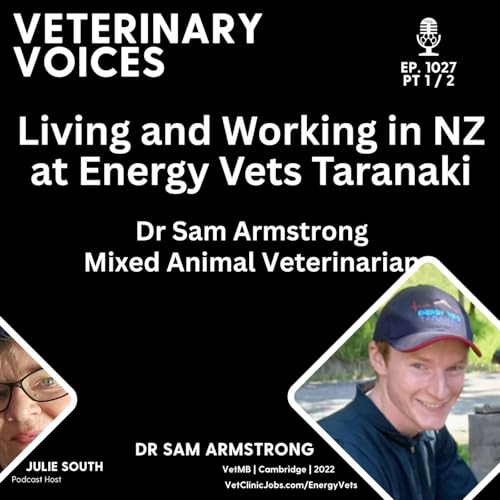
  • Living and Working at Energy Vets Taranaki with Mixed Animal Veterinarian - Dr Sam Armstrong - pt 1/2 - 1027
    Feb 6 2026

    Energy Vets | Finding Your Feet as a New Grad (Part 1)

    Starting your veterinary career isn’t just about clinical skills.

    It’s about how support shows up when you’re new, how questions are handled, and how safe it feels to keep learning — especially when you’re doing it in a new country.

    In this episode, Julie South speaks with Dr Sam Armstrong, a mixed animal vet at Energy Vets in Taranaki, about arriving in New Zealand straight out of university and starting his first job without knowing anyone locally.

    Sam reflects on settling into a new farming system, learning how the team works day to day, and the small, ordinary moments that helped him build confidence. Together, they offer a grounded look at what vets quietly pay attention to when deciding whether a clinic feels like their kind of clinic.

    This is Part One of a two-part conversation with Energy Vets, focused on early career experiences, everyday support, and what makes learning sustainable over time.

    In This Episode

    00:00 – Introduction and episode context
    01:48 – Sam’s background and arriving in New Zealand
    06:07 – Starting work as a new graduate and learning in practice
    07:57 – A significant farm case and building confidence over time
    10:33 – Team support, meetings, and shared decision-making
    11:38 – Integrating into Taranaki and working in New Zealand
    12:30 – How New Zealand farming systems differ from the UK and Ireland
    16:06 – Favourite piece of kit and day-to-day realities
    17:24 – Describing Energy Vets in three words
    19:47 – Closing reflections on learning, support, and culture

    If you’re an experienced small animal vet exploring your next step, you can find out more about current opportunities at Energy Vets at:
    vetclinicjobs.com/energyvets

    About Julie South

    Julie South is the founder of VetClinicJobs and host of Veterinary Voices.

    She works with forward-thinking veterinary clinics that want to show what working there is really like — not just list job requirements. Through VetClinicJobs, Julie helps clinics make their culture visible and recognisable, so vets and nurses can tell whether a clinic is Their Kind of Clinic long before a vacancy appears.

    Struggling to get results from your job advertisements?
    If so, then shining online as a good employer is essential to attracting the types of veterinary professionals who're a perfect cultural fit for your clinic.

    The VetClinicJobs job board is the place to post your next job vacancy - to find out more get in touch with Lizzie at VetClinicJobs


    Show More Show Less
    22 mins
  • The Attraction Gap: Why You're Trying To Solve Recruitment At Exactly The Wrong Time - ep. 257
    Feb 3 2026

    Closing the Attraction Gap: Why Knowing Isn't the Same as Doing

    Most veterinary clinic managers know they should attract people before they need them—but knowing doesn't close the gap between understanding what needs to happen and actually making it happen.

    In this episode of Veterinary Voices, Julie South explores the attraction gap: the space between knowing you should build recognition and actually being able to do it while running a busy clinic.

    Through the predictable five-month recruitment cycle most clinics experience, Julie shows why the gap never closes when you're trying to solve recruitment during a crisis—and why it only closes between crises, when you actually have time to build.

    This episode bridges the recent conversations on network expansion and recruitment momentum, and sets up next week's new series examining each month of the trapped recruitment cycle in detail.

    Stay to the end for a question about timing that reframes when clinics should actually be solving their recruitment problem.

    In This Episode

    00:00 – Introduction: The attraction gap and why knowing isn't doing
    01:10 – The impossible timing trap: never thinking about recruitment when staffed, desperate when understaffed
    04:03 – The predictable five-month cycle from job ads to expensive surrender
    07:31 – Two clinics, two different approaches to closing the gap
    10:17 – The timing question that explains why the gap never closes

    About Julie South

    Julie South is the founder of VetClinicJobs and host of Veterinary Voices.

    She works with veterinary clinics that want to move beyond reactive job advertising by building recruitment momentum through continuous culture storytelling—so when they do need to hire, they're never starting from cold again.

    Struggling to get results from your job advertisements?
    If so, then shining online as a good employer is essential to attracting the types of veterinary professionals who're a perfect cultural fit for your clinic.

    The VetClinicJobs job board is the place to post your next job vacancy - to find out more get in touch with Lizzie at VetClinicJobs


    Show More Show Less
    11 mins