Progress in Practice – A Sustainability Podcast cover art

Progress in Practice – A Sustainability Podcast

Progress in Practice – A Sustainability Podcast

Written by: Go Well Consulting
Listen for free

Progress in Practice is a Go Well Consulting series profiling the real-world sustainability initiatives being brought to market by the businesses we work with.

Hosted by Nick Morrison (Go Well's Founding Director), each episode goes behind the scenes with different New Zealand businesses to explore the ideas they're turning into action — the inspiration behind those ideas, the hard work of bringing them to life, and the honest lessons learned along the way.

This isn't a show about perfect solutions or polished success stories. It's about the messy, meaningful work of building something better — the false starts, the breakthroughs, and the resilience it takes to lead change in industries that have never done it before.

From circular economy manufacturing to supply chain innovation, the businesses we feature are proving that doing the right thing and running a successful business aren't mutually exclusive. They're showing what's possible when you stop waiting for someone else to solve the problem and decide to do it yourself.

Whether you're a business leader, a sustainability professional, or simply someone who finds hope in people doing things differently — welcome to Progress in Practice.

New episodes drop regularly. Subscribe wherever you listen to podcasts, and watch the full video episodes on YouTube. https://www.youtube.com/channel/UCEseQxcDOVJWgn6wJKqgxqQ

You can get in touch with us at hello@gowellconsulting.co.nz.

Go Well.

Go Well Consulting
Economics
Episodes
  • NZ's Road Cones Were All Going to Landfill — Until RTL Did Something About It
    May 13 2026

    Road cones. New Zealanders love to hate them. But until recently, when they wore out, they went straight to landfill. RTL decided to change that — and built the country's first fully closed-loop cone recycling programme to prove it.

    Road cones are one of New Zealand's most visible — and most complained about — pieces of infrastructure. Media coverage, talkback radio, and even politicians regularly weigh in on the sheer number of them lining our roads. But love them or loathe them, they serve a vital purpose: protecting road workers and the public during maintenance and infrastructure projects.

    The real problem isn't the cones themselves. It's what happens to them when they're damaged, worn out, or forgotten. Until recently, the answer for most cones was simple and wasteful — landfill.

    RTL decided to change that.

    Better Cone is New Zealand's first dedicated road cone recycling programme — a fully closed-loop system that takes cones from any manufacturer, shreds them into chip, and remanufactures that material into the base of brand new cones. Nothing goes to landfill. The programme is nationwide, price-competitive, and already gaining serious traction: since launching in July 2024, Better Cone has diverted over 1,500 cones from landfill — with 620 returned in February 2025 alone. That's seven tonnes of polyethylene kept out of the environment and back in circulation.

    In this episode, host Nick Morrison sits down with Joanne McMahon, General Manager of RTL, to hear the full story behind Better Cone — from first idea to market. It's a candid conversation covering:

    • How the programme works, and the stakeholders who made it possible
    • The two-and-a-half year journey from concept to launch, including six months of manufacturing trials
    • The emotional and commercial realities of pushing forward through New Zealand's economic downturn
    • How RTL cracked the pricing challenge — and why the two-for-one return model has been key
    • The unexpected morale boost the initiative has given the RTL team
    • What Joanne would do differently, and what the future of Better Cone looks like

    This is a story about sustainability, yes — but it's also a story about leadership, resilience, and what happens when a team refuses to follow the easy path.

    Progress in Practice is a Go Well Consulting series profiling the real-world initiatives being brought to market by the businesses we work with — the good ideas, the hard work, and the honest lessons learned along the way.

    To find out more about Better Cone, visit RTL's website via the link below.

    • Better Cone

    To learn more about Go Well Consulting and the themes we explore in this series, visit our website linked below.

    • Go Well Consulting
    Show More Show Less
    42 mins
  • Small Airport, Big Solar Farm – New Plymouth's Renewable Energy Story
    Apr 29 2026

    A small regional airport. A 15-hectare solar farm. 96% of the electricity going straight to the national grid. This is what commercial ambition meets community purpose looks like.

    What does it take for a regional airport to become a significant contributor to New Zealand's renewable energy grid? New Plymouth Airport CEO David Scott has a practical answer: vision, commercial discipline, and a willingness to take the harder road.

    Over the past two and a half years, the airport has developed Te Matakupenga — a 12 megawatt solar farm generating approximately 14,700 megawatt hours annually. The airport uses just 4% — the rest goes to the grid, with a portion sold at a discounted rate to the local council via Ecotricity.

    This is more than an energy project. It's a story about what's possible when an organisation decides to own the entire process.

    In this episode, host Nick Morrison talks with David Scott about:

    • How the project evolved from a post-COVID income diversification strategy into something much more meaningful
    • The structure of the airport's private power network and how tenants, hangars, and rental car operators all benefit
    • The Battery Energy Storage System (BESS) coming online in the next few weeks — and what it means for energy resilience
    • Why the farm was built at a scale far beyond the airport's own needs, and the commercial logic behind selling to the grid
    • The partnership with Ecotricity and how the local council is now buying discounted renewable power generated at the airport
    • EV charging infrastructure already powered by the solar farm — and how the airport has future-proofed for electric rental car fleets
    • The role of Puketapu Hapū as mana whenua, and how they helped shape the vision and name of the project
    • The emissions story — 1,500 tonnes of CO2 equivalent avoided annually, with a carbon payback period of just three and a half to four years
    • Why fixed panels were chosen over rotating ones, and how sheep grazing between the panels solves a land management challenge
    • The financial payback timeline of seven to ten years — and what future battery storage investments could mean for the bottom line
    • What it would look like for electric aircraft to one day charge from the farm — and why that's closer than you might think

    What makes this conversation particularly compelling is David's refreshing honesty. This project started as a commercial decision, and it remains one. But along the way, it became something the whole community can be proud of — a model for how regional infrastructure can lead the way on New Zealand's energy transition.

    New Plymouth Airport may not be a large organisation, but Te Matakupenga is a large statement about what's possible when you decide to take the harder road.

    Progress in Practice is a Go Well Consulting series profiling the real-world sustainability initiatives being brought to market by the businesses we work with — the good ideas, the hard work, and the honest lessons learned along the way.

    To watch this podcast episode and for others, check us out on YouTube here.

    Click here to find out more about the New Plymouth Airport solar project.

    To learn more about Go Well Consulting, visit our website here.

    Show More Show Less
    38 mins
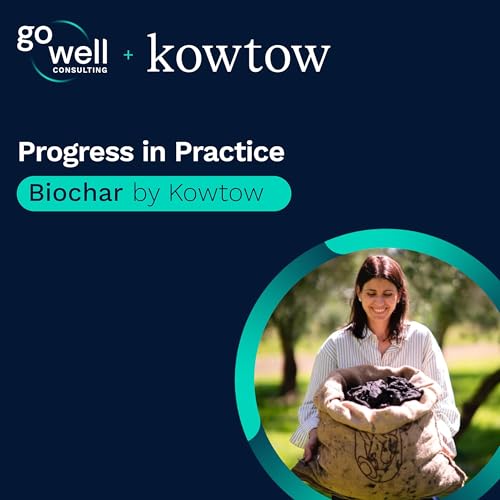
  • Turning Old Clothes Into Biochar – A Circular Fashion Breakthrough
    Apr 15 2026

    What happens to a garment when it truly reaches the end of its life?

    For most fashion brands, the answer is landfill. For Wellington-based label Kowtow, the answer is something far more ambitious: transform it into biochar, and put it back into the earth.

    In this episode of Progress in Practice, Go Well Consulting's Nick Morrison sits down with Emma Wallace, Managing Director of Kowtow, to explore one of the most genuinely innovative end-of-life solutions we've seen in the New Zealand and Australian fashion industry. Kowtow — a label built from the ground up on fair trade organic cotton and ethical manufacturing — has completed the first trial of their biochar initiative as part of what they now call the Regenerate Programme.

    By heating returned garments in a retort kiln through a process called pyrolysis, they are transforming 100% organic cotton clothing into a carbon-rich biochar that, when activated with seaweed tea and mixed into soil, sequesters carbon, supports water retention, and provides a home for beneficial soil microorganisms.

    This isn't a PR stunt or a future aspiration. The trial has been run, the biochar has been tested, the tomatoes in the Kowtow workroom grew measurably taller. This is real.

    Emma walks Nick through the full picture — from the founding philosophy that has guided Kowtow for two decades, to the grassroots partnerships with a Hokianga farmer and a local biochar distributor that made the trial possible. Together, they unpack why this initiative matters well beyond the fashion industry, and what it means for any business grappling with the genuine hard work of circular economy implementation.

    Key topics covered in this episode:

    • What biochar is, how it's made through pyrolysis, and why it's a powerful soil amendment
    • How Kowtow's Regenerate Programme collects, decommissions, and prepares end-of-life garments for biochar conversion
    • The science behind carbon sequestration — and why biochar outperforms composting for locking carbon into the soil
    • Kowtow's 20-year journey through circular economy principles: from organic cotton selection, to plastic-free garment redesign, to repair and resale, and now biochar
    • The grassroots partnerships — including a Hokianga farmer and The Good Carbon Farm — that made the trial possible
    • The commercial realities of sustainable fashion and what product stewardship really costs a small business
    • The potential for the initiative to scale and attract industry partners
    • Why small cultural shifts — like switching from pens to pencils — matter in building an organisation that can solve hard problems

    Whether you're a sustainability professional, a business leader exploring circular economy models, or simply someone who cares about where your clothes end up, this episode is a masterclass in what it looks like to keep pushing when you could have stopped.

    To watch this episode on Youtube check it out here.

    To learn more about Kowtow and the Regenerate Programme, visit their website.

    And to find out how Go Well Consulting can help your organisation navigate its own sustainability journey, visit the Go Well Consulting website here.

    Show More Show Less
    40 mins
adbl_web_anon_alc_button_suppression_c
No reviews yet