Episodes

  • Sci-fi thriller combines aliens, robots, and Cherokee culture
    May 6 2026

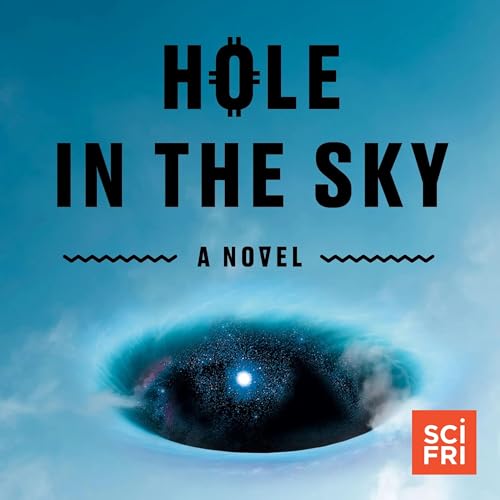
    Breaking news out of eastern Oklahoma! A hole in the sky has opened. Through it, an unidentified turtle-shaped craft has descended. Alerts say that this is first contact.

    So it goes in the sci-fi thriller “Hole in the Sky.” In the book, author Daniel H. Wilson imagines this moment where we meet alien life for the first time. It’s set in the heart of Cherokee Nation and follows characters including a military man, a NASA scientist, and a Cherokee father named Jim who is just trying to survive the alien entity.

    Wilson joins Flora for a conversation about the book and how he integrated elements of Cherokee culture with science fiction. They get into the ways we project our own fears—like genocide and slavery—onto aliens, and how science fiction helps us imagine the unimaginable.

    The SciFri Book Club is reading “Hole in the Sky” during May and June. Join us to read along!

    Read an excerpt from “Hole in the Sky.”

    Guest:

    Dr. Daniel H. Wilson is a Cherokee citizen and bestselling author of “Robopocalypse,” “Hole in the Sky,” and several other books. He holds advanced degrees in machine learning and robotics and lives in Portland, Oregon.

    Transcripts for each episode are available within 1-3 days at sciencefriday.com.

    Want SciFri gear? Check out our new shop!

    Subscribe to this podcast. Follow our show on Instagram, TikTok, Facebook, and Bluesky @scifri and sign up for our newsletters. Got a science question that’s keeping you up at night? Call us: 877-4-SCIFRI

    Show More Show Less
    18 mins
  • Beavers could be humans' biggest ally, if we let them
    May 5 2026

    Beavers are having a moment, thanks to the new Pixar movie “Hoppers.” Amid some body-swapping shenanigans, the film is about humans coexisting with wildlife—particularly oversized rodents capable of reworking landscapes in profound ways.

    The beaver science consultant on “Hoppers,” Emily Fairfax, joins Flora to talk about beavers’ brilliant, chaotic landscape engineering, and how the creatures show up in the movie. Then, reporter Zac Ziegler walks Flora through a successful beaver-centric engineering project in Oregon.

    Guests:

    Emily Fairfax is an assistant professor of geography at the University of Minnesota. She was a science consultant for the Pixar movie “Hoppers.”

    Zac Ziegler is a reporter at KLCC in Eugene, Oregon.

    Other episodes you may enjoy:

    • How The Humble Beaver Shaped A Continent
    • Beavers Build Ecosystems Of Resilience

    Transcripts for each episode are available within 1-3 days at sciencefriday.com.

    Want SciFri gear? Check out our new shop!

    Subscribe to this podcast. Plus, to stay updated on all things science, sign up for Science Friday's newsletters.

    Show More Show Less
    21 mins
  • Searching for dark matter, deep in the Earth
    May 4 2026

    Deep in an active nickel mine near Sudbury, Ontario, researchers are installing and calibrating a set of sensitive detectors. They hope that the location roughly 6,800 feet underground will screen out much of the ordinary radiation and cosmic rays felt on the surface, and allow their detectors to sense tiny disturbances caused by a dark matter particle passing close to the nucleus of one of the germanium atoms in a target material.

    If successful, the SuperCDMS SNOLAB experiment may shed some light on the nature of dark matter, an unseen something that is thought to make up around 85% of the matter in the universe.

    Priscilla Cushman, a physicist who has been working on the project for over 20 years, joins Host Flora Lichtman to describe the hunt, the timeline of the experiment, and the big unknowns facing the SuperCDMS team.

    Guest:

    Dr. Priscilla Cushman is spokesperson for the SuperCDMS SNOLAB experiment, and a professor in the School of Physics and Astronomy at the University of Minnesota.

    Other episodes you may enjoy:

    • Listening for the cosmic ‘dark ages,’ from the lunar far side
    • Most Powerful Neutrino Ever Is Detected In the Mediterranean

    Transcripts for each episode are available within 1-3 days at sciencefriday.com.

    Subscribe to this podcast. Plus, to stay updated on all things science, sign up for Science Friday's newsletters.

    Show More Show Less
    15 mins
  • The decades-long movement to kill FEMA
    May 2 2026

    Hurricane season officially begins in June. And in the event of a big storm, local and state governments often rely on help from the Federal Emergency Management Agency or FEMA. But, President Trump has questioned the value of the agency.

    “I've never been a big fan of FEMA. I like to keep it local. I like to see governors and neighboring states help each other as opposed to FEMA,” Trump said in March.

    We’ve heard this from the administration about other federal agencies, but FEMA is a special case. People have mistrusted this agency since its founding in the late 1970s.

    Host Flora Lichtman talks with Micah Loewinger, co-host of the show “On The Media,” who traced FEMA’s history in a new series called “American Emergency: The Movement to Kill FEMA.”

    Guest:

    Micah Loewinger is co-host of On The Media.Other episodes you may enjoy:

    • As Disasters Escalate, What’s The Future Of FEMA?
    • Can We Geoengineer Our Way Out Of A Natural Disaster?

    Transcripts for each episode are available within 1-3 days at sciencefriday.com.

    Subscribe to this podcast. Plus, to stay updated on all things science, sign up for Science Friday's newsletters.

    Show More Show Less
    13 mins
  • What cats and dogs hear + A 'smell map' of the nose
    May 1 2026

    Animal neuroaudiologist Pete Scheifele joins us to answer some burning questions from SciFri listener Paul: Why can dogs and cats hear a wider range of frequencies than we do? Is it in their ears, their brains? And what would life be like if you had dog ears or cat ears?

    And, scientists have created the first “smell map” of the nose using a mouse model. Host Flora Lichtman talks with neurobiologist Bob Datta about this latest research, and what it tells us about olfaction.

    Guests:

    Dr. Pete Scheifele is a neuroaudiologist at the University of Cincinnati and executive director of the FETCHLAB, an animal audiology clinic and lab.

    Dr. Bob Datta is a neurobiologist at Harvard Medical School.

    Other episodes you may enjoy:

    • What’s That Smell? An AI Nose Knows
    • Blood In The Water: Shark Smell Put To The Test

    Transcripts for each episode are available within 1-3 days at sciencefriday.com.

    Subscribe to this podcast. Plus, to stay updated on all things science, sign up for Science Friday's newsletters.

    Show More Show Less
    18 mins
  • How do you study microplastics in a plastic-filled lab?
    Apr 30 2026

    The news we hear about plastic is often alarming: We have a spoon’s worth of plastics in our brains, and there are microplastics in our hearts, lymph nodes, and bloodstreams. Plastics are ubiquitous, but the reality might be more complicated than it seems.

    It turns out that measuring microplastics is really, really difficult. One reason? Because we’re surrounded by plastics! Think of the pipettes and petri dishes and gloves we use in labs.

    Host Flora Lichtman chats with microplastics researcher Cassandra Rauert about the difficulties of studying plastics in the human body and what she’s doing about it—like how she designed a whole lab made almost entirely of stainless steel and glass.

    Guest:

    Dr. Cassandra Rauert is a senior research fellow studying microplastics exposure at the University of Queensland in Australia.

    Other episodes you may enjoy:

    • Can algae help pull microplastics out of our water supply?
    • Where Does Plastic And Other Trash Go After We Throw It Away?

    Transcripts for each episode are available within 1-3 days at sciencefriday.com.

    Subscribe to this podcast. Plus, to stay updated on all things science, sign up for Science Friday's newsletters.

    Show More Show Less
    11 mins
  • What is ibogaine, and why is it in the news?
    Apr 29 2026

    In mid-April, President Trump issued an executive order to set aside funding and loosen the bureaucratic process at the FDA to fast-track psychedelic therapy research. One obscure psychedelic got a particularly bright spotlight: ibogaine.

    Originating from the root bark of the iboga plant of central Africa, the psychedelic has shown promise for curbing opioid addiction and treating PTSD. But it also can be risky to take, and hasn’t made it to the medical mainstream like psilocybin or ketamine. So what’s the story with this drug?

    Joining Host Flora Lichtman to talk about its history is neurologist and pharmacologist Deborah Mash, who secured the first FDA approval for clinical trials involving ibogaine in the 1990s. And to tell us how it fits in with the growing interest in medical psychedelics is Jane Hu, journalist for The Microdose newsletter. (Disclosure: Deborah Mash is founder and CEO of a company that’s developing a therapeutic drug based on ibogaine.)

    Guests:

    Jane C. Hu is a journalist for the psychedelic science newsletter The Microdose, based in Seattle, WA.

    Dr. Deborah Mash is professor emeritus of neurology and molecular and cellular pharmacology at the University of Miami School of Medicine. She is the also founder and CEO of DemeRx.

    Other episodes you may enjoy:

    • How One Gene Affects Alzheimer’s Risk
    • Is This PTSD Treatment Too Good To Be True?

    Transcripts for each episode are available within 1-3 days at sciencefriday.com.

    Subscribe to this podcast. Plus, to stay updated on all things science, sign up for Science Friday's newsletters.

    Show More Show Less
    19 mins
  • The long history of birds, from velociraptors to pigeons
    Apr 28 2026

    Comparing a backyard sparrow to a fearsome velociraptor seems odd, but modern birds are indeed living dinosaurs. Scientists are finding more and more connections between the past physiology of dinos and the present physiology of birds.

    Joining Ira Flatow to talk about some forgotten species from the past tens of millions of years—think gorilla-sized penguins—is Steve Brusatte, paleontologist and author of “The Story of Birds: A New History from their Dinosaur Origins to the Present.”

    Read an excerpt from “The Story of Birds”

    Guest:

    Dr. Steve Brusatte is a paleontologist and author of “The Story of Birds: A New History from their Dinosaur Origins to the Present.” He’s based in Edinburgh, Scotland.

    Other episodes you may enjoy:

    • Do Birds Sing In Their Dreams?
    • Were Dinos On Their Way Out Before The Asteroid Hit? Maybe Not

    Transcripts for each episode are available within 1-3 days at sciencefriday.com.

    Subscribe to this podcast. Plus, to stay updated on all things science, sign up for Science Friday's newsletters.

    Show More Show Less
    22 mins