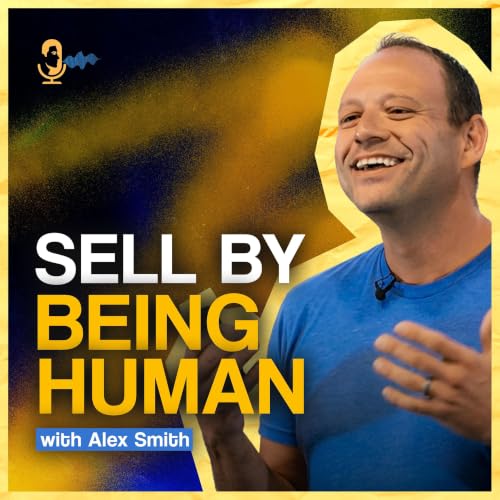
Sell By Being Human cover art

Sell By Being Human

Sell By Being Human

Written by: Alex Smith
Listen for free

This is where human connection and sales meet. You may be someone whose success depends on influence, negotiation, and your ability to create change, but you may reject aggressive sales tactics. Maybe you feel stuck in corporate "autopilot," knowing your best asset is your genuine personality, but you struggle to use it to get what you want. Then this channel is for you. It will teach you how to close the gap between wanting to be ethical and feeling pressured to sell aggressively. You’ll also learn actionable strategies for translating emotional intelligence into high-trust results. Join Alex and top guests, including NY Times bestsellers, keynote speakers, and global founders, as they prove that being truly human is the ultimate sales advantage.Copyright 2026 Alex Smith Careers Economics Management Management & Leadership Personal Success
Episodes
  • What Toys R Us Taught Me About Selling by Being Human with Warren Kornblum
    Oct 14 2026
    What if the secret to building a brand people love isn’t about being the biggest or the loudest, but about winning something deeper? Warren Kornblum calls it “share of heart.” After a career that took him from creative director to Global CMO of Toys “R” Us, he’s convinced it’s the only metric that truly matters.In this episode of Sell by Being Human, host Alex Smith sits down with Warren Kornblum, former Global CMO of Toys R Us, former CMO of Serta Simmons Bedding, and current founder and CEO of Share of Heart. With a career spanning from the advertising agency world to the C-suite, Warren shares his journey and the philosophy that guided him: true customer loyalty is built on emotional connection, trust, and genuine human care, not just awareness or wallet share.Drawing on his experience at Toys R Us during a pivotal time of retail disruption, Warren explains why the brand’s emotional connection, embodied by the iconic “I don’t want to grow up” song and Geoffrey the Giraffe, was its greatest asset, and how losing sight of the customer in favor of shareholders contributed to its decline. The conversation explores the lessons he learned from his father, “Uncle Philly,” a master of human connection; the critical difference between awareness and belief; and why AI, for all its power, will never replace human empathy.Warren also discusses his new book, Notes from the Brand Stand, and shares practical advice for anyone, from CEOs to baristas, on how to make people feel seen, valued, and important. Tune in to learn how to earn trust, build emotional connections, and sell by being more human, not less.Key TakeawaysShare of heart goes beyond share of mind and share of walletAwareness can be bought, but belief must be earnedSelling to one person or millions follows the same process: relevance, trust, and caringGreat sellers stay in the moment, because it’s about the customer, not youKnow who your customers are and who they aren’tRetaining customers matters as much as winning new onesSometimes the best change is no change: modernize a brand’s “jewels” instead of discarding themQuarterly pressure can pull companies away from the customers who built themLeaders should listen in on call centers and chat logsAI is table stakes; empathy and leadership set companies apartMaking people feel they matter costs nothingIn This Episode:[00:00] Dynamic intro[00:36] Welcome and introducing Warren Kornblum[03:54] What “sell by being human” means to Warren[05:30] The upside and risk of real human connection[07:53] Growing up in the mattress business with “Uncle Philly”[10:46] What Warren’s dad did that other salespeople didn’t[12:38] Marketing as an act of caring (and what it can cost)[13:47] Churn, retention, and why you can’t buy belief[16:40] Inside the early days of Toys R Us[18:04] Why Warren refused to retire the song and Geoffrey the giraffe[21:53] The Times Square store and Warren’s proudest moment[23:42] Seeing the signs before the decline[24:19] The online battle Warren lost with the board[27:07] Customers vs. shareholders: the battle he’d fight harder today[30:00] Making the business case for emotional connection[31:05] Measuring share of heart and managing by walking around[34:45] Why employees are the second most important audience[35:37] Will AI replace human connection?[36:51] Empathy, escalation, and AI as table stakes[41:01] The sycophantic chatbot problem[41:58] Daily skills for improving human connection[43:55] Starbucks, the pizza place, and feeling “processed”[48:08] Ordering coffee from a robot[49:42] Making people feel they matter costs nothing[50:55] What makes Warren totally Warren[52:26] Where to connect with Warren[54:00] Closing Notable Quotes[00:01] “If I can make an emotional connection with them, if I can become a part of their lives, then you sort of have the job almost well done.” - Warren Kornblum[15:19] “Awareness can be bought, but you can’t buy belief. I can get in your sphere through marketing but I can’t get you to believe in me unless I earn that.” - Warren Kornblum[12:42] “Marketing is an act of caring.” - Warren Kornblum[22:15] “Your natural instinct is to change things because you’re the new sheriff in town... sometimes the best change is not to change at all.” - Warren Kornblum[37:36] “Machines don’t have empathy.” - Warren Kornblum[40:42] “AI can be a great soldier. The day it starts being the leader, we’re all in big trouble.” - Warren Kornblum[49:42] “Making people feel like they matter costs nothing.” - Warren Kornblum[41:22] “AI is the most non-empathetic response we’ll ever get. It's very gratuitous.” - Warren KornblumOur GuestWarren Kornblum is the founder and CEO of Share of Heart and the author of Notes from the Brandstand. A former advertising agency creative director, he went on to serve as global chief marketing officer at Toys R Us and chief marketing officer at Serta ...
    Show More Show Less
    49 mins
  • Learning Beyond the Algorithm: What AI Can't Teach You with Alex Mozes
    Sep 30 2026
    Can you really learn to sell by watching a course, memorizing a script, or practicing with an AI bot? Alex Moses says no, not if you want the skill to stick.In this episode of Sell by Being Human, host Alex Smith sits down with Alex Mozes, CEO of Gravity Learning and one of the first employees at Udemy. Alex shares his journey from scaling a learning marketplace to founding a company built on a contrarian idea: that effective learning isn’t easy, fun, or asynchronous. It’s interactive, challenging, and deeply human.Drawing on his experience at Udemy, where he helped grow the company to over 100 million learners, Alex explains why the industry’s focus on completion rates and satisfaction scores is misguided. He argues that real growth comes from practice, feedback, and accountability with other people. The conversation explores the neuroscience of learning, the power of small group cohorts, and why AI is a great practice partner but a poor teacher.Alex also discusses how these principles apply directly to leadership and sales. He shares his approach to building trust with his team through structured feedback and genuine human connection, and he explains why the best way to sell is often to simply listen.Tune in to learn how to practice sales skills with real feedback, use AI the right way, and sell by being more human, not less.Key TakeawaysEffective learning is about outcomes, not ease or entertainmentReal behavior change happens through practice, challenge, and feedback with other humansThe L&D industry has focused on the wrong metrics like completion and satisfactionAI is excellent for practicing a known skill but poor for learning something newInterpersonal skills are becoming the central currency of business successSmall-group, interactive, cohort-based learning mirrors how humans evolved to learnTo make learning stick, you must apply it and visualize its future impactGreat facilitators make learners feel seen by connecting content to their lives"Feedback is fuel" for building a transparent and honest team cultureAs a CEO, dedicating one-on-ones to non-work conversations builds deeper trustThe simplest and hardest sales skill is to listen intently to understand the other personCreating a space where people can be bad at something is essential for growthThe best way to learn is to teach and practice with an accountability partnerConnecting learning to a specific future application makes it more likely to be retainedYour unique human quirks, like working from a sailboat, are part of what makes you relatableIn This Episode:[00:00] Dynamic Intro[00:47] Welcome and introducing Alex Mozes[03:17] What "sell by being human" means to Alex[03:18] Being human in a world of AI coworkers[07:40] Small moments and community in early stage Udemy[08:28] Growing a team from 3 to 150 people[11:42] Rethinking earlier beliefs about learning and friction[13:10] Why the L&D industry built toward the wrong goal[17:43] Skills that matter most for effective learning today[18:49] Why AI is good for practice but not for learning[23:27] What makes a facilitator truly connect with a room[27:24] Questions that help learners go deeper[32:09] How Alex builds connection and transparency as a CEO[32:23] The SBI feedback model and "feedback is fuel"[35:46] Using human skills to connect with investors and clients[36:28] Why listening is the core selling skill[37:52] What makes Alex totally Alex[39:19] Where to connect with Alex[39:35] Closing :Notable Quotes[13:24] "It's not about making learning easier or more fun... Effective is what we should be caring about. Outcomes is what we should be caring about." — Alex Mozes[14:57] "The number of subscribers to Duolingo to the number of people that have learned to speak another language using Duolingo is a fraction." — Alex Mozes[20:38] "AI is sycophantic... is not going to challenge or put you in a position where you can be bad. And it's also something that you really need to do with somebody that can give you truly constructive feedback." — Alex Mozes[22:12] "AI is actually pretty good at practice. It's not good at learning." — Alex Mozes[23:46 "I think one of the central traits of a good teacher, facilitator, or good experience is how connected they are to you and how much they are able to make you feel seen." — Alex Moses[32:58] "Feedback is fuel." — Alex MozesOur GuestAlex Mozes is the CEO of Gravity Learning, a company focused on interpersonal skills training through live, interactive, cohort-based workshops. Previously, he was one of the first employees at Udemy, where he helped scale the company from a small startup to a global learning platform serving over 100 million learners. With over 20 years in the learning industry, Alex is a leading voice on the future of adult learning, the science of behavior change, and the critical role of human connection in professional development.Resources and LinksSell by Being HumanLinkAlex MosesGravity Learning ...
    Show More Show Less
    25 mins
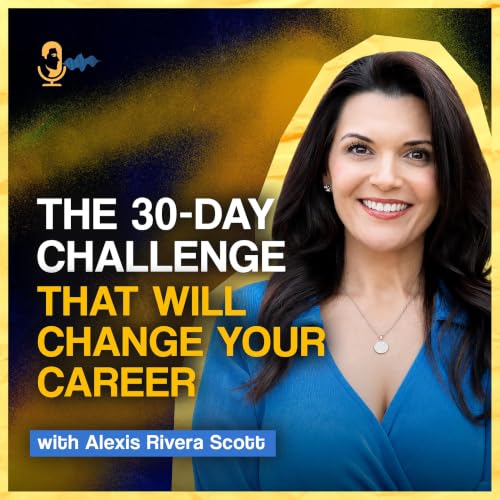
  • The 30-Day Challenge That Will Change Your Career with Alexis Rivera Scott
    Sep 9 2026
    The clock is ticking. You have 30 seconds before someone decides you're not worth their time but there are people you can't stop paying attention to. Every time they post, you read it. When they speak, you listen. When they reach out, you reply. You don't know exactly when it happened, but somewhere along the way, they became impossible to ignore.They didn't get there by shouting louder or posting more. They got there by being unmistakably themselves.Alexis Rivera Scott is one of those people.She's the head of Scott Consulting, founder of The Fairy Job Mom, and a creator who has built a career on showing up authentically. She's helped hundreds of people navigate their careers and build personal brands that actually work. And she's ranked the #1 Latina creator on Favicon.In this episode of Sell by Being Human, host Alex Smith sits down with Alexis to unpack how she did it. She reveals why she doesn't do traditional outbound outreach, how a simple, human question can open doors, and why "the secret to selling is actually not selling."Alexis also breaks down the difference between influencers and creators, why ghostwriting isn't about using AI, and why the magic happens in the DMs, not just in posts. She shares how consistency on LinkedIn led to a role that was created just for her, and how a friendship formed through online connection turned into a seat at the TIME100 Influencers Dinner.She ends with a challenge: commit to 30 days of showing up. Even if it's tiny, something will happen.This is a conversation about how authenticity and human connection can turn a digital presence into a career-defining asset.Key TakeawaysSelling by being human means understanding your buyer and making them feel seen, heard, and understoodTrust is the secret sauce; nobody buys from someone they don't trustThe secret to selling is actually not selling; focus on connecting firstAuthenticity means talking to people like you would a friend; the more professional you sound, the more walls go upPersonal brand is a long-term play; it's a marathon, not a sprintThe magic of LinkedIn happens in the DMs, not just in postsConsistency builds trust and creates a flywheel of inbound opportunitiesA resume should highlight impact, not just duties; ask "why should anyone care?"If you can Google it, it's not a LinkedIn post; add your own perspectiveEvery creator is not an influencer, but every influencer is a creatorWhen all your opportunities come inbound, you've built real influenceCommitting to 30 days of consistent content creation will generate results, even if smallIn This Episode:[00:00] Intro[01:23] Meet Alexis Rivera Scott[02:41] What "sell by being human" means to Alexis[03:13] Making people feel seen, heard, and understood[04:12] Why Alexis doesn't do traditional outbound outreach[05:33] The secret to selling is actually not selling[06:48] Social selling as a long-term relationship play[07:30] Why being too professional makes people's walls go up[08:51] A real example of a bad sales email and why it fails[10:22] A great outbound email that actually got a meeting[12:49] How personal brand on LinkedIn changed Alexis's career trajectory[13:37] The story of getting laid off, joining Thursday Night Sales, and building a role from scratch[16:43] How content creation created an inbound flywheel[17:46] Advising job seekers on visibility and impact[19:10] Why stating facts isn't bragging[20:49] Ghostwriting for executives: capturing voice vs. using AI[23:46] Why "you are your brand" even as an employee[25:22] The different lanes: influencer, thought leader, subject matter expert, educator[26:40] Why personal brand is a long-term commitment[29:16] The unexpected benefit: getting invited to the TIME100 Influencers Dinner[33:51] Influencer vs. creator: what's the difference?[35:56] The moment Alexis realized she was an influencer[37:34] "Only Alexis" moment: Inside Edition and Newsweek features[38:50] The 30-day content challenge[39:22] Closing remarksNotable Quotes[02:43] "Sell by being human is more to do with really understanding your buyer and understanding how you can help them and being able to communicate that in a way that helps them feel seen, heard, understood." — Alexis Rivera Scott[03:03] "No one's going to buy from you if they don't trust you." — Alexis Rivera Scott[05:32] "The secret to selling is actually not selling." — Alexis Rivera Scott[07:19] "I always tell people, particularly on LinkedIn, speak or type like you are talking to a friend. The more professional you sound, the more people's walls go up." — Alexis Rivera Scott[12:01] "Who do I want to work with? I want to work with someone I like. Someone who's comfortable to me. Someone who I can be myself around." — Alexis Rivera Scott[19:23] "If you feel uncomfortable, all I want you to ask yourself is: is this true? If the answer is yes, you are simply stating a fact. You're not bragging. You are stating a fact." — Alexis Rivera Scott[24:08] "You are your brand...
    Show More Show Less
    40 mins
adbl_web_anon_alc_button_suppression_t1
No reviews yet