• 187 - Geoff Hinton & Jay McClelland: Two AI Pioneers in Conversation (RE-AIR)
    Nov 6 2026

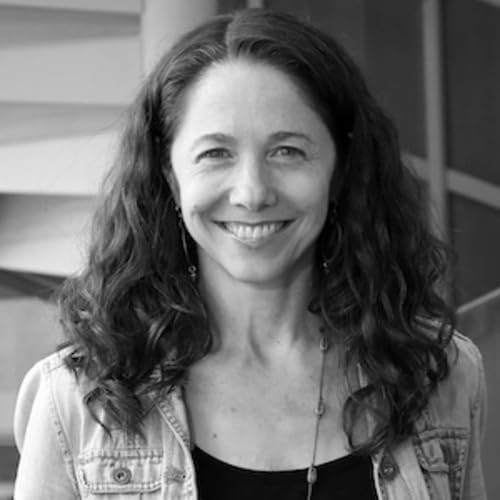
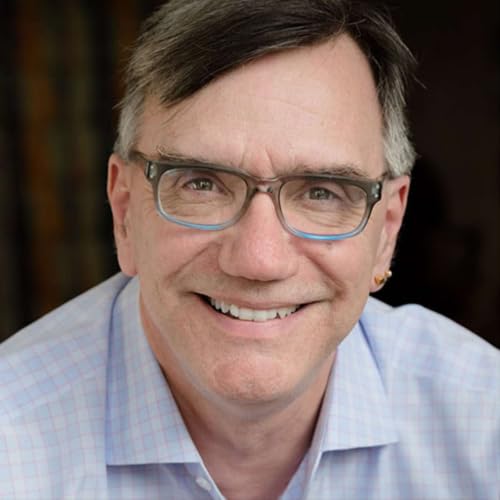
    This re-air episode features Eric's chat with 2024 Nobel Laureate Geoffrey Hinton and Stanford Professor Jay McClelland, two pioneers who have spent nearly half a century laying the groundwork for modern-day AI, advancing research on neural networks long before it captured the world's imagination.

    In fact, their early work faced significant skepticism from the scientific community - an experience they candidly discuss in this episode. This wide-ranging conversation covers everything from the capabilities of recent breakthrough LLMS like DeepSeek to AI agents, the nature of memory and confabulation, the challenges to aligning AI with human values when we humans don’t even agree on our values, and Geoff's fascinating new theory of language, featuring an analogy of words as thousand-dimensional, shape-shifting Lego blocks with hands.

    Geoff, who retired in 2023, divided his time between the University of Toronto and Google DeepMind. With numerous accolades including the 2018 Turing Award and 2024 Nobel Prize in Physics, he is perhaps best known for co-developing the backpropagation algorithm - now a cornerstone of AI research. Jay, currently at Stanford and Google DeepMind, has revolutionized our understanding of human learning through his work on Parallel Distributed Processing (PDP), applying neural network principles to understand phenomena like language acquisition. His insights into human learning have profoundly influenced how we understand machine learning.

    Their friendship dates back to the late 1970s and grew stronger as both collaborated with fellow pioneer David Rumelhart. They share some touching memories about Dave in this episode. Remarkably, despite decades of friendship and building upon each other's work, this appears to be their first recorded conversation together. Eric challenged them to discuss their latest insights and disagreements.

    The original episode was recorded on January 29, 2025.


    JOIN OUR SUBSTACK! Stay up to date with the pod and become part of the ever-growing community! https://stanfordpsypod.substack.com/

    If you found this episode interesting at all, consider leaving us a good rating! It just takes a second but will allow us to reach more people and make them excited about psychology.


    Links:

    Geoff's website

    Geoff's Google Scholar


    Jay's website

    Jay's Google Scholar


    Eric's website

    Eric's X @EricNeumannPsy


    Podcast X @StanfordPsyPod

    Podcast Substack https://stanfordpsypod.substack.com/


    Let us know what you think of this episode, or of the podcast! stanfordpsychpodcast@gmail.com

    Show More Show Less
    48 mins
  • 186 - Ian Gotlib: Understanding Depression
    Oct 23 2026

    This week, Katia is joined by Ian Gotlib, a professor of psychology at Stanford University. In this episode, we explore risk factors for depression, its connection to other disorders, and what individuals can do to manage their risk. We also discuss findings from a decade-long study of girls whose mothers have depression, how the way preteens speak may predict internalizing behaviors up to six years later, and how artificial intelligence can advance psychological research.

    Ian Gotlib’s Lab Website: https://snaplab.stanford.edu/

    Ian Gotlib’s paper, Natural language processing of youth speech predicts psychopathology across adolescence: https://www.nature.com/articles/s44220-026-00683-9

    Ian Gotlib: https://www.linkedin.com/in/ian-gotlib-09256526a/

    Katia Kriakova: https://www.linkedin.com/in/katiakriakova/

    Podcast Twitter: @StanfordPsyPod

    Podcast Substack: https://stanfordpsypod.substack.com/

    Podcast Contact: stanfordpsychpodcast@gmail.com


    Show More Show Less
    49 mins
  • 185 - Brian Knutson: What Neuroscience Reveals About Our Decisions
    Oct 9 2026

    This week, Katia Kriakova has a conversation with Brian Knutson, a professor of psychology and neuroscience at Stanford University. In this episode, we explore the neuroscience of decision-making, how brain activity can predict behavior and relapse in addiction, and why our choices don’t always align with how we want to live.

    Brian Knutson’s LinkedIn: https://www.linkedin.com/in/brian-knutson-8b87762a5/

    Brian Knutson’s Lab Website: https://spanlab.stanford.edu/people/brian-knutson/

    Katia’s LinkedIn: https://www.linkedin.com/in/katiakriakova/

    Podcast Contact: stanfordpsychpodcast@gmail.com

    Podcast Twitter: @StanfordPsyPod

    Podcast Substack: https://stanfordpsypod.substack.com/


    Show More Show Less
    55 mins
  • 184 - Tamar Schapiro: What Philosophy Can(not) Tell us About Children, Adults, and the Root of All Evil
    Sep 18 2026

    In this week’s episode, Julie and Adani chat with Tamar Schapiro, professor of philosophy at MIT! Tamar is interested in a wide range of things, from what it means to make good decisions in everyday life to ethical theory and the history of ethics (especially Kant and the British Moralists). We discussed Tamar’s work on why we treat children differently from adults, dig into whether and how reactivity might be the root of all evil, and close with some practical life advice based on Tamar’s own journey through philosophy and life!

    Tamar’s faculty webpage: https://philosophy.mit.edu/schapiro
    Tamar’s recent book, Feeling Like It: a Theory of Inclination and Will: https://doi.org/10.1093/oso/9780198862932.001.0001
    Tamar’s paper, Childhood and Personhood: https://access.heinonline.com/HOL/P?h=hein.journals/arz45&i=593

    Stanford Encyclopedia of Philosophy entry on The Philosophy of Childhood: https://plato.stanford.edu/entries/childhood/

    Julie: https://www.linkedin.com/in/hengj/

    Adani: https://www.adaniabutto.com

    Podcast Twitter: @StanfordPsyPod
    Podcast Substack: https://stanfordpsypod.substack.com/

    Let us know what you thought of this episode, or of the podcast! :) stanfordpsychpodcast@gmail.com

    Show More Show Less
    49 mins
  • 183 - William Damon: How to Live a Purposeful Life
    Sep 3 2026

    This week, Katia Kriakova has a conversation with William Damon, a professor at Stanford University. He is one of the world's leading researchers on human development across the lifespan and has pioneered the scientific study of purpose in life. In this conversation, we explore how we can make our own lives more purposeful and expand purpose beyond ourselves.

    William Damon’s book on purpose: The Path to Purpose: How Young People Find Their Calling in Life

    William Damon’s paper: The Psychology of Purpose: A Comprehensive Approach

    William Damon’s LinkedIn: https://www.linkedin.com/in/williamdamon/

    Katia Kriakova’s LinkedIn: https://www.linkedin.com/in/katiakriakova/

    Podcast Contact: stanfordpsychpodcast@gmail.com

    Podcast Twitter: @StanfordPsyPod

    Podcast Substack: https://stanfordpsypod.substack.com/

    Podcast LinkedIn: https://www.linkedin.com/company/stanford-psychology-podcast/

    Show More Show Less
    51 mins
  • 182 - Bill Burnett: How to Design a Meaningful Life
    Aug 21 2026

    This week, Katia has a conversation with Bill Burnett, an adjunct professor at Stanford University. He is the co-founder of Stanford's Life Design Lab and also the co-author of Designing Your Life and How to Live a Meaningful Life. In this conversation, Bill shares how we can live in alignment with our values and compass, how prototyping can help us embrace uncertainty, and how to design a life that is more meaningful to us.

    Designing Your Life Website: https://designingyour.life/

    Bill Burnett’s LinkedIn: https://www.linkedin.com/in/bill-burnett-4225401/

    Bill Burnett’s Books:

    Designing Your Life: How to Build a Well-Lived, Joyful Life

    How to Live a Meaningful Life: Using Design Thinking to Unlock Purpose, Joy, and Flow Every Day

    Katia’s LinkedIn: https://www.linkedin.com/in/katiakriakova/

    Podcast Contact: stanfordpsychpodcast@gmail.com

    Podcast Twitter: @StanfordPsyPod

    Podcast Substack: https://stanfordpsypod.substack.com/

    Show More Show Less
    1 hr and 8 mins
  • 181 - Nomisha Kurian: Critical Hope for the Future of Children & AI
    Aug 7 2026

    Adani chats with Nomisha Kurian, Assistant Professor in Education Studies at the University of Warwick, Associate Fellow at the University of Cambridge’s Leverhulme Centre for the Future of Intelligence, and Associate at the University of Edinburgh’s Centre for Research in Digital Education. Nomisha has been at the forefront of research on children’s safety and well-being, elucidating what it means for up-and-coming AI technologies to support children’s development and align with their best interests. She has also advised the UK Government Open Innovation Team, spearheaded policy briefs, and previously researched children’s rights law at Yale University. We discuss how a recently-viral NYT article relates to Nomisha’s frameworks for developmentally aligned AI, why we should have “critical hope” for the future, and learn more about the exciting things she’ll be releasing later this year!

    NYT feature – “What Parents in China See in A.I. Toys”: https://www.nytimes.com/video/world/asia/100000010595407/china-ai-toy-chatbot.html

    Nomisha’s framework on developmentally aligned AI: https://doi.org/10.1007/s44436-025-00009-z
    Nomisha’s further work: https://scholar.google.com/citations?user=wT89nlAAAAAJ
    Nomisha’s children’s book: https://nosycrow.com/book/university-of-cambridge-think-big-artificial-intelligence/

    Adani’s website: https://www.adaniabutto.com
    Adani’s Bluesky @adani

    Podcast Twitter @StanfordPsyPod
    Podcast Substack https://stanfordpsypod.substack.com/

    Let us know what you thought of this episode, or of the podcast! :) stanfordpsychpodcast@gmail.com

    Show More Show Less
    50 mins
  • 180 - Andrew Lampinen: Translating Cognitive Psychology to AI
    Jul 24 2026

    In this episode, Elizabeth chats with Dr. Andrew Lampinen as a part of our Alumni in Industry series. Andrew is currently a Member of Technical Staff at Anthropic. Prior to joining Anthropic, he worked as a Staff Research Scientist at Google DeepMind, and before that he earned his PhD here at Stanford and researched how humans are able to learn new things rapidly. His work bridges cognitive science and artificial intelligence, often with a focus on how the complex behaviors and representations of models, agents, or humans emerge from their learning experiences or data. In this episode, Dr. Lampinen shares his experiences in academia and industry and offers an insightful perspective on how these two research landscapes may be similar and different.


    Andrew's website: https://lampinen.github.io/


    Elizabeth’s: website: imelizabeth.github.io

    Elizabeth’s BlueSky: @imelizabeth.bsky.social


    Podcast BlueSky @StanfordPsyPod.bsky.social

    Podcast Twitter @StanfordPsyPod

    Podcast Substack https://stanfordpsypod.substack.com/


    Let us know what you thought of this episode, or of the podcast! :) stanfordpsychpodcast@gmail.com


    Show More Show Less
    39 mins