Episodes

  • Eid ul Fitr (2025 – 1446H) Prayer Time in Saudi Arabia (English)
    Mar 29 2025

    The Clear Evidence

    Eid Prayer Time in Saudi Arabia

    The Eid prayer in Saudi Arabia is held 10 to 15 minutes after sunrise. Thus it is important to reach the Masjid before sunrise to have ample time to find an appropriate praying spot. If the Masjid is expected to be very crowded then it is better to reach the Masjid before the Fajr prayer and then stay there till the Eid prayer.


    Time of Sunrise in the Biggest Cities of Saudi Arabia

    The time of sunrise in the biggest cities of Saudi Arabia on the day of Eid ul Fitr 2025 – 1446H (30th March 2025) is as follows:

    Eid ul Fitr (2025 - 1446H) Prayer Time in Saudi Arabia (English, Urdu)

    Show More Show Less
    1 min
  • What the Qur’an Says About Peace – Dr. Juan Cole (English)
    Mar 27 2025
    The Clear EvidenceIn this short video, Dr. Juan Cole, the Richard P. Mitchell Collegiate Professor of History at the University of Michigan, talks about what the Qur’an, the scripture revered by the world’s 1.7 billion Muslims, says about peace and why this has never been more important.What the Qur’an, the scripture revered by the world’s 1.7 billion Muslims, says about peace has never been more important. Yet very little attention has been paid to this crucial subject. In my book, “Muhammad: Prophet of Peace amid the Clash of Empires,” I fill this gap.Let us picture the historical Muhammad SAW, who was born about 570 years after the death of Jesus Christ, whom he saw as his predecessor. As a merchant from the small shrine city of Makkah in western Arabia, he frequently traveled to cities like Jerusalem and Damascus in the Eastern Roman Empire. His trade would have been disrupted in the year 603 AD, when the Iranian Sasanian Empire invaded the Roman Near East, kicking off a brutal 26-year-long war.It was a time of both Christianity and paganism. Most people in the Roman Empire had embraced Christianity, but at the fringes of civilization, Bedouin and villagers still worshipped the old Arabian gods. Muhammad’s SAW home town, Makkah, was the site of the Kaaba, a shrine to God. Some may have worshipped only this supreme deity, but most simply added him to a pantheon, with pagan goddesses depicted as his daughters.Arab custom respected a major shrine to a deity—like the Kaaba—as a zone of peace. Muhammad’s SAW clan, the Banu Hashem, were caretakers of the Kaaba and its pilgrimage and in charge of settling feuds. Peacekeeping was Muhammad’s SAW ancestral vocation.The Qur’an speaks, in chapter 97, of the descent on Muhammad SAW of the angel on the night of the first revelation, which occurred around the year 610 AD, or about seven years after the war between the Roman Empire and the Sassanids began. That chapter ends by saying, “and peace it is, until the breaking of the dawn.” 97:5. The revelation brings with it the peace of worship and spirituality.Muhammad SAW began preaching a strict monotheism to Makkan pagans, who were outraged. They harassed and boycotted Muhammad’s SAW early Believers RA. In the face of this persecution, the Qur’an advises Muhammad in chapter 73: “Be patient with what they say and take your leave of them graciously.” 73:10. Another chapter (41) proclaims, “Good and evil are not equal. Repel the latter with the greater good, and behold, your enemy will become a devoted patron.” 41:34. The chapter (25) called “The Criterion” speaks of “the servants of the All-Merciful who walk humbly upon the earth—and when the unruly taunt them, they reply, ‘Peace.’” 25:63. Some sources allege that Muhammad SAW and the Believers RA supported the Roman Empire and that the pagans sided instead with the Iranian Sasanids.The Qur’an tells Muhammad SAW of the year 622 AD, “Recall when the pagans were intriguing against you, to kidnap you, or murder you, or to expel you.” 8:30. Under pressure, the prophet SAW and his small community emigrated to the nearby city of Madina.Pagan Makkah, however, launched three military campaigns in an attempt to take Madina and crush the new religion of Islam. In each case, the Believers RA and their allies in Madina, who included the city’s Jewish community, repelled these attacks. The Qur’an suggests that one goal of these defensive battles was to protect Roman Christian churches to the north from the pagan marauders.Continue Reading: Video: What the Qur’an Says About Peace - Dr. Juan Cole (English)
    Show More Show Less
    7 mins
  • The Story of an American Air Hostess - Shaikh Khalil-ur-Rahman Sajjad Nomani (English)
    Mar 26 2025

    The Clear Evidence⁠


    Perhaps young girls are also listening. This incident took place in the 1980s. At that time, I was studying in Madinah and had come to India for a week for a specific reason. When it was time to return, I did not get a direct seat. In fact, at that time, there was either no direct flight from Delhi to Jeddah, or if there was, I didn’t get a seat on it.

    The seat I was assigned required me to first take an American Airlines flight from Delhi to Karachi. From Karachi, I had to switch flights to reach Riyadh, and then from Riyadh, I had to take another flight to Madinah. It was about three in the afternoon when I boarded the plane, burning with a fever and feeling very unwell. My only intention upon taking my seat was to close my eyes and try to rest—I planned to take a tablet, drink some tea, and sleep. But Allah had something else planned.

    The seat next to mine was occupied by a Sikh gentleman who had been traveling for a long time. He had no one to talk to during his six to seven-hour journey and was eagerly waiting for a new passenger to sit beside him so he could have a conversation. As soon as I arrived, intending to rest, he welcomed me with the intention of talking. I was now stuck.

    At that time, the Iranian Revolution led by Khomeini was a hot topic. The Sikh gentleman, who was an American national born and raised in the U.S., had limited proficiency in Hindi and preferred to converse in English. The habit of many Indians, especially when traveling, is to pass time by discussing politics. It is quite interesting how, by the time a journey ends, it seems as if all of the country's problems—inflation, electricity shortages, water crises, and gas issues—have been resolved, and everyone parts ways as if the nation’s fate has been decided. This culture is unique to India and not commonly found in other countries.

    As soon as the Sikh gentleman saw me—a young scholar wearing traditional attire—he started a conversation about the Iranian Revolution. Our elders taught us never to waste time on pointless discussions; rather, it is an art and a science to skillfully steer any conversation towards a meaningful topic. So, while responding to his conversation, I gradually shifted the discussion toward Islam. However, he soon started yawning, showing no interest in religious discussions. Seeing him yawn, I felt relieved, thinking I might finally get a chance to rest.

    But fate had something else in store. The seat in front of me, near the emergency exit, was occupied by an American air hostess. She had been listening to our conversation. She suddenly spoke up, saying, "It seems like you are discussing Islam. May I join in and ask a few questions?"

    I agreed and told her she could ask anything, and if I knew the answer, I would respond. She said she had been studying Islam for a year. While she found certain aspects appealing, some things were confusing and difficult to understand. She then asked, "What exactly is the concept of veiling (hijab)? Haven’t you imprisoned half of your population—your women—by imposing this practice?"

    May Allah guide people to wisdom. Our elders taught us to never respond to a question impulsively. Instead, one should first listen carefully, internally turn to Allah for guidance, and seek divine wisdom before answering. So, as I listened to her question, I silently prayed, asking Allah to guide me toward an answer that would be beneficial.

    And then, suddenly, an example came to my mind—one I had never thought of before. I told the American air hostess:


    Continue Reading: ⁠Audio: Aik American Air Hostess ka Waqia - Shaikh Khalil-ur-Rahman Sajjad Nomani (Urdu, English)


    Show More Show Less
    8 mins
  • Urdu Narration: Aik American Air Hostess ka Waqia – Shaikh Khalil-ur-Rahman Sajjad Nomani
    Mar 26 2025

    The Clear Evidence


    Perhaps young girls are also listening. This incident took place in the 1980s. At that time, I was studying in Madinah and had come to India for a week for a specific reason. When it was time to return, I did not get a direct seat. In fact, at that time, there was either no direct flight from Delhi to Jeddah, or if there was, I didn’t get a seat on it.

    The seat I was assigned required me to first take an American Airlines flight from Delhi to Karachi. From Karachi, I had to switch flights to reach Riyadh, and then from Riyadh, I had to take another flight to Madinah. It was about three in the afternoon when I boarded the plane, burning with a fever and feeling very unwell. My only intention upon taking my seat was to close my eyes and try to rest—I planned to take a tablet, drink some tea, and sleep. But Allah had something else planned.

    The seat next to mine was occupied by a Sikh gentleman who had been traveling for a long time. He had no one to talk to during his six to seven-hour journey and was eagerly waiting for a new passenger to sit beside him so he could have a conversation. As soon as I arrived, intending to rest, he welcomed me with the intention of talking. I was now stuck.

    At that time, the Iranian Revolution led by Khomeini was a hot topic. The Sikh gentleman, who was an American national born and raised in the U.S., had limited proficiency in Hindi and preferred to converse in English. The habit of many Indians, especially when traveling, is to pass time by discussing politics. It is quite interesting how, by the time a journey ends, it seems as if all of the country's problems—inflation, electricity shortages, water crises, and gas issues—have been resolved, and everyone parts ways as if the nation’s fate has been decided. This culture is unique to India and not commonly found in other countries.

    As soon as the Sikh gentleman saw me—a young scholar wearing traditional attire—he started a conversation about the Iranian Revolution. Our elders taught us never to waste time on pointless discussions; rather, it is an art and a science to skillfully steer any conversation towards a meaningful topic. So, while responding to his conversation, I gradually shifted the discussion toward Islam. However, he soon started yawning, showing no interest in religious discussions. Seeing him yawn, I felt relieved, thinking I might finally get a chance to rest.

    But fate had something else in store. The seat in front of me, near the emergency exit, was occupied by an American air hostess. She had been listening to our conversation. She suddenly spoke up, saying, "It seems like you are discussing Islam. May I join in and ask a few questions?"

    I agreed and told her she could ask anything, and if I knew the answer, I would respond. She said she had been studying Islam for a year. While she found certain aspects appealing, some things were confusing and difficult to understand. She then asked, "What exactly is the concept of veiling (hijab)? Haven’t you imprisoned half of your population—your women—by imposing this practice?"

    May Allah guide people to wisdom. Our elders taught us to never respond to a question impulsively. Instead, one should first listen carefully, internally turn to Allah for guidance, and seek divine wisdom before answering. So, as I listened to her question, I silently prayed, asking Allah to guide me toward an answer that would be beneficial.

    And then, suddenly, an example came to my mind—one I had never thought of before. I told the American air hostess:


    Continue Reading: Audio: Aik American Air Hostess ka Waqia - Shaikh Khalil-ur-Rahman Sajjad Nomani (Urdu)

    Show More Show Less
    12 mins
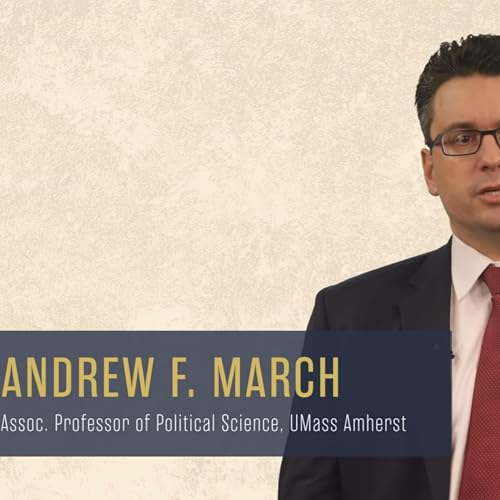
  • Introduction to Sharia – Andrew F. March (English)
    Mar 25 2025
    The Clear EvidenceSharia as a Path to God - Andrew F. MarchFor many of us in America, “Sharia” is a household word, familiar from the media and political debates. But what is Sharia and how much do ordinary Americans really know about it? We may think of it as “Islamic law” but that doesn’t tell us very much if we know little about the Islamic tradition. I’m not a Muslim myself, but I am a scholar of Islamic law, and I often find myself introducing Sharia to college students whose only knowledge of Islam might come from news reports about distant and confusing events.I tell them that for Muslims, Sharia means the “way” or “path” to God. I also explain that it’s broader than just law, and it refers to the very idea of God communicating with humans through revelation. This is why for Muslims, the Sharia includes God’s messages to previous prophets, from Noah to Abraham, Moses, and Jesus. This shouldn’t be a surprise—Muslims see God’s revelation to Muhammad SAW as a continuation, and completion, of the message revealed to the earlier Jewish and Christian prophets.But while the Sharia is not just law, it is law. It contains rules of behavior. But Muslim legal scholars of the past described the Sharia not so much as a codified rulebook, like our tax code, nor as merely a set of higher principles, like the idea of natural law, but as the ongoing search for God’s prescriptions for human action. Like the Mosaic law, the Sharia is the discovery of the rules that will allow believers to obey God.Muslims understand that these rules of Sharia reflect broader purposes and values. Scholars and theologians have traditionally said that the entire Sharia is designed to protect human welfare, which they define through 6 core universal interests: life, religion, reason, wealth, family and honor.For example, the Sharia prohibits the consumption of alcohol. But scholars don’t just say that this is because God has forbidden it – but also because it is God’s will that humans protect and preserve their reason or intellect, which is necessary for making correct moral decisions.The Sharia also prohibits sexual relations outside of marriage. This is not just because of divine decree, but because it preserves family bonds. At the same time, the Sharia prohibits false accusations of sexual immorality. This protects human dignity and honor, which are necessary for living a good life. So the Sharia should first be understood by its goals and values before its rules.What then are those rules? And if they are not codified, how are they known? Muslim jurists discovered these rules through 4 primary sources: the Quran, the words and actions of the Prophet Muhammad (SAW), the universal agreement about a matter by the Muslim community (or its scholars), and the careful use of analogy.Law usually refers to the public sphere, but most of the Sharia’s rulings are about private spiritual practice, such as prayer, fasting, charity, and so on. And while rulings on social relations from marriage, divorce, sales, contracts, and inheritance remain a living part of the Sharia, their implementation in modern societies varies from country to country. Sometimes it is based purely on personal conviction—as in the case of American Muslims voluntarily giving to charity or following Islamic finance laws.Importantly, very few of the areas of behavior and social relations the Sharia governs have only a single rule on which all jurists agree. Scholars always accepted and recognized reasonable disagreement, because interpretation could rarely provide complete certainty about God’s intentions.Continue Reading: Video: Introduction to Sharia - Andrew F. March (English)
    Show More Show Less
    7 mins
  • An Anti-Islamic Nationalist Politician’s Journey to Islam – Joram van Klaveren (English)
    Mar 24 2025
    The Clear EvidenceMy name is Joram van Klaveren, and I’m a former member of the Dutch parliament who represented the Party for Freedom, the anti-Islamic nationalist party of Geert Wilders.For years I gave everything I had to fight against Islam. I tried to make legislation to shut down all Islamic schools in the Netherlands. I attempted to close all mosques, ban the Quran, and ban Islam altogether from the Netherlands. As a Dutch politician, I opposed Islam in every way possible.But my views drastically changed during a party rally in 2014.“Wilders asked supporters ‘do you want more or fewer Moroccans in the Netherlands?’ Then the crowd shouted back ‘fewer, fewer, fewer.’ Wilders smiled and answered: I’ll make sure that it will happen. Then I thought it’s not about political ideology anymore, but the idea of getting rid of an ethnic group. A lot of people thought he sounded like the Nazi [Joseph] Goebbels. I thought he was crossing a line. Then I left the party,” he said.In 2017, I left parliament and finally had the time to fulfill a long-held desire: to write an anti-Islam book. I wanted a book that would provide conclusive theoretical grounding for all of the objections I held against Islam as a politician.My book would settle the dispute about Islam with a clear conclusion: Islam is a danger to Europe, to America, to the West, and, actually, to the whole world.Before writing my book, my view about Islam was influenced by the conservative Protestant environment of my upbringing, in which other religions, and certainly Islam, were definitely seen as wayward and wrong.I was also influenced by the cultural aversion toward Islam that many Europeans have, which was a result of their historic clashes with the Islamic world.And of course, the fears and worries I experienced during years of studying comparative religion at the university formed my opinions. Remarkably, my studies at the university actually began on September 11, 2001.Many horrors would sadly follow, inside and outside of Europe, from the murder of columnist Theo van Gogh; to kidnappings, anti-Semitic terror, and beheadings; to haphazard stabs, truck attacks, and suicide attacks; to the proclamation of the caliphate by ISIS. There were even Muslims from the Netherlands who travelled as jihadists to Syria.These events confirmed and deepened my negative feelings about Islam and motivated me to join Wilders’ party. I believed that Islam should be fought where possible.But as I began writing my book, I came across information that was at odds with my ideas.I learned that many of my ideas about Islam—stated by orientalists, far-right Westerners, and even by Islamic extremists—had little or no basis in historical Islam.My research often presented me with contexts and interpretations that were very different from those I had propagated for years. A more nuanced image of Islam slowly developed in my mind.Seeking more information, I wrote to various academic authorities on Islam, including Timothy Winter who converted to Islam and became Professor Abdul Hakim Murad of Cambridge University. He pointed out various scholars, books, and facts and advised me to read again and more deeply.One by one, my objections to Islam vanished. Islam was no longer a religion that promoted violence, hatred, and anti-Semitism, or a religion that categorized women and non-believers as inferior humans and stridently opposed democracy. Slowly, my perspective of Islam changed.I also received surprisingly satisfying, Islamic answers to my existing Christian questions about specific dogmas, such as the Trinity, the sacrifice of Christ, and original sin.All that I was learning about Islam influenced my work on the book in such a way that it began to take on the character of a personal search for God.Continue Reading: Video: An Anti-Islamic Nationalist Politician's Journey to Islam – Joram van Klaveren (English)
    Show More Show Less
    7 mins
  • Marital Relationship – Dr. Mufti Ismail Menk (English)
    Mar 23 2025

    The Clear Evidence


    As-salāmu alaykum wa-rahmatullāhi wa-barakātuh. In the name of Allah, Most Gracious, Most Merciful. Today we will be speaking about a very interesting topic, and that is the husband-wife relation.

    I think a lot of people have a lot to learn. Because what happens is, life is full of learning. If we don't learn, we will not be able to lead a life that is fruitful.

    All of us, as we grow, and whilst we are young and still growing, we have a dream. And the dream is, one day I will get married, and one day I will do this. You know, if it's a female, she would say, one day I will marry such and such a prince of mine.

    And the male will say, well, one day I will have the princess, and this is what will happen, and this is the type of person. We need to know that this entire thought needs to be harnessed. And we need to think very carefully what type of a person we want to marry.

    The reason is, that decision will determine the rest of our lives, whether we will lead a life of happiness or a life of doom. The decisions of marriage are by far the most important decisions that one could make within one's social circle and even for the rest of life. So it is important for us to know what the Prophet Muhammad, may peace be upon him, teaches us regarding making this choice.

    Firstly, he says that a woman can be married for some reasons. Some of these reasons are, لِمَالِهَا وَلِجَمَالِهَا وَلِحَسَبِهَا وَلِدِينِهَا She can either be married for her wealth. Some people look at wealth, wow, wealthy family, let me get married.

    And sometimes they look at the status in society, wow, you know, good lineage, or should I say, high status in society, prestigious people, let me get married. Sometimes they look at the looks. This person is very good looking, very pretty girl, you know, very handsome man, let me get married.

    And there is something that people look at which is religion, character and conduct. So the Prophet says, فَظْفَرْ بِذَاتِ الدِّينِ تَرِبَتْ يَدَاكَ Become successful by selecting the one who has religion, character and conduct. And this is why the Prophet, may peace be upon him, says, إِذَا جَاءَكُمْ مَن تَرْضَوْنَ دِينَهُ وَخُلُوقَهُ فَزَوِّجُوهُ إِلَّا تَفْعَلُوهُ تَكُنْ فِتْنَةٌ فِي الْأَرْضِ وَفَسَادٌ عَرِيضٌ When someone comes to you with a proposal, and you are happy with their level of character and conduct, as well as religion, then do not disagree or deny them.

    Let them get married to your daughter. If you don't allow them, there may be lots of fitna and fasad. What is fitna and fasad on earth? Fitna meaning corruption, problems, disruptions, difficulties, calamities.

    So many things can happen. So this is the teaching of Muhammad, may peace be upon him. We need not reject proposals without a reason.

    Some people will reject it solely because they've had a problem with someone. Solely because they had one raw deal where they were wrong sometimes. And their daughter has to suffer.

    The son has to suffer. They lose out on good proposals. As we all know today, to get a good person to marry is like hunting for a needle in a haystack.

    Perhaps not as difficult as that, but for a lot of people it may be just that. And it is very, very risky because sometimes we've picked up part of the hay, and we think it's a needle. And in the same way, we think we have a good man or a good wife, and it only turns out later on that they're not as good as we thought they were.

    So it's important for us, once we've made the decision, each one of us should be, the main aim in our lives should be to please our Maker, to please our Creator. We need to be constantly conscious of that. If that is the case, we will be able to lead a happy life.


    Continue Reading: Video: Marital Relationship - Dr. Mufti Ismail Menk (English)

    Show More Show Less
    14 mins
  • There’s Nothing Funny about Bullying – Mohamed Hoblos (English)
    Mar 23 2025

    The Clear Evidence


    “So I came from behind, and I scared him, right? And he freaked out.”

    “Two coffees for you.”

    “Yeah, two coffees, put it here, please.”

    “Where are you from, sir? India or Pakistan?”

    “Bangladesh.”

    “Same thing, different smell. Don’t tell me you put curry in a coffee, sir.”

    “No.”

    “Are you on a student visa or work visa? Don’t make me tell immigration. Man, how do you get a job here? You should be in a service station.” (laughing)

    “Now you're moving up these days, huh? You know, if you were Indian, I was gonna sing a song for you. Watch, watch. I will sing it…”

    “Would you like anything else?”

    “Two sugars, please, sir. Bye-bye.” (laughing)

    “What’s wrong with you, man?”

    “What’d you do that for?”

    “Did what?”

    “How rude was that!”

    “Relax, man. We’re just having a laugh. What’s wrong with you?”

    “You are very offensive.”

    “What do you mean offensive? Come on, man. I’ll prove it to you, he didn’t get offended.

    Hey, cricket boy, come here, man! Did you get offended?”

    “No, that was okay, it’s fine.”

    “I told you, man. Relax, he didn’t get offended.”

    “Brother, did you get offended?”

    “Actually, that was a bit offensive.”

    “I told you he was insulted.”

    “I thought we were having a laugh.”

    “It’s one thing to laugh, but it’s another thing to laugh at someone else’s expense. You should know better than that.

    Allah says in the Quran, ‘Do not insult one another and don’t call each other by insulting nicknames.’ That’s exactly what you did.”

    “I should know better, man.”

    “The Prophet of Allah never, once in his life, did he ever mock or make fun of anyone.”

    “I’m gonna go say sorry to the man.”

    “Yeah, I think you should.”

    Continue Reading: Video: There’s Nothing Funny about Bullying - Mohamed Hoblos (English)

    Show More Show Less
    2 mins