Episodes

  • How Bad ERP Data Destroys Scale, Automation and Customer Experience | The Disruptors #13
    Nov 18 2025

    Bad system data (especially inside ERP’s) is the underlying reason a lot of digital projects fail.

    Before you build portals, automations or self-service tools, your data structure needs to be right — because everything depends on it.

    Most businesses blame the software when a portal fails or an automation breaks. But the real issue usually sits underneath: inconsistent, outdated, or poorly governed system data.

    In this episode of The Disruptors, Intuji's CEO Julian Wallis and Aashish Paudel, COO of Intuji, break down why dirty data destroys scale, automation and customer experience — and what leaders must fix before investing in digital tools.

    Topics Covered
    00:00 – Intro - Episode Highlights
    00:48 – Why company system data is the real starting point for digital projects
    01:21 – Why leaders often underestimate the size and effort of data clean-ups
    03:11 – How poor ERP data structure exposes itself instantly in customer portals
    04:23 – Broken relationships between customers, contacts, SKUs and items
    04:54 – Pricing inconsistencies and how automation exposes hidden flaws
    05:17 – Duplicate records and conflicting customer data
    07:00 – The super-admin problem and uncontrolled data changes
    08:50 – The danger of legacy comfort and resisting needed change
    10:25 – ERP vs PIM: when to consolidate vs separate systems
    15:18 – Governance over features: why naming conventions and control matter
    23:37 – Why reliable self-service depends entirely on data quality
    27:09 – Why every business needs a data champion to own it’s quality

    Key Takeaways
    ● Most digital failures start with dirty company data, not broken software
    ● Workarounds hide internal problems but collapse when automation begins
    ● Governance, naming conventions and access control matter more than system software features
    ● Reliable automation and self-service can only run on well-structured data
    ● Every business needs a data champion to own quality, structure and improvement

    Learn More / Resources:
    Visit our Learning Centre at
    https://intuji.com/learning-centre/ for more resources on PSV Thinking®, digital transformation, and enterprise growth.

    Connect With Us:
    The Disruptors LinkedIn: (
    https://www.linkedin.com/company/the-disruptors-official)
    Intuji LinkedIn: (
    https://www.linkedin.com/company/intuji)
    Intuji Website: (
    https://intuji.com/)

    Subscribe to The Disruptors to learn how to apply PSV Thinking® and create an EdgeFactor® in your business.


    Show More Show Less
    32 mins
  • Why the Cheapest Digital Projects End Up Costing the Most | The Disruptors #12
    Sep 29 2025

    The harsh truth - in digital transformation, the cheapest quote often becomes the costliest mistake.

    Most digital projects that “save money” up front end up costing more — because the cheapest vendor rarely delivers the right outcome.

    In this episode of The Disruptors, Ritesh Shah and Julian Wallis unpack why procurement decisions based on price create technical debt, wasted spend, and failed transformation. They explain why the lowest bid is usually the most expensive, and how to evaluate partners who actually deliver on Profit, Scale, and Value.

    Topics Covered
    00:45 – Procurement is more than paperwork – why vendor choice matters
    02:10 – Lessons from big companies losing millions with the wrong partner
    03:45 – Aligning on the real problem before chasing tech solutions
    05:15 – The “checklist” trap: treating projects like commodities
    06:35 – Cheapest-first decisions and the hidden cost of technical debt
    08:20 – Vendors experimenting on the client’s budget
    10:20 – Why misaligned assumptions doom projects from the start
    12:00 – Building trust and confidence in procurement decisions
    13:20 – Buying brains, not just build capacity
    15:00 – Discovery as an investment, not a sunk cost
    17:30 – PSV Thinking™ applied to procurement (Profit, Scale, Value)
    19:30 – Why higher upfront investment delivers better long-term returns
    21:00 – Moving from vendor relationships to trusted partnerships
    22:15 – Closing insights: the cheapest quote usually costs the most

    Key Takeaways
    ● Procurement based on lowest cost almost always leads to higher long-term expense
    ● Strong partners challenge assumptions and prioritise discovery to align on outcomes
    ● Transformation success depends on trust, clarity, and solving the right problem
    ● PSV Thinking™ (Profit, Scale, Value) is the benchmark for evaluating vendors
    ● Higher upfront investment often delivers bigger long-term returns

    Learn More / Resources:
    Visit our Learning Centre at
    https://intuji.com/learning-centre/ for more resources on PSV Thinking®, digital transformation, and enterprise growth.

    Connect With Us:
    The Disruptors LinkedIn: (
    https://www.linkedin.com/company/the-disruptors-official)
    Intuji LinkedIn: (
    https://www.linkedin.com/company/intuji)
    Intuji Website: (
    https://intuji.com/)

    Subscribe to The Disruptors to learn how to apply PSV Thinking® and create an EdgeFactor® in your business.


    Show More Show Less
    24 mins
  • The Hidden Cost of Misaligned Discovery in Digital Projects | The Disruptors #11
    Sep 9 2025

    Most digital transformation projects fail before they even start — because discovery is done wrong.

    In this episode of The Disruptors, Julian Wallis hosts a conversation with Ashish Paudel, Intuji’s Chief Operating Officer, on why misaligned discovery derails digital transformation, how it drains profitability, blocks scale, and destroys enterprise value — and what to do differently.

    Topics Covered
    00:00 - Intro
    00:45 - Why discovery is more than feature gathering — setting vision and outcomes
    04:20 - Moving from feature-led thinking to outcome-driven transformation
    07:00 - How misaligned discovery creates failed projects and wasted investment
    10:40 - Superficial discovery: why box-ticking never aligns stakeholders
    14:10 - The costly gap between leadership assumptions and end-user reality
    18:30 - Good vs bad discovery — asking the right questions to find true needs
    22:15 - Why proper discovery must be anchored in PSV: Profit, Scale, Value
    26:00 - Discovery as the foundation before agile flexibility
    30:45 - Case studies of unused features and misaligned outcomes
    36:20 - Designing with stakeholders, not for them — lessons from the field

    Skipping proper discovery doesn’t save time or money — it guarantees misalignment, rework, and failure. Done right, discovery becomes the foundation for profitability, scalable growth, and long-term enterprise value.

    Key Takeaways
    ● Misaligned discovery is the root cause of failed digital projects.
    ● Good discovery is outcome-led, not feature-led.
    ● Discovery must connect directly to PSV Thinking™: Profit, Scale, Value.
    ● Engaging end-users is just as important as engaging leadership.
    ● Discovery done right builds the business case for digital investment.

    Learn More / Resources:
    Visit our Learning Centre at
    https://intuji.com/learning-centre/ for more resources on PSV Thinking®, digital transformation, and enterprise growth.

    Connect With Us:
    The Disruptors LinkedIn: (
    https://www.linkedin.com/company/the-disruptors-official)
    Intuji LinkedIn: (
    https://www.linkedin.com/company/intuji)
    Intuji Website: (
    https://intuji.com/)

    Subscribe to The Disruptors to learn how to apply PSV Thinking® and create an EdgeFactor® in your business.


    Show More Show Less
    45 mins
  • Why AI Won’t Replace Software Engineers Anytime Soon | The Disruptors #10
    Sep 1 2025

    AI makes coding easier than ever — but at what cost?

    In this episode of The Disruptors, Ritesh Shah and Julian Wallis unpack the hype around AI in software development. They explore why AI can speed up tasks but can’t replace the judgment, discipline, and experience of real software engineers.

    If your business is betting on AI to build scalable, secure systems without proper oversight, this episode is your wake-up call.

    Topics Covered
    00:00 – Intro
    00:45 – Why AI is everywhere in coding today
    02:30 – Garbage in, garbage out: the problem with AI training data
    04:30 – Augmentation vs replacement: where businesses get it wrong
    07:00 – Security and scalability risks of AI-generated applications
    10:00 – Developer vs Engineer: why experience and strategy matter
    13:00 – The danger of chasing short-term wins with AI apps
    16:00 – Why critical thinking is still the differentiator
    19:00 – How businesses should actually be preparing for AI
    24:00 – The PSV Thinking™ lens for using AI effectively
    29:00 – Closing message: AI is a tool, not a brain

    Key Takeaways
    ● AI speeds up development but can’t replace critical thinking.
    ● Businesses risk scalability, security, and IP if they rely blindly on AI.
    ● The real differentiator is how you use AI — within guardrails.
    ● Engineers provide judgment, strategy, and architecture that AI cannot.

    Learn More / Resources:
    Visit our Learning Centre at
    https://intuji.com/learning-centre/ for more resources on PSV Thinking®, digital transformation, and enterprise growth.

    Connect With Us:
    The Disruptors LinkedIn: (
    https://www.linkedin.com/company/the-disruptors-official)
    Intuji LinkedIn: (
    https://www.linkedin.com/company/intuji)
    Intuji Website: (
    https://intuji.com/)

    Subscribe to The Disruptors to learn how to apply PSV Thinking® and create an EdgeFactor® in your business.


    Show More Show Less
    35 mins
  • Why Price Wars Are Killing Manufacturers Without a Digital Differentiator | The Disruptors #9
    Aug 25 2025

    If you’re still competing on price alone, you’ve already lost.

    In Episode 9 of The Disruptors, Ritesh Shah and Julian Wallis unpack why manufacturers and industrial businesses get stuck in price wars — and how poor data, disconnected systems, and reliance on individuals keep them trapped.

    They explain how to build a true digital differentiator: structured data, scalable systems, and repeatable processes that unlock growth and enterprise value.

    Topics Covered:
    00:00:45 – Why quality and service aren’t enough
    Every competitor claims these, which means they no longer create a real edge.

    00:01:30 – Recurring problems in manufacturing systems
    ERP struggles, poor configuration, and fragmented processes slow growth.

    00:03:29 – The danger of relying on salespeople
    When staff leave, customers leave with them — unless sales is systemised.

    00:05:07 – The myth of quality and service differentiation
    Why “we have better quality and service” doesn’t cut it anymore.

    00:07:15 – Data chaos and disconnected systems
    Messy, siloed data keeps leaders blind to opportunities and risks.

    00:11:21 – Reactive vs proactive decision-making
    Most leaders run the business by looking backwards instead of forecasting forward.

    00:14:14 – Factory floor vs office disconnect
    Teams on the ground and management rarely share one source of truth.

    00:17:30 – Structuring data for scale
    Building a foundation that supports growth for the next 5–10 years.

    00:23:55 – The power of discovery
    How deep on-site discovery uncovers hidden profit leaks and real value gaps.

    00:31:27 – From cost-cutting to opportunity creation
    Why the real edge is not just saving money, but winning new business.


    Key Takeaways from this Episode:
    ● Competing on price alone is a losing strategy
    ● Quality and service are no longer true differentiators
    ● Poorly structured data and disconnected systems trap businesses in chaos
    ● A digital differentiator enables scalability, resilience, and growth
    ● PSV Thinking™ shifts focus from cost-cutting to long-term enterprise value

    Learn More / Resources:
    Visit our Learning Centre at
    https://intuji.com/learning-centre/ for more resources on PSV Thinking®, digital transformation, and enterprise growth.

    Connect With Us:
    The Disruptors LinkedIn: (
    https://www.linkedin.com/company/the-disruptors-official)
    Intuji LinkedIn: (
    https://www.linkedin.com/company/intuji)
    Intuji Website: (
    https://intuji.com/)

    Subscribe to The Disruptors to learn how to apply PSV Thinking® and create an EdgeFactor® in your business.


    Show More Show Less
    36 mins
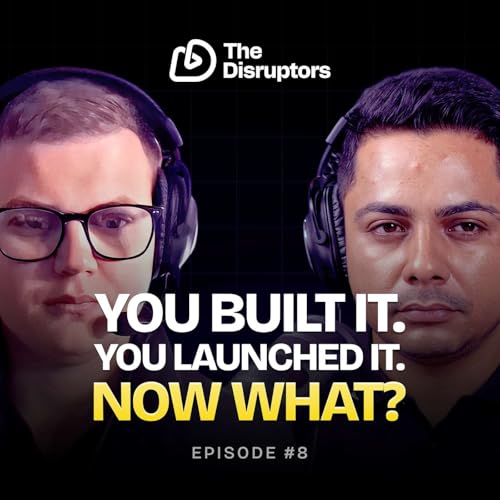
  • Why Digital Transformation Fails After Launch (And How to Get the Real ROI) | The Disruptors #8
    Aug 4 2025

    In Episode 8 of The Disruptors, Ritesh Shah and Julian Wallis dig into the most overlooked phase of digital transformation: what happens after go-live. This is the Dominate Phase of the 4DCX Framework® — where systems either become compounding assets… or turn into stale, expensive liabilities.

    This episode is your blueprint for shifting mindsets, setting strong foundations, and unlocking continuous ROI from your digital platforms.

    Topics Covered:
    00:00:00 – The Trap of ‘Launch and Leave’
    Why most businesses stop improving after go-live

    00:01:05 – What the Dominate Phase Actually Looks Like
    The compounding benefits of ongoing delivery

    00:02:17 – Cultural Change is Bigger Than Feature Sets
    Why continuous transformation starts with mindset, not code

    00:03:51 – Foundations Matter
    What happens when you get the architecture wrong early

    00:05:25 – Not a SaaS Startup? Stop Acting Like One
    Why B2B businesses need a different playbook

    00:07:29 – From MVP to Edge Factor
    Turning systems into long-term strategic assets

    00:10:02 – Microservices vs Monolith Debate
    Why it’s not about theory, it’s about scalability

    00:12:21 – Avoiding Groundhog Launches
    Breaking the cycle of stalled, siloed tech investments

    00:14:25 – Digital = Operational Engine
    Why you need one core system powering all user experiences

    00:17:20 – The Cost of a Bad Launch
    What happens when 5,000 users have a terrible first impression

    00:21:01 – Planning for Scale, Not Hype
    How to think 10 years ahead while building for today

    00:26:34 – Transformation is a Lifestyle
    Tech isn’t the win. Impact is.

    00:30:29 – What ‘Digital ROI’ Actually Looks Like
    And why most businesses miss it

    00:33:04 – You’re Not Just Building Software
    You’re building competitive advantage

    If you’re not evolving your system, you’re devaluing your business.

    Learn More / Resources:
    Visit our Learning Centre at
    https://intuji.com/learning-centre/ for more resources on PSV Thinking®, digital transformation, and enterprise growth.

    Connect With Us:
    The Disruptors LinkedIn: (
    https://www.linkedin.com/company/the-disruptors-official)
    Intuji LinkedIn: (
    https://www.linkedin.com/company/intuji)
    Intuji Website: (
    https://intuji.com/)

    Subscribe to The Disruptors to learn how to apply PSV Thinking® and create an EdgeFactor® in your business.


    Show More Show Less
    42 mins
  • Stop Digitising Chaos — Fix the Process First | The Disruptors #7
    Jul 21 2025

    If you digitise chaos, all you get is faster chaos.

    In Episode 7 of The Disruptors, Ritesh Shah and Julian Wallis unpack why so many digital transformation projects fail — not because of bad tech, but because of broken processes. Businesses often replicate old habits in new systems, expecting different results.

    This conversation cuts through the hype to surface the real issue: It’s not about the software. It’s about the structure.

    And if your processes are flawed, no system — AI, ERP, or otherwise — will save you.

    Topics Covered:
    00:00:45 – The Illusion of Progress
    Why digitising legacy workflows doesn’t solve anything

    00:02:04 – Systems vs Processes
    Why your tech stack is only as good as your operations

    00:03:27 – Building the 4DCX Framework™
    How Intuji delivers repeatable outcomes at scale

    00:06:09 – Discover. Design. Develop. Dominate.
    What the 4DCX framework actually means

    00:09:10 – What PSV Thinking™ Looks Like in Action
    Why structured execution matters more than shiny tools

    00:11:15 – Structured Data or Bust
    AI only works if your inputs are clean

    00:14:19 – Proactive Systems, Not Passive Tools
    What creating true EdgeFactor actually involves

    00:16:15 – Copying vs Rebuilding
    Why replicating legacy processes guarantees failure

    00:18:06 – The $100M Blind Spot
    What would break if your business doubled overnight?

    00:36:38 – Jobs That Should Take Seconds
    How bad UX leads to poor data, poor adoption, and poor decisions

    Digital transformation doesn’t begin with tech. It begins with disciplined process thinking, clear structure, and a ruthless commitment to execution. If you skip that, all the AI and software in the world won’t help.

    Key Takeaways from this Episode:
    ● Tech scales what already exists — if your process is broken, your results will be too
    ● Execution starts with clarity — structure and data before system and AI
    ● Real digital leverage = process + system + outcome
    ● Adoption only happens when the system makes life easier for the user
    ● AI is powerful — but only when built on structured, contextual input

    Learn More / Resources:
    Visit our Learning Centre at
    https://intuji.com/learning-centre/ for more resources on PSV Thinking®, digital transformation, and enterprise growth.

    Connect With Us:
    The Disruptors LinkedIn: (
    https://www.linkedin.com/company/the-disruptors-official)
    Intuji LinkedIn: (
    https://www.linkedin.com/company/intuji)
    Intuji Website: (
    https://intuji.com/)

    Subscribe to The Disruptors to learn how to apply PSV Thinking® and create an EdgeFactor® in your business.


    Show More Show Less
    45 mins
  • Don’t Just Improve Operations - Build Enterprise Value! | The Disruptors #6
    Jul 7 2025

    If your systems run on someone else’s software, they’re not really yours.

    In Episode 6 of The Disruptors, Ritesh Shah and Julian Wallis explore how manufacturers and wholesalers can start treating their processes — not just their tech tools and systems — as assets. When you build your own systems, you’re not just improving operations. You’re building real intellectual property that adds enterprise value.

    The conversation flips the script on what most business owners assume: Buying software doesn’t make your business more valuable. Owning your operating system does.

    Topics Covered:
    The Mindset Shift
    00:00:45 – Most businesses implement tools. Few build systems.
    Why your unique processes — not just your tools — are the foundation of enterprise value.

    What Actually Counts as IP
    00:01:40 – You can’t just slap a brand on software and call it IP
    The difference between owning a process and leasing a product.

    Open Source, Plugins, and AI
    00:03:28 – If you use third-party tech, can it still be IP?
    How you configure and control systems matters more than where they came from.

    The Hidden Risk of Off-the-Shelf Tools
    00:06:49 – Efficiency without ownership creates no long-term value
    Why relying on SaaS platforms could be costing you more than you think.

    Every Business Is Now a Tech Business
    00:09:37 – Whether you like it or not, tech is your edge
    Even in manufacturing, owning your own tech stack is becoming non-negotiable.

    When Integrations Are (and Aren’t) Assets
    00:11:46 – Not all custom work creates IP
    Why building tech in silos often fails to create lasting value.

    Don’t Let Your Vendor Own Your Future
    00:13:24 – You paid for it — but do you own it?
    Why your Master Services Agreement might be handing away your IP.

    How to Start Thinking Like a Systems Owner
    00:15:53 – Stop looking for tools. Start defining your platform.
    Where to begin when turning your business processes into proprietary systems.

    From Tech Stack to Strategic IP
    00:21:06 – Why branding, integration, and control are everything
    The difference between rented efficiency and ownable enterprise value.

    This episode is for every business leader still stuck in “off-the-shelf” mode — and ready to start building IP that actually belongs to them.

    Key Takeaways from this Episode:

    Learn More / Resources:
    Visit our Learning Centre at
    https://intuji.com/learning-centre/ for more resources on PSV Thinking®, digital transformation, and enterprise growth.

    Connect With Us:
    The Disruptors LinkedIn: (
    https://www.linkedin.com/company/the-disruptors-official)
    Intuji LinkedIn: (
    https://www.linkedin.com/company/intuji)
    Intuji Website: (
    https://intuji.com/)

    Subscribe to The Disruptors to learn how to apply PSV Thinking® and create an EdgeFactor® in your business.


    Show More Show Less
    24 mins