The Field Guides cover art

The Field Guides

The Field Guides

Written by: The Field Guides
Listen for free

Nature nerds rejoice! The Field Guides is a monthly podcast that will bring you out on the trail, focusing on the science of our North American wildlife. Nature & Ecology Science
Episodes
  • Ep. 80 - The Deer Are NOT Alright: Chronic Wasting Disease
    Apr 30 2026
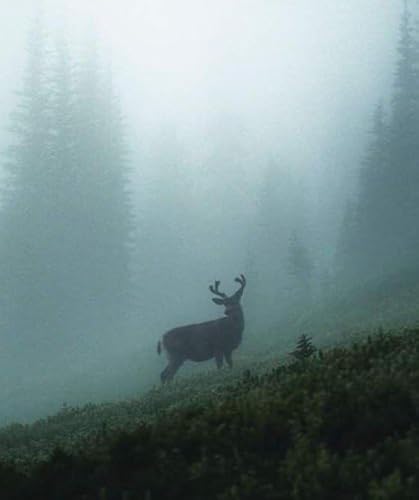
    Something’s not right in the woods, at least if you’re a white-tailed deer. In this episode, the guys dig into chronic wasting disease (CWD), a strange illness reshaping deer populations in many areas of the Lower 48 (and Scandinavia!). It’s not caused by a virus or a bacteria, but it is related to mad cow disease. They break down what it is, how it spreads, what’s happening inside infected animals, and why it’s so dang hard to contain. The deer are not alright… and there’s a reason.This episode was recorded on April 23, 2026 at Walton Woods Park in Amherst, NY (a suburb of Buffalo). Episode Notes and Links· Are there different CWD strains in a single animal? Chronic wasting disease isn’t a single, uniform pathogen. It’s more like a shifting swarm. Infected deer can carry multiple prion “strains” at once, meaning different misfolded shapes of the same protein that behave in slightly different ways. They could spread through the body differently, build up in different tissues, and cause disease at different rates. Lab experiments show this most clearly: when CWD prions are passed through model systems, what looks like one strain can split into multiple distinct variants, or reveal that a mixed population was there all along (e.g., Angers et al. 2010 PNAS; Béringue et al. 2012 Journal of Virology; Li et al. 2010 Journal of Virology). In actual deer, the picture is harder to pin down, but studies comparing prions from different tissues and individuals show real strain diversity and suggest that more than one strain can exist within a single animal (e.g., Angers et al. 2009 Journal of Virology; Moore et al. 2016 Emerging Infectious Diseases). The takeaway is that CWD behaves less like a single disease agent and more like a moving target: a cloud of protein shapes, some dominant, some hidden in the background, that can shift over time, giving the disease more chances to adapt, persist, and potentially jump into new hosts.· Does repeated exposure to CWD reduce incubation time in deer? Repeated exposure to CWD prions does likely shortens incubation time, mainly because prion diseases are strongly dose-dependent. Higher cumulative exposure, whether from a single large dose or many smaller ones over time, can both increase the chance of infection and accelerate disease progression. Experimental studies in deer and elk show that animals exposed to higher or repeated doses tend to develop symptoms faster than those exposed once at low levels. In the wild, this likely plays out through repeated contact with contaminated environments like soil, plants, and carcass sites. That said, factors like genetics and prion strain can still influence how quickly the disease develops in any given animal.· Is CWD the only prion disease that affects wildlife? CWD is the only prion disease currently thriving as a self-sustaining epidemic in wild populations. The others mostly sit at the edges and are livestock diseases that occasionally spill into wildlife or appear in captive/wild interface cases. For example, scrapie occasionally “leaks” into the wild (it has been found in bighorn sheep), but it doesn’t take over. It flickers at the edges of livestock systems. Nothing like the landscape-level, self-sustaining spread we see with CWD. That’s what makes CWD so concerning: it’s not just present in wildlife, it seems to be built for it.· Steve talked about the possibility of vampire bats and wild hogs spreading CWD. What’s the story? There’s currently no evidence that vampire bats are spreading CWD, but the wild hog story has gotten more interesting recently. Blood-feeding bats like the Common Vampire Bat (Desmodus rotundus) are often mentioned because prions can occur in blood at low levels, but there are no peer-reviewed studies showing bat-mediated transmission, nor any field patterns linking bats to CWD spread. So the bat idea remains speculative. Wild hogs (Sus scrofa), on the other hand, have moved beyond pure theory. A recent peer-reviewed study (e.g., Soto et al. 2025 Emerging Infectious Diseases) detected low levels of CWD prion activity in free-ranging pigs in endemic areas, suggesting they can pick up and carry prions after scavenging infected carcasses. Combine this with earlier work showing prions can survive digestion and still remain infectious (e.g., Nichols et al. 2009 PLoS ONE), it all points to hogs as plausible mechanical vectors: in other words, organisms that can move infectious material without necessarily developing the disease themselves. The takeaway: vampire bats are still a biologically interesting but unsupported idea, while wild hogs are emerging as potential “messy middlemen,” capable of redistributing prions across the landscape, even if they’re not a primary engine of CWD transmission, which is still driven by deer-to-deer contact and long-lived environmental contamination.·...
    Show More Show Less
    Less than 1 minute
  • Ep. 79 - The Brown Tree Snake on Guam: Using Genetics to Unlock the Secrets of an Invasive Species
    Apr 1 2026

    The Brown Tree Snake (Boiga irregularis) has wreaked ecological havoc on Guam since its accidental release in the years following WWII, playing a major role in the extinction of endemic bird species and causing trophic cascades that have rewired how the island’s forests function. But how did a population of millions come from just a handful of snakes? And how does this species continue to thrive after eliminating so much of its prey base? A soon-to-be-released study looked into the genome of this invasive species and uncovered some intriguing possibilities. In this episode, the guys welcome their special guest, Dr. Christopher Osborne, to discuss his study and its implications for species management.

    This episode was recorded on March 15, 2026 at Rollin T. Grant Gulf Wilderness Park in Lockport, NY, a place Bill has (jokingly) called “the armpit of WNY” despite its deep history and the fact that he’ll absolutely encourage you to check it out.

    Episode Notes and Links

    In the beginning of the episode, Steve said we would definitely, 100%, without doubt, cover something called Lewontin’s paradox. Well, we skipped it! The main idea behind the paradox is that genetic variation varies little among species, but population size varies massively. We would expect large populations to have a lot of genetic diversity, but we often find that they don’t. Population size doesn’t always scale with genetic diversity.

    Sponsors and Ways to Support Us

    Thank you to Always Wandering Art (Website and Etsy Shop) for providing the artwork for many of our episodes.

    Support us on Patreon.

    Works Cited

    A single preprint!
    Osborne, C.A., Foote, B.M., Fleck, S.J., Waterman, H.M., Chang, S.L., Nafus, M.G., Bellinger, M.R., Gray, L.N. and Krabbenhoft, T.J., 2026. Genomic Structural Variation Rescues a Classic Biological Invader from a Population Bottleneck. bioRxiv, pp.2026-01.
    https://www.biorxiv.org/content/biorxiv/early/2026/02/02/2026.01.30.702330.full.pdf

    Photo Credit

    Brown tree snake, USDA/APHIS, Public Domain, https://www.fws.gov/media/brown-tree-snake

    Show More Show Less
    1 hr and 13 mins
  • Ep. 78 - 3 Guys and A Gator (featuring Chip Campbell)
    Jan 31 2026
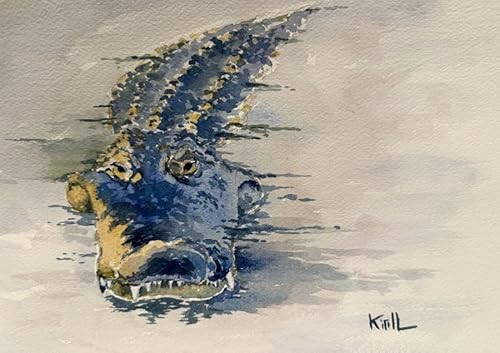
    It’s gator time, folks! It seems like we should’ve already covered this topic, but, nope, this is our first ever episode on the American Alligator (Alligator mississippiensis), and we’ve got two ringers to help: Daniel returns (our Field Guide host who moved to Florida last year) and he’s joined by his mentor in all things swamp-related, Chip Campbell. Chip spent twenty years running Okefenokee Adventures, leading interpretive tours in the Okefenokee National Wildlife Refuge, and his knowledge of alligator natural history and ecology runs deep.Thanks to our Patrons, this episode is also an on-the-road joint. The guys are deep in the Florida Everglades on a multi-day paddling trip, and they take a break at camp to talk with Chip about all things alligator — with a special focus on separating gator myths from reality.And, unfortunately for those of you crushing on Steve, this one’s 100% Steve-free.This episode was recorded on Dec. 31, 2025 at Watson’s Place campsite in Everglades National Park.Episode Notes and LinksAlligators, metabolism, and the “dog comparison”During the episode, Chip mentioned a study suggesting that several alligators could be maintained on roughly the same caloric intake as a single dog. We were not able to locate a study that makes that specific numerical comparison. However, the underlying idea is strongly supported by research on alligator physiology: American alligators have extremely low metabolic rates compared to warm-blooded mammals because they are ectothermic and do not spend energy maintaining body temperature. Classic physiological work shows that adult alligators can have daily energy expenditures that are only a small fraction of those of similarly sized mammals, making informal comparisons like this directionally accurate even if the exact ratio is anecdotal rather than experimental. Source: Coulson, R. A. (1989). Biochemistry and physiology of alligator metabolism in vivo. Integrative and Comparative Biology, 29(3), 921–934. https://doi.org/10.1093/icb/29.3.921Freshwater “sipping” — the study behind the observation The behavior Chip describes is documented in a study by Nifong and Lowers, which examined how coastal alligators use estuarine habitats. The authors note that after heavy rainfall, a thin layer of freshwater can temporarily sit on top of saltier water, and alligators will take advantage of this by drinking from the surface. This helps them manage hydration and salt balance in brackish environments, despite lacking the salt-excreting glands found in crocodiles. Source: Nifong, J. C., & Lowers, R. H. (2017). Reciprocal intraguild predation between Alligator mississippiensis and elasmobranchs in the southeastern United States. Southeastern Naturalist, 16(3), 383–396.Alligator growth vs. ageChip addressed the myth that alligators continue to grow throughout their life. Echoing what he reported, research on American alligators shows that although hatchlings and juveniles grow rapidly, their rate of growth slows substantially as they get older, and studies indicate they reach near-maximum body size well before the end of their lives. Long-term data suggest many alligators stop adding significant length by roughly 25–35 years of age, and more recent work has revised the classic idea of indefinite growth toward a pattern of determinate growth with a growth plateau in adulthood. Human harvest of alligators in LouisianaAs Chip said, Louisiana supports the largest wild harvest program for the American alligator in the United States, with more than 2,000 licensed hunters routinely harvesting an estimated 30,000–35,000 wild alligators annually under a regulated tagging system. In contrast, other states such as Florida have had regulated harvest programs with substantially lower annual take.” Sources: Joanen et al. (2021), Evaluation of Effects of Harvest on Alligator Populations in Louisiana, Journal of Wildlife Management; Louisiana Department of Wildlife and Fisheries Alligator Annual Report (2019–2020); Hines (SEAFWA) status report on Florida alligators.Fatal Alligator AttacksIn this episode, Chip discusses the history of fatal alligator-human conflicts, highlighting the 1973 Sharon Holmes incident as the first "fully confirmed" fatal attack in modern records. While the Holmes incident is often cited as the definitive first case, there was an earlier death that some consider to be the first modern fatality. Historical records show why Chip’s reference to the Holmes case being the first “fully confirmed” case is accurate:Sharon Holmes (1973): On August 16, 1973, 16-year-old Sharon Holmes was killed while swimming at Oscar Scherer State Park. This is widely cited as the first fully confirmed fatality because of the absolute nature of the evidence: the attack was witnessed by bystanders, and a subsequent necropsy of the 11-foot 3-inch alligator found conclusive physical remains. This event marked a turning point in ...
    Show More Show Less
    1 hr and 16 mins
adbl_web_anon_alc_button_suppression_c
No reviews yet