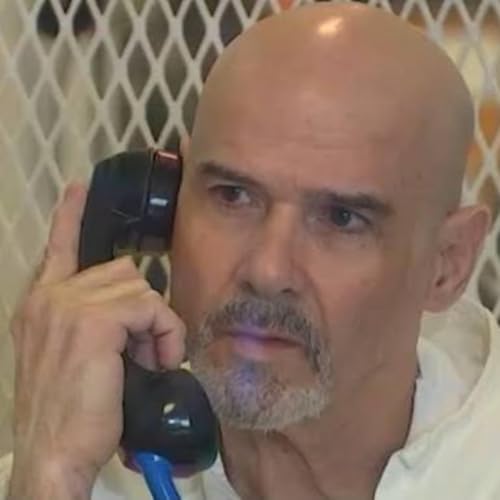
• Reinaldo Dennes’ Execution & The $3.6M Houston Diamond Heist
    Nov 19 2026

    On the night of January 24, 1996, a violent armed robbery and double shooting occurred inside Houston’s Greenrich Building. In the lobby, a disguised gunman shot an unarmed security guard, leaving him paralyzed. Two floors up, on the seventh floor, wholesale diamond dealer Janos "Johnny" Szucs was fatally shot inside his office, and a safe containing roughly $3.6 million in loose diamonds and about $200,000 in cash was emptied.

    At first glance, the crime scene baffled homicide detectives. There was no forced entry, no surveillance tapes, and Szucs’s electronically locked door had been opened from the inside. Investigators gradually linked the heist to the building’s fifth floor, where 39-year-old Reinaldo Dennes—a five-foot-six, soft-spoken jewelry designer, husband, father of three, and martial artist with no prior prison record—operated a legitimate business amid mounting financial strain.

    Prosecutors alleged that Dennes orchestrated the robbery with help from his brother, Alberto Dennes. According to the state’s theory, the original plan called for Alberto to shoot Szucs while Reinaldo retrieved security videotapes. Fingerprints belonging to Alberto were recovered at the scene. Immediately after the crime, Reinaldo and Alberto traveled to Florida and then flew to the Dominican Republic for several days. Reinaldo returned to Houston and was arrested on February 24, 1996, while Alberto never returned to face charges and became a fugitive at large, with the stolen diamonds never recovered.

    Tried in Harris County under Texas’s law of parties, Dennes was convicted of capital murder and received a death sentence in December 1997. Over the ensuing decades, his post-conviction appeals challenged key elements of the state’s case, including informant testimony, evidentiary issues, and party liability. Dennes—now 70 years old—faces a scheduled execution date of November 19, 2026.

    Sources:

    Reinaldo Dennes and John Rubio Appeal

    Protest to Stop the Execution of Reinaldo Dennes

    Reporting on Dennes

    DENNES WRIT OF CERTIORARI

    Dennes V. Davis (2020)

    ABC Reporting On the Case

    Reinaldo's Photo

    Show More Show Less
    41 mins
  • James Pavatt & Brenda Andrew: The Sunday School Affair That Ended on Death Row
    Nov 12 2026

    To the outside world, Rob and Brenda Andrew lived the ideal suburban life in Edmond, Oklahoma—active members of North Pointe Baptist Church where Rob served as a deacon and Brenda taught Sunday school. Behind closed doors, however, Brenda had begun a secret affair with her fellow Sunday school teacher and family insurance agent, James Dwight Pavatt. When Rob tried to remove Brenda as the beneficiary of his $800,000 life insurance policy during their bitter divorce, the lovers forged transfer paperwork and escalated their plot from cut brake lines in October 2001 to a cold-blooded ambush inside Rob’s Lansbrook garage on November 20, 2001—the night he arrived to pick up his children for Thanksgiving.

    This follows the chaotic aftermath that saw Brenda and Pavatt flee across the border into Mexico with Rob’s two young children before surrendering to federal authorities months later. You’ll hear how Oklahoma County prosecutors built separate capital murder trials—securing a conviction against James Pavatt in 2003 through a methodical chain of military weapons training and forensic evidence, before putting Brenda Andrew on trial in 2004 in a courtroom battle that sparked twenty years of constitutional appeals over character evidence and gender bias. Finally, this examines the high-stakes legal endgame: the U.S. Supreme Court's 2025 intervention, the federal appeals court ruling in 2026 that kept Brenda Andrew as the only woman on Oklahoma’s death row, and the October 2026 clemency denial before the Oklahoma Pardon and Parole Board that cleared the way for James Pavatt’s scheduled execution on November 12, 2026.


    Sources:

    PAVATT V TERRY ROYAL (2017)

    Pavatt v. Carpenter (2019)

    "Don't Kill For Me" Protest Information+Quotes

    Pavatt's Clemency Hearing

    Oxygen Reporting on the Case

    Pavatt's Death Sentence was Overturned

    Pavatt's Death Sentence was Reinstated

    25 Death Row Inmates Executions to be Scheduled in Oklahoma

    Brenda Andrews Supreme Case For Sexist Stereotyping During Her Trial

    Brenda Andrew's Case Information

    People's Reporting on the Case

    Altus Times Reporting on the Case

    Brenda's Reply to Her Writ of Certiorari

    James Pavatt

    Show More Show Less
    40 mins
  • Execution Day: The Final Hours of Death Row Inmate Jeffrey Weisheit
    Nov 5 2026

    On April 10, 2010, a catastrophic house fire along Fischer Road in Clark County, Indiana, revealed a scene so horrific it shook veteran first responders to their core. When emergency crews finally breached the flames, they made the devastating discovery of eight-year-old Alyssa and five-year-old Caleb Lynch, left trapped inside as the home burned to the ground. What began as a local disaster quickly turned into an intense, multi-state manhunt down Interstate 75, a high-stakes capital murder trial, and sixteen long years of bitter legal battles that reached the highest halls of American justice.

    In this comprehensive episode of The Final Appeal Files, we walk step-by-step through the entire legal saga of Jeffrey Weisheit. We examine his quiet descent into severe paranoia and calculated financial liquidation in the days leading up to the crime, the terrifying events of that April night while the children's mother worked an overnight factory shift, and the high-speed pursuit through Kentucky that ended in a violent standoff with law enforcement.

    We also take you deep inside the courtroom to unpack the high-tension Clark County trial, including the psychiatric defense evidence and the unexpected juror misconduct crisis that nearly derailed the entire proceeding. Finally, we explore his daily reality inside a ten-by-eleven-foot cell on Indiana State Prison’s Death Row, the complete breakdown of his state and federal appeals, his unvarnished admissions during the high-stakes parole board interview, and the tragic family division at the public clemency hearing that sealed his fate.


    Sources:

    WEISHEIT v. STATE (2015)

    Car Chase in Kentucky

    More Car Chase Information

    Prosecutor's Decision to Seek the Death Penalty+ Quotes

    Trial Venue Selected

    Neighbors Quotes

    Fire+Trial Details

    Judge Denies a Mistrial

    Sentencing Details+ Quotes

    Jeffery's First Day's on Death Row

    Weisheit v Neal (7th Cir. 2025)

    Death Warrant

    Weisheit's Multiple Execution Dates

    Weisheit's Clemency Plea

    Victims' Mother Wants Execution Carried Out

    Indiana Governor Denies Clemency

    Jeffery Weisheit's Backstory

    Lisa Lynch Interview

    Show More Show Less
    41 mins
  • The Execution of Ronald Clark O'Bryan: The Candy Man Who Killed Halloween
    Oct 29 2026

    On October 31, 1974, Halloween night, eight-year-old Timothy O’Bryan went trick-or-treating in a quiet neighborhood in Pasadena, Texas. Before going to bed, Timothy ate a giant candy Pixy Stix given to him by his father, Ronald Clark O’Bryan. Within minutes, the young boy was violently ill, suffering from severe convulsions before dying on the way to the hospital. Autopsy results revealed a lethal dose of potassium cyanide, instantly triggering a panic that widespread stranger-danger threats were hiding in suburban candy bags.

    What initially appeared to be every parent’s ultimate nightmare quickly transformed into a horrifying reality: the killer wasn't a malicious stranger, but Timothy’s own father. Facing mounting personal debts and total financial collapse, Ronald Clark O’Bryan had secretly taken out over $60,000 in life insurance policies on his two children just days before Halloween. To cover his tracks, O'Bryan distributed the poisoned candy to his daughter and three other neighborhood children, risking multiple innocent lives solely to establish a plausible cover story.

    In this episode of The Final Appeal Files, we walk step-by-step through the relentless investigation that brought "The Candy Man" to justice. We examine the crucial forensic evidence, the testimony from chemical suppliers, and the high-stakes capital murder trial that captivated the nation. We also analyze the lengthy death penalty appeals, the complex legal maneuvering, and O'Bryan's persistent claims of innocence right up to his execution by lethal injection at the Huntsville Unit in Texas on March 31, 1984.

    Finally, we explore the permanent cultural scars left behind by this case—how one man's unimaginable betrayal created the enduring urban legend of tampered Halloween candy and forever changed the way families celebrate October 31st.

    Subscribe to The Final Appeal Files for comprehensive deep dives into United States death penalty cases.


    Sources:

    Within These Walls by Reverend Carroll Pickett and Carlton Stowers

    Execution Scheduled For Halloween

    O'Bryan Denied His Guilt

    Trial Details

    Charges

    O'Bryan Execution Details

    What O'Bryan Was Like As a Person

    More Details on O'Byran's Execution

    The Man Who Killed Halloween Haunts People Today

    Final Meal Details

    O'Bryan's Final Words

    O'BRYAN v. State (Tex. Crim. App. 1979)

    Ronald Clark O'Bryan Appeal

    Show More Show Less
    54 mins
  • Execution Day: William Reaves Jr.
    Oct 22 2026
    At 3:15 AM on a humid night in September 1986, a routine call for a taxicab turned fatal outside a Vero Beach, Florida convenience store. When Indian River County Deputy Richard Raczkoski arrived to assist a stranded caller, a dropped handgun triggered a violent struggle on the pavement, leaving the 29-year-old deputy and expectant father mortally wounded. The shooter, decorated Vietnam veteran William Reaves, fled the state and ignited a forty-year legal war that reached all the way to the United States Supreme Court.This episode of The Final Appeal Files breaks down the complete story of William Reaves. It examines his frontline combat in Vietnam, his battle with severe PTSD, and his downward spiral into drug addiction. It walks through the intense courtroom battles between cold premeditation and combat-induced panic, the prosecutor conflict of interest that overturned his first conviction, and the compressed four-week countdown to his execution under Governor Ron DeSantis. Finally, it covers his last hours at Florida State Prison, the direct petition sent by one hundred military veterans, his final meal, and his execution by lethal injection.Was this long-delayed accountability for a fallen law enforcement officer, or a tragic failure of a system that failed both a deputy and a damaged combat veteran? Listen now, leave your thoughts in the comments, and please like, subscribe, and share The Final Appeal Files to support the show!Sources: William Reaves Case Overview and Legal Claims Murderpedia's Reporting on William Reaves WILLIAM REAVES v. SECRETARY FLORIDA DEPARTMENT OF CORRECTIONS (2013)Theywillkillyou's Profile On William Reaves William Reaves Execution Day Set Supreme Court Case Documents Victim's Brother Speaks Out Reporting On Death Warrant Reaves' Family's Plea for Clemency Richard Raczkoski Background and News Coverage William Reaves Pictures and Background Information William Reaves V. State of Florida Appeals William Reaves Appeals Florida Executions 2026 Commission On Capital Cases- William Reaves Reaves V. State (2002) William Reaves Final Moments Florida's Execution Protocol William Reaves Picture
    Show More Show Less
    42 mins
  • Executed: Joe Arridy
    Oct 15 2026

    In 1936, police in Pueblo, Colorado, were desperate to close the brutal murder of 15-year-old Dorothy Drain. When Joe Arridy was picked up wandering a rail yard, an ambitious sheriff found the answer he was looking for. Joe—a gentle young man with a severe intellectual disability and the mental age of a six-year-old—could not read, write, or comprehend what was happening around him. Yet, under pressure, investigators fed him details, coerced a shifting confession, and pushed him straight toward the death penalty.

    What followed wasn't justice—it was a total breakdown of the system. State psychiatrists testified that Joe had zero capacity for criminal intent, while his alibi, flawed forensics, and a recanted co-defendant statement were pushed aside to protect a convenient narrative. Even inside the walls of the Colorado State Penitentiary, hardened inmates and a pro-capital punishment warden became his fiercest protectors, watching Joe spend his days happily playing with toy trains and eating ice cream while nine stays of execution ran out.

    In this episode of The Final Appeal Files, I break down the evidence, the staged reenactments, and the systemic failures that led Colorado to send an innocent, childlike man to the gasposthumous pardon.


    Sources:

    Death Penalty Execution Methods Information

    Friends of Joe Arridy

    Joe Arridy's Posthumous Pardon

    Joe Arridy's False Conviction

    Joe Arridy Picture

    Show More Show Less
    44 mins
  • Failed Execution: Christa Pike
    Oct 8 2026
    On September 30, 2026, thirty years after becoming the youngest woman condemned to death row in modern American history, Christa Gail Pike was escorted into the execution chamber at Tennessee's Riverbend Maximum Security Institution. In letters from her cell, Pike wrote not of a fear of dying, but of a visceral terror of the execution process itself—specifically her small, fragile veins and the nightmare of suffering a prolonged, agonizing ordeal on the gurney.Outside her cell, a fierce legal war raged as her attorneys highlighted her extreme childhood trauma, severe psychiatric disorders, and her age of just eighteen at the time of the 1995 murder of classmate Colleen Slemmer. But after an eleventh-hour court stay was vacated by the U.S. Supreme Court, the state moved forward with the execution—only for those exact physical fears to materialize into an unprecedented catastrophe.For forty-five minutes behind closed curtains, non-medical prison staff jabbed Pike at least seven times with IV needles, leaving one bent from force as a terrified Pike actively tried to help executioners locate a viable line. When the drugs began flowing, the improperly placed lines caused severe subcutaneous extravasation, leaking concentrated pentobarbital directly into her arm tissue rather than her bloodstream. For over an hour, Pike remained conscious, crying out in pain from severe chemical burns and blistering. After a second full lethal dose failed to induce cardiac arrest, officials halted the procedure and rushed Pike to Vanderbilt University Medical Center in critical condition on a mechanical ventilator—making her the first person in U.S. history to survive a complete lethal injection execution attempt.The breakdown sparked raw outrage from Colleen Slemmer’s mother, May Martinez, while exposing the massive structural vulnerabilities of lethal injection—a method carrying a 7.2% failure rate. Because medical ethics prohibit doctors from participating in capital punishment, states rely on undertrained prison staff and secret compounding pharmacies. Compounding the scandal, four months earlier, the execution of death row inmate Tony Carruthers was also called off after over an hour of failed IV attempts under the exact same state physician, Dr. Mark Fowler.In the fallout, Tennessee Department of Correction Commissioner Frank Strada resigned, Governor Bill Lee halted all executions, and defense teams pushed for clemency. Then came an astonishing, late-breaking update: on October 6, six days after being placed on life support, Pike defied medical odds by waking up, coming off the ventilator, and speaking from her ICU bed.As legal battles rage over Eighth Amendment protections, this episode of The Final Appeal Files examines the systemic failures behind state secrecy, the medical realities of execution breakdown, and the central question facing the justice system: with Christa Pike having survived two lethal doses, would it be legally and morally justified for the State of Tennessee to attempt to execute her a second time?Sources- NBC News coverage on Christa Pike's condition after failed execution https://deathpenaltyinfo.org/executions/botched-executions NBC News coverage on Christa Pikes failed execution May Martinez's interview after the failed injection Autopsy information on people executed by lethal injection What to know about lethal injections Information on what lethal injection feels like Why botched executions are becoming more common Christa Pike's letter from jail Christa Pike's last words and lethal injection process Indiana Capital Chronicle reporting on Christa Pike Life saving measures after lethal injection drugs News Coverage On Death Penalty Doctor In Tennessee Willie Francis Case BBC reporting on Christa Pike's execution Christa Pike's Photo Christa Pike's Awake
    Show More Show Less
    40 mins
  • Execution Day: Christa Pike
    Sep 30 2026
    The night air in Knoxville, Tennessee, was freezing on January 12, 1995, but inside the Job Corps dorms, tension had been burning hot for weeks. At the center of it was 18-year-old Christa Pike. Volatile and intensely jealous, Christa had become convinced that another student, 19-year-old Colleen Slemmer, was trying to steal her boyfriend, 17-year-old Tadaryl Shipp.That night, Christa set a trap. Under the guise of burying the hatchet and sharing some marijuana, Christa and Tadaryl lured Colleen into the dark, wooded grounds near the University of Tennessee campus. A third student, Shadolla Peterson, tagged along as a lookout.Colleen had no idea what she was walking into.Once hidden by the shadows, the atmosphere shifted instantly. What was supposed to be a peaceful truce turned into a horrific 45-minute nightmare. Christa and Tadaryl launched a violent attack, torturing Colleen while she pleaded for her life. They slashed her, beat her, and carved a pentagram into her chest. The ordeal ended when Christa lifted a heavy piece of asphalt and crushed Colleen’s skull. Before walking away, Christa picked up a jagged fragment of Colleen’s skull and slipped it into her jacket pocket as a trophy.Within 36 hours, police had cracked the case. Christa didn't just confess—she proudly showed investigators the piece of skull still tucked in her coat.In 1996, a jury convicted Christa Pike of first-degree murder and conspiracy. At just 18 years old, she became the youngest woman sentenced to death in modern U.S. history. Tadaryl Shipp, ineligible for the death penalty as a minor, received a life sentence, while Shadolla Peterson received probation for testifying against them.Behind bars at the Debra K. Johnson Rehabilitation Center in Nashville, Christa’s dark history didn't end. In 2001, she nearly strangled a fellow inmate to death with a shoelace, adding an attempted murder charge to her record. Years later, in 2012, she made headlines again after authorities foiled an elaborate prison escape plot involving a bribed correctional officer.Over the decades, her legal team has fought her execution, citing severe childhood abuse, brain damage, and mental illness. Yet court after court has upheld her sentence. Today, Christa Pike is scheduled to be executed by the state of Tennessee.Sources: Chattanoogan Reporting on Federal Appeals Death Penalty Information Reporting on the Case CHRISTA GAIL PIKE v. STATE OF TENNESSEE Appeal Hearing for convicted Job Corps killer Pike resumes Murder victim's mother begs TN to release skull fragment Judge denies Job Corps killer's appeal Killer Christa Gail Pike asks fed court to block her execution Final death-row appeal of Christa Gail Pike delayed again Christa Pike woos Donald Kohut and Justin Heflin to help plan escape Man arrested in foiled plot to bust Tenn. female death row inmate from jail Tennessee Death Row Woman's Escape Plot Foiled Judge dismisses death row inmate Christa Pike's bid to reopen her criminal case Federal judge’s ruling opens death chamber door for Christa Gail Pike Christa Gail Pike v. State of Tennessee (Tenn. Crim. App. 2013) Christa Pike, Child Rape Victim, Faces Execution for Crime She Committed as a Teenager True Crime Weekly Reporting of the Case Inkwell Imprints Reporting on the Case Picture: https://encrypted-tbn0.gstatic.com/images?q=tbn:ANd9GcThSpEAKpnx9T1geVDxjjja9XnibAiWZadsFIWqtxy_Tw&s=10
    Show More Show Less
    44 mins