Episodes

  • Deep Dive into Smart Eye Interior Sensing and Driver Monitoring Systems
    Jul 27 2022

    Today’s episode features Detlef Wilke, Vice President of Automotive Solutions at Smart Eye. With a degree in electrical engineering, Detlef has over 25 years of experience within the automotive industry with deep technical expertise in driver monitoring and interior sensing systems.

    Listen to him speak about what he is working on at Smart Eye, how customers are using Smart Eye interior sensing technology, how it works, and what he sees as future trends in the automotive technology industry.

    Links of interest:

    • Smart Eye Announces Detlef Wilke as New VP of Automotive Solutions: https://smarteye.se/smart-eye-announces-detlef-wilke-as-new-vp-of-automotive-solutions/
    • Advancing Road Safety – The State of Alcohol Intoxication Research: https://smarteye.se/advancing-road-safety-the-state-of-alcohol-intoxication-research/
    • [eBook] How Euro NCAP will make DMS the New Safety Standard: https://smarteye.se/how-euro-ncap-will-make-dms-the-new-safety-standard/
    • Smart Eye Driver Monitoring Systems: https://smarteye.se/solutions/automotive/driver-monitoring-system/
    • Smart Eye Automotive Interior Sensing: https://smarteye.se/solutions/automotive/interior-sensing/
    Show More Show Less
    26 mins
  • The Role of Attention in the Creative Development Process
    Jul 20 2022

    Today’s episode features Duncan Southgate, Senior Director, Creative and Media Solutions - Insights Division at Kantar. Duncan has over 25 years brand, communications and media research experience gathered in various European, US and global roles with Millward Brown and Kantar. He is currently responsible for growing the company’s global creative and media effectiveness business and his core focus is how media context and creative content can best work together.

    We talked all about attention: what role expressiveness plays in relation to attention, where emotional engagement comes into play, and even how can brands can “predict” attention and impact in their advertising.

    Links of interest:

    • More about Kantar: https://www.kantar.com/campaigns/creative-effective
    • Duncan’s LinkedIn bio: https://www.linkedin.com/in/dsouthgate/
    • Affectiva facial coding AI: https://go.affectiva.com/affdex-for-market-research
    • Mitre10 ad: https://www.youtube.com/watch?v=oJN4H5CTbCM
    Show More Show Less
    23 mins
  • The Future is Multi-Modal: Eye Tracking and More with iMotions
    Jul 6 2022

    Today’s episode features the Founder & CEO of iMotions, and member of the Executive Management team in Smart Eye Group, Peter Hartzbech. Peter is an entrepreneur who is driven by using technology to make the world a better place. His company, iMotions, is a fully-integrated, hardware-agnostic software platform that allows researchers to use the power of any neuroscience technology, as well as traditional surveys and focus groups, to gain unparalleled insight into what people actual think and feel. Their customers use iMotions for everything from diagnosis of neurological diseases such as Parkinson, Schizophrenia, Autism and Alzheimers to personnel training, UX testing, advertising and military human research.

    Peter and I talked about his backstory leading up to the genesis of iMotions, his prior synergies with Affectiva facial expression analysis and eye tracking technology in the Smart Eye group. Listen to learn more.

    Links of Interest:

    • iMotions: https://imotions.com/biosensor/eye-tracking-screen-based/
    • Peter Hartzbech LinkedIn bio: https://www.linkedin.com/in/peter-hartzbech-the-entrepreneurial-gladiator/
    • MIT Professor Jared R Curhan's work on Negotiation: https://web.mit.edu/curhan/www/biography.html
    Show More Show Less
    31 mins
  • AI Potential, Regulation and More with “AI for Good” Author, Dr. Eric Daimler
    Jun 29 2022

    Today’s episode features Dr. Eric Daimler, who is an authority in the Artificial Intelligence community with over 20 years of experience in the field. He currently leads MIT’s first-ever spinout from its Math department and has co-founded six technology companies that have pioneered work in fields ranging from software systems to statistical arbitrage. As a Presidential Innovation Fellow during the Obama Administration, Eric helped drive the agenda for U.S. leadership in research, commercialization, and public adoption of AI. Eric is a passionate technologist, and we dove deep into conversations about AI - the potential, algorithm regulation and much more.

    It was great speaking with Dr. Daimler on compositionality, his work at Conexus and I loved his points on having “circuit breakers” for AI, and his philosophy around lifesaving AI innovations should be quickly adopted and embraced, while emphasizing that it is important to be bringing more people into the conversation around AI so more people are comfortable with it - particularly with regard to bias and ethics in AI.

    Links of interest:

    • Dr. Eric Daimler
    • About Conexus - Adaptable Data Consolidation
    Show More Show Less
    28 mins
  • Breaking Down the Stigma: How Emotion AI Can Revolutionize Mental Health Treatment
    May 31 2023

    Today’s episode features Smart Eye Deputy CEO Dr. Rana El Kaliouby (formerly Co-Founder and CEO of Affectiva) moderating a discussion with Pernille Bülow, PhD, founder and CEO of the nonprofit Mind Blossom, and Loren Larsen of Videra Health.

    On this last day of Mental Health Awareness month, these three came together to put a spotlight on this issue, and delve into the role technologies like Emotion AI can play in mental health. The panelists also discussed the ethical concerns surrounding the use of technology in mental health and how they can be addressed. Additionally, they examine the potential impact of this tech on mental health research and how it can be used to identify new treatments and therapies.

    The discussion highlights the potential of recent technology advancements to revolutionize the way we approach mental health and underscores the importance of responsible and ethical use of this technology. Listen in to learn more.

    Links of interest:

    • [Watch Now] Biosensors in mental health research: https://attendee.gotowebinar.com/register/7812277932273402896?source=podcast
    • [Blog] iMotions: Bringing Mental Health to the Forefront https://imotions.com/blog/learning/product-news/bringing-mental-health-to-the-forefront/
    • [Podcast Episode] iMotions: Emotion AI & Biosensors in Mental Health Research: https://podcasts.apple.com/us/podcast/imotions-emotion-ai-biosensors-in-mental-health-research/id1458361251?i=1000585494254
    • [Blog] How eye trackers can help us understand mental health issues around performance anxiety: https://smarteye.se/blog/how-eye-trackers-can-help-us-understand-mental-health-issues-in-performance-anxiety/
    Show More Show Less
    46 mins
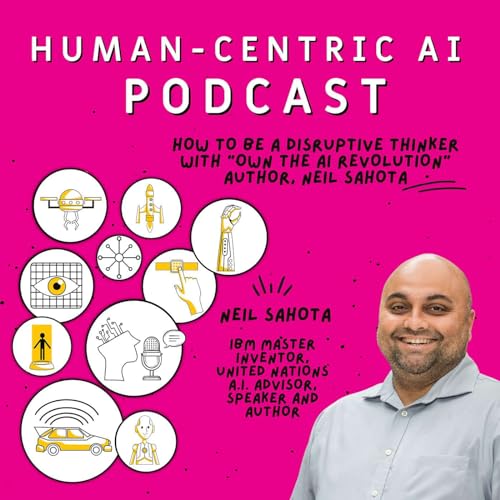
  • How to Be a Disruptive Thinker with “Own the AI Revolution” Author, Neil Sahota
    Jun 22 2022

    Today’s episode features Neil Sahota, an IBM Master Inventor, United Nations A.I. Advisor, Chief Innovation Officer, and globally-recognized speaker and author. Neil is a founding member of the UN’s AI for Good Initiative, and I invited him to speak on how to “disrupt the box.” Through his work with Global Fortune 500 companies as a change maker, he created a disruptive thinking framework to show people how to think differently.

    It was great speaking with Neil on his extensive background at IBM, and listening to his advice for entrepreneurs as an investor as well. His vast experience in the AI space was palpable throughout our conversation, yet he made the various topics very accessible and had some thought-provoking ideas on where he sees the future direction of AI heading. Listen in to learn more.

    Links of interest:

    • Neil Sahota’s website: https://www.neilsahota.com/
    • Neil’s book, “Own the AI Revolution”
    Show More Show Less
    23 mins
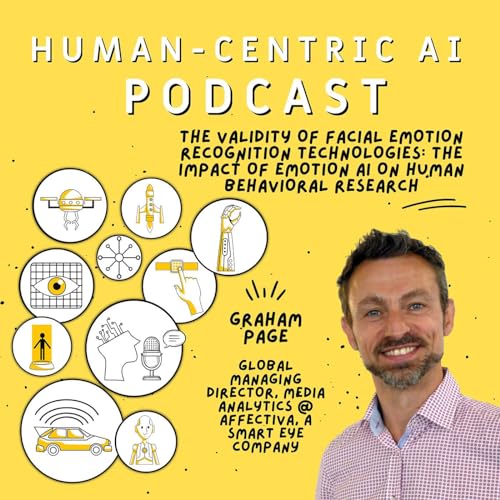
  • The Validity of Facial Emotion Recognition Technologies: The Impact of Emotion AI on Human Behavioral Research
    May 24 2023

    Today’s episode features a Q&A with our own Graham Page. Graham leads the Media Analytics business Unit as Global Managing Director of Media Analytics at Affectiva, a Smart Eye company. He pioneered the integration of biometric and behavioral measures to mainstream brand and advertising research for 26 years as Executive VP and Head of Global Research Solutions at Kantar.

    Over the course of the last year or so, there has been a thread of debate in the media regarding the validity and ethics of facial emotion recognition. This has often reflected the point of view of some data privacy groups who are concerned about the use of facial technologies across several use cases, or the opinions of commercial interests who offer alternative biometric technologies, or traditional research methodologies.

    Scrutiny of emerging technologies is vital, and the concerns raised are important points for debate. Affectiva has led the development of the Emotion AI field for over a decade, and the use of automated facial expression analysis in particular. Listen in to learn more.

    Links of interest:

    • [Podcast Episode] Lisa Feldman Barrett on Challenges in Inferring Emotion from Human Facial Movement: https://podcasts.apple.com/us/podcast/lisa-feldman-barrett-on-challenges-in-inferring-emotion/id1458361251?i=1000446966899
    • [Blog] Face Value: The Power of Facial Signals in Human Behavioral Research: https://blog.affectiva.com/face-value-the-power-of-facial-signals-in-research

    Additional Sources Referenced:

    [1] Barrett, Lisa Feldman, et al. "Emotional expressions reconsidered: Challenges to inferring emotion from human facial movements." Psychological science in the public interest 20.1 (2019): 1-68.

    [2] Ekman, Paul, and Wallace V. Friesen. "Facial action coding system." Environmental Psychology & Nonverbal Behavior (1978).

    [3] Rosenberg, Erika L., and Paul Ekman, eds. What the face reveals: Basic and applied studies of spontaneous expression using the Facial Action Coding System (FACS). Oxford University Press, 2020.

    [4] Martinez, Brais, et al. "Automatic analysis of facial actions: A survey." IEEE transactions on affective computing 10.3 (2017): 325-347.

    [5] McDuff, Daniel, et al. "AFFDEX SDK: a cross-platform real-time multi-face expression recognition toolkit." Proceedings of the 2016 CHI conference extended abstracts on human factors in computing systems. 2016.

    [6] Bishay, Mina, et al. "AFFDEX 2.0: A Real-Time Facial Expression Analysis Toolkit." arXiv preprint arXiv:2202.12059 (2022). Accepted at the FG2023 conference.

    [7] McDuff, Daniel, et al. "Predicting ad liking and purchase intent: Large-scale analysis of facial responses to ads." IEEE Transactions on Affective Computing 6.3 (2014): 223-235.

    [8] Koldra, Evan, et al. Do emotions in advertising drive sales? https://ana.esomar.org/documents/do-emotions-in-advertising-drive-sales--8059.

    [9] McDuff, Daniel, and Rana El Kaliouby. "Applications of automated facial coding in media measurement." IEEE transactions on affective computing 8.2 (2016): 148-160.

    [10] Teixeira, Thales, Rosalind Picard, and Rana El Kaliouby. "Why, when, and how much to entertain consumers in advertisements? A web-based facial tracking field study." Marketing Science 33.6 (2014): 809-827.

    [11] McDuff, Daniel, et al. "Automatic measurement of ad preferences from facial responses gathered

    Show More Show Less
    27 mins
  • How to Improve Flight Safety with Eye Tracking: Pilot Training and Simulation
    Jun 15 2022

    The role of a pilot today is different compared to 50 years back. These days, most commercial aviation is largely automated – an innovation that has decreased the number of accidents drastically and made aviation one of the safest ways to travel. In one million take-offs, the average number of accidents is less than one. In the last few years, eye tracking technology has made its impact on the automotive industry. Gaze scanning has gone from being an exciting area of research, to being installed in new car models all over the world and taking its place as one of the most important technologies for road safety.

    Right now, a lot is pointing to a similar development in the aviation industry. Is eye tracking technology about to grow wings and move on to saving lives up in the air?

    This episode features Ulf Lofberg and Bjorn Lindahl of Smart Eye. Björn’s educational background is electrical engineering, and he also has a Master’s in advanced IT. Today, Björn is product manager for the Research Instruments business area at Smart Eye, which largely involves identifying and developing business opportunities with new applications for Smart Eye’s products. On the sales side, Ulf has a degree in electrical engineering and masters in telecommunications. After spending 20 years building mobile networks, 6 years ago he joined Smart Eye in a dramatic change of career path to work with the interesting technology we are building today.

    Speaking with Ulf and Bjorn was a great opportunity to not only get a deeper technical understanding of how the Smart Eye products work for aviation, but also the practical applications of our technology and our vision for improving flight safety in the future of the aviation industry. Let’s listen in to learn more.

    Links of interest:

    • How Eye Tracking Will Take Aviation to New Heights: https://smarteye.se/blogs/how-eye-tracking-will-take-aviation-to-new-heights/
    • Case Study: Flight Simulator for the Naval Medical Research Unit https://smarteye.se/testimonials/smart-eye-working-with-the-us-navy-flight-simulator-the-kraken/
    • Case Study: Smart Eye Pro for Helicopter Simulators: https://smarteye.se/testimonials/smart-eye-pro-in-a-helicopter-simulator/
    • Case Study: At the Forefront of Human-Centered Automation in Aviation: https://smarteye.se/testimonials/at-the-forefront-of-human-centered-automation-within-aviation-and-sea/
    Show More Show Less
    30 mins