The Levant Files cover art

The Levant Files

The Levant Files

Written by: The Levant Files
Listen for free

About this listen

The Levant Files (TLF) launches as a trilingual new analytical platform focused on Eastern Mediterranean affairs, offering nuanced insights beyond traditional reporting. TLF launches a groundbreaking experiment powered by the next generation of Gemini AI. With cutting-edge features like Audio Overviews, Gemini enables us to transform content into engaging podcast-style conversations. Our mission is to bring you captivating topics from various areas every week. Let's deep dive then! www.thelevantfiles.orgThe Levant Files Politics & Government
Episodes
  • Tehran’s Terminal Hour: Inside the New Uprising
    Jan 2 2026

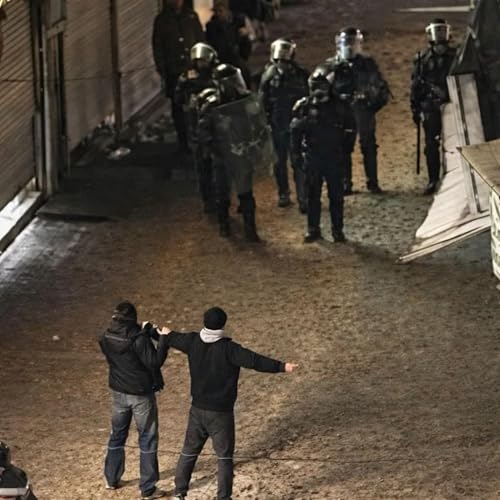
    The Islamic Republic stands on the precipice. It is January 2026, and the streets of Iran are burning not with reformist zeal, but with revolutionary fury. In this special Deep Dive episode of The Levant Files, we deconstruct the "perfect storm" that has shattered the regime’s grip on power.


    We begin with the catalyst: a catastrophic economic collapse that saw the Rial plummet to 1.45 million against the dollar. We explain why the powerful Bazaar merchants—historically the regime’s financial backbone—have locked their doors in a strike that signals a total loss of faith in the system. From the aisles of empty grocery stores to the burning government buildings in Lordegan, we trace how economic hopelessness has mutated into a singular political demand: the end of the theocracy.


    Our analysis exposes the regime’s schizophrenic "dual-track" survival strategy: the hollow conciliatory rhetoric of President Pezeshkian pitted against the brutal, live-fire crackdown orchestrated by a newly emboldened IRGC. We also explore the unprecedented calls for a transition government led by Crown Prince Reza Pahlavi and the groundbreaking legal battle in Argentina using universal jurisdiction to hunt down Iranian officials abroad.


    Is this the final chapter for the revolution of 1979? Join us as we strip away the noise and reveal the mechanics of a nation at its breaking point.


    Tune in now to The Levant Files for the essential briefing on the crisis reshaping the Middle East.


    Photo: Iran International

    Show More Show Less
    32 mins
  • The Somali Paradox. How a Nation of One People Became a State of Many Fragments
    Dec 30 2025

    Somalia presents one of the most haunting paradoxes in modern political history. As explored in this Deep Dive, few nations possess such a theoretically strong foundation for unity: a universal language, a shared religion in Sunni Islam, and a deep-seated pastoral heritage where the camel defines both value and law. Yet, this cultural homogeneity has failed to translate into political stability. Instead, the modern history of Somalia traces a tragic arc from the fervent "Pan-Somali" nationalism of the 1960s to the total disintegration of the state in 1991.


    This episode dissects the roots of this fracture, beginning with the "colonial convenience" that carved the Somali people into British, Italian, and French territories. We examine how the 1960 unification was doomed by administrative incompatibility and the dominance of the Italian-influenced South over the British-influenced North. The narrative moves through the authoritarian era of Siad Barre, whose contradictory attempt to ban the clan system while manipulating it for power—coupled with the disastrous Ogaden War—bankrupted the nation and destroyed its social fabric.


    The analysis culminates in the post-1991 reality, highlighting the stark divergence between regions. While the south descended into a vacuum filled by warlords, Al-Shabaab, and piracy, the breakaway region of Somaliland utilized traditional councils of elders (Guurti) to build a stable, functioning democracy. Ultimately, this summary reveals a story of incredible human resilience—sustained by a massive diaspora economy—while posing a critical question for the 21st century: Can a centralized western-style government ever succeed in a society where the primary unit of trust remains the clan?

    Show More Show Less
    41 mins
  • The People Who Refused to Vanish: The Enduring Identity of the Talysh
    Nov 14 2025

    Imagine a people, an entire ethnos, with a population of over 77,000 officially disappearing in just 33 years, reduced on paper to a mere 85 individuals. This isn't a dystopian novel; it's the modern history of the Talysh people, an ancient Iranian ethnos whose homeland is split between Azerbaijan and Iran along the southwestern coast of the Caspian Sea. Their story is one of staggering resilience against a backdrop of state-sponsored manipulation and forced assimilation. How does a culture survive when its very existence is denied in official records?In this episode of The Levant Files Deep Dive, we unravel this extraordinary story of endurance. We trace the Talysh identity back to antiquity, exploring their potential links to the legendary Cadusii people mentioned in classical texts, a connection that lives on in their collective memory and language. We’ll uncover how their unique language, rich with ancient echoes, preserves this history in its very sounds and place names, acting as a living archive of their past.Then, we journey into the heart of their culture—the sacred ironwood forests, the spiritual beliefs that blend folk Islam with pre-Islamic figures like the Black Shepherd, and the intricate material culture of their world-renowned carpets. These are the anchors that have helped them weather the storm. But we also confront the darkest chapter: the systematic Soviet policies designed to erase them from the map through language suppression, brutal deportations, and the statistical sleight-of-hand that nearly wiped them from history.Finally, we’ll see how in the 21st century, the Talysh have forged a new sanctuary in the digital world, creating a vibrant online ethnosphere to reclaim their heritage and connect a scattered people. Join us as we explore how a nation can be erased from a census but not from history, and how an identity rooted in mountains and myths found a new way to endure in the modern age.

    Photo: The flag of Talysh-Mughan Autonomous Republic (Talysh: Tolışə pərçəm) was adopted on August 7, 1993 as the state flag of the unrecognized Talysh-Mughan Autonomous Republic.[

    Show More Show Less
    12 mins
No reviews yet