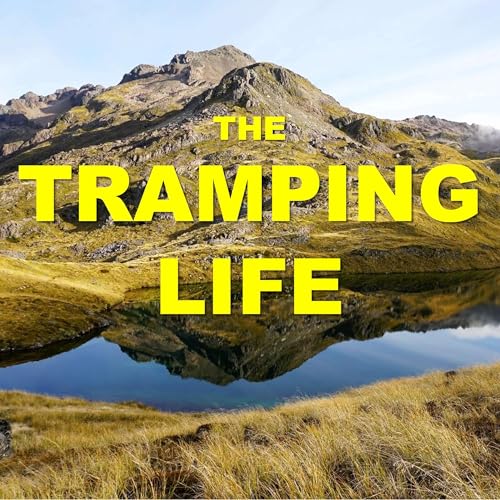
The Tramping Life cover art

The Tramping Life

The Tramping Life

Written by: Jonty
Listen for free

Conversations with people who share a deep love for exploring Aotearoa New Zealand on foot. From the well-trodden Great Walks to the rugged solitude of remote backcountry routes, our guests share their favourite hikes, huts, and hard-earned lessons from the track.


Whether you’re an experienced tramper or just curious about what makes hiking in New Zealand so special. The Tramping Life offers inspiration, practical insights, and a deeper connection to the landscapes that shape us.


#tramping #hiking #interviews #newzealand #nzhiking #hike #tramp #travel #walking #travel

© 2026 The Tramping Life
Social Sciences Travel Writing & Commentary
Episodes
  • Abel Tasman Inland Track
    May 29 2026

    In this episode of The Tramping Life, I take on the lesser-known Abel Tasman Inland Track, a 41km route through the forested spine of Abel Tasman National Park.

    While most walkers stick to the iconic Coast Track, this route heads inland—climbing to nearly 900 metres near Gibbs Hill and offering a much tougher, quieter alternative. It’s steeper, rougher, and far less scenic, but delivers something increasingly rare in New Zealand’s Great Walk network: solitude.

    I share my experience of pushing the track over two days instead of the usual three, dealing with relentless tree roots, mud, and long stretches without views. From the steady climb out of Marahau, to the tough middle section between Holyoake Clearing and Castle Rock Hut, through to a late arrival at Awapoto Hut and an early morning push over Pigeon Saddle, this is a very different side of Abel Tasman.

    We talk about:

    • What the Inland Track is really like compared to the Coast Track
    • Whether it’s worth doing (and who it’s actually for)
    • The physical demands, terrain, and hut experience
    • Practical tips for planning, including transport and logistics

    This is a track that divides opinion. It’s a solid workout and a chance to experience real quiet in a busy park—but it’s not one for views. If you’re curious about going beyond the beaches of Abel Tasman, this episode will help you decide if the Inland Track is worth your time.

    Show More Show Less
    7 mins
  • Robbie Burton - Publishing Our Tramping Stories
    May 22 2026

    Robbie Burton has spent a lifetime straddling two worlds — the wild backcountry and the world of books. The long-time co-leader of Potton & Burton, one of New Zealand’s most influential independent publishers, Robbie has also tramped and climbed across the country, including a three-month traverse of the Southern Alps from Milford to Nelson Lakes.

    In this episode, Robbie reflects on growing up free-range in Nelson, the teenage adventures that sparked his lifelong love of the mountains, and how those early experiences shaped both his outlook and his publishing career. We talk huts and hunger, heavy packs and light gear, how tramping culture has changed, and the challenges of keeping outdoor writing and photography alive in a digital world.

    It’s a conversation about wilderness, words, and why some journeys — on foot and in print — are worth taking slowly.

    Photo credit Mike Sim

    https://www.pottonandburton.co.nz/

    https://www.pottonandburton.co.nz/product/bushline/

    Show More Show Less
    28 mins
  • Rangitoto and Motutapu Island
    May 15 2026

    In this episode of The Tramping Life, we head somewhere few people associate with overnight tramping — Auckland. Just 25 minutes by ferry from the city lies Rangitoto and neighbouring Motutapu Island — two contrasting islands that combine volcanic geology, conservation success, military history and classic Kiwi bach culture.

    Rangitoto, Auckland’s youngest and largest volcano, erupted around 600 years ago, forming a 23km² island of jagged lava fields and pōhutukawa forest — the largest pōhutukawa forest in the world. Scattered along its shores are more than 100 historic baches, built mainly in the 1920s and 30s. Three have been restored by the Rangitoto Island Historic Conservation Trust, including Bach 78 at Islington Bay — a simple, character-filled place to spend the night.

    From the 259m summit of Rangitoto there are expansive views across the Hauraki Gulf and back to Auckland’s skyline. Staying overnight transforms the experience — sunset without the ferry crowds, ruru calling in the dark, and birdsong on the walk back down Summit Road.

    Across the causeway lies Motutapu — older, farmed, and historically rich. Once occupied by Māori prior to Rangitoto’s eruption, later a venue for large Victorian-era picnics, and heavily fortified during World War II, it now hosts extensive native restoration led by the Motutapu Restoration Trust. Over 500,000 trees have been planted, and both islands are now pest-free sanctuaries supporting takahē, saddleback, kererū, pīwakawaka and ruru.

    On this trip I stayed twice at Bach 78, walking the more rugged Coastal Track to Islington Bay, watching sunset from a deserted summit, and exploring Motutapu’s rolling hills, WWII remains, Home Bay campsite, and Emu Point. The contrast between Rangitoto’s raw volcanic terrain and Motutapu’s pastoral hills is striking — two distinct landscapes joined by a narrow causeway.

    Rangitoto and Motutapu offer a rare combination: accessible, affordable, logistically simple — yet quiet, scenic and historically layered. An overnight here feels far removed from the city, despite being within sight of it.

    Show More Show Less
    7 mins
adbl_web_anon_alc_button_suppression_c
No reviews yet