• Stop Automating Bad Sales: Use AI to Win More B2B Deals
    Oct 13 2026
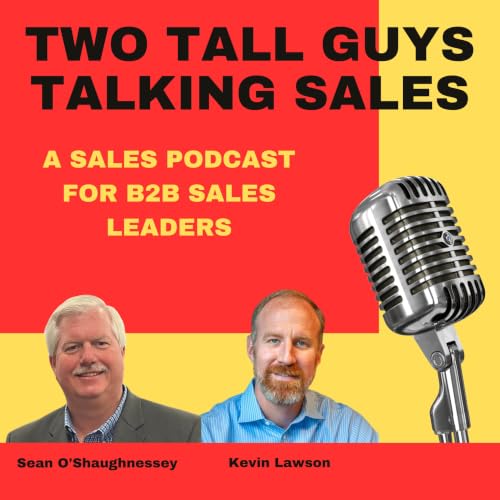
    Artificial intelligence is changing B2B sales, but using AI to send more automated emails or accelerate ineffective sales processes misses the real opportunity. What if AI could help you understand your customers more deeply, identify hidden opportunities in your pipeline, and deliver the kind of personalized attention that once defined great customer relationships? In this episode of Two Tall Guys Talking Sales, hosts Kevin Lawson and Sean O'Shaughnessey explore how AI is transforming sales research, account planning, and customer engagement. From analyzing CRM data to creating customer-specific presentations and uncovering revenue opportunities, Kevin and Sean share practical sales strategies that help salespeople work smarter, strengthen relationships, and win more business without sacrificing the human connection that drives sales success. Key Topics Discussed 00:00 – AI as a Sales Assistant, Not an Automated Salesperson: Kevin explains why the greatest value of artificial intelligence comes from helping salespeople research, analyze, and make better decisions. Discover why automating ineffective outreach with AI just creates more noise, while human-in-the-loop automation can improve customer engagement and sales effectiveness. 01:43 – Bringing Back Personalized Selling with AI: Sean draws a fascinating parallel between the neighborhood general stores of the early 1900s and today's AI-enabled sales environment. Learn how generative AI lets you recreate highly personalized customer relationships at scale, tailoring messaging, presentations, and conversations to each buyer's specific needs and business challenges. 05:46 – Using AI and CRM Data to Find Hidden Sales Opportunities: Kevin shares real-world examples from HubSpot, Zoho, and Pipedrive that demonstrate how AI can identify qualification gaps, analyze historical wins and losses, and reveal overlooked opportunities. These insights improve sales management, sharpen pipeline prioritization, and help salespeople spend their limited customer-facing time on activities that actually produce revenue. 08:36 – Turning Annual Reports into Powerful Sales Intelligence: Sean demonstrates how B2B sales professionals can use AI tools such as ChatGPT, Claude, and Gemini to analyze corporate 10-K reports and SEC filings. Discover how to identify a prospect's business priorities, uncover challenges relevant to your solution, and develop compelling, customer-specific presentations that emphasize value selling rather than generic product pitches. 11:46 – AI-Powered Account Planning for Smaller Businesses: You don't need Fortune 500 customers to benefit from AI-driven sales strategies. Kevin explains how analyzing 24 months of internal sales data can uncover product trends, pricing pressures, growth opportunities, and customer risks. Learn how to turn ordinary quarterly business reviews into strategic conversations that strengthen relationships, boost revenue, and differentiate your company from competitors. Key Quotes Kevin Lawson (01:35): "This is you getting more out of your selling day by using AI as a tool, not as a silver bullet." Sean O'Shaughnessey (04:12): "Because you have this amazing sidekick sitting beside you all the time, keeping track of all the details, keeping track of all the wisdom, researching every single thing that's going on in the company." Kevin Lawson (07:38): "This is effectiveness over efficiency." Sean O'Shaughnessey (11:26): "It's gonna be about how you are going to help your customer solve their problems." Kevin Lawson (13:29): "So when you're thinking about using AI, think about the story you're gonna tell about the insight that you've derived with your AI-assisted sales enablement." Additional Resources The following tools and information sources are discussed in the episode: ChatGPT, Claude, and Google Gemini: Generative AI platforms that can assist with customer research, document analysis, account planning, and personalized sales presentations. HubSpot, Zoho, and Pipedrive: CRM platforms discussed as examples of how AI can help salespeople analyze opportunities, identify qualification gaps, and improve sales processes. SEC Form 10-K and Form 8-K: Public company filings that provide information about business performance, strategic priorities, financial risks, and significant corporate developments. A Significant Actionable Item from this Podcast Use AI to uncover five actionable insights about one important customer before your next sales conversation. Choose an active customer or prospect with an upcoming meeting. If the company is publicly traded, obtain its latest 10-K and relevant recent SEC filings. If you're working with a smaller, privately held customer, consider your company's internal sales history for that account, including purchasing patterns, product mix, and pricing trends. Use an appropriate AI tool to analyze the information and identify five insights that could influence the customer's ...
    Show More Show Less
    17 mins
  • Your Sales Comp Plan May Be Killing Revenue Growth
    Oct 6 2026
    What happens when your best salesperson hits quota in October? A poorly designed compensation plan may quietly tell them to slow down. In this episode of Two Tall Guys Talking Sales, Kevin Lawson and Sean O'Shaughnessey examine why sales compensation accelerators can be one of the most profitable tools available to a sales leader. They break down the economics behind above-quota sales, explain why fixed costs make incremental revenue especially valuable, and challenge the common fear that high-performing salespeople can somehow be "paid too much." For CEOs, CFOs, sales managers, and any VP of Sales preparing next year's compensation plan, this conversation connects sales management, revenue management, sales motivation, and business valuation in a very practical way. Key Topics Discussed Why Sales Compensation Plans Need Accelerators — 00:49 Sean opens the discussion with a simple problem: once a salesperson reaches quota, what reason have you given them to keep selling? A flat commission structure can unintentionally create a ceiling. Properly designed accelerators reverse that incentive, giving salespeople a financial reason to keep pushing beyond 100% rather than protecting deals for the next compensation period. Incentivize the Outcomes the Business Actually Needs — 03:08 Kevin argues that compensation should do more than reward revenue. It should reinforce the sales strategies that matter to the business. If existing customers will continue buying with relatively little selling effort, paying disproportionately for those transactions may not produce the growth the company needs. Sales processes and compensation design can deliberately incorporate net-new logos, incremental growth, renewals, or other strategic outcomes. Why Above-Quota Revenue Can Be Exceptionally Profitable — 05:24 Sean explains the financial logic behind accelerators. By the time the company reaches its planned revenue target, much of its fixed-cost structure—base salaries, benefits, rent, and other operating expenses—has already been covered. In businesses with low incremental delivery costs, additional revenue can therefore carry significantly higher margins. Paying a salesperson a higher commission rate on that additional business can still generate substantially more profit for the company. Using Compensation Tiers to Drive Sales Success — 07:08 Salespeople tend to be competitive and goal-oriented. Sean describes how graduated accelerators at levels such as 80%, 100%, 120%, and even 140% of quota give sellers another target to pursue. Instead of compensation becoming static once quota has been achieved, the plan creates another scoreboard. That makes the compensation plan part of the company's broader Sales Enablement system, not merely an accounting mechanism. Stop Worrying That Top Salespeople Are Making "Too Much" — 08:27 Kevin challenges one of the most persistent assumptions in sales management: that a high commission check means the company is overpaying the salesperson. If the compensation structure is properly modeled, exceptional variable compensation should indicate exceptional company performance. The more important questions are whether the seller is generating profitable revenue, whether the plan rewards the right behaviors, and whether the economics work for the business. Better Sales Systems Can Increase Enterprise Value — 10:14 Compensation design does not exist in isolation. Kevin connects the comp plan to the sales playbook, marketing, company objectives, customer acquisition costs, customer lifetime value, and the larger operating model. A more intentional and predictable selling system can create a more efficient company—and potentially a more valuable one. Key Quotes Kevin Lawson — 03:08 "Incentivize the outcomes you want." That may be the episode's central principle. Compensation is not simply how a company divides up the money after a sale. It is a management system that tells sellers which results matter most. Sean O'Shaughnessey — 07:08 "You can actually afford to pay more money on your variable compensation…because it's going straight to your bottom line." Sean's point reframes accelerators as an investment in profitable incremental revenue rather than simply an additional sales expense. Kevin Lawson — 04:43 "If there's no additional trophy case winnings for going over quota, they'll stop." The language is colorful, but the management lesson is serious: once the economic incentive disappears, leaders should not be surprised when discretionary selling effort disappears with it. Sean O'Shaughnessey — 07:30 "They want to achieve the next goal. They want to make the next score." An effective compensation plan gives high performers somewhere else to go after they reach quota. Additional Resources Sean references several pieces of research supporting the use of sales accelerators and the risks associated with flat commission structures: Do Bonuses Enhance Sales Productivity? A ...
    Show More Show Less
    16 mins
  • Find Hidden Revenue in Existing Accounts: White-Space Analysis for B2B Sales
    Sep 29 2026
    Most sales organizations are surrounded by useful customer data, but too often, they only examine it after something goes wrong. In this episode of Two Tall Guys Talking Sales, hosts Kevin Lawson and Sean O'Shaughnessey explore a more proactive approach to B2B sales management: using white-space analysis, customer segmentation, executive relationships, and disciplined account reviews to uncover untapped revenue generation opportunities. From identifying products an existing customer should buy to building stronger connections across the buying committee, Kevin and Sean show how better business acumen and smarter sales processes can turn ordinary account management into a repeatable sales success strategy. They also discuss how AI and workflow automation can capture customer conversations, distribute action items, and help the entire company contribute to value selling. Key Topics Discussed Why Sales Leaders Need Data to Find Them — 00:00 A VP of Sales cannot possibly know every detail about every active account, customer, and opportunity. Kevin explains why effective sales management requires systems that surface meaningful insights rather than forcing leaders to continually hunt through spreadsheets, CRM records, and individual deals to discover what has changed. Using White-Space Analysis to Increase Wallet Share — 01:59 Kevin walks through a practical method for comparing the purchasing behavior of an ideal client against similar customers. If strong customers consistently allocate a predictable percentage of their purchases across several product lines, those patterns can expose missing revenue opportunities. The zeroes—and unusually small percentages—are often where the opportunity begins. Finding Revenue Beyond Your Core Offering — 04:06 White space does not have to mean simply selling more of the existing catalog. Kevin shares an example in which becoming proficient at sourcing difficult-to-find products helped a supplier become a vendor of choice. The customer reduced the complexity of managing multiple vendors, while the seller created additional revenue and potentially higher-margin business. Segmenting Customers and Creating an Executive QBR Strategy — 05:20 Sean recommends categorizing customers into A, B, and C groups based on their available revenue potential—not merely what they currently purchase. The largest and most strategic accounts should have relationships extending beyond the AE or account owner. CEOs and other executives should engage top-tier customers, while the VP of Sales and salespeople systematically build relationships with the next tiers. Turn Customer Reviews Into a Program, Then Use AI to Capture the Learning — 09:23 A customer review should not be an occasional sales tactic. Sean argues that it should become an institutional sales process, reviewed by executive leadership and supported across the company. Record the meetings, use AI to produce transcripts, extract action items, and route those insights to sales, marketing, supply chain, operations, or anyone else who can improve the customer relationship. This is workflow automation applied directly to sales enablement and customer retention. Map the Relationship White Space Inside Complex Accounts — 11:54 Product white space is only one dimension of account growth. Kevin recommends analyzing relationship white space as well: Who is above your current contact? Who reports to them? Who could be promoted, transferred, or become part of the future buying committee? In enterprise sales and other complex deals, understanding those relationships creates augmented sales intelligence that can protect an account and uncover additional opportunities. Key Quotes Kevin Lawson — 03:36 "Insights is what we're after here." That sentence captures the larger point of the episode. Data alone has limited value. Sales success comes from turning customer information into insight that changes the next conversation, next question, or next sales strategy. Sean O'Shaughnessey — 09:23 "This needs to be a program, not a project, not a one-off." Sean's distinction matters because customer intimacy cannot depend on individual initiative. QBRs, account development, relationship building, and follow-through need to become part of the operating rhythm of the company. Kevin Lawson — 11:54 "Do the white space analysis on what they're not buying." The most useful sales opportunities may already exist inside your customer base. Instead of immediately searching for another prospect, examine where existing customers are underpenetrated—and determine whether there is a legitimate value-based reason to expand the relationship. Additional Resources Ideal Client Profile Analysis — Use your strongest representative customer as a benchmark for understanding expected purchasing patterns across products, services, locations, units, or other meaningful customer dimensions. White-Space Analysis — Compare what customers currently ...
    Show More Show Less
    17 mins
  • Stop Chasing More Leads: Turn Your Quote Backlog Into Revenue
    Sep 22 2026
    Sales organizations often assume that revenue growth starts with finding more leads. Kevin Lawson and Sean O'Shaughnessey challenge that assumption in this episode of Two Tall Guys Talking Sales. For manufacturers, distributors, and other B2B companies that generate a high volume of quotes, substantial revenue may already sit in the existing pipeline—buried under unanswered proposals, unclosed opportunities, and customers whose buying behavior has never been analyzed. Kevin and Sean break down how disciplined sales management, internal service-level agreements, quote follow-up, and wallet-share analysis can turn an overlooked quote backlog into a practical revenue generation strategy. Key Topics Discussed Sometimes You Don't Need More Leads—You Need to Manage the Ones You Have — 01:01 Before spending more money on lead generation, examine the opportunities already sitting inside the business. Existing customers and prospects have already raised their hands, requested pricing, or engaged with the sales process. Sean explains why even modest improvements in follow-up and wallet share can create meaningful sales success without adding another prospect to the top of the funnel. The issue may not be lead volume. It may be sales process discipline. Sending a Quote vs. Presenting a Quote — 02:21 Not every quote deserves the same sales strategy. A simple transactional request may warrant sending pricing and establishing a follow-up reminder. A larger opportunity involving a buying committee, multiple stakeholders, or a more complex decision should be handled very differently. Sean argues that sellers should present significant proposals rather than merely emailing them, using the conversation to reinforce value selling, business impact, and the reasons the customer should choose their company. Most importantly, the AE should leave that conversation with the next meeting already scheduled. Build Internal SLAs Around Quote Response and Follow-Up — 05:09 Kevin challenges sales leaders to establish clear internal service-level agreements for quote handling. How quickly should an inbound request be acknowledged? When should the salesperson respond? At what dollar value does a quote require a presentation instead of an email? When should operations, delivery, or finance become involved? These rules create measurable sales processes instead of relying on individual habits. With CRM, email, and phone activity connected through the sales tech stack, leaders can measure response time, conversion, staffing requirements, pipeline velocity, and coaching opportunities rather than managing by anecdote. Stop Being a Quote Factory: Measure the Cost of Customers Who Rarely Buy — 08:43 One of Kevin's favorite measurements exposes a hidden revenue management problem: customers who consume enormous quoting resources but rarely purchase. He describes a client whose supposedly valuable customer requested roughly 30 quotes per day, each requiring about 15 minutes of work, while converting only a tiny percentage into orders. That data changed the conversation. Instead of assuming the account was valuable because it was active, leadership could see the administrative burden it created and ask the customer how the supplier could become a stronger vendor partner. This is exactly the kind of analysis that can expose opportunities to reduce non-selling activities while improving revenue. Use Quote Win Rates to Estimate Wallet Share and Find Growth Opportunities — 10:52 Many companies cannot answer a basic account-management question: what percentage of the customer's category spend do we actually receive? Sean builds on Kevin's example to show how quote activity can provide an important clue. If a customer asks for dozens of quotes but awards very few orders, competitors are probably capturing much of that spend. At the opposite extreme, if the company wins nearly every opportunity it receives but is never invited to quote other product categories, that can signal another kind of growth opportunity. Both conditions deserve deliberate account strategy from the VP of Sales or sales leader. Turn Quote Data Into Better Sales Leadership Decisions — 12:20 The objective isn't merely cleaner CRM data. Quote conversion patterns can tell a sales leader where coaching is needed, which customers deserve more attention, which accounts consume disproportionate resources, and where cross-sell opportunities may exist. That creates a more informed approach to enterprise sales and account development: identify the anomaly, understand why it exists, and decide what the sales team should do differently. Key Quotes Kevin Lawson — 01:01 "Sometimes you don't need any more leads. Let that sink in. Sometimes you don't need more leads. Sometimes you need to do a better job of managing the ones you have." Sean O'Shaughnessey — 02:44 "There's a big difference between sending a quote and presenting a quote." Sean O'Shaughnessey — 03:42 "You do ...
    Show More Show Less
    18 mins
  • Why Qualified B2B Deals Still Fall Apart: MEDDPICC, Economic Buyers, and Buying Committees
    Sep 15 2026
    Filling every box in MEDDPICC does not mean you actually understand the deal. In this episode of Two Tall Guys Talking Sales, Kevin Lawson and Sean O'Shaughnessey dig into one of the most dangerous problems in B2B sales: confidently believing you have identified the economic buyer, decision process, decision criteria, and business impact—only to discover late in the cycle that your assumptions were wrong. From complex deals and buying committees to stalled proposals and hidden influencers, Sean and Kevin explain why qualification is not a CRM exercise. It is an ongoing discipline that demands business acumen, better questions, and the willingness to challenge what you think you know. Key Topics Discussed MEDDPICC Is Only as Good as the Answers You Put Into It — 00:23 Sean explains why qualification frameworks such as MEDDPICCC, BANT, and SPICED can create false confidence. Completing the fields is not the same as validating them. In Enterprise Sales and other complex deals, getting one critical assumption wrong—especially the economic buyer or decision process—can derail the entire opportunity. The Economic Buyer vs. the Person Managing the Budget — 04:59 Kevin explores the distinction between someone who manages a budget and someone who can actually authorize a purchase. Using examples ranging from fleet fuel to professional services, he shows why strong sales strategies require follow-up questions about authority, contracting, procurement, and how decisions actually get made. Discovery Does Not End When the CRM Stage Changes — 08:20 Sean challenges the conventional sales process assumption that discovery is an early-stage activity. Effective salespeople keep testing their assumptions throughout the opportunity. The goal is to continually verify that the information remains accurate as the buying committee and deal evolve. Follow the Business Impact to Find the Real Power — 08:58 The economic buyer may control the money, but the executive or department receiving the business benefit can have enormous influence over the purchase. Sean explains how metrics such as reduced selling time, increased deal size, lower supply-chain costs, or stronger ROI can show which stakeholders need to join the conversation. This is where value selling and business acumen become essential. When the Deal Stalls, Reopen Qualification — 12:05 A proposal has been sent. A week passes. Then another. Silence. Kevin explains why being ghosted should trigger a review of the opportunity rather than another generic follow-up email. Reassess the person, the impact, and the decision process—and have the courage to admit that you may have missed something. Getting Better Sales Coaching Outside the Forecast Call — 13:11 Sean discusses the value of having experienced salespeople and sales leaders available to challenge assumptions before a deal falls apart. For AEs, sales managers, and VPs of Sales, stronger coaching can improve qualification discipline, pipeline velocity, and ultimately sales success. Key Quotes Sean O'Shaughnessey — 01:16 "If you know the correct answer, you almost always will know if you can win the deal, if you will win the deal, and also if you shouldn't win the deal because you're not a good fit." Kevin Lawson — 07:41 "Mastering it can take a lifetime." Kevin compares professional selling to golf: the basic mechanics are easy to understand, but consistently executing the right sales processes and asking the next question takes years of disciplined practice. Sean O'Shaughnessey — 08:20 "Discovery happens throughout the sales process." That distinction matters. Discovery is not something you complete and leave behind. In complex B2B opportunities, every new stakeholder, metric, objection, and approval step can change your understanding of the deal. Kevin Lawson — 13:05 "Take the 30 seconds of courage and ask the question." Sometimes deal acceleration does not require another sales tool or a more sophisticated message. It requires asking the uncomfortable question that exposes what you missed. Additional Resources MEDDPICCC — A qualification methodology frequently used in Enterprise Sales and complex deals to examine metrics, the economic buyer, decision criteria, decision process, pain, champions, competition, and other critical elements of an opportunity. BANT — A simpler qualification framework focused on budget, authority, need, and timing. SPICED — Another structured approach to understanding customer situations, pain, impact, critical events, and decision-making. B2B Sales Lab — A community where sales professionals and sales leaders can discuss real opportunities, sales management challenges, sales strategies, and execution issues with other practitioners. Visit b2b-sales-lab.com. September 22 B2B Sales Lab Office Hours — Sean and Kevin invite listeners to attend this session without becoming a member, giving salespeople and sales leaders an opportunity to bring ...
    Show More Show Less
    18 mins
  • Hit 120% of Quota: Manage Your Sales Territory Like a Business
    Sep 8 2026
    What if the biggest obstacle to hitting your sales quota isn't your territory, your product, or even your competition, but the way you manage yourself? In this episode of Two Tall Guys Talking Sales, Kevin Lawson and Sean O'Shaughnessey challenge sales professionals to stop thinking only like employees and start managing their territories like businesses. They break down the numbers every seller should know, explain why CRM discipline directly affects sales success, and show how average deal size, selling effort, close rates, and opportunity quality should drive daily decisions. For B2B sellers who want stronger business acumen, better sales processes, faster pipeline velocity, and more predictable revenue, this episode offers a practical framework for becoming the manager your territory needs. Key Topics Discussed Being Your Own Sales Manager — Not Just Your Own Boss (00:00) Kevin and Sean draw an important distinction between thinking like a business owner and actually managing yourself like one. Sean introduces the idea of treating your sales territory as your own franchise: the company provides the products and infrastructure, but you are responsible for how effectively that territory produces revenue. That mindset changes sales management from something your VP of Sales does to you into something you actively do for yourself. Define What a Successful Day Looks Like Before It Starts (02:48) Before the first call, email, meeting, or prospecting activity, Sean argues that a salesperson should know exactly what must happen for the day to count as successful. Sometimes that means completing an important proposal or responding to customer questions. Other days require prospecting, building pipeline, or starting new conversations. Effective sales strategies start with consciously allocating limited time and attention to the activities that matter most. Know Your Numbers—and Manage Beyond 100% of Quota (03:56) Kevin connects strong sales management to systems and controls: the system determines how the work gets done, while the controls tell you whether it is working. Sellers should know their quota, compensation structure, average deal size, close rate, customer concentration, territory concentration, and other performance metrics. More importantly, Kevin makes the case for planning toward 120% of quota rather than 100%, because salespeople can't fully control when complex deals close. That buffer is risk management, not optimism. Understand the True Cost of Winning a Deal (07:01) Sean goes beyond average deal size and introduces the idea of the "average transaction"—the total selling effort necessary to create that deal. How many meetings were required? How much time did those meetings consume? Did the opportunity begin through a referral, inbound inquiry, networking connection, or cold prospecting? When sellers understand the actual investment required to generate revenue, they can begin making better ROI decisions about where their selling time belongs. If the current activity model mathematically cannot produce quota attainment, working harder is not the answer. The assumptions or sales processes need to change. CRM Data Hygiene as a Competitive Advantage (10:41) CRM administration is often treated as an annoying non-selling activity. Kevin challenges that assumption directly. Good CRM data helps sellers understand where deals stall, where they lose, how often opportunities convert from particular stages, and whether the next step actually advances the buying process. Better information creates better coaching, stronger opportunity qualification, and potentially significant sales productivity gains. In that sense, reducing sales administrative burden should never mean eliminating the information needed to manage the business intelligently. The Next Step Must Describe Progress—not Just Another Meeting (13:22) "Schedule another meeting" is not a meaningful next-step opportunity. A legitimate next step describes what needs to be accomplished: confirm several requirements before preparing a proposal, identify the economic buyer, re-scope the solution, or determine whether a proof of concept makes sense. That level of specificity creates accountability and helps sellers manage complex deals based on evidence, not enthusiasm. Key Quotes Kevin Lawson (00:00): "Being your own manager is not the same as being your own boss." Sean O'Shaughnessey (02:12): "You are a franchisee of your territory, selling those products… You own it. You need to run it." Kevin Lawson (05:50): "You should always be planning to exceed your quota, not just hit it, 'cause you're managing risk." Sean O'Shaughnessey (09:23): "If you cannot make your number by working hard and doing all the things correctly… then you gotta change some of those assumptions." Kevin Lawson (11:16): "If you're in the camp of saying, 'I don't wanna put information in my CRM,' you're gonna get outsold by your competition." Additional Resources B2B ...
    Show More Show Less
    17 mins
  • Stop Chasing More Pipeline: How to Win More B2B Sales Deals
    Sep 1 2026
    Most salespeople do not lose because they cannot make the spectacular play. They lose because they miss the layups. In this episode of Two Tall Guys Talking Sales, Kevin Lawson and Sean O'Shaughnessey challenge the conventional wisdom that sales success requires ever-larger pipelines and more activity. Instead, they make the case for disciplined sales processes, tighter qualification, faster follow-up, stronger business acumen, and a relentless focus on the opportunities you should actually win. If your sales management system assumes that closing 20% or 30% of your pipeline is normal, this conversation may force you to rethink the math. Key Topics Discussed 00:25 – Stop Missing the Sales "Gimmes" Sean uses basketball free throws and layups to illustrate one of the simplest—and most expensive—problems in B2B sales: failing to execute the obvious fundamentals. Responding quickly to a prospect, writing a compelling follow-up email, providing requested information, and introducing the right customer reference are not advanced sales strategies. They are basic execution. Consistently missing them creates unnecessary friction, slows pipeline velocity, and costs revenue generation. 03:04 – Build Your Pipeline Around High-Probability Opportunities Kevin introduces an 80%, 90%, and 95% framework for thinking about ICP fit and opportunity quality. Salespeople often become enamored with "whale" opportunities that resemble half-court shots while neglecting the prospects with strong product-market fit, clear buying signals, and obvious need. Whether you are an AE, SDR, VP of Sales, or working inside RevOps, the question is the same: how much of your pipeline consists of deals you genuinely have a right to win? 06:27 – Rationalize the Pipeline and Get Out of Bad Deals Pipeline management should not be an exercise in protecting inflated opportunity counts. Kevin argues for something more disciplined: determine whether you belong in each deal. Do you understand the economic buyer, the decision process, the decision criteria, the goals, and the fit? If not, either develop that understanding or leave the opportunity. Better sales management means removing bad deals rather than pretending weak opportunities will somehow convert. 08:28 – Why 3X, 4X, and 5X Pipeline Coverage Can Hide a Bigger Problem Sean challenges one of the most common assumptions in revenue management: that every salesperson needs three, four, or even five times quota sitting in the pipeline. Five-times coverage implies an expected close rate of roughly 20%. Instead of celebrating pipeline volume, sales leaders should ask why such a low conversion rate is considered acceptable. Better qualification, value selling, messaging, and ICP discipline can create a smaller but dramatically more productive pipeline. 11:26 – A 90% Close Rate Is Not Fantasy—If You Measure It Correctly Kevin draws an important distinction: the close-rate calculation should begin after meaningful discovery and qualification. A prospect should not move into proposal or scoping simply because someone wants a quote. If you do not understand the economic buyer, business goal, impact, and buying conditions, the deal has not earned advancement. This is where sales enablement and process discipline become more valuable than simply increasing activity. 12:40 – Improve Your Close Rate Before Lunch Tomorrow The episode finishes with highly practical execution. Define the next step. Prepare properly for the next meeting. Document customer goals. Brief internal participants. Send the buyer an agenda. Clarify what must happen next. In complex deals involving a buying committee or an Enterprise Sales environment, seemingly small actions build trust, surface weak opportunities earlier, reduce non-selling activities later, and improve B2B sales pipeline predictability. Key Quotes Sean O'Shaughnessey – 02:25 "Are you doing the simple things well?" That question cuts through a tremendous amount of sales-tech noise. Artificial intelligence, workflow automation, conversational intelligence, predictive analytics, and an increasingly complicated sales tech stack can improve sales productivity—but none of them compensate for poor execution of the fundamentals. Kevin Lawson – 06:27 "Am I in the right deals or am I in the wrong deals?" That may be one of the most important questions in pipeline management. Better revenue management begins by distinguishing real opportunities from deals that merely make the CRM look healthy. Sean O'Shaughnessey – 08:28 "I like lazy salespeople." Sean's point is deliberately provocative: great salespeople should not have to brute-force their way to quota. They know what they sell, who should buy it, the value it creates, and which opportunities deserve their time. That clarity creates a better ROI from every hour sold. Kevin Lawson – 12:02 "What we're talking about here is discipline to the selling process, not trying to rush to the quote." That ...
    Show More Show Less
    18 mins
  • When to Walk Away From a Sales Deal: Stop Wasting Time on Bad Opportunities
    Aug 25 2026
    There is a hidden cost in every sales pipeline: the deals that consume time, attention, and internal resources without a compelling reason to remain there. In this episode of Two Tall Guys Talking Sales, Kevin Lawson and Sean O'Shaughnessey challenge B2B salespeople to stop treating every opportunity as something that deserves to be won. They examine how strong sales management starts with deciding where your time creates the greatest return, recognizing opportunities outside your "deal box," and knowing when walking away can actually improve revenue generation and pipeline velocity. If you are an AE, SDR, VP of Sales, or sales leader trying to improve sales productivity and B2B sales pipeline predictability, this conversation provides a disciplined way to distinguish a difficult deal worth fighting for from a bad deal that should never have been in the pipeline. Key Topics Discussed 01:46 – Your Prospects Must Earn the Right to Be in Your Pipeline Kevin introduces a powerful reversal of the traditional sales mindset: salespeople are trying to earn a buyer's business, but prospects must also earn the seller's time investment. A large opportunity is not automatically a good opportunity. Strong sales strategies require evaluating whether the potential customer fits the company's capabilities, economics, customer mix, and broader revenue management priorities. 03:02 – Understanding Your "Deal Box" Not every revenue-generating opportunity fits the business. Kevin describes the "deal box"—the characteristics that define the opportunities your company is best positioned to win, serve, and grow. An account buying only a peripheral product may appear attractive because of margin, but if maintaining that customer consumes disproportionate resources or offers little expansion potential, the ROI may be poor. Effective sales processes require looking beyond the initial transaction. 05:32 – Evaluate the Account, Not Just the Current Opportunity Sean expands the discussion from deal planning to account planning. Is this a company with which you want a long-term relationship? Can the account support additional revenue generation? Does pursuing this opportunity advance your territory strategy, or is it simply consuming time that could be better spent on higher-value prospects? Business acumen and value selling require evaluating both the immediate deal and the economic potential of the relationship behind it. 07:51 – Use the One-on-One Sales Meeting for Deal Decisions A salesperson should not quietly abandon a questionable opportunity. Sean explains why these situations belong in a one-on-one sales management conversation. Bring the evidence to your manager, explain why the opportunity may no longer justify the investment, and ask whether you are missing any strategic information or coaching. A strong VP of Sales or sales manager may confirm that the opportunity deserves more resources—or agree that those resources should be redirected elsewhere. 08:47 – How to Withdraw Without Burning the Relationship Walking away does not require an adversarial conversation. Sean describes a direct approach: tell the buyer you are questioning whether your company is truly the best fit and invite them to explain why you should remain involved. That creates an unusual moment of honesty. The prospect may confirm that you should exit—or reveal information about the buying committee, competitive position, internal priorities, or stalled decision process that changes your understanding of the opportunity. 11:14 – Divide Your Pipeline Into Three Categories Kevin closes with a practical pipeline exercise. Identify the deals you most want to win, the deals you want but have the lowest probability of winning, and the opportunities that have no legitimate reason to remain in your pipeline. Those groups require three different responses: deal planning, sales coaching, and an exit strategy. That discipline improves pipeline velocity, sales productivity, and ultimately sales success. Key Quotes Kevin Lawson – 01:46 "Your prospects need to earn the right to be in your pipeline." That statement reframes pipeline management. Opportunity volume is not the objective; productive allocation of selling resources is. Sean O'Shaughnessey – 06:33 "Your job as a salesperson is to maximize the revenue coming from your territory, however you define your territory." That means evaluating opportunity cost, not merely asking whether a particular deal could eventually close. Sean O'Shaughnessey – 08:47 "I'm not sure that we're a perfect fit for what you're trying to accomplish." Sometimes the most effective messaging is a willingness to disqualify yourself. The buyer's reaction can expose information that months of conventional follow-up failed to uncover. Kevin Lawson – 11:33 "Which of these do I most want to win? And which of these deals do I think are least likely for me to win?" Those are different questions, and confusing them leads ...
    Show More Show Less
    17 mins