• Episode 030: Who Are You Without Performance
    Jan 27 2026

    Performance does not always look dramatic. Most of the time it is subtle. It is being on when you are tired, reading the room before you speak, adjusting your tone to fit what is expected, and being capable, composed, and reliable.

    When those traits get rewarded, performance can start to feel like who you are, not something you do.

    In this episode, Jennifer explores a deeper question: who are you when you are not performing, producing, proving, or holding everything together. You will hear a grounded reframe that performance is often adaptation and nervous system regulation, not a flaw. And you will be invited back into identity as something you inhabit, not something you earn.

    What You Will Learn
    • How performance becomes an identity, not just a behavior

    • Why performance is adaptation, not authenticity

    • The nervous system reason high achievers stay in self monitoring mode

    • Why rest can feel undeserved when identity is fused with output

    • The difference between optimization and integration

    • How to begin loosening the grip of performance without losing competence

    Key Takeaways (Quick Scan)
    • Performance is not authenticity. It is adaptation.

    • A role can be useful without being your essence.

    • Performance is often regulation, not manipulation.

    • When identity fuses with output, rest feels undeserved.

    • You are not your output, usefulness, or consistency.

      Reflection Prompts
      • Who are you when no one needs anything from you

      • Who are you when there is nothing to prove

      • What parts of you only surface when the pressure drops

      • What might it be like to let those parts have more space

      If this opened something for you, Jennifer created a gentle tool called the Identity Audit.

      It helps you see which patterns are currently organizing your choices and where there might be space for something more aligned.

      No pressure, Just an invitation.

    Show More Show Less
    11 mins
  • Episode 029: Niceness vs Integrity
    Jan 20 2026

    Being nice gets rewarded early. It keeps things smooth, makes you easier to like, and helps you avoid conflict. For high achieving women, niceness can become a social skill that turns into an identity. But niceness is not the same as kindness. Kindness comes from care. Niceness often comes from approval.

    In this episode, Jennifer breaks down how niceness can quietly shrink your voice, create resentment, and keep your power muted. You will also hear a grounded reframe: you do not need to become harsh to be honest. The invitation is integrity, the ability to be respectful and clear without abandoning yourself.

    What You Will Learn

    The difference between kindness, niceness, and integrity How niceness shows up as self editing, over explaining, and softening your truth Why niceness often forms as conditioning, not personality How people pleasing aligns with the fawn response in stress research Why agreeable people can be perceived as warm but not always influential How integrity builds trust over time and returns your energy.

    Key Takeaways (Quick Scan)

    Kindness comes from care. Niceness often comes from approval. Niceness preserves harmony short term. Clarity builds trust long term. People pleasing is often regulation, not manipulation. Integrity is honesty plus respect. You do not have to keep shrinking your truth to stay connected.

    Reflection Prompts:
    Where have you been choosing niceness over honesty?
    Where do you soften your truth to keep the peace?
    What conversations do you keep rehearsing but never have?
    What might change if you trusted that clarity would not cost you connection?

    If this resonated, Jennifer created a gentle reflection tool called the Invisible Rule Book Reset. It helps you uncover the quiet rules you have been living by and decide which ones you are ready to release. No pressure. Just an invitation.

    Show More Show Less
    11 mins
  • Episode 28: Independence Isn’t Freedom
    Jan 13 2026

    Independence is celebrated, especially for high achieving women. Being capable, self sufficient, and not needing anyone can look like strength. But independence is not always freedom. Sometimes it is armor. In this episode, Jennifer explores how independence often forms early as a necessity, not a preference. When support felt inconsistent, conditional, or disappointing, self reliance became the safest option. Over time, that strategy can quietly harden into hyper independence, which can protect you from disappointment while also isolating you from connection. You will hear a grounded reframe: strength is not the absence of need. Strength is the ability to choose support without losing yourself. What You Will Learn: Why independence can be a survival strategy, not a personality trait How independence can become armor that avoids vulnerability The difference between loud loneliness and quiet loneliness Why hyper independence is often nervous system regulation, not stubbornness The three needs humans require for resilience: autonomy, competence, connection A clean distinction: independence protects you; freedom expands you Key Takeaways (Quick Scan) Independence is not the same as freedom. For many women, independence formed early as necessity, not preference. Hyper independence can be a nervous system strategy that reduces uncertainty. Resilience is built through autonomy, competence, and connection together. Freedom means choosing support without surrendering your power.

    Show More Show Less
    11 mins
  • Episode 27- Perfectionism Is Avoidance (Not Excellence)
    Jan 6 2026

    Perfectionism often looks like discipline, excellence, and “high standards”, especially for high-performing women. But underneath, it’s frequently a form of avoidance: a nervous system strategy designed to create certainty before safety.

    In this episode, Jennifer breaks down the difference between excellence and perfectionism, why perfectionism can feel responsible (even noble), and the hidden costs: stalled momentum, delayed visibility, and an identity that gets tethered to outcomes and approval. You’ll also hear a grounded reframe: pressure narrows behavior, while safety expands it. Meaning sustainable growth comes from psychological safety and self-compassion, not self-criticism.

    What You’ll Learn
    • Why perfectionism isn’t “high quality work”—it’s often fear in a polished outfit

    • The difference between excellence (craft + learning) and perfectionism (control + certainty)

    • How perfectionism shows up as “almost ready,” endless refining, and quiet stalling

    • Why perfectionism isn’t just mindset—it’s a nervous system strategy under perceived threat

    • How psychological safety and self-compassion support sustainable performance

    • A simple reframe: excellence is responsive; perfection is rigid

    Key Takeaways (Quick Scan)
    • Perfectionism is the need for certainty before safety.

    • Excellence is about craft; perfectionism is about control.

    • Perfection creates paralysis; excellence creates momentum.

    • Polishing can feel safer than publishing when your nervous system perceives evaluation as threat.

    • You don’t have to keep earning your right to exist through performance.

      If this stirred something in you, Jennifer created a reflective tool called the Power Prompt Quartet A set of guided prompts to help you notice where perfection has been running the show and what wants to take its place.

      No pressure. just an invitation.

    Show More Show Less
    13 mins
  • Episode 26: Wealth Without Punishment
    Dec 16 2025
    Episode 26: Wealth Without Punishment - Releasing the Belief You Have to Suffer to Deserve More Episode Summary "If it didn't hurt, I didn't earn it." If you've ever felt guilty when things are too easy. If you've ever launched something that worked and immediately moved the goalpost. If you can't remember the last time you celebrated without also critiquing yourself—you may be paying what Jennifer calls a "punishment tax" on your own success. In this powerful episode, Jennifer Damaskos explores the hidden belief that keeps high-performing women trapped in cycles of overwork, self-sabotage, and unnecessary suffering. She unpacks where this belief comes from, how it shows up in your wealth, and what it means to build wealth without punishment. This isn't about avoiding effort. It's about refusing to add unnecessary pain just because you were taught that ease is suspicious. Key Topics & Timestamps [00:00:00] - Introduction: The Punishment TaxThe belief "If it didn't hurt, I didn't earn it" and how high-performing women pay a hidden cost on their own success [00:01:00] - Defining the Punishment TaxThe extra hours, self-criticism, and chaos you unconsciously invite just so your nervous system can say "we paid for it" [00:02:00] - What the Punishment Tax Looks LikeCrushing a launch then signing misaligned clients, getting a promotion then refusing support, paying off debt then creating similar pressure elsewhere [00:03:00] - Where This Belief Comes FromFamily messaging, cultural narratives that glorify hustle, corporate environments where burnout equals loyalty [00:04:00] - How the Punishment Tax Shows Up in MoneyEarn-exhaust-escape cycles, consistent income with inconsistent capacity, chaotic clients, success-and-self-sabotage patterns [00:06:00] - The Research on Ease and PerformanceMIT research showing that ease doesn't make you lazy—ease makes you more effective [00:07:00] - One Strategic Act of EaseWhere are you overpaying in suffering? What would 10% easier look like? [00:08:00] - The Stories That Come UpNoticing the punishment tax speaking: "I'm cutting corners. They'll be disappointed. This is dangerous." [00:09:00] - The Identity-Level QuestionWho am I when I let wealth be kind to me—not chaotic, not punishing, but kind? [00:10:00] - Final ThoughtsYou were never meant to live in a loop where every win requires matching suffering to feel legitimate Powerful Quotes from This Episode "If it didn't hurt, I didn't earn it." "The punishment tax is the hidden cost you tack onto your wins: extra hours you have to work, extra self-criticism you pile on after every achievement, extra chaos you unconsciously invite—just so your nervous system can say, 'See, we paid for it. We didn't get away with anything.'" "On the surface, you're just driven or being responsible. Underneath, your system doesn't believe you're allowed to win without suffering." "This belief is rarely random. It's stitched together from family messaging, cultural narratives that glorify hustle, and corporate environments where burnout is framed as loyalty." "When your body associates success with overwork, stress, always being on—it's not just personal. It's a reflection of the environments you've survived." "Ease doesn't make you lazy. Ease makes you more effective." "If your history has taught you that rest equals laziness, enjoyment equals slacking, receiving equals selfishness—then wealth with ease is going to feel wrong." "Who am I when I let wealth be kind to me—not chaotic, not punishing, not something I constantly chase or fix. Kind." "Wealth without punishment is not about avoiding effort. It's about refusing to add unnecessary pain just because you were taught that ease is suspicious." Key Takeaways ✅ The "punishment tax" is the hidden cost you add to your wins—extra hours, self-criticism, chaos—to prove you earned it ✅ This belief comes from family messaging, cultural narratives glorifying hustle, and corporate environments where burnout equals loyalty ✅ Recent data shows around 50% of employees report burnout, with leadership burnout exceeding 50% (women more affected) ✅ Four ways the punishment tax shows up: earn-exhaust-escape, consistent income with inconsistent capacity, chaotic clients, success-and-self-sabotage cycles ✅ MIT research shows people with higher perceived social support and psychological safety are more creative, resilient, and sustain performance over time ✅ Ease doesn't make you lazy—ease makes you more effective ✅ Start with one strategic act of ease: Where are you overpaying in suffering? What would 10% easier look like? ✅ The punishment tax will speak up when you choose ease: "I'm cutting corners. They'll be disappointed. This is dangerous." What the Punishment Tax Looks Like The punishment tax might look like: Crushing a launch and then immediately signing misaligned clients or overdelivering to exhaustion Getting a promotion and then refusing support so you're drowning ...
    Show More Show Less
    11 mins
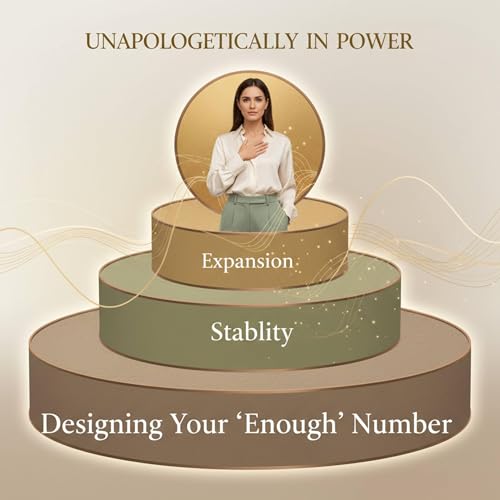
  • Episode 25: Designing Your “Enough” Number
    Dec 9 2025
    Episode 25: Designing Your "Enough" Number - A Nervous System-Based Wealth Plan Episode Summary "I'll feel safe when I make more. When I hit X amount, I'll finally relax." Then you hit the number—and your nervous system didn't get the memo. Most high-achieving women never actually define what enough means, so they keep living in a vague cloud of "not there yet," even as their life objectively improves. In this transformative episode, Jennifer Damaskos guides you through designing three simple numbers: your safety number, your stability number, and your expansion number—in a way your nervous system can actually get behind. This isn't about impressing anybody. It's about being honest with yourself and giving your brain permission to stop scanning for danger every time you open your banking app. Key Topics & Timestamps [00:00:00] - Introduction: Making "Enough" Less Vague, More Embodied Why you keep living in "not there yet" even as your life improves [00:01:00] - The Mental Bandwidth Cost of Money Stress Research on financial scarcity and how money stress reduces your ability to plan, focus, and make thoughtful decisions [00:02:00] - Why Your Brain Can't Tag "Safe Now" When you never define enough, your brain stays in low-level alert—even when the numbers are better than ever [00:03:00] - Your Safety Number The monthly income where basic needs are covered and your nervous system can exhale [00:04:00] - Your Stability NumberSafety plus breathing room—you're not just surviving, you're supported [00:05:00] - Your Expansion Number The monthly income where you can invest, give, buy back time, and take bolder moves with less stress [00:06:00] - The Nervous System Reality Check How to test each number against your body's response: collapse, neutrality, or quiet excitement [00:07:00] - Building Around What Feels Possible Why we don't build your next 90 days around a number that sends your system into shutdown [00:08:00] - Where Are You Now? Honestly assessing where you are and identifying one lever to pull in the next 30-60 days [00:09:00] - Living "As If" You're Already There The counterintuitive practice of making decisions as if your safety number is already secured [00:10:00] - Your Reflection Practice Which number will you organize your next 90 days around? What does your nervous system say? [00:11:00] - Final Thoughts Your wealth is about the relationship your system has with "enough" Powerful Quotes from This Episode "Most high-achieving women never actually define what enough means, so they keep living in a vague cloud of 'not there yet,' even as their life objectively improves." "Money stress isn't just uncomfortable—it's expensive from a brain energy standpoint." "When you never define enough, your brain can't ever tag the situation as 'safe now,' so it stays in a low-level state of alert, even if the numbers are better than they've ever been." "This is not about impressing anybody. This is about being honest." "Research on stress and decision-making tells us that when we're highly activated, our brains default to short-term survival choices. When we're more regulated, we regain access to long-term strategic thinking." "If your expansion number sends your system into shutdown, it doesn't mean it's wrong. It just means we don't build your next 90 days around it." "You're not pretending the numbers don't matter. You are refusing to let your worst-case anxiety run every decision." "Your wealth is not just about how much you make—it's about the relationship your system has with enough." Key Takeaways ✅ Financial stress reduces mental bandwidth and makes it harder to plan, focus, and make thoughtful decisions ✅ When you never define "enough," your brain stays in low-level alert—even when numbers improve ✅ Three numbers to define: Safety (basic needs covered), Stability (breathing room), Expansion (invest and give from overflow) ✅ Reality-check each number against your nervous system: Does your body collapse, feel neutral, or experience quiet excitement? ✅ Build your next 90 days around the highest number that feels possible and safe enough right now ✅ When highly activated, our brains default to short-term survival choices; when regulated, we access long-term strategic thinking ✅ Practice living "as if" your safety number is already secured—refuse to let worst-case anxiety run every decision The Three Numbers Framework 1. Your Safety Number This is the monthly income where your basic needs are covered. Your non-negotiables are funded. Your nervous system can exhale a bit. Includes: Housing, utilities Basic food, transportation Minimum debt payments Essential healthcare A very small "life happens" buffer Ask yourself: What is the monthly number where, if this were consistently coming in, my system would stop feeling like every bill is an emergency? 2. Your Stability Number This is safety plus breathing room. You're not just surviving—you're supported. Add in:...
    Show More Show Less
    12 mins
  • Episode 24: Visibility Without Overexposure
    Dec 2 2025
    Episode 24: Visibility Without Overexposure - How to Be Seen Without Feeling Stripped Bare Episode Summary You say you want more clients, more opportunities, more recognition. But when the spotlight swings toward you, your nervous system goes, "Actually, no. Too much. We're out." Suddenly you're overthinking every post, delaying every launch, and disappearing just when things start working. That's not because you're flaky. It's because visibility is a nervous system event, not just a marketing strategy. In this powerful episode, Jennifer Damaskos explores why brilliant women say they want visibility and then slam on the brakes the moment it shows up. She unpacks the difference between being visible and being overexposed, introduces the three visibility settings (dim, default, and deliberate), and shares research on psychological safety and how inequality impacts our nervous system's response to being seen with wealth and success. This isn't about forcing yourself onto bigger stages. It's about building enough internal safety that your visibility doesn't feel like walking into a firing squad. Key Topics & Timestamps [00:00:00] - Introduction: The Visibility ParadoxWhy brilliant women want visibility and then slam on the brakes when it shows up [00:01:00] - Visibility as a Nervous System EventWhy your system goes into threat mode when the spotlight swings toward you [00:02:00] - The Biology of Being SeenWhy we're not wired to feel chill about standing alone in front of a crowd—evolutionary perspective [00:02:00] - Psychological Safety ResearchHow teams with higher psychological safety perform better—and what that means for you individually [00:03:00] - Visible vs. Overexposed: Drawing the LineThe critical difference between intentional visibility and overexposure [00:04:00] - The Two ExtremesWhy we swing between hiding and overexposing—and why both leave you feeling invisible [00:05:00] - The Three Visibility SettingsDim, Default, and Deliberate—where are you currently operating? [00:07:00] - Visibility, Wealth, and Social SafetyResearch on inequality, brain changes, and why talking about financial wins feels politically charged [00:08:00] - The Visibility Audit ExerciseWhere are you hiding? Where are you overexposed? Where do you want to be deliberately visible? [00:09:00] - One Tiny Step Into Deliberate VisibilityHow to practice being seen on your terms this week [00:10:00] - Supporting Your Nervous SystemBuilding psychological safety for yourself by proving "I don't abandon myself when I'm visible" [00:11:00] - Final ThoughtsHow visibility, wealth, and nervous system regulation are braided together Powerful Quotes from This Episode "Visibility is a nervous system event, not just a marketing strategy." "There's a difference between being visible and being overexposed. Overexposure feels like sharing when you're still raw. Intentional visibility feels like sharing from a scar, not an open wound." "Default visibility keeps you busy, but not known." "Deliberate visibility sounds like: This is what I stand for. These are the people I'm here to serve. This is the part of my story I'm willing to share, and this part is mine." "Your nervous system has been absorbing data from the world around you for a long time. Visibility with wealth bumps into that." "On a personal level, you can build psychological safety for yourself by consistently proving: I don't abandon myself when I'm visible." "If being seen currently feels like a threat, your system will keep you at 'almost there' in your business, your career, and your money—no matter how much you know." Key Takeaways ✅ Visibility is a nervous system event—your biology thinks it's protecting you when you sabotage visibility ✅ Psychological safety is the belief that it's safe to take interpersonal risks and be seen as yourself ✅ Visible vs. overexposed: One is sharing from a scar; the other is sharing from an open wound ✅ Three visibility settings: Dim (mostly hidden), Default (visible but not intentionally), Deliberate (chosen, not coerced) ✅ Research shows living in unequal environments impacts brain regions tied to emotion regulation and increases anxiety ✅ Visibility around wealth feels politically and socially charged—especially for marginalized women ✅ Build psychological safety by proving to yourself: "I don't abandon myself when I'm visible" The Three Visibility Settings Dim Visibility You're mostly hidden. You consume more content than you create. You rarely raise your hand, speak up, or post. People who know you well say, "If everyone else could just see what I see." The danger: When dim becomes your permanent address, even though your next level of wealth and impact clearly lives beyond it. Default Visibility You're sort of visible, but not intentionally visible. You show up when the algorithm or the job demands it. You share what feels acceptable, not what feels true. You dilute your message so it offends the fewest people. ...
    Show More Show Less
    12 mins
  • Episode 23: The Hidden Cost of Overgiving
    Nov 25 2025
    Episode 23: The Hidden Cost of Overgiving - When Your Generosity Quietly Drains Your Wealth Episode Summary You're praised for being the one everyone can count on. The woman who over-delivers, over-functions, and always figures it out. On the surface, it looks like generosity. Underneath, it often hides a deeper belief: If I keep giving, they'll stay. If I keep giving, I'll be safe. If I keep giving, I'll finally feel worthy. In this powerful episode, Jennifer Damaskos draws a clear line between clean generosity and overgiving—and reveals why one builds wealth while the other quietly drains it. She unpacks the hidden math of the "over-giver wealth equation," shares research on why women carry more emotional labor and burnout at higher rates, and offers a simple three-question test to help you identify when giving has crossed into self-abandonment. This isn't about stopping your generosity. It's about separating your worth from your output so your giving can be powerful, clean, and sustainable—without depleting your time, energy, or bank account. Key Topics & Timestamps [00:00:00] - Introduction: When Generosity Becomes DepletionThe pattern high-achieving women are praised for—right up until it burns them out [00:01:00] - Generosity vs. Overgiving: Drawing the LineOne says "I choose this from overflow." The other says "I can't not give, even when it hurts." [00:02:00] - What Overgiving Actually Looks LikeAdding extra work "just this once," discounting rates, being the one who always pays, giving away frameworks for free [00:03:00] - The Research: Women and Emotional LaborWhy women carry more emotional labor, report higher burnout, and feel underappreciated—backed by data [00:04:00] - The Over-Giver Wealth EquationHigh output + fuzzy boundaries + unpriced labor = emotional and financial deficit [00:05:00] - The Three Currencies You're LosingTime, energy, and self-respect—and why the last one is the most expensive [00:06:00] - The Roots of OvergivingHow childhood patterns of performing, fixing, and shrinking your needs became your adult survival strategy [00:08:00] - Clean Generosity vs. Survival StrategyMRI studies show generosity is good for us—when it comes from choice, not fear [00:09:00] - The Three-Question TestHow to identify if you're giving from overflow or depletion before you say yes [00:10:00] - Boundaries as Containers, Not WallsHow protecting your capacity lets your generosity last [00:11:00] - What Wealth Boundaries Sound LikeReal-world scripts for holding your rate, offering what's realistic, and staying present without overextending [00:12:00] - Your Reflection PracticeWhere are you overgiving? What are you secretly hoping to receive in return? [00:13:00] - Final ThoughtsWhen you untangle your worth from your output, your giving becomes more powerful—not less Powerful Quotes from This Episode "Generosity says I choose to give from overflow. This feels aligned, and I could say no. Overgiving says, I can't not give even when it hurts me." "When you repeatedly override your own needs for everyone else, your nervous system stops trusting you to protect it. So even when more money comes in, your body does not relax because it expects you to give it away." "The problem is when you use giving as a way to buy safety, approval, belonging, or proof that you are a good person. That's no longer generosity. That's a survival strategy." "Your boundaries are not walls. They are containers that let your generosity last." "Your heart was never the issue. Your capacity is." "When you untangle your worth from your output, your giving becomes more powerful, not less, because it's rooted in self-respect instead of self-erasure." Key Takeaways ✅ Overgiving isn't generosity—it's often a survival strategy rooted in childhood patterns✅ The over-giver wealth equation: High output + fuzzy boundaries + unpriced labor = deficit✅ Women carry more emotional labor and report higher burnout rates (backed by research)✅ Overgiving erodes three currencies: time, energy, and self-respect✅ Clean generosity comes from overflow and choice; overgiving comes from fear and obligation✅ Three-question test: Will I resent this? Would I still give if there was no pressure? Am I giving from overflow or depletion?✅ Boundaries protect your ability to keep caring, leading, and giving long-term The Three-Question Test (Before You Give) Question 1: If I say yes, will I silently resent it later?If your honest answer is yes, that's not generosity—that's self-abandonment in a nice outfit. Question 2: If I knew this person would still love, respect, or value me if I said no, would I still want to give this?If your desire disappears when the pressure is removed, the giving was never about love. It was about fear. Question 3: Am I giving from overflow or from depletion?Check in with your body. Overflow giving feels like openness and warmth. Depletion giving feels like heaviness and obligation. What Wealth ...
    Show More Show Less
    14 mins