Episodes

  • How Trial and Error Lit the Way | Kaitlyn Sleeth’s VoQuest
    Oct 19 2026

    How do you find work you love when your plans keep changing?

    Kaitlyn Sleeth considered nursing, planned on law school, and changed majors before finding her fit in marketing. Today, she’s a digital marketing specialist at O’Reilly Auto Parts, working on social media, podcasts, and an ambassador program that brings automotive creators together.

    In this episode of VoQuest, Kaitlyn joins C.W. Elliott to share how faith, mentorship, and a willingness to try helped her navigate the uncertainty of choosing a career. They talk about landing her first job after an initial rejection, finding confidence as the youngest person in the room, and why putting real effort into your work can help you discover what you enjoy.

    If you’re feeling pressure to have your future mapped out, Kaitlyn’s story is an encouraging reminder: you can learn from each step without knowing exactly where the path will lead.

    Show More Show Less
    41 mins
  • You Don't Have to Find Your Passion First | Alex Tecle's VoQuest
    Oct 12 2026

    What if you don't know what you're passionate about yet?

    Alex Tecle has spent nearly 15 years in emergency nursing, including nine years serving veterans in the ER at the VA in Fayetteville, Arkansas. But nursing wasn't a career he dreamed up on his own. It was a path shaped by his father's wisdom, people who cared enough to speak into his life, hands-on experience, and eventually a realization that the work fit him far better than he initially expected.

    In this episode, Alex shares what life as an ER nurse actually looks like, including a few unforgettable stories from the emergency room. We talk about why adaptability and humility matter in high-pressure environments, how curiosity can make you better at your work, and why listening to wise people in your life can change your trajectory.

    We also explore mentorship, faith, professional growth, and an idea every young person trying to figure out their future should hear: you don't necessarily have to discover your passion before you begin. Sometimes passion grows after you start doing the work.

    If you're trying to figure out what you want to do with your life, this conversation is a reminder to stay curious, try things, listen to people you trust, and keep taking the next step.

    Show More Show Less
    43 mins
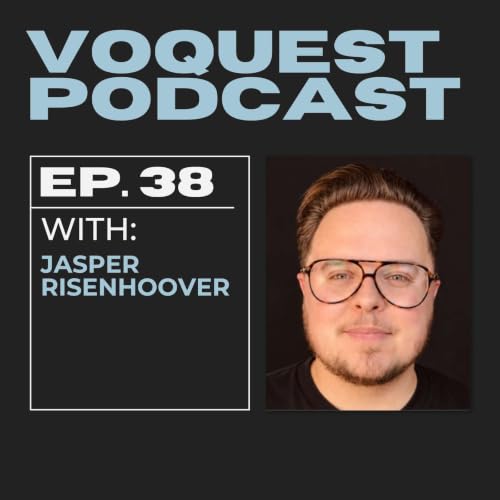
  • Your Career Isn't Your Identity | Jasper Risenhoover's Vocation Quest
    Oct 5 2026

    What happens when your career doesn't go according to plan?

    Jasper Risenhoover's path has included photography, communications, internships, ministry, graduate school, social media, and now entrepreneurship. Along the way, he's learned that finding your vocation isn't always about having a perfect plan. Sometimes it's about taking the next step, learning from what's in front of you, and trusting God with where it leads.

    In this episode of VoQuest, Jasper shares how early interests in photography and storytelling grew into a career in social media and eventually led him to launch FaithWrite, an AI-powered tool designed to help Christian creators develop content and share their message.

    We talk about whether college was worth it, the value of internships and mentors, and what a difficult season of unemployment taught Jasper about separating his identity from his career. We also explore the intersection of faith and work, and why Christians shouldn't be afraid to engage with emerging technology like AI.

    Jasper also shares the advice he'd give his 18-year-old self: embrace the process, don't worry about having everything figured out, and don't give up when the path looks different than you expected.

    In this conversation:

    • How Jasper turned an early interest in photography into a career in media
    • Whether college was worth the investment for him
    • Why internships, mentors, and relationships can shape your direction
    • What unemployment and career setbacks taught him about identity and work
    • Building FaithWrite and experimenting with entrepreneurship
    • AI, social media, and opportunities for Christians to influence culture
    • Why your career and your calling don't have to be separate
    • Jasper's advice for young people trying to figure out what comes next

    Learn more about Jasper and his work:

    Jasper Risenhoover on LinkedIn
    https://www.linkedin.com/in/jasper-daniel-risenhoover-aa6881269/

    FaithWrite
    https://faithwrite.app/

    Mentioned in the episode:

    Faith Driven Entrepreneur
    https://faithdrivenentrepreneur.org/


    Show More Show Less
    54 mins
  • CEO at 23 | Being a dentist was the plan... world travel and entrepreneurship took over | Bryce Holloway's VoQuest
    Sep 28 2026

    At 17, Bryce Holloway thought he was going to become a dentist. At 23, he spends most of the year living in South America and operates as CEO of Investor Signals, connecting founders with investors.

    So how did he get from one to the other?

    In this episode of the VoQuest Podcast, Bryce shares the unconventional path that took him from flipping cars and experimenting with making money online to traveling through South America, building a business, developing expertise in startup fundraising, and eventually stepping into leadership at Investor Signals.

    We talk about how startup fundraising actually works, why relationships matter so much in venture capital, what it's really like to work inside an early-stage company, and the skills young people can develop to make themselves valuable in fast-moving environments.

    One idea stands out above the rest: develop your "figure it out" muscle.

    Bryce explains why integrity, resourcefulness, sales ability, consistency, curiosity, and the willingness to solve problems without waiting for someone to hand you instructions can dramatically increase the opportunities available to you.

    We also talk about taking risks while you're young, learning from failure, avoiding lifestyle inflation, building relationships, and why Bryce's advice to his 17-year-old self isn't to find the perfect career, but to go down more rabbit holes.

    Because the more interests you explore, the more you're exposed to. And the more you're exposed to, the more opportunities you can discover.

    Connect with Bryce & Explore

    Bryce Holloway on LinkedIn:
    https://www.linkedin.com/in/bryce-holloway123/

    Investor Signals:
    https://www.investorsignals.co/

    Looking for opportunities at startups?

    During the conversation, we discussed finding recently funded startups that are actively hiring. Kyle Thomas regularly shares startup hiring opportunities on LinkedIn:

    https://www.linkedin.com/in/kyle-coffelt-thomas/

    Show More Show Less
    47 mins
  • From $-300 to a PE Firm w/ $15M AUM at 26: Samuel Popa's VoQuest
    May 6 2026

    You don't need money to start. You don't need a mentor. You don't even need a plan... at least, not at first. What you need is the willingness to get uncomfortable and keep going when nothing is guaranteed.

    If you've ever looked at the path ahead and thought "I don't have what it takes to build something real" this episode is a direct answer to that thought.

    Today's guest knows what it feels like to stand at that crossroads with nothing but potential. Samuel Popa went from earning $200 every two weeks as a hospital worker (with a bank account that rarely climbed above zero) to building and running a portfolio of companies under a private equity firm, all by age 26. He didn't have investors, a business degree, or a family safety net. He had a very small stimulus check, a co-working space, and an idea he got from watching James Bond. Today, he's pulling back the curtain on exactly how he got there and what he'd tell his younger self if he could go back.

    What You'll Learn:

    • How Samuel brokered his first container deal with negative $300 in the bank and what that taught him about starting before you're ready
    • What "vertical integration" actually means and how it quietly became the engine behind his entire empire
    • Why chasing money makes it harder to get and what to focus on instead
    • The mindset and discipline habits Samuel credits for his growth (and why he compares business failure to lifting at the gym)
    • How to define success before you start building so money doesn't become the destination that leaves you empty

    Key Moments:

    • The James Bond movie that sparked the whole idea (~8:30)
    • The ghost ad that made his first $200 with nothing in the bank (~9:30)
    • The half-million-dollar supplier crisis that almost ended his company — and created his best business relationship (~16:30)
    • "If you're the smartest person at the table, you're at the wrong table" (~29:00)
    • His definition of success — and why it's more than money (~19:30)

    Resources Mentioned:

    • Extreme Ownership by Jocko Willink (mentioned by C.W.)
    • The Immigrant Edge by Brian Buffini (mentioned by C.W.)
    • Samuel Popa on LinkedIn: https://www.linkedin.com/in/samuel-popa-542352314/
    • BuiltBox Containers: https://www.builtboxcontainers.com/

    Enjoyed this episode? We want to know what's resonating with you. What topics or guests would you love to hear on VoQuest? Tell C.W. directly on Instagram → @voquestpodcast

    🎙 Listen on Apple Podcasts | Spotify | YouTube

    Show More Show Less
    34 mins
  • Fitness, Faith, and Finding Your Path | Kase Kilchrist on Business, Purpose, and Health
    Apr 21 2026

    In this episode of VoQuest, I sit down with Kase Kilchrist to talk about fitness, faith, business ownership, and what it looks like to find your path when life does not unfold in a straight line.

    Kase shares how he went from studying child and family development and working as an autism specialist to becoming a trainer and eventually building an online coaching business. Along the way, he explains what people do not see behind the scenes of working for yourself: client check-ins, programming, taxes, KPIs, lead flow, ad spend, content scripting, and the constant pressure of wearing multiple hats.

    We also talk about the emotional side of the journey: being a people pleaser, taking criticism from people who do not understand your goals, learning how to filter feedback, and refusing to let other people’s expectations dictate your future.

    For young people interested in health and performance, Kase shares practical advice on avoiding shortcuts, staying natural, learning the basics of nutrition, and understanding why more is not always more in the gym. He also explains why real coaching and accountability still matter in a world full of apps, generic advice, and AI tools.

    Toward the end, the conversation shifts to faith, surrender, and learning to trust God with your future. If you are trying to figure out your next step, build discipline, or make wiser decisions about work, health, and calling, this episode is full of honest perspective and practical encouragement.

    Find Kase on Instagram: https://www.instagram.com/quesolifts/

    Follow VoQuest Podcast:
    Instagram: https://www.instagram.com/voquestpodcast/

    Show More Show Less
    53 mins
  • What I Wish I Knew About Money at 18 | Mark Schroeder on Saving, Investing, Debt, and Financial Planning
    Apr 10 2026

    In this episode of the VoQuest Podcast, I sit down with financial advisor Mark Schroeder to talk about the money habits most people wish they had started much earlier. We discuss why character, work ethic, vision, and decision-making come before tactics, then move into practical advice on saving, investing, avoiding emotional decisions, managing debt, and protecting what you build.

    Mark gives a grounded look at what financial planning actually involves: helping people clarify their goals, understand their options, and make wise long-term decisions instead of reactive short-term ones. The conversation covers compound interest, why starting early matters even with small amounts, the difference between Roth IRAs and 401(k)s, why ETFs can be a simple starting point for beginners, and how some people think about tools like life insurance as part of a broader financial plan.

    A few simple definitions for listeners:
    compound interest is when your money earns returns, and then those returns begin earning returns over time;
    an ETF is a basket of investments that helps you diversify instead of relying on one stock;
    a Roth IRA is a retirement account funded with after-tax money, where qualified withdrawals can later be tax-free;
    a 401(k) is an employer-sponsored retirement account, often funded with pre-tax contributions;
    and indexed universal life (IUL) is a type of permanent life insurance that can include a cash-value component in addition to a death benefit. This episode is for general education and reflection, not individualized financial advice.

    Whether you are a student, a young adult, a parent trying to prepare your kids better than you were prepared, or someone who simply wishes they had started sooner, this episode will challenge you to think differently about money, planning, responsibility, and the kind of life you want to build.

    Highlights

    • Why character and work ethic are foundational financial assets
    • What financial advisors really do beyond “picking investments”
    • Why starting with a small amount still matters
    • Roth IRA vs. 401(k) in simple terms
    • Why ETFs can be a practical beginner option
    • Why trying to time the market often backfires
    • Good debt vs. bad debt
    • How life insurance fits into long-term planning
    • Why health, family, and enjoying the journey still matter
    • What Mark would tell his 17-year-old self
    Show More Show Less
    50 mins
  • From Fitness to Occupational Therapy: Trevor Thompson's Vocation Quest
    Mar 31 2026

    In this episode of the VoQuest Podcast, we unpack what OT really is with occupational therapist Trevor Thompson, how it differs from physical therapy, and why it can be such a meaningful and flexible career path. Trevor shares his journey from business studies and fitness work to discovering a passion for helping people with complex medical needs, eventually earning his doctorate in occupational therapy and serving veterans in Arizona.

    Along the way, Trevor explains what a day in the life of an OT looks like, from ICU and emergency room work to adaptive recreation, prosthetics, and helping patients regain the skills they need for everyday life. He also shares how shadowing helped clarify his direction, why continual learning matters long after school ends, and how his career has adapted with different stages of life.

    Trevor also shares his testimony and the lessons he would share with his younger self: keep trying things, give major decisions time, and trust that God can guide your path even through confusion and pain.

    Highlights

    • What occupational therapy actually is and why many people misunderstand it
    • Trevor’s path from fitness and business into the medical world
    • How working with clients with MS, ALS, and other conditions changed his direction
    • Why OT stood out in med school
    • What OTs do in the ICU, ER, and hospital setting
    • How occupational therapists help patients with daily life skills after injury or surgery
    • The difference between OT and PT in practical terms
    • Education requirements for OT, including the shift toward doctoral programs
    • A lower-debt bridge path from OTA to OTD that students should know about
    • Why shadowing is one of the best ways to clarify career direction
    • Trevor’s framework for a fulfilling day: exercise, purpose, and relationships
    • How OT can flex with changing life stages, family needs, and long-term goals
    • The value of reading physical books and creating space for self-reflection
    • Trevor’s advice to young people: keep jumping in, keep trying things
    • Why “time is a great filter” for major life decisions
    • Trevor’s personal testimony of faith, suffering, and learning to trust God again
    Show More Show Less
    47 mins