

What Happened To You?
Failed to add items
Add to cart failed.
Add to wishlist failed.
Remove from wishlist failed.
Follow podcast failed
Unfollow podcast failed

What Happened To You?
-
Narrated by:
-
Written by:
There is a question that changed the way I think aboutchildren.
Not, what’s wrong with you?
What happened to you?
Those are two very different questions. And the one you askdetermines everything—what you see, what you miss, what you do next, and what the child in front of you learns about whether they are worth understanding.
Today’s guest works with children and families every singleday inside a school building in Frederick, Maryland—where she sees what trauma actually looks like in the hallways, the classrooms, and the counselor’s office. This conversation is for every parent who has ever wondered what is really going on with their child. And for every adult who was once that child.
IN THIS EPISODE
— What it means clinically when trauma is stored in the body—and what the ACEs research tells us about its long-term impact
— What a dysregulated nervous system looks like in someone who doesn’t know they have one
— Why understanding a pattern isn’t enough to change it—and what neuroplasticity actually means for healing
— What progress in trauma work really looks like, and why it’s so easy to miss
— What’s actually underneath the child labeled difficult, defiant, or checked out
— Why parents are often harder to reach than children—and what finally gets through
— What school social workers can actually do for your family—IEPs, 504s, in-school therapy, and more
— “Children don’t need a perfect parent. They need a presence that feels reliable and supportive.”
CONTENT NOTE
This episode discusses childhood trauma, adverse childhoodexperiences, behavioral presentations at school, and the impact of family dynamics on children’s mental health. Please listen at your own pace. In the U.S., call or text 988—free, confidential, 24/7. Outside the U.S.: findahelpline.com. You do not have to navigate this alone.
FIND CAROLINE
malamantiscounseling.com
LinkedIn: Caroline Kinna Caroline Kinna | LinkedIn
GET THE BOOKS
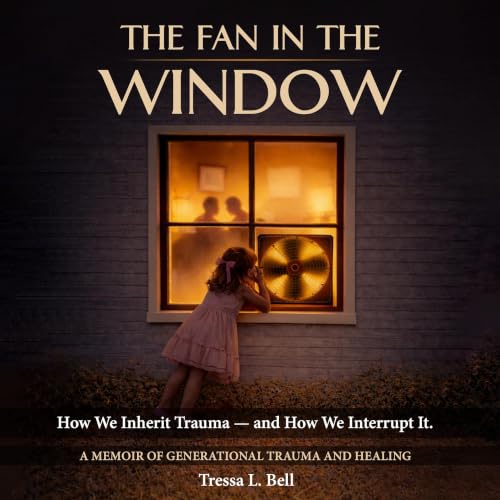
The Fan in the Window: How We Inherit Trauma—And How WeInterrupt It and You Can Interrupt It: A Practical Guide for the Parent Who Inherited Trauma and Swore They’d Do It Differently are both available now on Amazon. If the memoir gave you the story, the companion book gives you theroadmap—built around the Interruption Model™, practical tools for doing the work one pattern at a time.
amazon.com/author/tressalbell
FOLLOW TRESSA
thefaninthewindow.com/podcast
Instagram, Facebook, TikTok, YouTube: @tressalbell
Substack: tressalbell.substack.com
LinkedIn: linkedin.com/in/tressa-l-bell-31830440a
If this episode resonated, please leave a review on ApplePodcasts—it takes less than two minutes and helps new listeners find this work.
This didn’t start with you…but you can interrupt it.