• How Can We Solve the Global Sanitation Crisis? | Dr. Roshan Raj Shrestha (#128)
    Nov 10 2026
    How can we solve the global sanitation crisis and provide safe toilets and clean water for everyone? Dr. Roshan Raj Shrestha, a global sanitation expert and former Gates Foundation leader, explains why reinventing toilets, improving wastewater treatment, and expanding access to safely managed sanitation require more than technology alone.In this episode of the ZuLoo Poodcast, Jocelyn and Darin sit down with Dr. Shrestha to explore his remarkable journey from selling vegetables on the streets of Kathmandu, Nepal, at age 12 to becoming an influential voice in global water and sanitation.Dr. Shrestha shares how his early research into water pollution led him to develop household water treatment solutions and work with underserved communities in Nepal and Bangladesh. He also discusses his 13 years with the Gates Foundation, including efforts to advance the Reinvent the Toilet initiative, fecal sludge management, and citywide inclusive sanitation.From toilets that treat waste on-site to transforming sanitation policies and infrastructure, this conversation reveals why solving the global sanitation crisis requires innovation, investment, and systems that protect public health.What You Will Learn✅ How Dr. Shrestha went from selling vegetables in Nepal to becoming a global water and sanitation leader✅ Why water pollution, unsafe sanitation, and poor waste management are closely connected✅ How reinvented toilets and fecal sludge treatment could improve sanitation in communities without sewer systems✅ Why citywide inclusive sanitation requires policy reform, investment, and accountability alongside new technologyTimestamps00:00 How Can We Solve the Global Sanitation Crisis?03:30 Meet Dr. Roshan Raj Shrestha04:30 Celebrating Dashain in Nepal07:15 From street vendor to water and sanitation expert09:00 Studying water pollution and wastewater treatment11:45 Why human waste is a major source of water contamination15:15 How Dr. Shrestha became known as the Water Doctor17:00 Developing water treatment solutions for underserved communities23:00 Joining the Gates Foundation26:50 Reinventing toilets and treating human waste on-site28:35 Why citywide inclusive sanitation matters30:20 The importance of fecal sludge management32:10 Scaling sanitation solutions through investment and policy reformKey Takeaways🔹 Clean water starts with safe sanitation. Dr. Shrestha explains how untreated human waste contributes to water pollution and why improving sanitation is essential to protecting public health.🔹 Reinvented toilets offer new possibilities. Emerging technologies aim to treat human waste on-site, reducing dependence on traditional sewer infrastructure.🔹 Managing waste matters as much as building toilets. Fecal sludge treatment helps prevent waste from septic tanks and pit latrines from contaminating surrounding communities.🔹 Technology alone cannot solve the sanitation crisis. Lasting progress requires investment, government accountability, effective policies, and inclusive sanitation systems.Guest BioDr. Roshan Raj Shrestha is a global water and sanitation expert with more than 37 years of experience advancing clean water, wastewater treatment, and sustainable sanitation solutions.Originally from Nepal, he began his career researching water pollution and helped establish the Environment and Public Health Organization (ENPHO). He later spent 13 years with the Gates Foundation, supporting sanitation innovation, fecal sludge management, and citywide inclusive sanitation initiatives.Known as the Water Doctor, Dr. Shrestha has helped advance sanitation solutions and policies across Asia and other developing regions, emphasizing affordable technology, public health, and equitable access to safe sanitation.https://worldtoilet.org/roshan-shrestha/ ResourcesEnvironment and Public Health Organization (ENPHO)Learn more about water, sanitation, and environmental health initiatives in Nepal.https://enpho.org/Gates FoundationExplore global initiatives focused on sanitation innovation and reinventing toilets.https://www.gatesfoundation.org/World Toilet SummitLearn more about global sanitation innovation, collaboration, and advocacy.https://worldtoiletsummit.org/ResourcesHow do you ZuLoo? Connect with ZuLoo on social media!Instagram: @zuloo__ https://www.instagram.com/zuloo__/X / Twitter: @ZuLooInc https://twitter.com/ZuLooIncFacebook: ZuLoo https://www.facebook.com/zuloo501c3YouTube: The ZuLoo PōōdcastSupport the showCopyright (c) ZuLoo Media LLC. All rights reserved. The Pōōdcast is the property of ZuLoo Media LLC (the “Publisher”). The opinions expressed on the Pōōdcast are not necessarily that of the Publisher or of its parent company, ZuLoo, Inc. (“ZuLoo”), or its affiliates. References to third-parties, or links thereto, do not constitute an endorsement by such persons of the Pōōdcast, the Publisher, ZuLoo, or their affiliates, products, or services. ZuLoo Humanitarian is a non-profit ...
    Show More Show Less
    38 mins
  • Reinventing Toilets: The Future of Sanitation Technology | Professor Thammarat Koottatep (#127)
    Oct 27 2026
    Can we solve the global sanitation crisis by improving the toilets and wastewater systems we already have? Professor Thammarat Koottatep believes affordable sanitation innovation, smarter wastewater treatment, and regenerative sanitation could help communities improve public health without replacing their existing infrastructure.On the ZuLoo Pōōdcast, Jocelyn and Darin speak with Professor Thammarat Koottatep, Co-Director of the Global Water and Sanitation Center at the Asian Institute of Technology (AIT), about the future of toilets, wastewater treatment, and sustainable sanitation solutions.Professor Koottatep shares his involvement in sanitation research supported by the Gates Foundation, including the Reinvent the Toilet initiative, cyclone toilet technology, and solar-powered septic tank systems. He explains why traditional sewer infrastructure is often too expensive for developing communities and how decentralized wastewater treatment can provide more practical alternatives.The conversation also explores regenerative sanitation, an approach that improves existing septic tanks and sanitation systems rather than replacing them entirely. From turning human waste into valuable resources to making sanitation technology more affordable and accessible, Professor Koottatep challenges how we think about toilets and what happens after we flush.What You Will Learn✅ Why affordable, decentralized wastewater treatment systems are essential for improving sanitation in developing communities✅ How cyclone toilet technology and solar-powered septic tanks could improve waste separation and treatment✅ What regenerative sanitation means and why upgrading existing infrastructure may be more practical than replacing it✅ Why access to toilets is only part of the solution and how proper wastewater and fecal sludge management protects public healthTimestamps(00:00) Reinventing Toilets: The Future of Sanitation Technology(03:25) Meet Professor Thammarat Koottatep(04:10) The World Water Congress and World Toilet Summit(05:35) Professor Koottatep's background and sanitation research(07:00) The Global Water and Sanitation Center and Gates Foundation support(08:00) Why traditional wastewater infrastructure doesn't work everywhere(11:00) The sanitation challenges facing Southeast Asia(13:30) Decentralized wastewater treatment and resource recovery(15:15) How cyclone toilet technology separates liquid and solid waste(17:40) Solar-powered septic tanks and reducing harmful pathogens(22:00) Why sanitation innovations struggle to reach consumers(25:15) Regenerative Sanitation and improving existing infrastructure(28:00) Retrofitting septic tanks for better wastewater treatment(29:30) The challenges of fecal sludge management(31:00) Thailand's sanitation progress and the future of the World Toilet SummitKey Takeaways🔹 Building toilets is only the beginning. Without proper wastewater and fecal sludge treatment, harmful waste can still contaminate water sources and communities.🔹 Affordable innovation improves sanitation access. Decentralized solutions like cyclone toilets and solar-heated septic tanks offer practical alternatives to expensive sewer systems.🔹 Regenerative sanitation improves existing infrastructure. Upgrading septic tanks and pit latrines with better treatment technology can be more practical and affordable than replacing them.🔹 Human waste can become a valuable resource. Properly treated wastewater and fecal sludge can support agriculture, energy production, and nutrient recovery while reducing pollution.Guest BioProfessor Thammarat Koottatep is a Professor at the Asian Institute of Technology (AIT) in Thailand and Co-Director of its Global Water and Sanitation Center.With more than 30 years of experience, he specializes in wastewater treatment, sustainable sanitation, and affordable technologies for underserved communities. His research includes cyclone toilets, solar-heated septic tanks, and Gates Foundation-supported sanitation innovations.He is also the author of Regenerative Sanitation: A New Paradigm for Sanitation 4.0, which explores improving existing sanitation systems to create more sustainable and accessible solutions.Linkedin: https://www.linkedin.com/in/thammarat-koottatep-27016842/ Book: Regenerative Sanitation: A New Paradigm for Sanitation 4.0ResourcesHow do you ZuLoo? Connect with ZuLoo on social media!Instagram: @zuloo__ https://www.instagram.com/zuloo__/X / Twitter: @ZuLooInc https://twitter.com/ZuLooIncFacebook: ZuLoo https://www.facebook.com/zuloo501c3YouTube: The ZuLoo PōōdcastSupport the showCopyright (c) ZuLoo Media LLC. All rights reserved. The Pōōdcast is the property of ZuLoo Media LLC (the “Publisher”). The opinions expressed on the Pōōdcast are not necessarily that of the Publisher or of its parent company, ZuLoo, Inc. (“ZuLoo”), or its affiliates. References to third-parties, or links thereto, do not constitute an endorsement by such persons ...
    Show More Show Less
    37 mins
  • Ukraine's Water Crisis: Keeping Clean Water Flowing During War | Artem Shyra (#126)
    Oct 13 2026
    How is Ukraine keeping clean water flowing during war? Artem Shyra, Vice President of the Ukrainian Water Association, shares the challenges of maintaining water infrastructure, protecting drinking water supplies, and providing essential water services to communities during an ongoing conflict.In this episode of the ZuLoo Poodcast, Jocelyn is joined by guest co-host Sam Mangum, who helps translate the conversation with Artem from Ukrainian to English. Together, they explore how the war has affected Ukraine's water systems, the challenges facing water treatment professionals, and the difficult decisions required to keep communities supplied with clean water.Artem explains how water shortages have forced cities to prioritize essential needs, why emergency backup water sources are critical, and how water treatment professionals are adapting to damaged and strained infrastructure. He also discusses his work with Nirex, a company involved in water purification and treatment equipment.From water security and emergency water management to the resilience of Ukrainian communities, this conversation highlights the importance of reliable water infrastructure and the people working to keep it functioning during times of crisis.What You Will Learn✅ How the war in Ukraine has affected drinking water access, water treatment, and essential infrastructure✅ Why some Ukrainian communities face restricted water access and how cities prioritize limited supplies✅ How emergency backup water sources and water purification technology help maintain water services during a crisis✅ What Artem Shyra's experience reveals about water security, infrastructure resilience, and the challenges of working during wartimeTimestamps00:00 Why bidets are the future and an introduction to Ukraine01:20 Meet guest co-host Sam Mangum and learn why he speaks Ukrainian03:45 Understanding Ukraine's water and sanitation infrastructure06:45 Meet Artem Shyra, Vice President of the Ukrainian Water Association08:00 How war is affecting Ukraine's access to clean water09:00 Finding alternative water sources during a crisis10:00 Prioritizing water access for homes and essential needs12:50 Lessons learned from maintaining water infrastructure during war13:45 Why emergency backup water sources are critical15:00 Finding hope amid uncertainty and ongoing challenges15:25 Nirex and its role in water treatment and purification16:45 Reflections on Ukrainian resilience and the ongoing conflictKey Takeaways🔹 Water infrastructure is essential to survival during conflict. Artem describes how the war has disrupted water access in Ukrainian cities, placing additional pressure on water treatment professionals and essential public services.🔹 Water shortages require difficult decisions. When water systems cannot operate normally, communities must prioritize essential needs. Artem explains that some apartment buildings have experienced severely restricted water availability, forcing cities to carefully manage distribution.🔹 Backup water sources are critical for water security. Artem emphasizes the importance of identifying reliable water sources and maintaining alternatives. When one supply becomes unavailable, an emergency backup can help prevent a complete interruption of water services.🔹 Resilience and adaptability help keep communities functioning. Despite uncertainty and ongoing challenges, Artem and other water professionals continue finding ways to maintain essential services, adapt to changing conditions, and provide water to the people who need it.Guest BioArtem Shyra is the Vice President of the Ukrainian Water Association and a water treatment professional with approximately 20 years of experience in the industry.Through his work in water treatment and purification, Artem has been involved in providing water solutions and supporting access to essential water services in Ukraine. He also discusses his work with Nirex, a company involved in water purification and treatment equipment.During the ongoing war in Ukraine, Artem has witnessed firsthand the challenges facing water infrastructure, including disrupted supplies, restricted access, and the need for reliable alternative water sources.His experience highlights the importance of water security, emergency preparedness, and maintaining critical infrastructure during times of crisis.Website: http://ukrainian-water-association.org/en/ ResourcesHow do you ZuLoo? Connect with ZuLoo on social media!Instagram: @zuloo__ https://www.instagram.com/zuloo__/X / Twitter: @ZuLooInc https://twitter.com/ZuLooIncFacebook: ZuLoo https://www.facebook.com/zuloo501c3YouTube: The ZuLoo PōōdcastWebsite: http://ukrainian-water-association.org/en/ ResourcesHow do you ZuLoo? Connect with ZuLoo on social media!Instagram: @zuloo__ https://www.instagram.com/zuloo__/X / Twitter: @ZuLooInc https://twitter.com/ZuLooIncFacebook: ZuLoo https://www.facebook.com/zuloo501c3YouTube: The ZuLoo PōōdcastSupport the ...
    Show More Show Less
    23 mins
  • Are Bidets Better Than Toilet Paper? The Future of Bathroom Hygiene with Steven Scheer (#125)
    Sep 29 2026
    Are bidets better than toilet paper for hygiene, sustainability, and your health? Steven Scheer, President of Brondell, Inc., believes washing with water can provide a cleaner experience while significantly reducing our dependence on toilet paper.On the ZuLoo Poodcast, Jocelyn and Darin sit down with Steven Scheer to explore how bidets work, why Americans have been slower to adopt them, and how the toilet paper shortage of 2020 helped bring bidets into the mainstream.Steven explains the health and hygiene benefits of washing with water, the environmental impact of toilet paper, and how modern bidet toilet seats have evolved to include heated seats, adjustable water temperature and pressure, air dryers, deodorizers, and other smart features.The conversation also looks toward the future of smart toilets, including how emerging technology could eventually monitor health indicators and help identify potential concerns through urine and stool analysis.What You Will Learn✅ Why washing with water can provide a cleaner and more comfortable alternative to toilet paper✅ How the toilet paper shortage of 2020 accelerated bidet adoption in the United States✅ How modern bidets work, from basic non-electric attachments to integrated smart toilets✅ How future toilets could use health monitoring technology to provide valuable information about our bodiesTimestamps00:00 Inside the modern smart bidet experience02:18 Meet Steven Scheer, President of Brondell Inc.03:40 How a trip to Thailand introduced Steven to bidets06:44 Why Americans have been slow to adopt bidets08:17 How the toilet paper shortage changed the bidet market11:36 Bidets, personal hygiene, and health benefits15:07 The environmental impact of toilet paper16:58 How does a bidet actually work?19:23 Inside today's smart bidet toilets25:47 Designing bidets for the American bathroom27:49 Clean water, filtration, and sustainable home products32:58 The future of bidets and smart toilet technologyKey Takeaways🔹 Bidets can offer more than convenience. Steven shares how washing with water can provide greater comfort and independence, particularly for people experiencing medical conditions or mobility challenges.🔹 Using a bidet can dramatically reduce toilet paper use. Steven says his household uses approximately 75% less toilet paper with bidets, while some users eliminate toilet paper almost entirely by using built-in air dryers.🔹 Modern bidets range from simple to high-tech. A basic model can connect directly to a home's clean water supply without electricity, while integrated smart toilets can include heated seats, adjustable water temperature and pressure, warm air drying, deodorizers, nightlights, and automatic flushing.🔹 The toilet of the future could help monitor your health. Steven envisions toilets incorporating biomarkers that could potentially detect blood in stool, hydration issues, and other health indicators through routine bathroom use.Guest BioSteve Scheer is President of Brondell, Inc., and is a seasoned business entrepreneur specializing in early to mid-stage startup environments. He has an extensive background in corporate development, strategic operations, new product development, and business planning within manufacturing and technology sectors. Steve has had multiple appearances as a Design Bites panelist at the Kitchen and Bath Industry Show (KBIS), taking home a People's Choice Award in 2022. His extensive media and podcast appearances cover a range of topics, including fostering positive company culture, innovation in the home, and initiatives for driving successful, sustainable businesses. Steve holds a Bachelor’s degree in Finance from Northeastern University in Boston, Massachusetts.Website: https://www.brondell.com/ LinkedIn: https://www.linkedin.com/in/steven-scheer-1a0a3aResourcesHow do you ZuLoo? Connect with ZuLoo on social media!Instagram: @zuloo__ https://www.instagram.com/zuloo__/X / Twitter: @ZuLooInc https://twitter.com/ZuLooIncFacebook: ZuLoo https://www.facebook.com/zuloo501c3YouTube: The ZuLoo PōōdcastSupport the showCopyright (c) ZuLoo Media LLC. All rights reserved. The Pōōdcast is the property of ZuLoo Media LLC (the “Publisher”). The opinions expressed on the Pōōdcast are not necessarily that of the Publisher or of its parent company, ZuLoo, Inc. (“ZuLoo”), or its affiliates. References to third-parties, or links thereto, do not constitute an endorsement by such persons of the Pōōdcast, the Publisher, ZuLoo, or their affiliates, products, or services. ZuLoo Humanitarian is a non-profit 501(c)(3) charity affiliated with ZuLoo. The ZuLoo Marketplace is owned and operated by ZuLoo Enterprises USA LLC, a ZuLoo-affiliated company. Questions may be directed to legal@zuloo.com.
    Show More Show Less
    39 mins
  • Can We Solve the Global Water Crisis? The Future of Water Positive | Alejandro Sturniolo (#124)
    Sep 15 2026
    Can businesses use water and still have a positive impact on global water resources? Alejandro Sturniolo believes they can, and that the technology to make it happen already exists.In this episode of the ZuLoo Poodcast, Jocelyn and Darin sit down with Alejandro Sturniolo of Aqua Positive to explore what it means to become water positive and why water reuse, desalination, and smarter water management could transform how businesses and communities approach water scarcity.Alejandro explains how companies can look beyond reducing their own water consumption and support projects that save, replenish, or create water within communities and watersheds. He also challenges common assumptions about wastewater, desalination, and the water footprint of data centers and AI.From water reuse and wastewater treatment to corporate sustainability and the future of water technology, Alejandro makes the case that solving many of our water challenges isn't about waiting for a breakthrough. It's about education, connecting existing solutions, and taking action.What You Will Learn✅ What water positive means and how organizations can save or replenish more water than they consume✅ Why water reuse and desalination could play an important role in addressing water scarcity✅ How data centers, AI, and everyday consumer activity contribute to our water footprint✅ Why Alejandro believes education and connecting existing solutions are more important than waiting for new technologyZuLoo Humanitarian: Learn more and support the mission at https://zuloo.org/give/ Timestamps00:00 Why Alejandro is optimistic about the future of water03:27 Meet Alejandro Sturniolo of Aqua Positive04:40 How Alejandro discovered his passion for water05:49 What does it mean to be water positive?11:34 Rethinking wastewater as a valuable resource13:34 How desalination works and misconceptions about energy use16:15 Water reuse, water quality, and technology17:21 Data centers, AI, and their water footprint22:13 Why education may be the biggest barrier to progress24:49 Alejandro's vision for the future of waterKey Takeaways🔹 Water positive goes beyond using less water. Alejandro explains that organizations can look beyond their immediate operations and support projects that save, replenish, or create water within a broader community or watershed.🔹 Wastewater doesn't have to be waste. Modern treatment and reuse technologies can turn wastewater into a valuable resource. Alejandro argues that properly treated reused water can achieve extremely high levels of water quality.🔹 Data centers aren't the entire water story. While AI and data centers use water, Alejandro encourages people to consider water footprints across industries and everyday products rather than focusing on a single sector. He points to water-positive commitments from data centers as an example of companies taking action.🔹 The technology exists. Knowledge is the bigger challenge. Alejandro believes the primary limitation isn't technology but education and the ability to connect sustainability goals with existing water solutions.About the GuestAlejandro Sturniolo is a water sustainability expert, entrepreneur, and advocate for water-positive strategies.After building a successful company across South America, Alejandro sold the business and turned his attention more fully toward his longtime passion for water. His interest in the concept of water positive led him to explore how businesses can move beyond simply reducing water consumption and instead create a net-positive impact through water conservation, reuse, and replenishment.Today, Alejandro works through Aqua Positive to connect businesses, water technologies, and sustainability strategies. He also serves as Secretary of the Water Positive Think Tank, which he describes as a community of more than 1,000 people working to advance water-positive thinking and action.Aqua PositiveImpact FiltrationLinkedInResourcesHow do you ZuLoo? Connect with ZuLoo on social media!Instagram: @zuloo__ https://www.instagram.com/zuloo__/X / Twitter: @ZuLooInc https://twitter.com/ZuLooIncFacebook: ZuLoo https://www.facebook.com/zuloo501c3YouTube: The ZuLoo PōōdcastSupport the showCopyright (c) ZuLoo Media LLC. All rights reserved. The Pōōdcast is the property of ZuLoo Media LLC (the “Publisher”). The opinions expressed on the Pōōdcast are not necessarily that of the Publisher or of its parent company, ZuLoo, Inc. (“ZuLoo”), or its affiliates. References to third-parties, or links thereto, do not constitute an endorsement by such persons of the Pōōdcast, the Publisher, ZuLoo, or their affiliates, products, or services. ZuLoo Humanitarian is a non-profit 501(c)(3) charity affiliated with ZuLoo. The ZuLoo Marketplace is owned and operated by ZuLoo Enterprises USA LLC, a ZuLoo-affiliated company. Questions may be directed to legal@zuloo.com.
    Show More Show Less
    30 mins
  • What Happens After You Flush? Inside Wastewater Treatment | Matthew DeNafo (#123)
    Sep 1 2026
    What really happens after you flush the toilet? From the moment wastewater leaves your home, an entire system of pipes, screens, treatment tanks and microorganisms goes to work cleaning that water and protecting public health.On this episode of the ZuLoo Poodcast, Jocelyn Gardner and Darin Mangum sit down with Matthew DeNafo, President of the Atlantic County Utilities Authority (ACUA), to go behind the scenes of wastewater treatment and the infrastructure most of us never think about.Matt explains how wastewater treatment , what happens to everything that gets flushed and why so-called "flushable" wipes can create major problems for sewer systems. He also shares the simple rule everyone should follow when deciding what belongs in the toilet.The conversation also explores how wastewater infrastructure protects clean water and public health, ACUA's use of wind energy and how new technology, greater efficiency and water reuse could shape the future of wastewater treatment.What You Will Learn✅ What really happens to wastewater after you flush the toilet✅ Why "flushable" wipes and other everyday items can cause major sewer problems✅ How wastewater treatment protects clean water, public health and local communities✅ How water reuse, sustainable energy and new technology could shape the future of wastewater treatmentZuLoo Humanitarian: Learn more and support the mission at https://zuloo.org/give/Timestamps00:00 Inside Wastewater Treatment with Matt DeNafo01:59 Meet Matt DeNafo, President of ACUA03:41 From engineering to wastewater management07:24 Inside ACUA's wastewater treatment operations11:59 What really happens after you flush?16:45 What you should never flush down the toilet18:25 The problem with "flushable" wipes22:29 Common misconceptions about wastewater26:55 How wastewater treatment protects public health and clean water32:14 The future of wastewater treatment and water reuseKey Takeaways🔹 Wastewater is more than toilet water. Showers, sinks, washing machines and dishwashers all contribute to the wastewater treatment system.🔹 "Flushable" wipes aren't really flushable. They don't break down properly and can collect inside sewer systems, creating serious clogs and maintenance problems.🔹 Wastewater infrastructure protects entire communities. Effective treatment supports clean waterways, public health, recreation, tourism and economic development.🔹 Water reuse could be an important part of wastewater's future. Matt sees opportunities to use new technology, improve efficiency and find better ways to reuse treated water rather than simply discharging it.About the GuestMatthew DeNafo is President of the Atlantic County Utilities Authority (ACUA) in Southern New Jersey. A civil and environmental engineer, Matt joined ACUA in 2007 and worked his way through engineering and leadership roles before becoming president.Today, he helps lead ACUA's wastewater treatment, recycling and solid waste operations. Its regional wastewater system serves approximately 200,000 residents across 14 municipalities, along with the millions of visitors who travel to Atlantic County each year.LinkedIn: https://www.linkedin.com/in/mattdenafo/ Atlantic County Utilities Authority (ACUA): https://www.acua.com/ ResourcesHow do you ZuLoo? Connect with ZuLoo on social media!Instagram: @zuloo__ https://www.instagram.com/zuloo__/X / Twitter: @ZuLooInc https://twitter.com/ZuLooIncFacebook: ZuLoo https://www.facebook.com/zuloo501c3YouTube: The ZuLoo Pōōdcast https://www.youtube.com/channel/UCxWrLHD56hng6zDWQYiBUxgSupport the showCopyright (c) ZuLoo Media LLC. All rights reserved. The Pōōdcast is the property of ZuLoo Media LLC (the “Publisher”). The opinions expressed on the Pōōdcast are not necessarily that of the Publisher or of its parent company, ZuLoo, Inc. (“ZuLoo”), or its affiliates. References to third-parties, or links thereto, do not constitute an endorsement by such persons of the Pōōdcast, the Publisher, ZuLoo, or their affiliates, products, or services. ZuLoo Humanitarian is a non-profit 501(c)(3) charity affiliated with ZuLoo. The ZuLoo Marketplace is owned and operated by ZuLoo Enterprises USA LLC, a ZuLoo-affiliated company. Questions may be directed to legal@zuloo.com.
    Show More Show Less
    37 mins
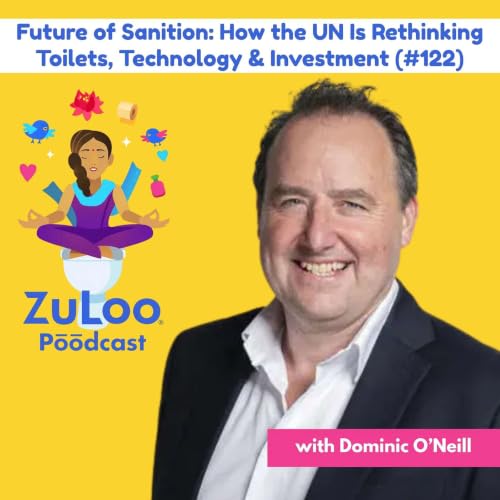
  • Future of Sanitation: How the UN Is Rethinking Toilets, Technology, and Investment | Dominic O’Neill (#122)
    Aug 18 2026
    How can innovative sanitation solutions and non-sewered toilets help solve the global sanitation crisis? By making sanitation more water-efficient, climate-resilient, and investable, communities can gain access to safely managed sanitation without relying solely on expensive traditional sewer systems.On the ZuLoo Poodcast, Jocelyn and Darin sit down with Dominic O’Neill of the UN’s Sanitation and Hygiene Fund (SHF) to explore the future of sanitation financing, non-sewered sanitation, and water-efficient toilet technology.Dominic shares how witnessing a cholera epidemic in Rwandan refugee camps sparked a career spanning more than three decades in sanitation. Today, his work focuses on making sanitation more investable and helping governments, businesses, and financial institutions build sustainable sanitation economies.From off-grid sanitation and fecal sludge management to climate-resilient technology and nature-based wastewater treatment, Dominic explains why traditional sewer infrastructure cannot be the only solution and why the world may be on the verge of a sanitation technology revolution.What You Will Learn in This Episode✅ Why sanitation continues to receive less investment and attention than other global health priorities.✅ How non-sewered sanitation and off-grid toilet systems can provide safely managed sanitation where traditional sewer infrastructure is impractical.✅ Why water-efficient and climate-resilient sanitation technology could play a major role in the future of toilets and wastewater management.✅ How the Sanitation and Hygiene Fund is helping governments, financial institutions, SMEs, and entrepreneurs build stronger sanitation economies and attract investment.Timestamps(00:00) The Future of Sanitation: How the UN Is Rethinking Toilets, Technology, and Investment (02:02) Meet Dominic O’Neill of the Sanitation and Hygiene Fund (02:41) How Dominic's sanitation career began (03:40) Witnessing cholera in the Rwandan refugee camps (06:25) Why sanitation continues to be overlooked (07:30) Making sanitation investable (09:51) How the Sanitation and Hygiene Fund approaches the sanitation crisis (12:59) What sanitation can learn from off-grid energy (14:13) Why non-sewered sanitation isn't only for developing countries (16:51) Fecal sludge management and next-generation sanitation (20:25) The most promising water-efficient sanitation technologies (24:07) How policy could accelerate non-sewered sanitation (26:03) How the Sanitation and Hygiene Fund actually works (28:30) The human impact of safe sanitation (32:22) What success looks like over the next five to ten years (33:46) A preview of SHF's work in menstrual healthKey Takeaways🔹 Sanitation needs a new investment model. Dominic explains that solving the sanitation crisis requires moving beyond individual pit latrines and expensive centralized sewer systems toward solutions that can attract sustainable public and private investment.🔹 Non-sewered sanitation can be a powerful alternative. Off-grid systems can provide safely managed sanitation in communities where sewer connections are financially, geographically, or practically impossible.🔹 Water efficiency will be critical. Dominic sees water-efficient systems, including closed-loop and dry sanitation technologies, as particularly promising as communities face increasing water-security and climate challenges.🔹 Sanitation changes everyday lives. Safe sanitation can create jobs, protect public health, and give women greater safety and dignity, particularly in dense informal settlements where leaving home to use a toilet can expose them to violence.About Dominic O’NeillDominic O’Neill has spent more than three decades working in sanitation and international development. His interest in the sector began while studying environmental health and deepened after witnessing a cholera epidemic in Rwandan refugee camps early in his career.Today, Dominic works with the Sanitation and Hygiene Fund (SHF), part of the United Nations system, where the focus is on creating the conditions necessary to expand investment in sanitation and hygiene.Rather than acting as a traditional investor, SHF works as a catalyst and support facility, helping analyze sanitation markets, strengthen government policy, support sanitation enterprises, engage financial institutions, and identify opportunities to build sustainable sanitation economies.Website: https://www.shfund.org/LinkedIn: linkedin.com/in/dominic-o-neill-b9960772 ResourcesHow do you ZuLoo? Connect with ZuLoo on social media!Instagram: @zuloo__ https://www.instagram.com/zuloo__/X / Twitter: @ZuLooInc https://twitter.com/ZuLooIncFacebook: ZuLoo https://www.facebook.com/zuloo501c3YouTube: The ZuLoo Pōōdcast https://www.youtube.com/channel/UCxWrLHD56hng6zDWQYiBUxgSupport the showCopyright (c) ZuLoo Media LLC. All rights reserved. The Pōōdcast is the property of ZuLoo Media LLC (the “Publisher”). The ...
    Show More Show Less
    37 mins
  • How Community-Led Sanitation Is Transforming Lives in South Africa | Shelley Webb-Humphreys (#121)
    Aug 4 2026
    How can community-led sanitation, clean water, and sustainable toilets transform lives in underserved communities? They can by providing safe sanitation, clean water, dignity, and economic opportunities while empowering local communities to lead long-term change. In this episode of the ZuLoo Poodcast, Shelley Webb-Humphreys, CEO of SOSNPO, shares how innovative sanitation solutions, dignity hubs, dry toilets, and circular economy initiatives are helping improve public health and create sustainable futures across South Africa.After beginning her career in psychology and the corporate IT sector, Shelley found her purpose addressing South Africa's water and sanitation challenges. Today, SOS NPO works alongside communities to improve access to safe toilets, clean water, hygiene, rainwater harvesting, and community-led sanitation, while developing innovative projects that convert human waste into fertilizer, create jobs, and improve quality of life.From replacing dangerous pit toilets in schools to empowering women through Dignity Hubs and sustainable sanitation businesses, Shelley explains why listening to communities is the key to building sanitation projects that truly last.Whether you're passionate about global sanitation, clean water, public health, women's empowerment, community development, sustainable sanitation, circular economy, or social entrepreneurship, this conversation highlights how dignity begins with access to safe sanitation.What You'll Learn✅ Why community-led sanitation creates more sustainable and successful projects.✅ How SOS NPO is replacing dangerous pit toilets with safe, water-efficient sanitation systems.✅ How Dignity Hubs provide toilets, showers, laundry facilities, and economic opportunities for women.✅ Why circular economy sanitation solutions can improve public health while creating jobs and reducing waste.Support ZuLoo HumanitarianHelp provide clean water, sanitation, and hygiene solutions to communities around the world.zuloo.orgTimestamps(00:00) Why Fecal Sludge Matters More Than You Think(05:05) Meet Shelley Webb-Humphreys and SOS NPO(08:30) How Cape Town's Water Crisis Inspired a New Mission(13:56) Building Sustainable Sanitation Through Community Partnerships(17:50) The Future of Dry Toilets and Urine Diversion Systems(20:45) How Dignity Hubs Empower Women and Create Jobs(27:20) Replacing Dangerous Pit Toilets in South African Schools(31:45) Why Many Sanitation Projects Fail(34:00) The Importance of Community Buy-In(36:00) The Future of Sanitation in South AfricaKey Takeaways🔹 Sustainable sanitation begins with listening to communities and designing solutions around their needs.🔹 Dry toilets and urine diversion systems can reduce water use, eliminate fecal sludge, and improve environmental outcomes.🔹 Dignity Hubs create safer sanitation while supporting women's financial independence through microenterprises.🔹 Long-term sanitation success depends on community ownership, education, and ongoing maintenance rather than simply installing infrastructure.About Shelley Webb-HumphreysShelley Webb-Humphreys is the CEO of SOSNPO, a South African nonprofit dedicated to improving access to clean water, safe sanitation, hygiene, and sustainable community development. Originally from England, Shelley transitioned from a career in corporate IT and psychology into humanitarian work after witnessing the challenges facing underserved communities in South Africa.Under her leadership, SOSNPO has developed innovative sanitation projects including Dignity Hubs, rainwater harvesting initiatives, circular economy programs that transform human waste into valuable resources, and campaigns to replace dangerous pit toilets in schools. Her work focuses on creating community-led solutions that improve public health, empower women, generate employment, and restore dignity.LinkedIn: https://www.linkedin.com/in/shelley-webb-humphreys-307621337/ Website: https://www.sosnpo.org/ ResourcesHow do you ZuLoo? Connect with ZuLoo on social media!Instagram: @zuloo__ X / Twitter: @ZuLooInc Facebook: ZuLoo YouTube: The ZuLoo Pōōdcast Support the showCopyright (c) ZuLoo Media LLC. All rights reserved. The Pōōdcast is the property of ZuLoo Media LLC (the “Publisher”). The opinions expressed on the Pōōdcast are not necessarily that of the Publisher or of its parent company, ZuLoo, Inc. (“ZuLoo”), or its affiliates. References to third-parties, or links thereto, do not constitute an endorsement by such persons of the Pōōdcast, the Publisher, ZuLoo, or their affiliates, products, or services. ZuLoo Humanitarian is a non-profit 501(c)(3) charity affiliated with ZuLoo. The ZuLoo Marketplace is owned and operated by ZuLoo Enterprises USA LLC, a ZuLoo-affiliated company. Questions may be directed to legal@zuloo.com.
    Show More Show Less
    38 mins