Tap the gear icon above to manage new release emails.
Follow Justin Gregg to get new release emails from Audible and Amazon.
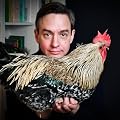
Dr. Justin Gregg is a senior research associate with the Dolphin Communication Project and adjunct professor at St. Francis Xavier University, Justin holds a PhD in Psychology from Trinity College Dublin and a BA in Linguistics from the University of Vermont.
He is the author of the international bestseller If Nietzsche Were a Narwhal: What Animal Intelligence Reveals About Human Stupidity—translated into 17 languages—and Humanish: What Talking to Your Cat or Naming Your Car Reveals About the Uniquely Human Need to Humanize, as well as Are Dolphins Really Smart? by Oxford University Press. Justin’s writing has appeared in The Wall Street Journal, Scientific American, Slate, Aeon, BBC Focus, and Salon, and he has been featured on CBS Mornings, CBC Ideas, ABC News Live Prime, ReThinking with Adam Grant, Ologies with Alie Ward, and The Daily Stoic with Ryan Holiday. He writes the Elegant Arguments blog for Psychology Today, and The Narwhal Diaries Substack.
An improv instructor, musician, playwright, and voice actor, Justin produces and host multiple podcasts, including The Dolphin Pod, Why Are People Watching This?, and Let’s Talk Antigonish. He’s voiced characters in animated films (including playing the titular Thor in Thor: Legends of Valhalla), produced radio plays, and released three albums with the ECMA and Music Nova Scotia award-nominated children's group Bingly and the Rogues. He also fronts a Nova Scotia-based post-punk-dad-band called Minivans.
Justin has spoken internationally at academic conferences, literary festivals, and corporate events, including South by Southwest and The Hay Festival of Literature & Arts. His talks explore the shortcomings of human thinking, the brilliance of animal minds, and the power of creativity and comedy. Justin’s unusual background—dolphin researcher, improv performer, musician, science communicator—means he bring something different to every keynote, workshop, and event. He uses humor, storytelling, and unexpected comparisons to animal cognition to make complex scientific ideas feel both accessible and fun.
Read more
Read less