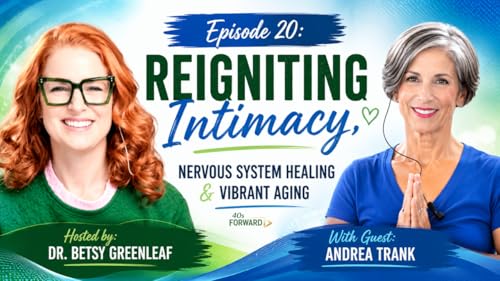
In this episode of 40s Forward, Dr. Betsy Greenleaf sits down with Andrea Trank, somatic yoga instructor, certified integrative medicine coach, HeartMath-certified practitioner, and owner of Heavenlane Healing and Creative Arts.
Together, they explore how nervous system regulation, hormones, pelvic health, intimacy, and root-cause healing all connect after 40.
Andrea shares her personal journey from school teacher and busy mother of three to integrative wellness practitioner after years of struggling with gut issues, thyroid symptoms, chronic pain, brain fog, poor sleep, and being told her symptoms were simply anxiety, depression, or aging.
What You'll Learn in This Episode
• Why nervous system regulation is essential for healing
• How stress, inflammation, gut health, and hormones are connected
• Why hormones alone may not fix everything
• How somatic yoga and HeartMath can support midlife wellness
• Why intimacy is part of vibrant aging
• How long-term couples can reconnect after feeling like roommates
• Why pelvic floor health matters for sexual function and confidence
• How communication, play, and humor can reignite desire
The Missing Piece: The Nervous System
Andrea explains that nutrition, supplements, exercise, and reducing toxins helped her, but the missing piece was learning how to regulate her nervous system.
When the nervous system is dysregulated, even the "right" diet, hormones, supplements, and lifestyle changes may not fully work. HeartMath became one of the tools that helped her calm her body and support deeper healing.
Dr. Greenleaf and Andrea discuss why true wellness after 40 requires an integrative approach—not just protocols, but attention to stress, inflammation, gut health, hormones, lifestyle, and emotional regulation.
Reigniting Intimacy After 40
One of the most powerful parts of this episode is Andrea's honest story about her marriage.
After more than 40 years together, she and her husband went through a long season where they felt more like roommates than romantic partners. Health issues, hormone changes, pain, and life stress had pushed intimacy into the background.
After addressing her hormones, pelvic health, and overall wellness, Andrea began to feel desire again. She opened the conversation with her husband, and that honesty helped them reconnect in a new way.
Their intimacy became more playful, connected, frequent, and joyful.
Intimacy Is More Than Sex
Andrea shares that reigniting physical intimacy improved far more than the bedroom. It strengthened communication, compassion, emotional presence, and daily connection.
Dr. Greenleaf also explains that many couples give up on intimacy because they assume loss of desire is "normal aging"—but it does not have to be the end of that part of life.
Desire is emotional, mental, relational, and biological.
Pelvic Health & Sexual Wellness
Andrea opens up about being diagnosed with advanced pelvic organ prolapse and preparing for surgery.
Dr. Greenleaf explains why pelvic floor health matters for sexual function, confidence, and aging well. They discuss prolapse, pelvic support, and why sexual wellness should be part of the midlife health conversation.
Key Takeaways
• Healing after 40 requires supporting the gut, hormones, nervous system, and lifestyle
• Hormones can help, but they are not the whole answer
• Nervous system regulation is essential for deeper healing
• Intimacy can be reignited after years of disconnection
• Long-term love can become more playful with intention
• Pelvic health is a major part of aging well
• Midlife can be a time of renewal, not decline
Guest Resources
Andrea Trank
Somatic Yoga Instructor
Certified Integrative Medicine Coach
HeartMath-Certified Practitioner
Owner of Heavenlane Healing and Creative Arts
Website: heavenlanecreations.com
Facebook: facebook.com/Heavenlanecreations
YouTube: youtube.com/@AndreaTrank
LinkedIn: linkedin.com/in/andreatrank-health-yoga-coach
Instagram: instagram.com/heavenlanecreations
Key Quote
"People don't realize you have so much life to live—and it can be such a better life."
If this episode resonated with you, share it with someone who needs to hear that intimacy, vitality, and healing are still possible after 40.
Follow 40s Forward for more conversations on hormones, pelvic health, relationships, root-cause healing, and living vibrantly in midlife and beyond.


 Jun 11 202637 mins
 33 mins
 38 mins
 37 mins
 Apr 30 202643 mins
 Apr 20 202630 mins
 Apr 14 202639 mins
 37 mins