• How The European Parliament Can Make Accessibility Real
    Aug 11 2026

    Accessibility is not a “nice to have” add-on to the economy. It is consumer protection, civil rights, and a growth strategy, and it only becomes real when disabled people are in the rooms where power is exercised. We’re joined by Katrin Langensiepen, a Greens Member of the European Parliament, to talk candidly about what disability representation looks like inside EU policymaking, and how easily the media and the public can reduce a disabled politician to a single topic even when the work spans internal market regulation, social affairs, and equality.

    We also get honest about intersectionality and why some people resist the word. Disability never shows up alone: it intersects with gender, migration, race, poverty, and sexuality, and ignoring that reality leaves the most marginalised people behind. Katrin and our hosts explore how ableism shapes fear, how “inspiration” framing can still be dehumanising, and how far-right narratives can pretend to be on disabled people’s side while blaming migrants and refugees for scarcity. That strategy works when communities are made to feel they must compete for dignity.

    From there, we shift to the European Accessibility Act and what enforcement really takes. EU accessibility law can set a powerful umbrella standard, but member states control implementation, monitoring, and penalties, which can mean delays, half-measures, and court battles. We connect the dots to AI regulation and assistive technology: AI can close gaps for disabled people, but it can also automate discrimination in hiring and services unless rules protect human rights. We close with a practical lever that often gets overlooked: procurement power, and why buying standards can move markets faster than good intentions.

    If you care about disability rights, EU accessibility, inclusive tech, and AI governance, listen now, share this with someone who works in policy or product, and subscribe and leave a review with one accessibility change you want enforced next.

    Send us Fan Mail

    Support the show

    Follow axschat on social media.
    Bluesky:
    Antonio https://bsky.app/profile/akwyz.com

    Debra https://bsky.app/profile/debraruh.bsky.social

    Neil https://bsky.app/profile/neilmilliken.bsky.social

    axschat https://bsky.app/profile/axschat.bsky.social


    LinkedIn
    https://www.linkedin.com/in/antoniovieirasantos/
    https://www.linkedin.com/company/axschat/

    https://www.linkedin.com/in/neilmilliken/

    Vimeo
    https://vimeo.com/akwyz

    https://twitter.com/axschat
    https://twitter.com/AkwyZ
    https://twitter.com/neilmilliken
    https://twitter.com/debraruh

    Show More Show Less
    25 mins
  • A Blind Founder Builds An AI Assistant You Can Trust
    Aug 4 2026

    Your inbox is where productivity goes to die, especially when the tools assume you can constantly scan a screen, hunt for tiny buttons, and triple-check every draft. We sit down with Sriram, founder of Lumin, to unpack what happens when an AI voice assistant is built for blind and low vision users first and held to a higher standard: it has to be accurate enough to trust, fast enough to use daily, and deep enough to handle real email workflows instead of shallow commands.

    Sriram shares his journey from video game engineering and immersive tech to entrepreneurship, then the turning point of progressive vision loss from cone rod dystrophy. That lived experience shapes Lumin’s core idea: “talk to your email” in a way that actually gets work done. You’ll hear a live demo where Lumin summarizes new mail, opens a message, describes a photo attachment clearly for social media, drafts a reply, takes an edit, and sends only after confirmation. The conversation digs into why this kind of AI productivity tool is fundamentally different from generic chat apps and why handling attachments, revisions, and back-and-forth is where most assistants break down.

    We also get concrete about accessibility and inclusive design: co-design with Lighthouse for the Blind, screen reader support, robust text zoom, and a simplified interface that keeps power in voice commands. Then we look ahead at the product roadmap, including Outlook and calendar support, plus the longer-term vision of meeting users on more devices like Android, smart glasses, and eventually cars. Finally, we tackle AI trust and privacy head-on: clear disclosure of cloud providers, visibility into what Lumin remembers, and user control including account deletion.

    Subscribe, share this with someone who lives in their inbox, and leave a review if you want more honest conversations about AI, accessibility, and assistive technology that actually works.

    Send us Fan Mail

    Support the show

    Follow axschat on social media.
    Bluesky:
    Antonio https://bsky.app/profile/akwyz.com

    Debra https://bsky.app/profile/debraruh.bsky.social

    Neil https://bsky.app/profile/neilmilliken.bsky.social

    axschat https://bsky.app/profile/axschat.bsky.social


    LinkedIn
    https://www.linkedin.com/in/antoniovieirasantos/
    https://www.linkedin.com/company/axschat/

    https://www.linkedin.com/in/neilmilliken/

    Vimeo
    https://vimeo.com/akwyz

    https://twitter.com/axschat
    https://twitter.com/AkwyZ
    https://twitter.com/neilmilliken
    https://twitter.com/debraruh

    Show More Show Less
    27 mins
  • How To Build Accessibility Into Business Systems
    Jul 18 2026

    AI is rewriting job descriptions, regulators are getting sharper, and accessibility teams are being asked to prove value faster than ever. So we put Neil Milliken in the spotlight to talk about his leap from leading global accessibility at Atos to founding Thrival Holdings, a boutique consultancy built around one simple idea: help organisations create the conditions where people thrive, not just survive.

    We dig into how AI in accessibility is changing the work without replacing the need for specialists. Neil breaks down why the future looks less like one-person “expert bottlenecks” and more like scalable accessibility governance: embedding accessibility knowledge into design and engineering workflows, using tools responsibly, and backing it all with regression testing so quality does not drift as models and codebases evolve. We also talk candidly about what happens to collaboration when companies downsize and people feel they must protect individual value.

    Then we zoom out to the policy and business side: the European Accessibility Act, real enforcement signals like French rulings that challenge misleading “percentage accessible” scores, and why compliance timelines rarely flip like a switch. We connect accessibility to ESG and sustainability by treating exclusion like pollution, a framing that helps leaders understand negative externalities, the curb cut effect, and the ROI of inclusive design across procurement, risk management, and reporting.

    If you care about digital accessibility, WCAG, disability inclusion, and building programs that last through AI and regulatory change, this conversation will give you language and strategy you can use immediately. Subscribe, share the episode with a colleague, and leave a review with the one metric you think would finally make accessibility non-negotiable.

    Send us Fan Mail

    Support the show

    Follow axschat on social media.
    Bluesky:
    Antonio https://bsky.app/profile/akwyz.com

    Debra https://bsky.app/profile/debraruh.bsky.social

    Neil https://bsky.app/profile/neilmilliken.bsky.social

    axschat https://bsky.app/profile/axschat.bsky.social


    LinkedIn
    https://www.linkedin.com/in/antoniovieirasantos/
    https://www.linkedin.com/company/axschat/

    https://www.linkedin.com/in/neilmilliken/

    Vimeo
    https://vimeo.com/akwyz

    https://twitter.com/axschat
    https://twitter.com/AkwyZ
    https://twitter.com/neilmilliken
    https://twitter.com/debraruh

    Show More Show Less
    27 mins
  • How WelcoMe Lets Guests Share Access Needs Before Arrival
    Jul 9 2026

    A power wheelchair user reaches the gangway on a dream cruise, looks down, and realises there is no safe way off the ship. Everyone cares. Nobody knows what to do. That single moment captures the real accessibility crisis: not a shortage of good intentions, but a shortage of systems that make accessible service repeatable, calm, and consistent.

    We sit down with Gavin Neate, founder of WelcoMe, and Mike Clapper of Able2Global to unpack how accessibility can move from awkward last-minute improvisation to something you handle the same way you handle any other guest preference. We talk about why disabled people end up accepting subpar service, why brands hide behind compliance instead of focusing on customer experience, and why hyper-personalization cannot stop at marketing. Welcome’s approach is practical: let people share access and communication needs before they arrive, directly through a venue website or inside booking platform integration, with the guest in control of what they disclose.

    We also dig into the execution layer that most organisations miss: staff training. Gavin explains the forgetting curve and why one-off training fails, then shares a lightweight, gamified weekly approach that keeps disability inclusion top of mind without turning it into a checkbox exercise. Mike brings the business case for inclusive hospitality in the United States, showing why accessible travel is both a human issue and a revenue issue, and why the market is far bigger than most leaders assume.

    If you care about accessibility technology, hospitality accessibility, and building an accessible guest experience that feels normal instead of exceptional, this conversation will give you a clear model and a few uncomfortable truths. Subscribe, share this with a leader who owns customer experience, and leave a review telling us where you want to see “access needs before arrival” become the standard.

    Send us Fan Mail

    Support the show

    Follow axschat on social media.
    Bluesky:
    Antonio https://bsky.app/profile/akwyz.com

    Debra https://bsky.app/profile/debraruh.bsky.social

    Neil https://bsky.app/profile/neilmilliken.bsky.social

    axschat https://bsky.app/profile/axschat.bsky.social


    LinkedIn
    https://www.linkedin.com/in/antoniovieirasantos/
    https://www.linkedin.com/company/axschat/

    https://www.linkedin.com/in/neilmilliken/

    Vimeo
    https://vimeo.com/akwyz

    https://twitter.com/axschat
    https://twitter.com/AkwyZ
    https://twitter.com/neilmilliken
    https://twitter.com/debraruh

    Show More Show Less
    30 mins
  • What If Event Accessibility Were The Default?
    Jun 27 2026

    93% of disabled delegates facing barriers at events should be a wake-up call, not a footnote. We sit down with Catherine Grinyer, (Attendable), Shani Dhanda (accessibility consultant and broadcaster), and Orla Pearson (My ClearText and Access Loop) to get honest about why event accessibility is still so inconsistent and what it takes to fix it without hand-waving.

    We dig into the thinking behind The Accessible Event Show and why it matters now: post-pandemic events are back, sustainability is finally mainstream, and yet disability inclusion still gets treated as optional. We talk practical delivery, not theory, from live captioning and accessible livestreams to the “small” production details that make or break participation for speakers and attendees. Orla explains how captions support far more than one person who asks, including deaf and hard of hearing audiences, people using English as a second language, and many neurodivergent attendees.

    We also cover the reality of stakeholder buy-in across organisers, agencies, and venues, and why budgets and timelines expose whether values are real. The European Accessibility Act comes up as a clear legal push, and we reference research showing how common access barriers are at conferences and live events. Most importantly, we turn the mirror back on the industry: disabled people need to benefit as speakers, staff, and suppliers, not only as audience members.

    The Accessible Events Show returns on 29 October 2026 at The Drum in Wembley, London, with a free-to-attend format and an accessible livestream. A US edition is also coming on 4 December in the DC or Virginia area. Learn more at accessibleeventshow.com and follow along on LinkedIn. If this conversation helps, subscribe, share the episode with an event pro, and leave a review so more people build events that welcome everyone.

    Send us Fan Mail

    Support the show

    Follow axschat on social media.
    Bluesky:
    Antonio https://bsky.app/profile/akwyz.com

    Debra https://bsky.app/profile/debraruh.bsky.social

    Neil https://bsky.app/profile/neilmilliken.bsky.social

    axschat https://bsky.app/profile/axschat.bsky.social


    LinkedIn
    https://www.linkedin.com/in/antoniovieirasantos/
    https://www.linkedin.com/company/axschat/

    https://www.linkedin.com/in/neilmilliken/

    Vimeo
    https://vimeo.com/akwyz

    https://twitter.com/axschat
    https://twitter.com/AkwyZ
    https://twitter.com/neilmilliken
    https://twitter.com/debraruh

    Show More Show Less
    21 mins
  • How Amazon Builds Workplace Accessibility For 1.5 Million Employees
    Jun 10 2026

    Accessibility at work is easy to talk about and hard to deliver, especially when your “office” includes fulfillment centers, delivery stations, corporate teams, and cutting-edge tech roles spread across the globe. We sit down with Megan Smith, Global Accommodations and People Accessibility Lead within Amazonian Experiences and Technology, to unpack what it really takes to run accommodations and workplace accessibility programs at serious scale and with real speed. Megan shares her own path into disability inclusion as a legally blind leader, and why self-advocacy plus operational rigor is a powerful combination.

    We walk through the full accommodations flywheel: intake, evaluation, decisioning with managers and sites, and making sure the accommodation is implemented. Megan explains why much of the volume comes from temporary injuries that need fast, consistent handling, how pregnancy-related accommodations require dedicated expertise, and why complex disabilities benefit from high-touch support that adapts to different job environments. We also explore how people accessibility focuses on preventing barriers in the first place by setting standards, offering tooling, and influencing what the company builds and buys for employees.

    Then we look forward. AI is already blurring the line between assistive technology and personalization, with big implications for screen readers, captions, and the idea of a “one console” work experience. Megan breaks down what must remain true today (solid accessibility fundamentals and WCAG principles) and what might change tomorrow, including trust, privacy, and how we filter signal from AI-generated noise. If you care about disability inclusion, HR accommodations, accessible technology, or the future of AI accessibility, this conversation gives you practical mental models and sharp questions to take back to your team.
    Subscribe, share this with a colleague, and leave a review so more people can find the show.

    Send us Fan Mail

    Support the show

    Follow axschat on social media.
    Bluesky:
    Antonio https://bsky.app/profile/akwyz.com

    Debra https://bsky.app/profile/debraruh.bsky.social

    Neil https://bsky.app/profile/neilmilliken.bsky.social

    axschat https://bsky.app/profile/axschat.bsky.social


    LinkedIn
    https://www.linkedin.com/in/antoniovieirasantos/
    https://www.linkedin.com/company/axschat/

    https://www.linkedin.com/in/neilmilliken/

    Vimeo
    https://vimeo.com/akwyz

    https://twitter.com/axschat
    https://twitter.com/AkwyZ
    https://twitter.com/neilmilliken
    https://twitter.com/debraruh

    Show More Show Less
    29 mins
  • The Job Hunt When You Are Blind
    Jun 3 2026

    One sentence can flip an interview from warm to frozen: “I should tell you I’m visually impaired.” That moment sits at the heart of our conversation with Steve Tyler, Director of Assistive Tech and Transformation at Leonard Cheshire, and Jasmin Ambiong, a blind Filipina disability inclusion and accessibility advocate and Billion Strong ambassador joining us from Wellington, New Zealand.

    We get specific about what disability employment really looks like for blind job seekers: Steve applying for 108 jobs before landing his first role, the “sharp intake of breath” after disclosure, and why even highly accomplished blind professionals can feel their careers are one redundancy away from disappearing. Jasmin shares what it feels like to hear “we’re not ready to employ a blind person,” why disabled candidates often have to be exceptional just to be considered, and how remote work can become a survival tactic when in-person hiring is built on fear rather than skills.

    We also zoom out to the systems shaping accessible hiring and inclusive workplaces: disability organisations that still do not hire disabled staff, and the double-edged sword of AI in recruitment. From photo requests in application flows to algorithmic screening that mirrors cultural bias, we talk about how automation can either expand reasonable accommodations or amplify discrimination at speed.

    If you care about accessibility, disability inclusion, assistive technology, and fair hiring, listen through and share it with someone who hires. Subscribe to AXSChat, leave a review, and tell us your take: when should candidates disclose disability, and what should employers change first?

    Send us Fan Mail

    Support the show

    Follow axschat on social media.
    Bluesky:
    Antonio https://bsky.app/profile/akwyz.com

    Debra https://bsky.app/profile/debraruh.bsky.social

    Neil https://bsky.app/profile/neilmilliken.bsky.social

    axschat https://bsky.app/profile/axschat.bsky.social


    LinkedIn
    https://www.linkedin.com/in/antoniovieirasantos/
    https://www.linkedin.com/company/axschat/

    https://www.linkedin.com/in/neilmilliken/

    Vimeo
    https://vimeo.com/akwyz

    https://twitter.com/axschat
    https://twitter.com/AkwyZ
    https://twitter.com/neilmilliken
    https://twitter.com/debraruh

    Show More Show Less
    30 mins
  • Inclusion Works Best When Everyone Plays Together
    May 27 2026

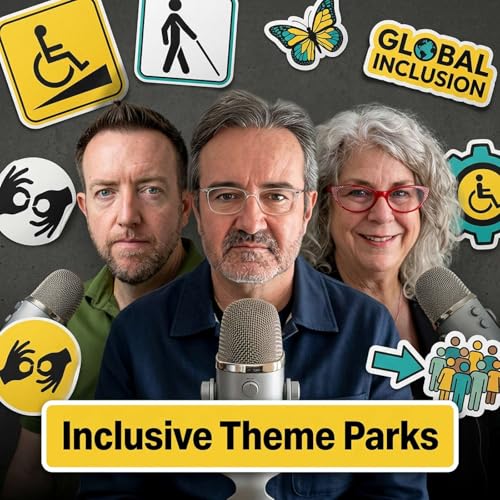
    A theme park where wheelchair users do not get parked in the front row, where sensory needs shape the design, and where “accessible” is not a single modified option, it is the whole experience. We sit down with Sharon Newhardt, inclusion strategist at Morgan’s Wonderland and Morgan’s Inclusion Institute, to unpack what ultra-accessible really looks like when you build a destination from the ground up.

    We get specific about the craft behind inclusive design: how Sharon’s team brings people with different disabilities to the table early, how they pressure-test ideas with real feedback, and how they find vendors who can solve for safety and access at the same time. Sharon shares a standout example of accessibility innovation in themed entertainment: a 4D theatre “roller coaster” that includes moving wheelchair platforms so guests using wheelchairs get the same motion experience as everyone else. That kind of work does not just improve one park, it creates new products and raises the bar across the amusement industry.

    We also dig into the bigger mission and how it scales beyond a theme park. Sharon tells the origin story that sparked Morgan’s Wonderland, explains why the park is for everyone, and describes how the Inclusion Institute helps airports, museums, hospitals, sports venues, and employers start with practical “low-hanging fruit” improvements and move toward lasting cultural change. If you care about accessibility, disability inclusion, universal design, accessible travel, or building better guest and employee experiences, you will leave with real ideas you can use.

    Subscribe for more conversations like this, share the episode with someone who builds spaces or services, and leave a review so more listeners can find the show.

    Send us Fan Mail

    Support the show

    Follow axschat on social media.
    Bluesky:
    Antonio https://bsky.app/profile/akwyz.com

    Debra https://bsky.app/profile/debraruh.bsky.social

    Neil https://bsky.app/profile/neilmilliken.bsky.social

    axschat https://bsky.app/profile/axschat.bsky.social


    LinkedIn
    https://www.linkedin.com/in/antoniovieirasantos/
    https://www.linkedin.com/company/axschat/

    https://www.linkedin.com/in/neilmilliken/

    Vimeo
    https://vimeo.com/akwyz

    https://twitter.com/axschat
    https://twitter.com/AkwyZ
    https://twitter.com/neilmilliken
    https://twitter.com/debraruh

    Show More Show Less
    28 mins