Episodes

  • Beyond Knowing: Evolving in a Changing World
    Jan 27 2026

    In an age where knowledge is "fast, cheap, and always updating," the true differentiator for a busy professional is no longer what you know, but how effectively you can adapt and grow. This audio overview serves as a definitive guide to Process Education (PE), a performance-based philosophy that moves beyond the simple acquisition of information to focus on the continuous development of learning skills. By distilling decades of educational theory into a practical framework, this resource explains how to shift from a traditional culture of evaluation to an assessment culture—a move that is critical for anyone looking to improve the quality of their performance in a rapidly changing, experience-based economy.

    You will be introduced to the "PE in a Nutshell" framework, which offers a streamlined methodology for performing, assessing, and growing to reach your unlimited potential. This overview is the single best source for learning how to become a "self-grower": an empowered individual who takes control of their own destiny, navigates ambiguity, and serves as a mentor to others. Whether you are looking to enhance your own capability or lead your organization through uncertainty, this recording provides the essential tools to help you become the "guide, director, coach, and scriptwriter" of your own professional journey.

    Show More Show Less
    11 mins
  • Tough Love Builds Grit and Accountability
    Dec 29 2025

    In this episode of Active Listening, we dive into the essential question of why some individuals push themselves to their limits while others of equal intelligence do not. Research suggests that the defining quality shared by high achievers is grit, defined as "perseverance and passion for long-term goals". While standardized tests like the SAT are useful, studies indicate that grit and self-discipline are actually better predictors of success in college than IQ or test scores

    We explore how educators can move beyond simply praising talent—which can actually harm student motivation—and instead foster a growth mindset

    You will hear about the importance of teaching students that confusion and mistakes are a normal, expected part of the learning process rather than a sign of failure

    This episode also examines the role of "tough love" in higher education. We discuss how creating a quality learning environment requires faculty to:

    • Set high expectations that challenge students to move beyond their comfort zones
    • Avoid "enabling behaviors" that create dependency, such as intervening too quickly when a student struggles
    • Manage short-term failure so it serves as a catalyst for growth and long-term goal directedness
    • Utilize peer interaction and common vocabulary to build a culture of character and resilience

    Ultimately, student success is not an entitlement; it must be earned. By teaching students how to regulate their attention and emotions through deliberate practice, we empower them to reach their full potential.

    To understand the necessity of high expectations, consider the high jumper: if an athlete successfully clears a bar at six feet, the coach must raise it to six feet and six inches to motivate a better performance

    In the same way, academic excellence requires us to raise the bar for our students, providing them with the "stamina" to clear it.

    This episode is based on the following sources:

    • Faculty Guidebook 3.1.8 Letting Students Fail So They Can Succeed (by Jim Hadley) https://www.facultyguidebook.com/fgb/efgb4/modules/3/3_1_8.htm
    • Developing Grit In Our Students: Why Grit is Such a Desirable Trait, and Practical Strategies for Teachers and Schools (by Jennifer Bashant) https://files.eric.ed.gov/fulltext/EJ1081394.pdf
    Show More Show Less
    16 mins
  • Assessment vs. Evaluation: How to GROW
    Nov 29 2025

    This episode takes on the idea that assessment, at its core, is not merely a task but a transformative engine of continuous improvement, establishing a strategic partnership with students dedicated solely to elevating future performance rather than judging the quality of past work. For this powerful academic alchemy to occur, faculty must cultivate a specialized, non-judgmental mindset built on mutual trust and respect. Instructors must intentionally focus feedback only on improving the characteristics of the performance, strictly avoiding judgmental statements or language that targets the individual performer, ensuring students feel supported rather than criticized. This process is most potent when the learner is in control, actively seeking assessment and collaborating to define the criteria for feedback, thereby validating the relevance and ensuring their willingness to act on suggestions. By honoring the student's central role and maintaining a relentless focus on growth, this non-evaluative approach creates a positive, trusting learning environment that produces "magical" or "teachable moments" and effectively shifts the responsibility for lifelong learning and growth directly onto the student.

    Show More Show Less
    11 mins
  • The Regret of a Lifetime: Why Extrinsic Rewards Sabotage Passion
    Oct 30 2025

    Join us for an extensive discussion on the importance of aligning one's life with individual values and passions as a foundation for personal fulfillment and life vision. It highlights the potential for regret when people live according to the expectations of others, citing the work of nurse Bronnie Ware, and emphasizes that true happiness stems from making decisions consistent with personal and professional values. The text contrasts intrinsic motivation, driven by personal beliefs and interests, with extrinsic motivation, which relies on external rewards and punishments, such as the "carrot and stick" model. Crucially, the source argues that while extrinsic factors can initiate behavior, only self-motivation and alignment with core values can sustain long-term commitment and persistence in achieving goals, reinforcing the need for self-reflection and self-regulation.

    Show More Show Less
    14 mins
  • Unpacking 10 Steps to a Quality Learning Environment
    Sep 30 2025

    Educators interested in creating a more impactful and effective learning environment will want to delve into this methodology, which provides a step-by-step process for significantly enhancing student learning performance, growth, and development.

    This deep dive offers a practical framework, consisting of ten key steps, designed to cultivate an environment where students take greater ownership, responsibility, and control of their learning. It emphasizes that establishing this environment early in a course is critical for developing mutual trust and respect, which minimizes judgment and allows for more effective assessment and, ultimately, student success.

    Show More Show Less
    15 mins
  • Architect Your Life: Mastering Self-Growth with Mindset, Consciousness, and Motivation
    Aug 31 2025

    For educators deeply invested in the scholarly pursuit of personal and professional advancement, the Process Education (PE) framework presents a compelling and meticulously articulated approach to self-growth. This framework critically distinguishes itself from conventional 'growth mindsets' by emphasizing intentional and autonomous transformation as foundational to an individual's journey.

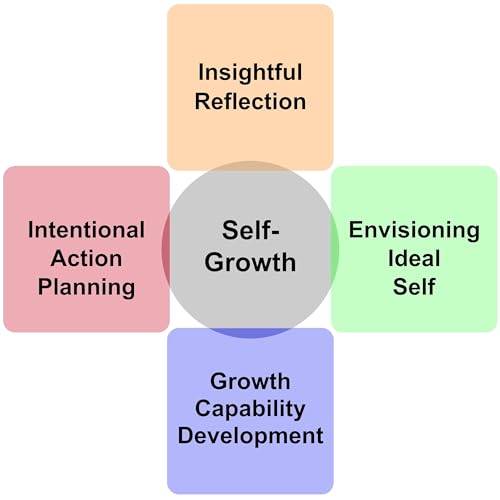
    At the heart of the PE framework lies the Four-Anchors Model, a structured conceptualization designed to guide this transformative process. This model comprises four essential components: insightful reflection, envisioning an ideal self, intentional action planning, and growth capability development.

    The framework further delves into the profound influence of mindset, consciousness, and motivation, meticulously detailing how these dynamic factors interact with and shape each of the four anchors. To elucidate these complex interactions and provide practical strategies for personal development, the PE framework offers twelve illustrative narratives.

    Ultimately, the PE framework is engineered to demystify and reduce the inherent complexity of self-growth practices. It posits that by fostering a harmonized approach to self-improvement, individuals can significantly enhance their quality of life and refine their capacity to achieve deeply held aspirations.

    Show More Show Less
    13 mins