• Redefining Treatment for Chiari Malformation with a Transitional Care Model
    Apr 30 2026

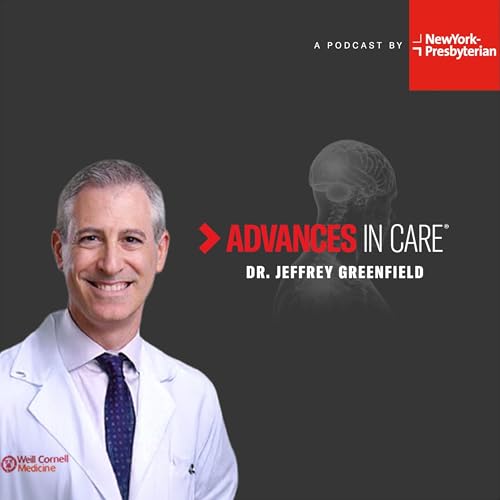
    On this episode of Advances in Care, Erin Welsh and Dr. Jeffrey Greenfield, pediatric neurosurgeon at NewYork-Presbyterian and director of the Chiari CARE program at Weill Cornell Medicine, discuss a rare condition called Chiari malformation.

    Typically diagnosed by MRI, Chiari malformation is classified when part of the cerebellum descends into the upper spinal canal. Though some of the most severe types of Chiari malformation can be diagnosed during pregnancy, the most common type may present asymptomatically until adolescence or adulthood, with symptoms that are often misdiagnosed as other disorders. To address the unmet need for proper diagnosis and management of this condition, Dr. Greenfield created the Chiari CARE program–a multidisciplinary approach involving neurology, pain management, neuropsychology, radiology, and more–to help provide full-spectrum care to patients. A key factor of the Chiari CARE program is its emphasis on transitional care, which includes both treating patients who come in as pediatrics throughout their adulthood as well as those who are diagnosed later in life.

    But Dr. Greenfield’s vision extends to the future. Having just treated the program’s thousandth surgical patient, his team is amassing and analyzing outcomes data and using machine learning to refine predictions for which future patients would be good candidates for surgery or require other treatment methods that will enhance overall quality of life.

    Chapters:

    [00:00 - 4:12] Chiari CARE

    Dr. Greenfield and Erin discuss a rare congenital brain condition called Chiari malformation, and highlight Dr. Greenfield’s Chiari CARE program at NewYork-Presbyterian and Weill Cornell Medicine.

    [4:12 - 8:35] The Importance of Transitional Care

    Dr. Greenfield expands on the importance of transitional care for patients with congenital neurological conditions like Chiari malformation.

    [8:35 - 11:51] Determining the Right Approach

    Dr. Greenfield explains how he and his team determine whether their patients need surgery or not, and the challenges of diagnosing and treating Chiari malformation in adults.

    [11:51 - 14:31] Harnessing Data to Advance Research

    Dr. Greenfield describes how his team is utilizing the MRI scans from over a thousand patients to develop models that could predict who may be a good candidate for surgery or other treatment avenues.

    [14:31 - 18:35] Advancing Diagnostics

    Dr. Greenfield shares his vision for an improved coordinated care model for patients newly diagnosed with Chiari malformation.

    [18:35 - 19:20] Credits

    ***

    Jeffrey Greenfield, MD, PhD is a board-certified neurosurgeon who specializes in pediatric neurosurgery. In addition he sees certain adult patients with congenital neurosurgical conditions. Compassionate clinical care, research, and education are all central to his philosophy as a neurosurgeon and physician. His clinical expertise includes Chiari malformation, all forms of tethered spinal cord, pediatric brain tumors and congenital neurosurgery into adulthood.

    As creator and director of the Chiari CARE program, Dr. Greenfield has developed an international reputation caring for children and adults with Chiari malformation, tethered cord, syringomyelia, and other associated conditions such as craniocervical instability, CSF leaks, and hydrocephalus as part of a large multidisciplinary team.

    For more information visit

    nyp.org/Advances

    Show More Show Less
    19 mins
  • Single Port Robotic Surgery Transforms Outcomes for Lung Tumor Removal
    Apr 16 2026

    Erin Welsh is joined by Dr. Jeffrey Port, a thoracic surgeon at NewYork-Presbyterian and Weill Cornell Medicine, and a leader in thoracic surgical oncology, to discuss advances in minimally invasive robotic surgery and the unique collaborative care model that his program employs to operate on complex chest tumors.

    When Dr. Port first started his career, the surgical techniques used to operate on lung cancer patients were akin to open heart surgery. But in recent years, his team has pioneered new techniques in thoracic surgery, specifically a minimally invasive single port robotic approach, which utilizes a multi-finger robotic hand to operate through one incision. Weill Cornell Medicine is currently one of only 10 centers nationwide using this technology for thoracic surgery, and the highest-volume center in the country that is performing these advanced procedures. Dr. Port also discusses the unique collaborative model his team utilizes to perform complex chest tumor surgeries which oftentimes require cardiopulmonary bypass. This combination of cutting edge surgical techniques, high case volume, and a multidisciplinary approach, is meaningfully expanding treatment options for patients who cannot be treated elsewhere.

    Chapters:

    [00:00 - 04:39] Introduction to Thoracic Surgery

    Dr. Port and Erin discuss the standard of care for thoracic surgery as it stood a few years ago and his pioneering use of robotics in single port thoracic surgery today.

    [04:39 - 09:06] Recovery Benefits of Single-Port Robotic Surgery

    Dr. Port expands on how the technology differs from standard robotics and the recovery benefits of single-port robotic thoracic surgery.

    [09:06 - 13:20] NewYork-Presbyterian/Weill Cornell Medicine as Early Adopter of Innovative Technology

    Dr. Port details his department’s efforts as a training facility, teaching surgeons and health care professionals from across the world the techniques and workflows that contribute to their success.

    [13:20 - 16:16] Multidisciplinary Approach as a Key to Cardiopulmonary Care

    Dr. Port outlines how multi-specialty care allows his team to undertake very complex cases with success.

    [16:16 - 17:01] Credits

    ***
    Dr. Jeffrey L. Port is a Professor of Thoracic Surgery at Weill Cornell Medicine and a leader in thoracic surgical oncology. For more than two decades, he has helped shape Weill Cornell’s robotic thoracic surgery program and played a central role in advancing both minimally invasive and complex, high-risk chest surgery. His clinical focus spans lung cancer and other thoracic malignancies, with particular expertise in robotic approaches and coordinated cardiac–thoracic procedures for patients with advanced disease.

    For more information visit nyp.org/Advances

    Show More Show Less
    17 mins
  • Improving Preterm Birth Outcomes with Virtual Cervix Technology
    Apr 2 2026

    On this episode of Advances in Care, host Erin Welsh is joined by Dr. Mirella Mourad, maternal-fetal medicine specialist at NewYork-Presbyterian and co-director of the Preterm Birth Prevention Center at Columbia, to explore a groundbreaking new technology aimed at improving the diagnosis and treatment of preterm birth.

    Preterm birth impacts approximately 1 in 10 pregnancies in the United States, making it a leading cause of neonatal complications and long-term health challenges. But despite its prevalence and associated risks, innovative solutions to address the condition have lagged behind. To address this gap, Dr. Mourad and her collaborator, Dr. Kristin Meyers, a professor of mechanical engineering at Columbia’s School of Engineering, are developing a new tool: a patient-specific “digital twin” of the cervix. This advanced technology has the potential to revolutionize obstetric care for patients, by allowing clinicians to test new treatment methods, collect data to better understand why certain people are at risk for preterm birth, and overall, catalyze innovation in the historically under-researched field of maternal-fetal medicine, ultimately helping to drive better outcomes and successful pregnancies. Dr. Mourad also discusses how this digital twin can potentially assist with identifying women with placenta accreta spectrum disorder, and inform more precise and proactive treatment plans for patients with this high-risk condition.

    ***

    Mirella Mourad, MD is the Co-Director of the Preterm Birth Prevention Center and a Maternal-Fetal Medicine specialist at Columbia University Irving Medical Center. She is particularly interested in the medical diseases that affect pregnancy, focusing on maternal cardiac conditions, autoimmune diseases, and surgical complications involving abnormal placentation. Dr. Mourad is a fellow of the American College of Obstetricians and Gynecologists and a member of the Society of Maternal-Fetal Medicine.

    For more information visit nyp.org/Advances

    Show More Show Less
    20 mins
  • How ECMO Leadership is Driving Improved Survival and Post-ICU Recovery
    Mar 19 2026

    On this episode of Advances in Care, Erin Welsh is joined by Dr. Cara Agerstrand, director of the Medical ECMO Program at NewYork-Presbyterian and Columbia, and Dr. Matthew Baldwin, critical care specialist at NewYork-Presbyterian and research lead of Columbia’s Baldwin Lab which focuses on the study of critical illness survivorship.

    Thousands of people suffer from cardiopulmonary conditions such as cardiac arrest and severe respiratory illnesses in the United States every year, with many requiring mechanical ventilation and critical care in the ICU. To better serve these patients, NewYork-Presbyterian and Columbia has built a renowned program to manage these patients on rescue therapies like extra-corporeal membrane oxygenation (ECMO), the most advanced form of cardiopulmonary life support. Since 2009, the team at NewYork-Presbyterian and Columbia has established an expertise to care for the sickest respiratory and cardiac failure patients with this technology, and has been at the forefront of utilization which has rapidly evolved from early pediatric use to post H1N1 and COVID surges.

    The standards of care for ECMO treatment and patient outcomes set by New York Presbyterian and Columbia over the past decade has earned them recognition as an ELSO Platinum Level Center of Excellence, one of only a few centers worldwide to have consistently achieved this status since it was first awarded. The team takes this expertise further through advanced research in The Baldwin Lab, which focuses on a variety of projects to better understand the biological factors of why some patients fully recover from ICU stays and others do not, as well as physical, mental, and emotional wellbeing for patients.

    ***

    Dr. Cara Agerstrand is an Associate Professor of Medicine and Director of the Medical ECMO Program at Columbia University Irving Medical Center / NewYork-Presbyterian Hospital. Dr. Agerstrand completed her Internal Medicine residency and Pulmonary & Critical Care fellowship at Columbia University Irving Medical Center. She is an elected member of the Steering Committee of the Extracorporeal Life Support Organization, a member of the ECMO and Mechanical Circulatory Support Domain Task Force of the American College of Chest Physicians and is extensively involved in clinical care, research, and educational efforts involving extracorporeal membrane oxygenation (ECMO) and extracorporeal carbon dioxide removal (ECCO2R). She has special interests in the use of ECMO for severe forms of the acute respiratory distress syndrome (ARDS), pulmonary hypertension and in pregnant and postpartum patients. Dr. Agerstrand is widely published and is an internationally invited speaker.

    Dr. Matthew Baldwin, MD, MS, is a board-certified pulmonary and critical care physician and clinical investigator with a Masters in Biostatistics. Dr. Baldwin’s laboratory aims to improve critical illness survivorship. His research into survivors of acute respiratory failure works to elucidate the mechanisms of post-ICU frailty as therapeutic targets for improving physical recovery. He has identified frailty subtypes in acute respiratory failure survivors, and discovered that aging-related plasma biomarkers of inflammation, neuro-endocrinopathy, and muscle mitochondrial myopathy are potential therapeutic targets for post-ICU interventions. His research related to palliative care aims to improve ICU survivorship, and he has developed novel palliative care interventions for mechanical ventilation patients, such as chaplain-led communication-board-guided spiritual care.

    For more information visit nyp.org/Advances

    Show More Show Less
    20 mins
  • Phase 3 Trial Reduces Risk of Progression in Metastatic Prostate Cancer
    Mar 5 2026

    On this episode of Advances in Care, host Erin Welsh is joined by Dr. Scott Tagawa, medical oncologist at NewYork-Presbyterian and director of the Genitourinary Oncology Program at Weill Cornell Medicine, to talk about the latest developments in prostate cancer care.

    Prostate cancer is the most common cancer in men after skin cancer, with 5-10% of patients presenting with metastasis at the time of diagnosis. Advancing treatment options for men with metastatic disease remains a critical priority in oncology. To address this challenge, Dr. Tagawa recently led a promising Phase III randomized trial– called PSMAddition– to assess radioligand therapy, a subset of targeted radionuclide therapy, or TRT. This new therapeutic agent, lutetium PSMA-617, is being tested in men with hormone-sensitive metastatic prostate cancer. Radioligand therapy works by seeking prostate-specific membrane antigens (PSMAs) to deliver radiation to prostate cells throughout the body while minimizing surrounding damage that other therapies can sometimes cause. The results from the PSMAddition trial were significant. The addition of TRT in addition to standard hormone treatment slowed cancer progression by 28%, yielded notable declines in PSA levels, and proved benefits across patient subgroups. The PSMAddition trial is the first to analyze the use of this treatment regimen earlier in care and could potentially redefine the standard of care for patients with metastatic prostate cancer.

    While metastatic prostate cancer remains incurable, combination strategies incorporating PSMA-targeted therapy represent a promising pathway for expanding the quality and quantity of life for patients, and may prove beneficial as a first-line treatment.

    This breakthrough trial builds on 25 years of innovation in prostate cancer research at NewYork-Presbyterian and Weill Cornell Medicine, where foundational discoveries helped advance the development of PSA and PSMA-targeting agents that are now transforming cancer care.

    ***

    Scott T. Tagawa, MD, MS, FACP, FASCO, is a Professor of Medicine and Urology at Weill Cornell Medicine, and an Attending Physician at NewYork-Presbyterian – Weill Cornell Medical Center. His research covers clinical and translational investigations in genitourinary tumors and thrombosis (blood clotting) in people with cancer. As the Medical Director of the Genitourinary Oncology Research Program, Dr. Tagawa leads clinical trials in the areas of prostate, kidney, and bladder cancer as well as the prevention and treatment of thrombosis with cancer. He specializes in drug development and theranostics in prostate cancer. Dr. Tagawa also serves as leader of the GU Disease Management Team and co-leader of the Experimental Therapeutics Program of the Meyer Cancer Center. He is the WCM principal investigator for the Alliance for Clinical Trials in Oncology (formerly CALGB), serving on the Board of Directors and as a funded member of the Genitourinary Committee.

    For more information visit nyp.org/Advances

    Show More Show Less
    16 mins
  • Breakthrough Technology Improves Concussion Assessment and Player Safety
    Feb 19 2026

    On this episode of Advances in Care, host Erin Welsh sits down with Dr. Thomas Bottiglieri, chief of the primary care sports medicine division at NewYork-Presbyterian and Columbia, to discuss the evolving landscape of concussion care– from prevalence to emerging diagnostic breakthroughs.

    With over 2 million estimated concussions occurring annually in the United States, and many of them affecting young athletes, Dr. Bottiglieri and his colleagues have sought to develop a more accurate and accessible way to objectively diagnose concussion. While a single injury may not cause long term issues, research shows that repeated head trauma– and lack of proper care– can lead to premature neurodegeneration.

    During their research to improve diagnostic measures, Dr. Bottiglieri and his team discovered a biomarker associated with severe concussions: a subtle tremor of the head and neck that becomes amplified when a concussed patient tries to visually focus on a target.

    This discovery led to the development of ProScope, an innovative eyetracking software tool that measures head and neck stability and can detect the diagnostic biomarker with over 80% sensitivity. With the advent of these tools, clinicians can now, for the first time, objectively measure concussion. A former competitive athlete himself, Dr. Bottiglieri hopes that the ProScope tool can become commercially available to improve access to cost-effective diagnosis, ensuring that athletes– or anyone with a head injury– can recover safely and return to the activities they love.

    ***

    Thomas S. Bottiglieri, D.O. is a sports medicine physician specializing in the management of orthopedic injuries and disorders impacting athletes at all skill levels from adolescents to seniors. In addition to treating the full spectrum of muscle, bone, tendon, and joint injuries, Dr. Bottiglieri is a nationally recognized expert in the field of concussion care. His practice stresses shared decision-making with patients and their families and uses the latest medical technology, evidence-based sports medicine, and a compassionate, patient-centered approach.

    For more information visit nyp.org/Advances

    Show More Show Less
    17 mins
  • 2025 Year in Review: Revisiting the Top Takeaways from Advances in Care
    Dec 18 2025

    On the final episode of 2025, host Erin Welsh is joined by Courtney Allison, host of NewYork-Presbyterian’s health and wellness podcast, Health Matters, to recap the year’s highlights from their dozens of conversations with clinicians, researchers, and health care specialists from Columbia & Weill Cornell Medicine. They highlight key takeaways, revisit groundbreaking treatments that were pioneered across the institution, and discuss several research updates that are shaping the future of medicine for both physicians and patients.

    For more information visit nyp.org/Advances

    Show More Show Less
    20 mins
  • Revisiting the Network Effect: Analyzing Brain Structures to Treat Depression
    Dec 4 2025

    For any patient diagnosed with depression for the first time, the recommended course of treatment is the same: a medication like a selective serotonin reuptake inhibitor (SSRI), an evidence based psychotherapy, or both. But there is a large group of people for whom these treatments simply won't work. That’s where Dr. Conor Liston and his team focus. In this episode from the Advances in Care archives, Dr. Liston speaks with former host Catherine Price about his work mapping the brain is helping doctors better understand where depression is impacting certain brain structures and what that means for the symptoms patients present. Dr. Liston’s work is focused on identifying how these symptoms impact patients' brains and using those findings to identify the best treatment approach.

    Since this episode aired, Dr. Liston and his colleagues have continued to build on their research regarding a specific region of the brain called the “salience network.” They found that the salience network was considerably larger in people with clinical depression than in those without, and that people with larger salience networks in childhood were more likely to develop depression later in life. Their research points to an enlarged salience network as the first objective biomarker for diagnosing depression, which could revolutionize how depression is treated, and allow for intervention even before symptoms develop.

    Show More Show Less
    27 mins